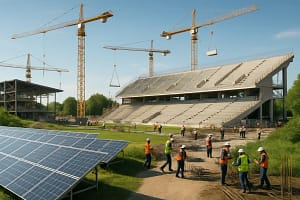
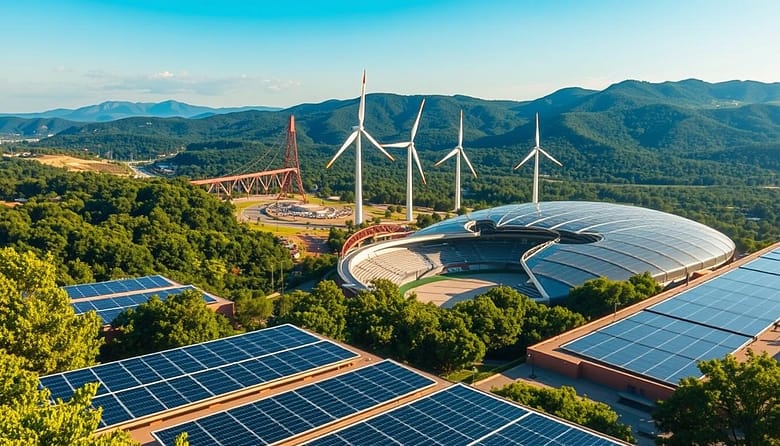
Imagine stadiums fighting climate change instead of just hosting games. Places like Sacramento’s Golden 1 Center and Paris’ Olympic Aquatics Center are leading the way. They use solar power and act as urban batteries.
These stadiums used to be big energy users. But now, they’re using solar panels and wind turbines. UEFA is spending €32 million on green projects. The NBA is turning courts into solar farms.
The battle is between making money and saving the planet. Paris 2024 wants its venues to power neighborhoods. Euro 2024 is measuring success in megawatts and goals. Here’s the buzzer-beater: the Warriors’ Chase Center sells solar energy back to San Francisco, benefiting everyone but fossil fuel companies.
This is more than just using green technology. It’s about creating sustainable venues that reduce carbon emissions. The real question is, can sports save the planet?
The Cost and Impact of Energy Use
Let’s solve the mystery of stadium energy use. Was it the AC in Dubai’s climate-controlled pitches? Or maybe the LED lights in sports venues? Or Germany’s energy-efficient Euro 2024 plan? The real question is how sports venues became energy hogs, affecting both budgets and the environment.
The Miami Heat’s cooling costs could fund renewable energy projects for Caribbean nations. Golden State’s Chase Center spends more on lighting than Draymond Green’s technical foul fines. Emerson’s study shows smart HVAC systems can save 80% on costs, proving carbon-neutral sports are real.
| Venue | Energy Quirk | Annual Cost | CO2 Equivalent |
|---|---|---|---|
| Dubai Soccer Fields | Outdoor AC systems | $3.9M | 2,700 passenger vehicles |
| Allianz Arena (Munich) | Natural ventilation | $420K | 83 electric buses |
| Chase Center | LED lighting systems | $1.2M | 1,400 transatlantic flights |
The Euro 2024 carbon footprint is massive, with 2.7 million tickets sold. Yet, Munich’s natural ventilation shows we can reduce energy use without fossil fuels.
Switching to LED lighting in NBA arenas could power 14,000 homes annually. The Warriors’ $1.2M lighting bill highlights the impact of small changes. As stadiums become more efficient, the real victory is in reducing carbon emissions.
Innovation: Solar, Wind, and Smart Grids
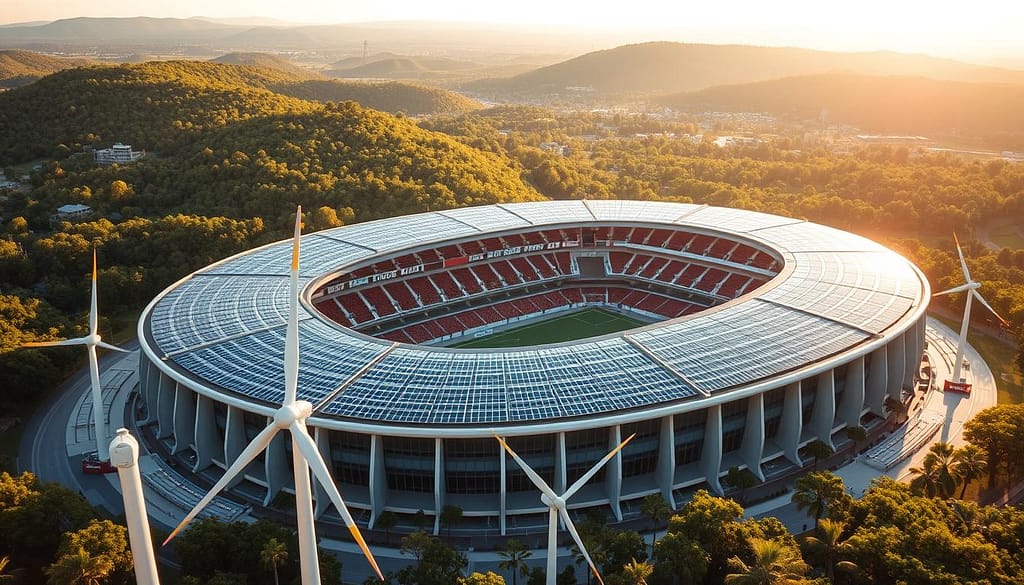
Imagine if every LeBron dunk could power a jumbotron. Spoiler: it basically can. Sports venues are now powered by renewable energy, just like a Steph Curry three-pointer. Solar arrays and AI-driven grids are changing the game.
From Basketball Courts to Race Tracks: Renewable Energy Playmakers
The Phoenix Suns’ Footprint Center has 1,700 solar panels. They generate enough energy to power 750 homes a year. That’s like Devin Booker sinking 500,000 threes in a single game.
But why stop at basketball?
Case Study: Bahrain Circuit’s 6.5MW Solar Gambit
While Max Verstappen’s Red Bull hits 220 mph, Bahrain International Circuit’s solar farm produces 6.5 megawatts. That’s enough energy to power every espresso machine in Monaco during Grand Prix weekend. The secret? A solar power in sports and entertainment strategy that’s sharp.
Emerson’s SCADA system monitors energy flows like Moneyball tracks RBIs. It’s like the Draymond Green of energy monitoring. Sacramento’s Golden 1 Center uses weather data and ticket sales to predict energy needs.
This isn’t just about saving polar bears. It’s about winning. When your stadium generates more energy than a Taylor Swift concert consumes, you’re not just cutting costs—you’re rewriting the rulebook. And honestly? The view from the nosebleeds just got a whole lot brighter.
Top Examples of Arenas Reducing Consumption
In the world of energy efficiency, some arenas are leading the way. They’re using innovative methods to cut down on carbon emissions. These venues are turning waste into valuable resources and using advanced LED lighting.
Gold Standard Venues Leading the Charge
The Golden 1 Center in Sacramento is a powerhouse of solar energy. It gets 85% of its power from solar panels. This means it could power Taylor Swift’s entire Eras Tour and have energy left over for nachos.
The Footprint Center in Phoenix is a champion of waste reduction. It aims to send zero waste to landfills. This goal is as exciting as a game-winning shot.
Paris 2024’s Plastic-to-Podium Transformation
The Paris Aquatics Centre is a recycling marvel. It uses recycled Evian bottles to make its 5,000 seats. This shows that sustainability can be as impressive as winning an Olympic gold medal.
Now, let’s talk about LED lighting:
| Venue | LED Tech | Energy Savings |
|---|---|---|
| Fiserv Forum (Milwaukee) | Dynamic color-shifting | 40% reduction |
| Olympiastadion (Berlin) | AI-powered scheduling | 52% reduction |
Behind the scenes, arenas use advanced technology. They have sensor networks that adjust energy use quickly. This is like a high-stakes heist, but for saving energy.
Role of Fans and Community Partners
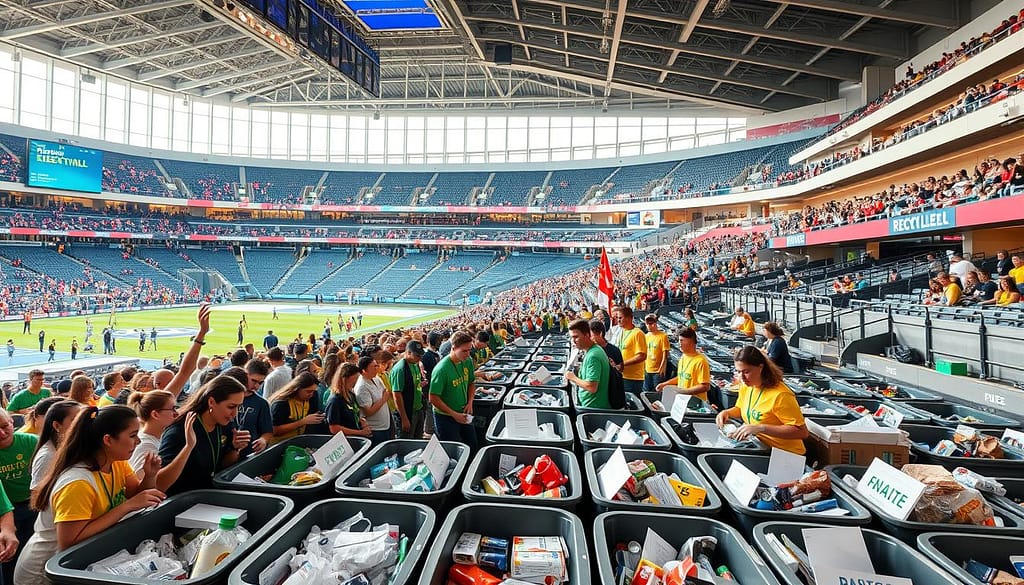
Imagine if every tailgate party became a climate action rally. That’s the secret to modern stadium sustainability. It’s about turning fans into eco-warriors with recycling bins and rail passes. While politicians debate, sports fans are quietly leading the way in environmental action.
From Tailgates to Climate Gates: Fan Power Dynamics
When 70,000 Packers fans started separating waste at Lambeau Field, they showed something big. They proved that mass behavior change doesn’t need congressional approval. This cheesehead revolution shows three important things about environmental sports partnerships:
- Fans support green initiatives that feel like part of the game-day experience
- Small actions, like proper waste sorting, add up in big crowds
- Teams using local pride do better than generic eco-campaigns
Europe is also making a big impact. Germany’s Euro 2024 transportation plan is a game-changer. Their strategy:
| Initiative | Impact | Fan Benefit |
|---|---|---|
| Free rail tickets with match tickets | 67% reduction in flight emissions | No airport security lines |
| Local brewery partnerships | 90% regional sourcing | Fresher pints, bragging rights |
| Volunteer cleanup rewards | 12 tons of waste diverted | Exclusive merch access |
Paris 2024 leads in community engagement. Their Olympic suppliers list is like a farmers market directory – 80% of food vendors within 150 miles. It’s not just about carbon footprints. It’s about making stadiums economic engines for local businesses.
So why do sports recycling programs do better than national policy? It’s simple: When the home team asks you to recycle, it’s not bureaucracy. It’s clubhouse rules. And nobody wants to let down the squad.
Funding and Technology Grants
Watergate showed us that following the money reveals the biggest scandals. In carbon-neutral sports, the drama isn’t on the field. It’s in the boardrooms, where grants and tax breaks turn stadiums into climate heroes. Forget locker-room pep talks; the real game-changers are IRS incentives and UEFA’s €32 million Climate Fund. Let’s look at how financial moves turn stadiums into eco-warriors.
The Greenbacks Behind Green Stadiums
Modern stadiums are changing their budgets, not just their lightbulbs. Germany’s climate effort is a €32 million investment in solar panels, not beer sales. Tax incentives are the financial steroids of this green revolution, with governments giving stadiums great deals. Paris 2024’s $150 million for green infrastructure is a big step towards a new sports legacy.
| Funding Source | Amount | Key Project | Impact |
|---|---|---|---|
| UEFA Climate Fund | €32M | Germany’s stadium retrofits | 40% energy reduction by 2025 |
| Emerson Grants | $10M | Smart grid installations | 5.2M kWh saved annually |
| Paris 2024 Initiative | $150M | Olympic solar infrastructure | 100% renewable event power |
These aren’t just handouts. Stadiums using grants see returns quickly. Emerson’s $10 million smart-grid investment could cut energy costs by 22%. This could fund many organic hot dog vendors. Plus, going green is great PR.
So, what’s next? It’s like the renewable energy sports version of the Tour de France. Everyone’s winning with tax credits. As stadiums aim for net-zero, the real winners are the planet. Who knew money could make stadiums greener?
The Future of Energy in Sports
Imagine walking into a stadium where the walls photosynthesize like giant spinach leaves and parking spaces moonlight as Tesla Powerwall villages. This isn’t sci-fi fan fiction – it’s the near future of renewable energy sports infrastructure. Solar panels were big in the 2010s, but tomorrow’s venues are planning something new.
Beyond Solar: Next-Gen Stadium Tech
The Paris 2024 Olympic legacy plans show prototypes that would impress Bruce Wayne’s R&D team. Think:
- Algae-infused façades converting CO2 into biofuel during halftime shows
- Kinetic flooring systems harvesting crowd movement energy (a new use for wave celebrations)
- Modular battery arrays turning parking lots into neighborhood microgrids
Emerson’s latest pilot project in Chicago shows stadiums could soon be urban power plants. Their test venue generated 118% of its energy needs last season. It’s like a basketball team scoring 150 points per game.
AI-Driven Energy Management on the Horizon
Forget basic smart thermostats. The real game-changer is AI systems that predict energy needs like Bill Belichick anticipates opposing plays. These neural networks analyze everything from nacho oven heat signatures to VIP suite champagne chiller demands.
| Technology | Traditional Systems | AI-Optimized Approach |
|---|---|---|
| Load Prediction | Historical averages | Real-time weather + ticket sales analysis |
| Energy Storage | Fixed battery cycles | Machine learning market price arbitrage |
| HVAC Control | Zone-based schedules | 3D crowd heat mapping via CCTV |
The true magic happens when these systems start talking to city grids. Imagine a stadium during a blackout: not just keeping lights on, but powering nearby hospitals like an athletic version of Iron Man’s arc reactor. We’re talking about venues that don’t just reduce their carbon footprint – they become neighborhood-sized erasers.
Conclusion
The final scoreboard for energy efficiency in sports arenas shows more than just LED lights. Venues like Chase Center and Mercedes-Benz Stadium are leading the way. They use solar power and rainwater to cut down on carbon emissions.
These arenas are not just playing games; they’re fighting for the planet. They’ve turned wind turbines and geothermal systems into key players. This shows that sports can be a force for good in the fight against climate change.
Target Center and Allianz Field are like Tom Brady in sports. They’re aging well and setting records. Fans have also become energy-conscious, showing that sports and sustainability can go hand in hand.
Stadiums have shown that fossil fuels are not the answer. With new technology and funding, they’re moving towards a greener future. This is a big win for the environment.
These sports palaces have become climate labs. They’re not just playing games; they’re making a difference. They’re using every trick in the book to reduce energy use.
The message is clear: sports can lead the way in sustainability. With innovation and determination, we can make a big impact. It’s time to keep pushing for a greener future.