
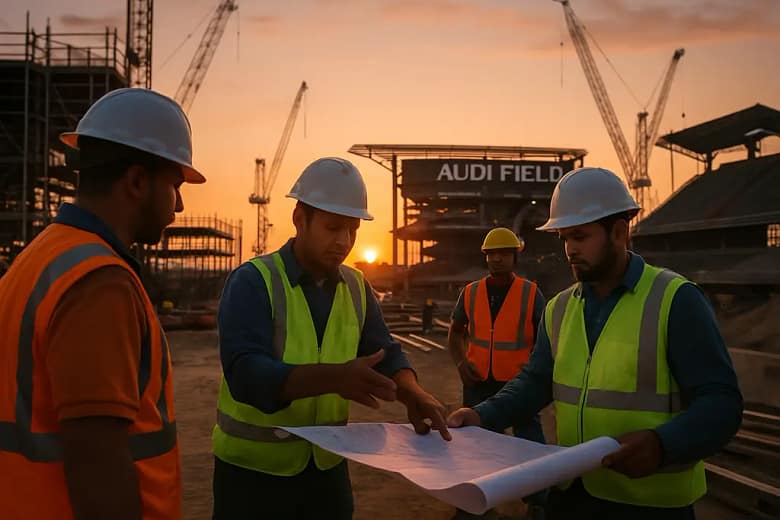
Audi Field Expansion is no longer just a facility proposal for D.C. United. As of October 19, 2026, it has become a test of how Washington, D.C. links soccer growth, construction labor, public money, and community benefits. The plan described in the research would add about 8,000 seats, put a roofed, climate-controlling structure over the venue, and rely on a mix of team and District funding.
The sports case is straightforward: a larger, more weather-protected Audi Field could support more D.C. United matchday demand and more non-MLS event dates. The civic case is harder. Public investment must be judged against worker protections, ticket access, neighborhood impacts, and whether promised benefits can be verified after construction ends.
As an advocate for athlete rights and sustainable sports practices, I view the labor agreement as more than a political step. Stadiums depend on athletes, workers, supporters, and surrounding neighborhoods. If any one group carries too much risk while another captures most of the gain, the project needs stronger oversight before public dollars are committed.
Audi Field Expansion And Public Investment
The proposal entered the legislative process on July 17, 2026, when D.C. Council Chair Phil Mendelson introduced a bill connected to the stadium upgrade. A D.C. Council hearing was scheduled for October 23, 2026, which means the plan had not yet cleared public review as of October 19, 2026. That timing matters because public testimony can shape labor, housing, fan access, and repayment terms before final approval.
What The July Bill Set In Motion
Under the proposal described in the research, the total project cost is estimated at $620 million. The District would provide $300 million, while D.C. United would provide $360 million and cover any cost overruns. The public contribution would be made through $60 million capital budget installments over five years, with stadium-generated revenue from tickets, concessions, and merchandise helping repay the city investment.
For Audi Field Expansion supporters, that repayment structure may sound cleaner than a one-time subsidy. It still requires scrutiny. Stadium revenue depends on event volume, attendance, pricing, and operating terms. Public officials should not treat projected receipts as guaranteed money until the assumptions are clearly tested in public.
Seats, Roof, Events, And Public Risk
The roof is central to the sports and business argument. The study commissioned by D.C. United estimates that a roofed venue could host up to 114 events annually, including concerts and other sporting events. That figure should be read as a planning estimate, not as an outcome already achieved.
The extra 8,000 seats also raise fan-value questions. More capacity can reduce scarcity for major matches, but it does not automatically make attendance more affordable. If public money supports the project, elected officials should ask for clear reporting on ticket availability, community access programs, and event-day transportation pressures. Public spending on stadiums should be judged by what residents can see and measure, not only by ribbon-cutting promises. That same public-value test appears in Back2Tap’s analysis of venue trade-offs.
Labor Support And Community Benefits
D.C. United and the Baltimore-DC Metro Building Trades finalized a Project Labor Agreement on September 14, 2026, covering the proposed construction work. According to the research, the agreement sets terms for worker pay, benefits, and hiring. That labor support gives the club a stronger argument that the project would create organized construction work under defined standards.
Audi Field Expansion Labor Terms
The September PLA gives Audi Field Expansion supporters a concrete labor point to present during the hearing process. Project Labor Agreements can help reduce uncertainty on large builds by setting wage, benefit, and work-rule expectations before construction begins. In a stadium setting, that matters because schedule pressure can be intense once a club, league, and event calendar start planning around a target opening.
Labor protections should not end at construction. The research notes that earlier sports-related D.C. development used labor terms around hospitality work. If the new project increases events, the District and team should be asked how food service, security, cleaning, event operations, and other stadium jobs will be treated. Year-round use should not mean unstable year-round work.
Housing, Retail, And Matchday Jobs
The proposal also includes redevelopment of adjacent land into retail and housing, with some affordable housing units included. The research does not provide a unit count, income targets, or enforcement terms, so those details remain uncertain from the available record. That uncertainty is not a reason to dismiss the community-benefits claim, but it is a reason to require clear written commitments before approval.
Soccer clubs often speak about community identity, and D.C. United has a real supporter culture at Audi Field. Community identity, though, must include residents who do not buy season tickets. If public land, public infrastructure, or public revenue is involved, the benefits should reach workers and neighbors as well as matchday customers. Broader community-focused coverage across the same publishing network, such as that seen on Banat Zayed, reflects why public projects need clear local stakes and plain-language accountability.
D.C. Stadium Oversight Standards

Washington has recent experience with sports development agreements, which should help officials ask sharper questions. The original Audi Field project was tied to the 2014 Soccer Stadium Development Act. D.C.’s official project page says the development included a Labor Peace Agreement with UNITE HERE Local 25 for hospitality jobs and a Project Labor Agreement requirement for construction Audi Field project record.
What Earlier Audi Field Deal Shows
That earlier framework is useful because it shows that labor standards were not an afterthought in the stadium’s first public process. The proposed expansion should be held to at least the same level of clarity. If construction labor receives defined protection, service workers should not be left to vague assurances. If the venue adds more dates, workers will be central to the fan experience and to the stadium’s economic claim.
There is also a sustainability angle, but it should be handled carefully. The research supports claims about a roof, year-round use, housing, retail, and event capacity. It does not provide verified environmental performance targets. Any claim about green benefits should therefore wait for documented energy, materials, transit, and emissions plans. Sustainable sports infrastructure is not just about building more; it is about proving that the public cost produces durable civic value.
RFK Engagement Raises The Bar
The RFK Campus is a separate project, but it sets a public-engagement benchmark for major sports development in D.C. On September 24, 2026, officials transmitted a master plan that cited more than 30 engagement events and more than 3,000 written comments during a 45-day public comment period RFK Campus plan release.
That level of participation matters for the Audi Field debate. A public hearing is valuable, but a single hearing cannot carry the full weight of neighborhood concerns, labor standards, housing commitments, transportation effects, and fan access. The District should expect a public record that is easy to review, not scattered across presentations and verbal assurances.
What Audi Field Expansion Must Prove
Audi Field Expansion must prove four things before District leaders treat it as a public-interest project. First, the labor agreement should protect construction workers while opening real pathways for local hiring. Second, the housing and retail commitments should be specific enough for residents to track. Third, the repayment plan should be stress-tested against realistic event and attendance scenarios. Fourth, fan access should be part of the public debate, because public money should not only produce premium inventory.
The proposal may offer D.C. United a stronger venue and the city a busier event site. Those are valid sports-business goals. They are not enough by themselves. A stadium expansion backed by public funds must give workers, athletes, supporters, and neighbors a fairer share of the value they help create.