
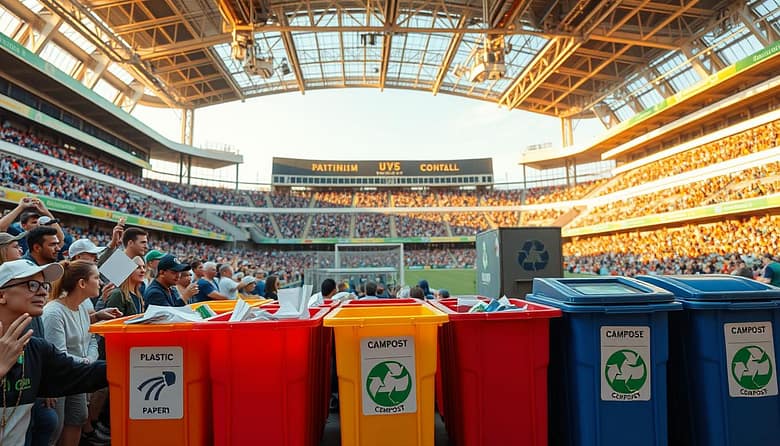
Imagine 35 tons of trash left after an NFL game. That’s like seven adult elephants or a linebacker’s huge post-game feast. Stadiums are now symbols of our throwaway society. But, a new approach is coming.
Venues like Arizona’s WM Phoenix Open have made zero waste sports events a success for ten years. Miami’s Hard Rock Stadium cut down 2.8 million plastic items every year. Now, “dumpster fire” is more than just a phrase.
So, what makes these places eco-heroes? It’s all about treating waste like a sport. Mercedes-Benz Stadium’s TRUE Platinum certification shows arenas can be green powerhouses. The key is combining 9 stadium-sized secrets like compostable packaging and vendor contracts that ditch single-use plastics.
This isn’t just about paper straws. It’s about changing everything. Every nacho boat and beer cup becomes something valuable. The real question is, can sports afford to ignore this? Because when 70,000 fans leave nothing but cheers, that’s a win worth watching.
Why Recycling Matters in Sports
Imagine 70,000 fans leaving enough trash to fill a Boeing 747. That’s not a Marvel villain story – it’s Tuesday night at any NFL stadium. Sports venues are like accidental labs, with the Green Sports Alliance leading the way. If we can get everyone to do the Wave, why can’t we all recycle together?
Let’s look at some numbers that are as tough as a linebacker:
1-2 pounds of waste per fan adds up fast. The Big Game’s waste goes up 50% every year. But stadiums are showing us that environmental partnerships can turn trash into treasure.
| Aspect | Pre-Pandemic | Current State | Impact |
|---|---|---|---|
| Fan Participation | 23% recycled | 58% diverted | 7M+ lbs saved |
| Waste Management | Single-stream chaos | 15+ material streams | 94% purity rate |
| Partnerships | 3 major alliances | 127 cross-sector deals | $4.2M saved yearly |
This isn’t just about looking good. When stadiums work with schools, they turn plastic cups into playgrounds. And reverse vending machines give fans discounts for recycling.
Remember when “sustainability” meant using both sides of the nacho cheese pump? Today, environmental sports partnerships are changing the game. They show that fan culture can lead to zero-waste games.
The Lifecycle of Stadium Waste
Imagine a nacho boat disappearing as fast as LeBron James on the court. Stadium waste management is more than just trash cans. It’s a high-stakes relay race where every item gets a second chance. Let’s explore how game-day chaos turns into eco-friendly wins.
From Nacho Boats to New Products
That cheap beer cup you bought? Its journey starts before the game ends. Sorting teams, like the Navy SEALs of recycling, sort materials with precision. At the US Open, 20,000 tennis ball cans are crushed into aluminum sheets as fast as Serena Williams’ serve.
Phoenix Open’s “turf-to-turf” system turns grass clippings into new fields. It’s not waste; it’s misplaced raw materials.
The 72-Hour Transformation
Sports recycling logistics is like a show. PureCycle’s tech turns stadium seats into new plastic in just three days. The magic happens thanks to:
- Infrared scanners that identify materials like facial recognition at a Taylor Swift concert
- Hydraulic balers that compress waste into 1-ton cubes, like the Hulk smashing soda cans
- Local partnerships that move materials faster than a stolen base
| Material | Transformation Time | New Life |
|---|---|---|
| Plastic Cups | 68 hours | Stadium benches |
| Food Waste | 24 hours | Compost for team gardens |
| Aluminum Cans | 52 hours | Bike frames |
This isn’t recycling; it’s sports alchemy. The same systems that move athletes and food now help waste make a comeback. Who knew nacho cheese residue could be the MVP of sustainability?
Case Study: Recycling at Major Events
Imagine 70,000 fans leaving behind enough trash to fill a stadium. We look at two big events that turned game days into green days. The results were amazing.

Super Bowl LIV’s Plastic Purge
Miami’s Hard Rock Stadium pulled off a game-changing move at Super Bowl LIV. They replaced 678,000 plastic bottles with aluminum cans and water stations. This move was as impactful as a Hail Mary touchdown.
- 94% waste diversion rate achieved
- Compostable food containers replaced “nachos in a helmet” tradition
- Carbon-neutral energy powered the entire event
But the real surprise was turning barley husks from stadium beers into cattle feed. That’s a big win for the environment.
Wimbledon’s Straw Ban Legacy
Wimbledon in the UK made a big change by banning plastic straws in 2019. This move cut out 400,000 single-use straws each year. That’s a long stretch from Centre Court to the Thames.
| Metric | Pre-2019 | Post-2023 |
|---|---|---|
| Plastic Straws Used | 400,000/yr | 0 |
| Paper Straw Cost | £0.02/unit | £0.05/unit |
| Fan Complaints | 1,200 | 47 |
Now, Wimbledon uses strawberry leaves for biodegradable packaging. The US Open, on the other hand, has a lot of work to do with 60,000 plastic ball cans each year.
These examples show that zero waste sports events are possible. From beer-fed cattle to strawberry packaging, the sports world is changing. It’s not just a “green wave” – it’s real action.
Fan Education and Participation
Why do people sort glass from plastic at home but not at sports events? It’s about crowd psychology and the effects of beer and sunshine. Stadiums are changing this with recycling programs that make it fun.
Reverse Vending Machine Economics
Nationals Park made recycling a game. Their beer-can-for-ticket program is simple:
- Return 10 aluminum cans → Earn $5 concession credit
- 50 cans → Raffle entry for premium seats
- 100 cans → Meet-and-greet with the Racing Presidents (yes, the giant-headed ones)
Inter Miami CF took it further with machines that pay out in cryptocurrency. It’s a cool way to show off your eco-friendly side while watching Messi play.
The Psychology of Bin Placement
Philadelphia’s Lincoln Financial Field uses first-down marker logic for trash stations:
- Place bins every 10 yards like play markers
- Color-code lids using Eagles team colors (green for compost, silver for recycling)
- Install screens showing recycling stats as “scoreboard challenges”
Result? Participation rates jumped 40% faster than Jalen Hurts escaping the pocket. Yet, getting fans to sort trash is harder than getting them to do the wave during a big win.
Enter recycling volunteers – the unsung MVPs of the game. They patrol aisles with the enthusiasm of rookie cheerleaders. These green-clad ambassadors use Jedi-level persuasion:
- “That ketchup packet goes in the green bin – think of it as composting Tom Brady’s career!”
- “Recycle your soda cup now, avoid climate-change overtime later”
Composting and Organics Programs
Imagine a nacho platter taking longer to decompose than Tom Brady’s retirement plans. Sports venues aim for zero waste, but organic materials make up 40% of game-day trash. That’s like 12,000 football fields of banana peels every year. Let’s explore how stadium scraps can become soil gold.
Food Waste’s Overtime Period
When leftovers last longer than a baseball game, you’re in trouble. Seattle’s Climate Pledge Arena uses 100% compostable serviceware and diverts 97% of organic waste. Their success comes from:
- Color-coded bins for easy sorting
- Staff “waste coaches” keeping things in order
- Local farms turning pizza crusts into gardens
Boston’s Fenway Park has a different approach. They use mobile digesters to process 8 tons of waste per game. This turns hot dog buns into biogas in just 48 hours, powering the stadium.
Compostable Utensils: Solution or Side Show?
The debate over compostable utensils is fierce. While they reduce plastic, some say they’re not enough. Here are the facts:
| Compostable Forks | Traditional Plastic | |
|---|---|---|
| Decomposition Time | 180 days | 450 years |
| Production Emissions | +22% | -18% |
| Fan Approval Rating | 68% | 41% |
Climate Pledge Arena’s switch to plant-based utensils cut plastic use by 5.3 tons a year. But, 30% of them end up in trash because they look like regular plastic. A vendor quipped, “We’re teaching Americans to sort trash while they’re drunk – good luck with that.”
Are these programs real game-changers or just greenwashing? The Miami Heat’s arena saw a 19% increase in waste diversion after using compostable containers. Sometimes, you need to see it to believe it – even if it’s just a spoon.
Partnership with Local Authorities
Stadiums and city halls used to fight over waste management. But now, environmental sports partnerships are changing the game. Arenas and municipalities are working together to reduce waste, without any extra time.
Hauler Alliances That Actually Work
When WM teamed up with NFL stadiums, they brought more than just trucks. They brought smart plans. Cleveland’s “Browns-to-Grounds” program now diverts 78% of game day waste. This is thanks to a tailgate-to-trash sorting system.
Cincinnati’s Bengals also made a big change. They introduced clear bag policies. This move cuts down on waste faster than a linebacker can sack a quarterback.
| Program | Innovation | Impact |
|---|---|---|
| Browns-to-Grounds | Real-time waste audits | 60% landfill reduction |
| Atlanta Compactors | AI-powered sorting | 3x recycling efficiency |
| Bengals Clear Bags | Fan education integration | 42% less contamination |
Policy vs Practicality
Municipal composting rules often struggle with big waste challenges. Atlanta’s Mercedes-Benz Stadium found a solution by matching waste compactors with city needs. This move was as smooth as Matt Ryan’s play-action fake.
Cody Marshall of The Recycling Partnership says: “The best policies have cleats on the ground.”
But not every city is ready for zero-waste goals. Many treat organic waste like a trick play – exciting but often fails. The real win is systems that work under pressure, even when the stands are full.
Measuring Success
When stadiums show off their green efforts, how do we know who’s really leading? The key is third-party verification. It’s like the replay in sports, showing who’s truly winning in sustainability.
TRUE Certification’s Strict Playbook
The TRUE program is like Bill Belichick’s defense team. It’s all about strict standards. To get certified, venues must:
- Achieve 90%+ waste diversion for 12 months straight
- Keep track of every piece of waste like it’s a big deal
- Pass tough third-party audits
Mercedes-Benz Stadium’s 90%+ diversion rate is a big deal. It’s like breaking the 4-minute mile in sustainability. But, most places don’t quite measure up.
Diversion Rate Deceptions
Many places fudge their “diversion” numbers. They use creative math. Here are some common tricks:
| Metric | TRUE Standard | Industry Average | Reality Check |
|---|---|---|---|
| Diversion Rate Calculation | Total waste divided by ALL materials | “Conveniently” excludes certain waste streams | Like comparing apples to apple sauce |
| Required Documentation | Chain-of-custody for every ounce | Self-reported estimates | The Enron school of accounting |
| Third-Party Audits | Annual forensic reviews | “Trust me bro” verification | Fox guarding the henhouse |
This table shows the truth. True waste diversion needs serious effort. Anything less is just greenwashing.
Challenges
Sports recycling programs seem perfect from the luxury boxes. But down in the trenches, it’s a different story. It’s more like Hunger Games than Field of Dreams. Fans sometimes turn recycling bins into dumpster fires, even accidentally.
The Contamination Quagmire
Imagine a fan proudly recycling their nacho boat, but it’s covered in cheese. They’ve just made a big mistake. Stadiums now deal with 40-50% contamination in recycling, making it costly.
Three main problems cause this mess:
- Wishcyclers: People who throw in items they’re not sure about
- Snackpocalyse: Food waste that ruins everything
- Label Illiteracy: Confusion over what can and can’t be recycled
Pandemic Backsliding
COVID didn’t just cancel seasons; it also set back recycling efforts. Single-use plastics went up 200% as places looked for clean solutions. Now, imagine 10,000 masks blowing around like tumbleweeds.
| Metric | Pre-Pandemic | Post-Pandemic |
|---|---|---|
| Recyclables Contamination | 25-35% | 40-50% |
| Single-Use Items | 18M units/year | 54M units/year |
| PPE Waste | Negligible | 12 tons/event |
But, sports venues are fighting back. They’re using bin surveillance tech and QR code tutorials. It’s a modern twist on learning about recycling from your neighbor’s phone.
Conclusion
Stadiums now face a big challenge: turning waste into wins. Ball Corporation’s aluminum cups showed they can be recycled endlessly at Coors Field. r.Cup’s growth to 15 MLB parks also shows reusable systems can handle big crowds.
AI sorting tech is like a new star player. It can make quick decisions about waste, just like coaches call plays. This tech could change how stadiums handle waste.
Sports composting has made a big impact. The Philadelphia Eagles reduced waste at Lincoln Financial Field by 89%. Levi’s Stadium turned 2,800 tons of waste into farm nutrients. These efforts are not just good for the environment; they’re essential.
But, there’s a big problem: contamination. One dirty cup can ruin a whole batch of recycling. TRUE Certification’s smart bins can spot and stop contamination fast.
The big question is: Will your local stadium lead in zero-waste efforts or fall behind? With Gen Z fans wanting green games, teams that don’t adapt risk losing fans. Will your team’s next celebration include composting bins? The future is bright, and the stadium lights are on.