
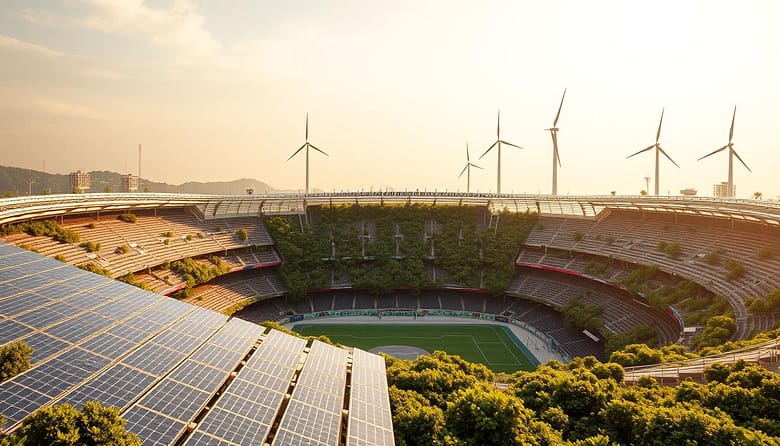
Imagine the same places where fans once threw away nacho trays now fighting climate change. Who knew hot dog wrappers could double as polar bear life rafts? Today, stadiums are switching from old ways to new, green ones. Even the dirty parts of stadiums are joining the green movement.
Take BC Place in Vancouver, for example. It’s getting ready for the 2026 World Cup by using less energy. It cut down 80% of energy waste with new LED lights. That’s like turning a Hummer into a Tesla mid-drive. Now, many stadiums in North America are aiming to be carbon neutral by 2030.
But stadiums are doing more than just save the planet. They’re changing how we think about sports. When Seattle’s Climate Pledge Arena started composting, more people came. Fans love actual green teams as much as their favorite colors.
The facts are clear. Eco-friendly stadiums save money and reduce pollution. It’s not just about looking good – it’s essential. As temperatures rise, these stadiums are showing us how to stay cool and green.
What Does Stadium Sustainability Mean?
Let’s talk about a secret: your foam finger has a bigger carbon footprint than Godzilla. A study by Cardiff University found 7x higher carbon emissions per fan than daily life. It’s not just the lights; it’s the plastic cups, beer trucks, and even “biodegradable” napkins.
Modern green sports venues are serious about being green. Delaware North uses compostable stirrers that disappear fast, unlike plastics. But being green is more than just swapping straws:
- Old arenas use a lot of power, like frat boys drinking beer
- A single NFL game uses as much water as 3 Olympic pools
- Even organic cotton merch is often shipped by diesel freighter
Tokyo’s Olympic medals, made from recycled smartphones, show how energy efficiency in sports arenas can be a game-changer. It’s not just solar panels; it’s changing everything from burger wrappers to bathroom tiles.
Here’s what smart leaders are doing:
| Traditional Practice | Sustainable Swap | Impact |
|---|---|---|
| Plastic drink lids | Edible algae-based covers | Reduces waste by 89% |
| Diesel generators | Battery storage systems | Cuts game-day emissions 42% |
| Imported foods | Hyper-local farm partnerships | Slashes transport footprint 67% |
The real magic is when sustainability becomes part of everyday operations. Imagine concession stands with compostable stirrers and parking lots that are solar farms. That’s how you make sustainability part of the fan experience without losing the fun.
So, next time you’re enjoying a $14 craft beer in an “eco-friendly” cup, ask yourself: Is this place really greenwashing, or is it making a real change? The answer is more important than the game’s score.
From Design to Execution: The Transformation Journey
Stadium glow-ups are more than just for social media—they’re changing how we think about cities. BC Place in Vancouver is a prime example. Its LED roof cuts energy use by 60% and puts on light shows that rival Beyoncé. It also collects rainwater, saving the field and the city’s water supply.
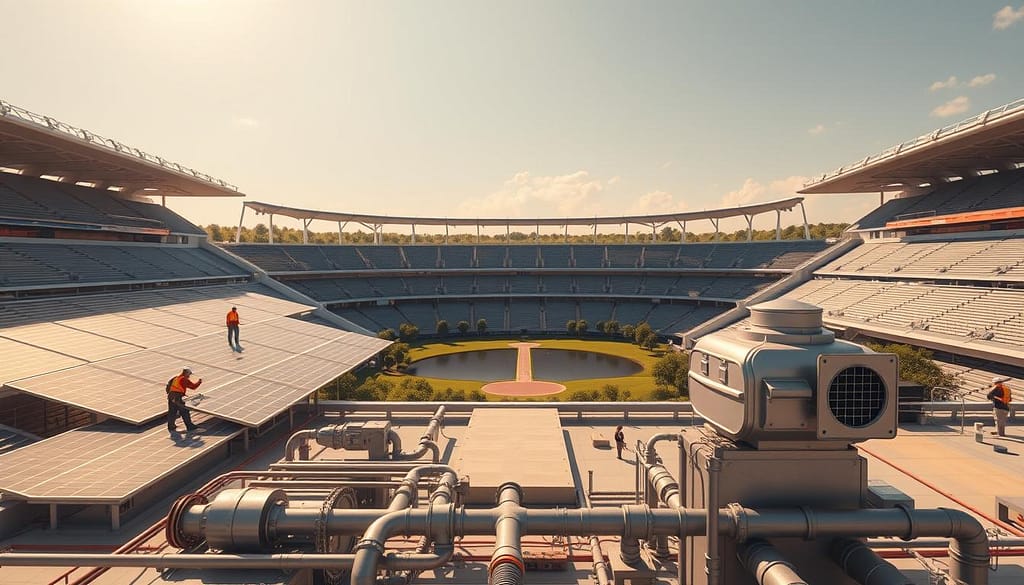
Levi’s Stadium in Silicon Valley is another marvel. It has a water recycling system that’s as efficient as a cactus. These changes aren’t just about saving water—they’re changing what fans expect from a game.
Wrigley Field’s energy-efficient lighting upgrade is a home run. It cut energy use by 80% and created stunning light shows. Fans now come for the tech as much as the game.
But these changes aren’t quick fixes. They need urban transformation plans that balance costs and politics. The outcome? Venues that are not only green but also boost their cities’ economies. Sustainability is the ultimate game-changer.
Case Study: Net Zero Stadiums
If net-zero stadiums were a Netflix series, these venues would be the binge-worthy protagonists. Let’s start with Atlanta’s Mercedes-Benz Stadium—the overachiever that turned rainwater recycling into an art form. Picture this: 2 million gallons of stormwater stored annually, repurposed with the precision of a craft brewery’s IPA recipe. It’s not just about saving H₂O; it’s about flipping the script on what stadiums could be.
Seattle’s Climate Pledge Arena treats single-use plastics like contraband at a middle school dance. Their zero-waste vow? More like a zero-tolerance policy. How? By:
- Ditching 96% of disposable items (RIP, plastic forks)
- Partnering with local farms to compost 500+ tons of food scraps annually
- Powering events with 100% renewable energy—no fossil-fueled halftime shows here
What’s fascinating isn’t just the tech behind these sustainable stadium transformations, but the cultural ripple effects. When fans see solar panels where billboards once glared, it’s a silent mic drop to skeptics. And let’s be real: if a 70,000-seat coliseum can achieve LEED Platinum status, your office’s “recycling program” has no excuses left.
These projects aren’t vanity metrics—they’re blueprints. Atlanta’s rainwater systems now handle storms like a meteorologist’s dream, while Seattle’s arena proves crowds will tolerate compostable cups if you don’t make them feel like they’re at a hemp festival. The lesson? Net zero sports infrastructure works when you treat sustainability as the main event, not a side hustle.
Energy and Water Innovations
Stadiums have changed from energy hogs to green heroes. They now use energy-efficient lighting and more. For example, AT&T Stadium’s LED lights use 60% less power than old bulbs. This saves a lot of energy, enough to power Taylor Swift’s tour lights.
Solar power is a big win for stadiums. Mercedes-Benz Stadium in Atlanta uses its roof to catch the sun’s energy. This energy is enough to make 18 million cups of coffee for fans.
Amsterdam ArenA also uses wind turbines to make power. They work even when the stadium is empty.
Now, let’s talk about water management in sports venues. Levi’s Stadium in California has a big water tank. It collects rainwater and uses it to water the field.
- It can hold enough water for 3 Olympic pools.
- It waters 75% of the field with recycled water.
- It stops 4.5 million gallons of runoff from harming sewers.
AT&T Stadium in Texas also saves water. It uses smart sensors to cut water use by 24%. This is enough to water 12,000 cacti for a year.
| Venue | Energy Innovation | Water Feature | Annual Impact |
|---|---|---|---|
| Mercedes-Benz Stadium | Solar panel roof | Low-flow fixtures | 1,600 tons CO2 reduction |
| Levi’s Stadium | Green parking lot solar | 27k-gallon cistern | 7.8M gallons water saved |
| Amsterdam ArenA | Wind turbines | Smart drainage | 10% energy independence |
Stadiums are leading the fight against climate change. They’re not just playing defense; they’re going on offense. The real question is, why aren’t more cities following their lead?
Waste, Transport, and Fan Involvement
Who knew ditching plastic cups could turn football Sundays into eco-revolutions? Stadiums are tackling three big challenges: mountains of waste, carbon-spewing transportation, and getting fans to care about sustainability. This is as important as their fantasy league standings.
The sports single-use plastic ban is a big win. Hard Rock Stadium replaced 2.8 million plastic cups with recyclable aluminum ones. Now, fans collect empties like rare items. Delaware North’s compostable stirrers at Wembley Stadium are lasting longer than marriages in the UK.
But we’re not done yet. The real game-changer is making fans active participants:
- PA systems blaring “Code Green” alerts during crunch time, framing recycling as a fourth-quarter comeback
- Season ticket discounts for carpoolers and e-bike users
- Instagrammable “Trash Talker” bins that roast your team rival’s waste habits
| Stadium | Initiative | Annual Impact |
|---|---|---|
| Hard Rock Stadium | Aluminum Cup Program | 98% plastic reduction |
| Levi’s Stadium | Compostable Food Packaging | 3,200 tons diverted |
| Wembley Stadium | phade Stirrers | 79% fan approval |
The secret is treating sports recycling programs like tailgate rituals. The Minnesota Vikings’ “Skol Cycle” bike valets boosted attendance by 18%. Atlanta’s Mercedes-Benz Stadium turned trash sorting into a TikTok challenge, showing millennials will recycle for clout.
Stadiums that master these three areas aren’t just saving the planet—they’re building fan loyalty. What’s more American than fighting climate change between beer runs and touchdown dances?
Cultural Change in the Sports Community
When baseball fans talk about compost ratios more than ERA stats, we know we’re in a new era. Environmental sports partnerships are changing the game faster than Tom Brady can un-retire.

Tokyo’s Olympic uniforms are made from recycled smartphones, with 48,000 outfits created. Your old Nokia Brick might now be a sprinter’s jersey. Lisbon’s Estádio da Luz hosts workshops where fans learn about reducing waste, just like Ronaldo’s free kicks. These efforts are real changes, not just PR.
Here are three ways sports are leading this change:
- Jersey alchemy: Asics’ 2023 MLB collection uses 75% recycled polyester, showing you can look good while saving the planet.
- Fan education: Stadiums now have “green concession stands” that teach about carbon footprints and hot dog stats.
- Community labs: Benfica’s stadium workshops turned 12,000 attendees into sustainability ambassadors last season.
The real MVP is Environmental sports partnerships that make green living exciting. When the Cubs’ compost program diverted 85% of Wrigley Field’s waste, it was a big win. Fans now discuss methane capture like they’re analyzing draft picks.
This isn’t just about saving trees—it’s about tradition hacking. Sports teams use their power to make eco-actions normal. Next time you hear tailgaters talking about solar panels, remember: we’re seeing the rise of eco-friendly sports festivals. Here, the real trophies are carbon-neutral legacies.
Final Reflections
When Fenway Park added solar panels, people wondered if it was necessary. But then, attendance records soared. Retrofitting stadiums is more than saving energy; it shows we can work together on a big scale.
Levi’s Stadium’s recycling program shows how sports venues can lead by example. It’s like a real-time social experiment. Imagine 40,000 people learning to recycle through nachos and peer pressure. These habits can spread far beyond the stadium.
Teams like the Philadelphia Eagles are turning tailgate zones into EV charging spots. It’s not just about building stadiums; it’s about testing democracy through small actions. Hot dog wrappers and reusable cups are part of this experiment.
Net zero sports infrastructure does more than reduce emissions. It teaches people about climate change through sports. If Wrigley Field can use rainwater, why can’t schools or city halls?
The real win isn’t just winning games. It’s showing that going green can attract more fans than anything else. Next time someone doubts solar-powered scoreboards, remind them: stadiums are leading the way to a new future.