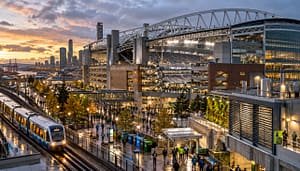
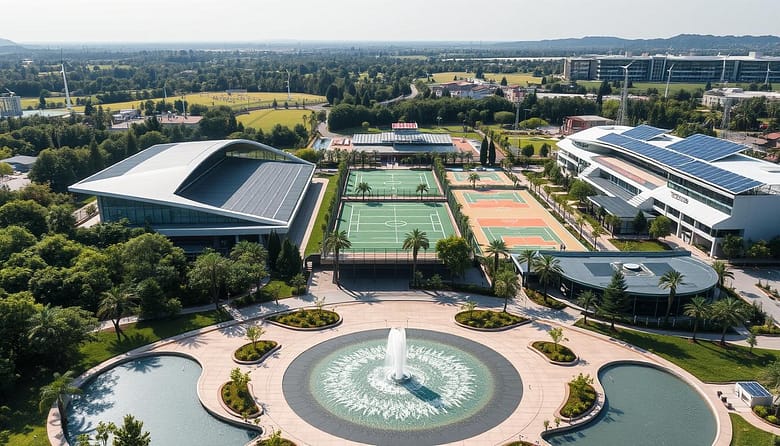
Imagine a 50,000-seat arena that uses water like it’s going out of style. Now picture its smarter version, one that uses water wisely and innovates like Silicon Valley. This is the future of hydration-conscious sports infrastructure, where every drop is precious.
The University of British Columbia is not just training athletes. Their rec center saves enough water to fill 100,000 Stanley Cups each year. They use low-flow showers that save more water than a car wash. Paris 2024’s aquatic center runs on solar power and rainwater, showing how sports venues can be eco-friendly.
This isn’t just about saving water. It’s about reducing waste in sports. Venues are using reclaimed water and solar power. They aim to be more eco-friendly than cactus gardens.
The big question is: Can these water-smart venues make wastefulness a thing of the past? In the game of sustainability, there’s no overtime.
Water Challenges in Athletics
Why do sports stadiums use so much water? It’s because of old infrastructure. Leaky pipes and ancient plumbing systems cause big water problems.
UBC’s Thunderbird Stadium toilets use a lot of water, 18.9 liters per flush. That’s a lot, even more than the WaterSense standard. But, upgrading can save a lot of money. The Department of Energy saved the University of Minnesota $412K by making improvements.
| Water Guzzler | Old System | Smart Upgrade | Annual Savings |
|---|---|---|---|
| Toilets | 18.9L/flush (UBC) | 4.8L/flush (WaterSense) | 14 million liters |
| Irrigation | Dumb sprinklers | Soil moisture sensors | $412K (DOE project) |
| Landscaping | Thirsty Kentucky bluegrass | Xeriscaped turf | 60% reduction |
Partnerships are making a big difference. Universities, tech firms, and agencies are working together. They’re creating drought solutions sports fans love.
Smart irrigation systems now use weather data to adjust water flow. Xeriscaping is also changing the game. It turns fields into drought-resistant areas, like Bermuda grass that uses less water.
Conservation Technologies: Irrigation, Bathrooms, and More
Stadiums used to compete for the loudest fireworks and shiniest screens. Now, they focus on water intelligence. It’s not about fantasy leagues anymore. It’s about tech that saves every drop, like a Super Bowl-winning play.
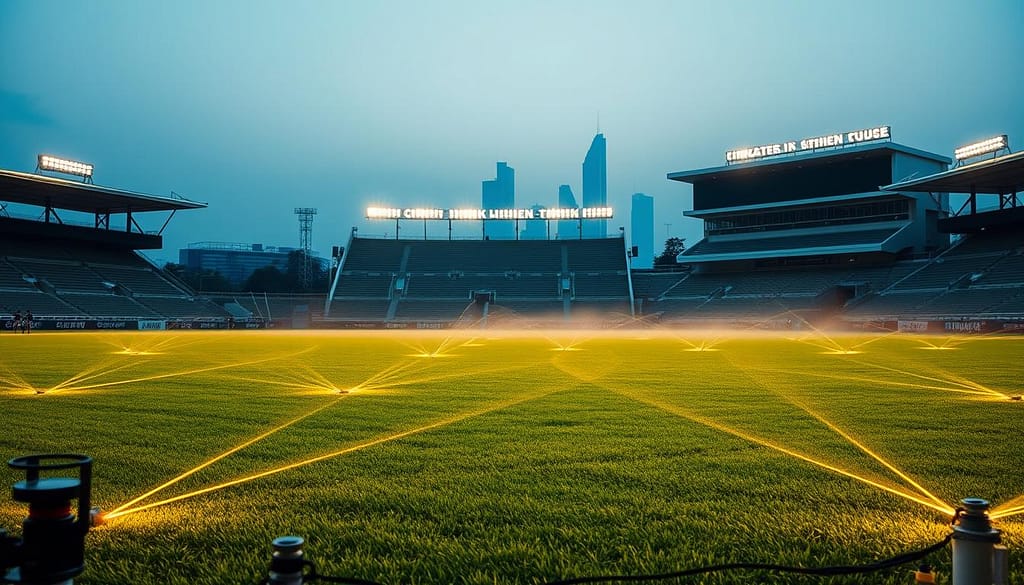
When Grass Gets Genius-Level IQ
Smart irrigation is far from your grandpa’s sprinkler system. It uses NASA-grade soil sensors to check moisture levels with incredible precision. Phoenix Stadium’s field has these sensors to:
- Figure out exactly how much water it needs
- Match watering with weather forecasts
- Show real-time turf conditions
This tech cuts water use by 63%. That’s enough to fill 2.5 Olympic pools every year. It’s like Moneyball for water management.
Bathrooms That Outsmart Physics
Waterless restrooms are changing stadium plumbing like Tesla changed gas stations. UBC’s sensor-activated urinals are a great example:
- They use zero water with biodegradable filters
- Motion sensors track when they’re used
- They save 4.2 million liters of water each year
Phoenix Stadium goes even further with compostable toilets. They turn waste into fertilizer. It’s a big step towards being eco-friendly.
These innovations show stadiums can save water without losing fan experience. The real win? When halftime stats include gallons saved, not just touchdowns.
Leading Venues: Who’s Setting the Bar?
While your neighborhood basketball court wastes a lot of water, modern stadiums are changing the game. Let’s look at two stadiums that show you can save water and host big events.
The Golden 1 Center in Sacramento is a water-saving superstar. It has a 26,000-gallon rainwater harvesting system that’s super efficient. This system helps save 45% of water, making it drier than a comedian’s jokes during halftime.
In Atlanta, Mercedes-Benz Stadium is a water-saving hero. It has a LEED Platinum certification that shows it’s serious about saving water. Here’s what they’ve done:
- They save over 680,000 gallons of water every year with smart irrigation.
- They’ve cut water usage in restrooms by 47% with low-flow fixtures.
- They even have a stormwater capture system that’s like a local reservoir.
| Venue | Location | Water-Saving Features | Annual Savings | Certification |
|---|---|---|---|---|
| Golden 1 Center | Sacramento, CA | Roof catchment system, xeriscaping | 10M+ gallons | LEED Gold |
| Mercedes-Benz Stadium | Atlanta, GA | Smart irrigation, bioswales | 15M+ gallons | LEED Platinum |
| Chase Center | San Francisco, CA | Graywater recycling, drought-tolerant plants | 7M+ gallons | LEED Silver |
These venues are not just saving water; they’re setting a high standard. The big question is, when will your local arena start saving water too?
Partnerships with Local Water Agencies
When sports leagues and water agencies team up, it’s a win-win. The NFL and EPA joined forces for Super Bowl LVII. They used Waterless restrooms to save 100,000 gallons of water and cut down on waste.

But what happens outside the stadium? Let’s look at three key partnerships:
| Partner | Initiative | Impact | Year |
|---|---|---|---|
| NFL Green + EPA | Super Bowl LVII waterless facilities | 100k gallons saved | 2023 |
| UBC + Metro Vancouver | Stormwater recycling system | 40% reduction in field irrigation | 2021-present |
| Phoenix Water + Cardinals | “Poop to Power” biogas conversion | Stadium energy needs cut by 15% | 2022 |
Phoenix is leading the way with its “Poop to Power” project. They turn stadium waste into biogas, cutting energy needs by 15%. It’s a smart move towards energy independence.
These partnerships are a mix of science and showmanship. Sports venues need credibility, so they team up with experts. And when public support is needed, mascots and merchandise come out. Together, they’re changing water management fast.
Community Awareness Campaigns
Move over foam fingers – the real stadium status symbol is now a reusable bottle with your team’s logo. Sports teams are using fan psychology to promote conservation. They’re making saving water as exciting as the game.
The Philadelphia Eagles’ “Green Legion” program is changing the game. They’ve saved 8 million gallons of water through audits and “hydration station” mapping. Envision Racing has also made big changes, turning climate pledges into real actions.
Vegas has turned water tracking into a game. The Golden Knights’ app lets fans compete in H₂O-saving challenges for rewards. It’s all about beating others while waiting for food.
Three key strategies making waves:
- Gamified apps with real-time impact metrics (because millennials need receipts)
- Branded waterless restrooms merch that’s actually cool (RIP plastic ponchos)
- VIP experiences for top conservers (meet the mascot? Try meeting the irrigation engineer)
The secret sauce? According to behavioral science research, these campaigns tap into our love of competition and instant rewards. Teams are now investing in rainwater harvesting education. When the Padres’ “Splash Zone” became a drought education hub, it was a game-changer.
Next time you’re at a game, look at the concourse. It’s not just beer lines – it’s interactive exhibits on rainwater harvesting. Sports are leading the way in civic engagement.
The Broader Impact on Cities
Imagine your hometown stadium playing a big role in saving water. With 240 million annual visitors at U.S. sports venues, they’re not just for games. They’re key players in making cities more water-resilient.
Minneapolis found a smart way to save water. They give discounts to venues that use smart irrigation systems. It’s like earning points for saving water, making it a win-win for everyone.
Here are three ways sports venues are changing water policy:
- Economic incentives instead of strict rules
- Sharing data on water reuse systems with the public and private sectors
- Testing new water-saving technologies in real settings
Atlanta’s Mercedes-Benz Stadium cut water use by 47%. It’s now a model for drought solutions sports. Their success is helping other cities in the Sun Belt save water too.
Cities get to show they’re serious about climate action. Venues get great PR. In Minneapolis, taxpayers save $12 million a year. It’s a win for everyone, showing that saving water can beat any obstacle.
Recommendations
Stadiums can’t save the planet alone, but they can make a big difference. Start by valuing every drop of water. Install rainwater harvesting systems to turn rain into a resource, not a problem.
Chase Center in San Francisco uses 40% less water thanks to this approach. Follow FIFA’s 2026 Water Neutrality plan to protect water like it’s precious.
Upgrade to WaterSense-approved fixtures to save water fast. Make LEED certification as common as foam fingers at games. The NHL shows it’s possible to cut water use without hurting the game.
Replace old fixtures with new ones to save water. Use waterless restrooms to cut down on water use. Phoenix’s State Farm Stadium reduced water use by 60% this way.
Work with local utilities like the Vegas Golden Knights did. Turn parking lots into green spaces that help recharge aquifers. Use apps to make fans compete in water-saving challenges.
Install QR codes on cups to teach people about water recycling. Make every halftime show a chance to teach about water conservation.
This isn’t just about saving the planet. Cities like LA and Miami face droughts. When stadiums lead, others follow. Waterless restrooms and rainwater harvesting are key to survival.
It’s time to make every venue a water-saving hero. The playbook is ready. Who’s ready to play?