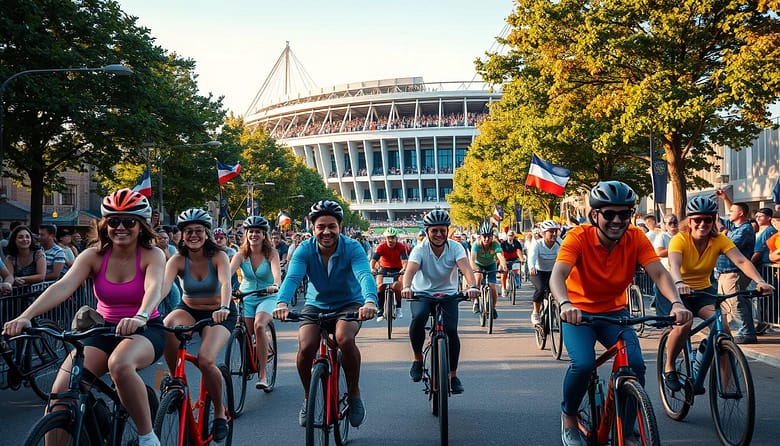
Imagine a stadium full of energy, not stuck in traffic. Bike-to-Game Programs aim to make this dream come true. They encourage fans to ride bikes to big games, making it eco-friendly.
These efforts tackle two big city problems: traffic jams on game days and pollution. By pushing for cycling, cities and teams can make events better for everyone.
The main goal is to change how fans get to games. They want more people to ride bikes instead of driving alone. For cities and sports teams looking ahead, this is key.
This movement is like the success of Strider Bikes. They inspire kids to love biking and be active. Bike-to-Game Programs aim to build a lasting culture of biking among sports fans.
This article will dive into how these programs work. We’ll look at the details and strategies that make active transport a success for fans, health, and the environment.
Why Mode Shift Matters
Changing how fans get to the stadium is more than just solving traffic problems. It’s a big change in how we think about mobility. Moving from cars to bikes has many good effects. Every bike ride helps make our cities better.
The environmental benefits are clear and strong. Cars on game days pollute the air more. But, if fans bike, it makes the air cleaner.
Think of all the cars not on the road. This means less pollution and cleaner air for everyone. It’s a big win for our health.
Biking to the game is good for fans’ health right away. It turns travel time into exercise. Fans feel better and more ready for the game.
This active travel makes fans healthier. It makes going to the game more fun. It also encourages people to bike more often.
The benefits for the city are huge. Big events usually make traffic worse. But biking helps keep traffic moving.
It also means less need for parking lots. These lots take up a lot of space and cost a lot. Bikes need much less space, making room for other uses.
Neighborhoods around the venue are quieter and safer. There’s less noise and fewer accidents. It makes a better place for everyone.
It’s like the success of Strider Bikes. They changed how people think about bikes. Bike-to-game programs can do the same for getting to events.
Mode shift is key for modern cities. Studies show it’s important for sustainable cities.
It solves many problems at once. It’s good for the environment, health, and the city. The goal is to make moving people better and smarter.
Route Planning and Safety
Deciding to cycle to the game is a big choice. Fans weigh safety and ease against driving. Your campaign’s success depends on making the bike route as safe and easy as driving.
Start by teaming up with the city’s transport department. Together, you’ll check the current bike lanes and find missing links. This helps plan better routes.
Next, improve the bike lanes. This might mean adding permanent lanes or setting up temporary ones for events. Using barriers to create safe lanes is also effective. The goal is to make a safe path to the stadium.
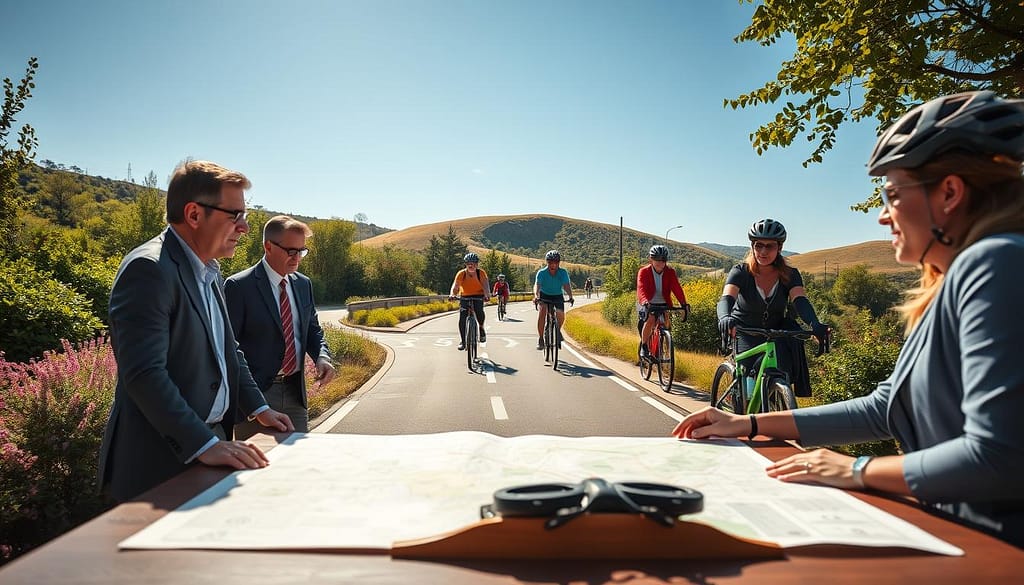
Clear signs are key. Fans shouldn’t need a map app. Signs should show how far to the stadium and highlight bike paths. This makes riders feel more confident.
The table below shows how to make a safe bike route for game days.
| Safety & Accessibility Feature | Implementation Method | Primary Benefit |
|---|---|---|
| Dedicated Bike Lanes | Permanent striping or temporary protected lanes using barriers. | Physical separation from vehicle traffic, reducing collision risk. |
| Enhanced Wayfinding Signage | Large, event-branded signs at key decision points and intervals. | Eliminates navigational confusion, ensuring a stress-free ride. |
| Temporary Traffic Calming | Event-day speed bumps, road narrowings, and increased police presence. | Slows vehicle traffic in key zones, creating a safer shared environment. |
| Pre-Event Rider Education | Online safety videos and “rules of the road” guides sent with tickets. | Empowers riders with knowledge, promoting predictable and safe behavior. |
More than just infrastructure, safety includes well-lit routes and group rides. A quick safety lesson on helmets and rules of the road helps all cyclists.
When cycling feels safe and easy, more fans do it. This leads to a secure bike valet service. It shows your commitment to fan safety and the environment. This approach supports community empowerment through sports.
By making cycling easy and safe, you encourage more fans to ride. The route becomes a promise of safety, changing how fans travel to your events.
Bike Valet, Parking, and Perks
Just like Strider Bikes changed how toddlers move, a great Bike-to-Game program focuses on fans. It aims to make biking the best choice, not just an option. This means providing services that are as easy as driving.
A top-notch bike valet service is key. Fans get help at a special drop-off spot. Their bikes are parked safely and they get a ticket to pick them up later. This service is as good as valet car parking, making biking a better option.
For those who park their bikes themselves, the facilities must be top-notch. They should be covered, well-lit, and have strong locks. They need to hold lots of bikes without getting too crowded, keeping things safe and organized for active transport.
- Discounted Concession Vouchers: A $5 discount at the main stand makes biking worth it.
- Exclusive Entry Gates: Special gates for cyclists mean shorter lines and a quicker entry.
- Loyalty Points Programs: Scanning your ticket at the valet earns points for team gear, keeping fans engaged all season.
These perks make biking to the game a fun part of the event. They show the team values biking as a choice. When the benefits are clear, biking becomes the top way to get to the game. This approach, focusing on the customer, makes biking a tradition.
Partnering with Cities and Advocates
Municipal partnerships and community advocacy turn a simple promotion into a lasting mobility movement. The success of any Bike-to-Game Program depends on strategic alliances. You can’t do it alone.
Start by working with city planning and sustainability offices. They often aim to reduce vehicle miles and boost active transport. Aligning your program with these goals makes it a city priority. This can lead to support like bike lane signs, easier bike valet services, or funding for green initiatives.
Local cycling advocacy groups are also key. They’ve earned trust in the cycling community over time. Their support is a powerful marketing tool. They can help with volunteers, promote events, and offer insights on safe routes.
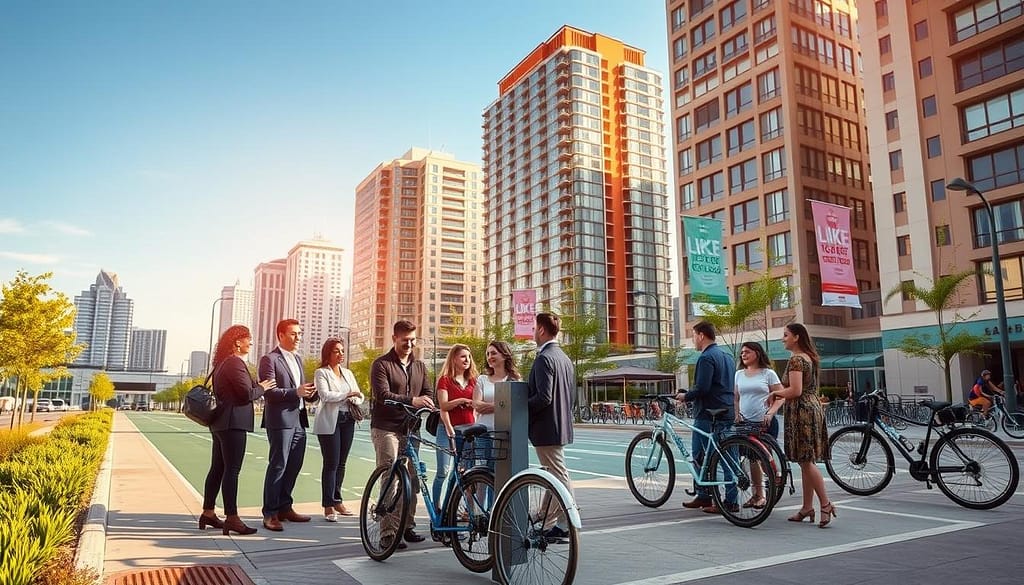
Engaging these groups requires tailored storytelling. A city official cares about data on congestion and health. An advocate wants to see the cycling community grow and infrastructure improve. Create a story for each, like a PR campaign targets specific reporters. Show how the program helps their mission.
The table below outlines a clear stakeholder analysis to guide your outreach and messaging strategy.
| Stakeholder Group | Primary Interests | Potential Support Offered | Key Messaging Focus |
|---|---|---|---|
| City Sustainability Office | Meeting carbon reduction targets, improving air quality, public health metrics | Grant funding, official program endorsement, data sharing | Quantifiable emissions saved, reduced strain on public transit and parking |
| City Transportation/Planning Dept. | Traffic congestion management, infrastructure utilization, safety data | Temporary traffic calming, wayfinding signage, route safety audits | Peak traffic diversion, demonstrating demand for cycling infrastructure |
| Local Cycling Advocacy Group | Growing rider numbers, securing safer streets, community building | Volunteer recruitment, promotional outreach, rider surveys | Empowering the cycling community, creating new riders, long-term advocacy wins |
| Regional Public Health Agency | Increasing physical activity, reducing chronic disease risk | Health initiative co-branding, wellness messaging, possible funding | Active lifestyle promotion, connecting sports fandom with community health |
By showing shared values and benefits, you move from asking for help to a true partnership. The goal is to get lasting support and a sense of shared ownership. When the city and advocates feel like partners, they will support your program year after year.
This model makes your program more than a marketing stunt. It becomes a key part of the city’s mobility ecosystem, leading to lasting positive change.
Emissions Accounting and PR
A well-run bike valet service does more than reduce traffic. It also gives you hard data on carbon reduction and a great PR story. This turns a community event into a real win for the environment.
Accurate emissions accounting is simple in three steps:
- Track Participation: Count every cyclist who uses the secure parking service.
- Calculate Avoided Miles: Use surveys or local data to estimate the vehicle miles traveled (VMT) those trips replaced.
- Apply Carbon Metrics: Convert the avoided VMT into pounds of CO2 saved using standardized EPA or local transportation emission factors.
This final number—your total carbon reduction—is more than a statistic. It is the cornerstone of your success story.
Proactive communication turns data into influence. Teams should pitch their verified results to journalists covering sustainability, sports business, and community news. A campaign focused on tangible achievements cuts through the noise.
The media’s interest is huge. Take PR Volt’s work for Strider Bikes as an example. Their campaign, centered on active lifestyle impact, secured 203 top-tier media hits and generated a staggering 108 million total impressions. This shows how powerful a data-driven story can be.
This level of exposure does more than generate headlines. It builds lasting brand equity as an environmental leader. It attracts new sponsors who value green initiatives. Most importantly, it inspires more fans to join the movement, creating a virtuous cycle of growth for your bike valet program.
Season-Long Incentive Programs
Season-long incentive programs unlock the full power of bike-to-game campaigns. They go beyond single-game promotions. They aim to make lasting changes in how fans get to games.
Start a points-based loyalty system. Give fans points for each game they bike to. They can trade these points for team gear, food, or tours of the stadium.
Use digital leaderboards to add a competitive edge. Highlight the most cycling fans. Plan themed bike days to keep the excitement alive and build a community.
Strider Bikes shows the lasting impact of such programs. They’ve sold over 4 million bikes worldwide. Their success comes from ongoing engagement, not just one-time events.
A well-planned program makes biking a regular part of game-day. It offers clear rewards for choosing eco-friendly travel. This makes biking a reliable choice for getting to games.
Season-long incentives bring real benefits. They reduce traffic and pollution all year. They boost public health and strengthen fan connections. A dedicated program ensures your investment in biking pays off for years.