The Commanders Stadium proposal at the RFK campus is best evaluated as a sports project first, then as a civic development test. A football venue sets the rhythm: game days, security perimeters, broadcast demands, team operations, fan movement, and neighborhood pressure all shape whether the surrounding district works after kickoff and after the final whistle.
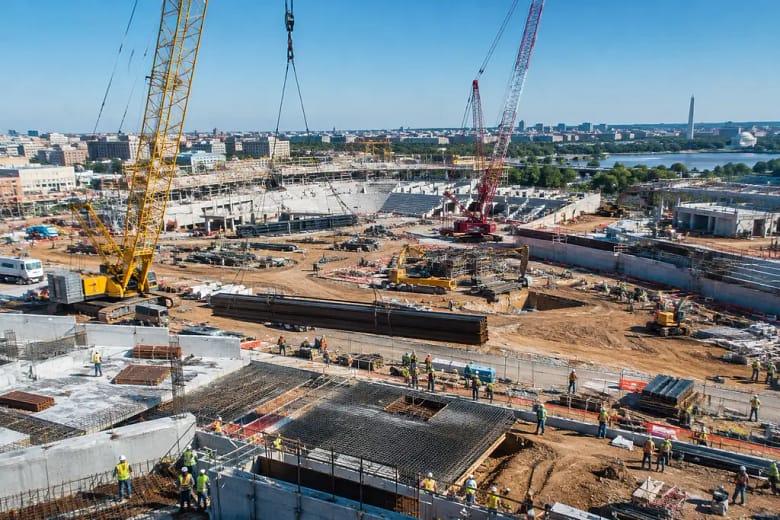
The available public facts point to a project with rare scale. The Washington Commanders have committed $2.7 billion in private investment toward the new stadium project, while the full mixed-use development cost has been estimated at $3.7 billion to $3.8 billion. Construction is scheduled to begin in the first quarter of 2027, vertical construction is scheduled for spring 2027, and full completion is slated for 2030.
Those numbers make RFK a serious case study, but not yet a proven template. A model for future sports districts must show more than big spending and attractive site plans. It must protect public value, serve fans without isolating neighbors, and give athletes and workers a setting that is planned around real event operations rather than presentation boards.
Commanders Stadium And The Mixed-Use Test
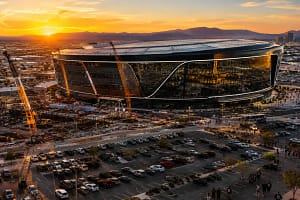
The stadium itself is planned as a 65,000-seat roofed venue, with the ability to host sports, arts, cultural events, and more than 200 activations annually, according to the project’s submission materials. That matters because a stadium district succeeds only if it can avoid becoming a place used heavily on a small number of NFL dates and lightly the rest of the year.
Commanders Stadium Project Scale
The proposed event mix gives the district a clearer sports-business logic. Annual attendance is estimated at 1.4 million visitors once operational, supported by 28 to 29 ticketed stadium events per year plus more than 100 private and other events. For a venue of this size, those non-NFL dates are not a side issue. They affect staffing, transit planning, field and floor conversion, loading access, neighborhood noise, and the commercial case for nearby retail.
From an athlete-rights perspective, year-round use should be judged carefully. More event days can support public value, but they also require clear operating standards for surfaces, back-of-house space, recovery areas, medical access, and safe movement of team personnel. The research provided does not give those details, so the responsible evaluation is cautious: the venue’s event capacity is promising, while the athlete-facing proof will depend on later design and operations documents.
Why Site Share Matters
The RFK project spans 180 acres. The stadium would occupy around 11% of the site, or 16% when parking is included, leaving more than 80% available for mixed-use and other amenities, according to the District’s financial analysis. That site share is one of the strongest arguments for treating the plan as more than a stadium replacement.
If that remaining land becomes active housing, parks, retail, and hotel space, the district could avoid the single-purpose pattern that has limited many stadium areas. If it becomes dominated by traffic storage, closed plazas, or isolated event infrastructure, the wider public return becomes harder to defend. For readers tracking the step-by-step review of the site plan, Back2Tap’s earlier analysis of RFK campus progress fits directly with this question.
Public Cost, Private Money, And Phasing
The project’s scale creates two separate tests: whether the stadium can operate as a major sports venue, and whether the district can produce daily value beyond event dates. The research notes projected development costs of $8.0 billion across phases, split between $3.2 billion for the stadium over a three-year construction period and $4.8 billion for the surrounding mixed-use district over seven years.
What The Numbers Can And Cannot Prove
Large cost figures do not automatically prove public benefit. They show ambition, construction activity, and a significant private stake, but public leaders still need to measure outcomes that fans and residents can feel. Those include transit reliability after games, park access on non-event days, retail that serves residents as well as visitors, and housing commitments that are delivered rather than deferred.
The private investment commitment is meaningful because it places substantial project risk outside the public balance sheet. Still, stadium-centered plans often depend on public infrastructure, land decisions, zoning approvals, and long-term coordination. That is why public oversight remains central, especially in a district that aims to mix football, housing, hotels, retail, and open space on one campus.
Oversight After The September Hearing
The RFK Campus Master Plan was transmitted to the D.C. Council on September 24, 2026, and a public hearing was held on September 30, 2026. As of October 29, 2026, formal adoption was targeted before the end of 2026. That timing places the project in a decisive review period before the scheduled start of construction in early 2027.
Good oversight should be specific. Officials should ask how each phase protects neighborhood access, how event-day operations will be measured, how affordable housing delivery will be tracked, and how the stadium’s year-round schedule will affect transportation demand. Sports projects earn trust when promises are tied to milestones, not when benefits are left for later interpretation.
Housing, Parks, And Event-Day Pressure
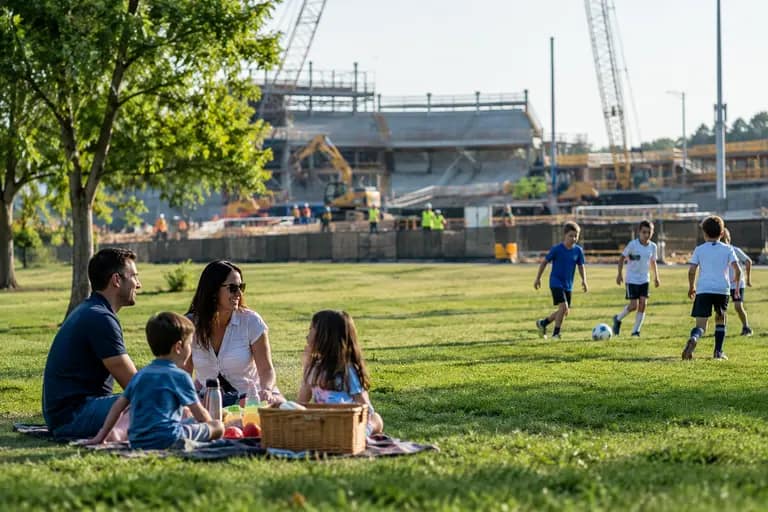
The proposed mixed-use district includes 5,000 to 6,000 new homes, with 1,500 to 1,900 affordable units. It also includes more than 1,200 hotel rooms, about 287,000 square feet of retail, and roughly 76 acres dedicated to parks and open green space. Those figures give the project a wider civic purpose, but they also raise the planning stakes.
Homes Beside A Football Venue
Housing next to a major NFL venue can work only if residents are treated as year-round users, not as background to event traffic. Affordable housing targets are especially significant because they can help public land support broader access to the city. Yet targets need binding schedules and transparent reporting. A stadium district can widen opportunity, but only if the housing portion keeps pace with the sports and commercial pieces.
The Commanders Stadium plan is notable because the stadium footprint does not consume most of the campus. That creates room for parks and homes, which is the basic condition needed for a mixed-use district. The harder task is sequencing: if the stadium opens before surrounding public spaces and housing are ready, the area could function for years as an event zone rather than a balanced urban district.
Mobility As A Sports Issue
The master plan includes a new road network, two parking garages, improved transit access, and stronger neighborhood connections aimed at reintegrating the campus with surrounding areas. Those details are not secondary to football. They affect whether fans arrive safely, whether workers can commute without unreasonable burden, and whether residents can move through their own neighborhood on event days.
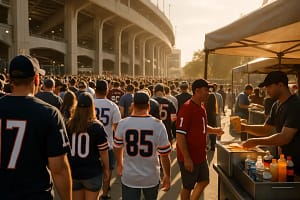
Sports venues often discuss fan experience inside the building, but the experience starts earlier: the walk from transit, the queue after a night game, the parking exit, and the ability of emergency vehicles to move. In that sense, the RFK plan should be measured by peak-event stress as much as by renderings. A related site in the same network, Triple T Powersports, reflects how sports infrastructure discussions can extend across venue types and mobility cultures.
Commanders Stadium Project Standards For Future Districts
If the RFK plan becomes a reference point for future mixed-use sports developments, it should be because it met clear standards over time. The Commanders Stadium proposal has the ingredients: a major private investment, a roofed 65,000-seat venue, a large campus, housing targets, park acreage, retail, hotels, and a phased schedule. Ingredients, though, are not outcomes.
- Sports performance: the venue should support safe, high-quality operations for football and other events without overloading athletes, workers, or surrounding streets.
- Public accountability: housing, parks, transit, and infrastructure commitments should be tracked against dates and public reporting.
- District value: the campus should function on ordinary weekdays, not only during major games and concerts.
- Sustainable practice: open space, transit access, and phased development should reduce reliance on event-only land use.
For future cities studying RFK, the lesson is not that every team needs a larger district. The lesson is that a stadium can be part of a wider public plan only when the sports calendar, land use, mobility, housing, and oversight are designed together. That is the standard the Commanders Stadium project now has to meet.