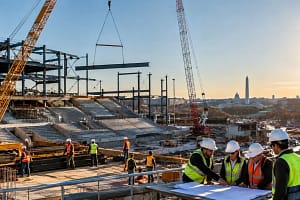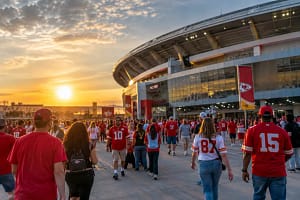

Rays stadium impact is no longer an abstract debate after Hillsborough County Commissioners approved the stadium deal on August 28, 2026. The project now sits at the intersection of baseball, tourism, public finance, and civic trust. For Rays fans, the sports-first question is simple: can a new indoor ballpark make the club’s home schedule stronger while creating event activity that benefits Tampa beyond 81 regular-season home dates?
The available projections are large, but they should be read with care. AECOM projected in April 2026 that the proposed stadium and surrounding Stadium District would generate $75 billion in economic output over 30 years, including $19 billion in wage earnings and an average of 7,400 direct jobs annually, or 9,750 total jobs when indirect effects are included, according to WUSF reporting. Those figures set the scale of the claim. They do not, by themselves, settle whether the public return will match the public risk.
That distinction matters in sports. Stadiums are not only real estate projects; they are workplaces for athletes and staff, gathering places for fans, and public symbols tied to local identity. A responsible review has to protect those interests without treating every forecast as guaranteed.
Why Rays stadium impact Starts With Baseball Demand
The stadium proposal was built around a direct baseball need: the Rays’ lease at Tropicana Field in St. Petersburg ends after the 2028 MLB season, and the proposed Tampa venue was targeted to open by Opening Day 2029. That timeline gives the project a clear sports deadline. It also raises a practical test for ownership, local officials, and league stakeholders: the building must improve the game-day experience enough to strengthen attendance without assuming that early novelty will last indefinitely.
Rays stadium impact And The Attendance Test
AECOM’s attendance modeling suggested that a new stadium could lift average home-game attendance to about 20,500 per game in its first three years, roughly 20% to 25% higher than 2023-2024 levels. The same research notes cautioned that attendance would likely decline toward historical norms after the first-stage “honeymoon” period. That is the central Rays stadium impact question from a fan and team-health standpoint: does the venue create lasting demand, or does it mainly create a short early bump?
For a franchise that has often been discussed through stadium uncertainty, stability has real value. A permanent home can help with scheduling, sponsorship planning, premium sales, and regional identity. Yet attendance gains are earned through the baseball product, transportation access, ticket affordability, and trust that fans are not being priced out of the building they helped support.
Public Cost And Private Risk
Under the memorandum of understanding signed May 14-15, 2026, the stadium cost was estimated at $2.3 billion. The Rays were responsible for about $1.27 billion plus cost overruns, while public funding was capped at $976 million from Hillsborough County and the City of Tampa. That cost structure is central to any fair assessment. A public cap can protect taxpayers from some construction escalation, but public money still has opportunity costs.
For readers tracking the financing side in detail, a related Back2Tap review of the Rays stadium deal explains why caps, overruns, housing concerns, and fan-first accountability need to be measured through the life of the agreement, not only at the approval vote.
Sports Tourism Uses Beyond Baseball
The proposed Forever Home was described as a roughly 30,000-seat indoor facility and projected as the largest indoor event venue in the Tampa Bay region, with potential uses including concerts, graduations, championship sporting events, and year-round activity beyond baseball, according to the Rays’ own special-event renderings release. That indoor capacity is the core sports-tourism argument. Tampa would not be relying only on baseball attendance; it would be seeking a broader event calendar.
From a sports perspective, the most relevant non-MLB uses are events that already fit a 30,000-seat indoor setting: neutral-site college events, indoor championships, large school tournaments, wrestling, volleyball, gymnastics, basketball showcases, and regional fan festivals. The research supports the venue’s intended event flexibility, but it does not prove how many of those events Tampa will secure. That difference should remain clear in public discussion.
Event Calendar Potential
Sports tourism works best when events bring visitors who would not otherwise spend in the market. The research notes tied earlier ballpark estimates to direct spending of about $298 million gross per year in a stabilized year of operations, with about $217 million considered net new in Pinellas County. Because that figure was tied to a previous Pinellas location model, it should not be carried into the Tampa site without caution. The useful lesson is the method: separate gross spending from net new spending, and separate local substitution from outside visitor demand.
That method protects fans and taxpayers from inflated claims. If a family from Tampa spends at a ballpark instead of another local venue, the regional gain is different from a visiting team’s supporters booking hotel rooms, eating near the venue, and extending a trip. Good sports-tourism analysis should keep those categories apart.
District Development And Daily Use
The Stadium District projection was broader than the ballpark. AECOM estimated 7.6 million square feet of development over 30 years, including about 5.9 million square feet of mixed-use space such as apartments, retail, restaurants, and hotels, plus 1.7 million square feet of major office or district anchors. The fiscal impact to city, county, and state from confirmed sources was estimated at $2.2 billion over 30 years. Assessed property values for Phase 1 were projected to reach $1.4 billion by 2034 and $4.8 billion by 2058, excluding the stadium and college campus.
Those numbers support the claim that the plan is not only a ballpark plan. Still, mixed-use development should not be treated as automatic community benefit. Housing mix, access for service workers, local hiring standards, and transportation connections will determine whether the district serves game-day visitors, local residents, and stadium employees in balanced ways.
Accountability For Fans, Workers, And Public Value

As someone who believes athlete rights and sustainable sports practices belong in the same conversation as revenue projections, I see the Tampa project as a leadership test. If public dollars support a venue, the public deserves clear reporting on jobs, event bookings, traffic plans, accessibility, and long-term maintenance. Players and staff also deserve a facility that supports performance, safety, and year-round operations without treating labor as an afterthought.
Public reports should distinguish between construction jobs, permanent stadium jobs, district jobs, and indirect jobs. The AECOM projection of 7,400 direct jobs annually and 9,750 total jobs including indirect effects is significant, but residents should be able to see how those categories are counted. Wage quality matters as much as job quantity when a project is sold as a regional economic engine.
- Track annual attendance against the 20,500 early-year projection and later historical norms.
- Report event bookings by type, including sports events, concerts, graduations, and civic uses.
- Separate gross spending from net new visitor spending in public updates.
- Publish public-cost exposure, private overruns, and district tax performance each year.
- Measure access through transit, parking, ticket affordability, and disability accommodations.
Public education matters here. Fans often hear headline figures first and caveats later. Sites in the same network, including the related Wikiapp portal, can help readers compare public claims and reference points, but the accountability work still belongs to the officials and team leaders who approved and manage the deal.
Rays stadium impact For Tampa Sports Tourism
The fairest reading of Rays stadium impact is that Tampa gained a credible sports-tourism opportunity with real public-finance risk attached. The indoor design, 30,000-seat scale, and year-round event concept give the venue a stronger use case than a baseball-only facility. The district projections also show why officials viewed the plan as a long-term economic development project rather than a single-team venue.
But sports communities should resist treating projections as outcomes. The deal was approved on August 28, 2026; the proof will come through attendance, event bookings, net new visitor spending, wage quality, and transparent public reporting between now and the targeted Opening Day 2029. If Tampa leaders want this project to stand as a model, they should make the data easy to audit and the benefits easy for residents to see.
For the Rays, the assignment is just as clear. Build a home that supports the club, respects fans, and earns its place in Tampa’s sports economy through performance on the field and responsible operation off it.