
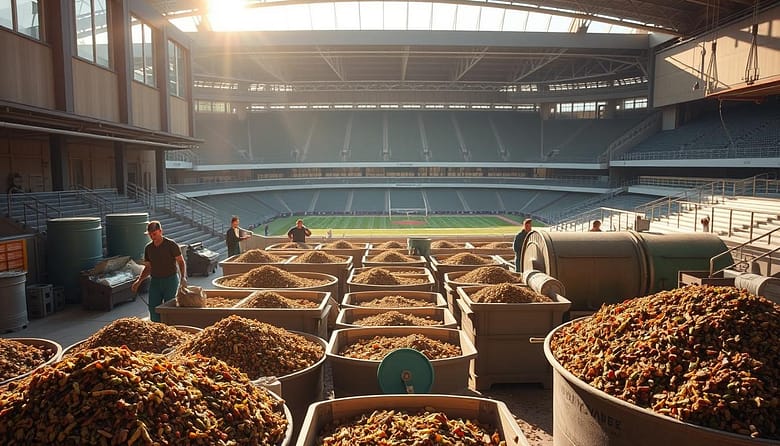
Imagine 60,000 fans cheering as a foul ball lands in stands filled with banana peels. Welcome to America’s new favorite sport, where stadiums are now soil superheroes. Instead of dumping trash, places like Truist Park turn 75% of waste into soil. It’s like magic, happening faster than a pitcher can lose a game.
So, how did this happen? It’s thanks to “Green Teams” and their compost bins. In Atlanta, the Braves team sorts waste like pros. Seattle’s Climate Pledge Arena aims for zero waste sports events. Even Allianz Field’s stormwater system uses compost to clean water, like a VIP checking IDs.
But let’s get real. These efforts aren’t just for saving the planet. They’re bottom-line MVPs. By turning trash into soil, stadiums save money fast. The question is, can your favorite team’s sports recycling programs beat the competition? The answer? The seventh-inning stretch just got a lot more interesting.
Understanding the Need: Food Waste in Sports
Imagine a stadium parking lot filled with 5,000 yellow school buses. Now picture each bus full of half-eaten hot dogs and stale popcorn. That’s the annual food waste sports problem we face – a Game of Cones where nacho cheese flows like wine and victory parades leave compostable confetti.
- Duke University’s stadium study found concession stands waste 27% more food during rivalry games (apparently, losing teams kill appetites)
- Super Bowl LVII’s 113 million viewers generated enough trash to bury a football field 10 feet deep – mostly single-use cups and sauce packets
- Minnesota United’s stormwater-to-toilet system saves 1 million gallons annually – proving beer-bellied fans can be eco-warriors
The sports single-use plastic ban movement is more than just a trend. When the Braves partnered with WestRock to turn peanut shells into pizza boxes, they scored a branding touchdown bigger than any walk-off homer. These environmental sports partnerships turn waste into PR gold – the kind that makes corporate sponsors line up like dollar hot dog night.
Need a playbook? Our food waste reduction guide for athletes shows how to turn stadiums from trash coliseums into circular economy arenas. Because in 2024, the real MVP is whoever figures out how to compost a pretzel the size of Rhode Island.
Notable Composting Programs
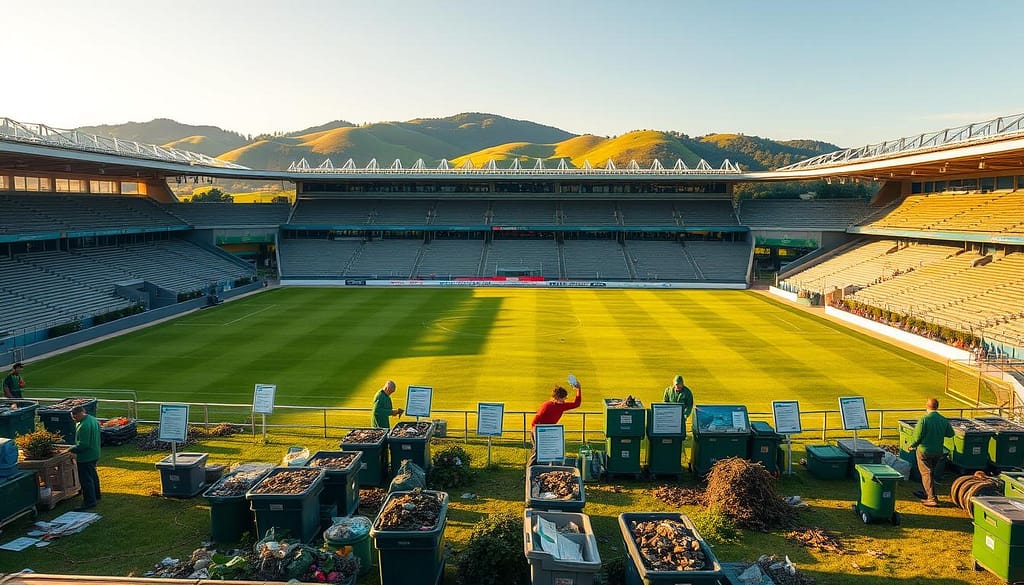
Stadiums are changing the game in waste management. Allegiant Stadium, home of the Las Vegas Raiders, is a prime example. During Super Bowl LVIII, they diverted 42 tons of compostables. That’s a lot of biodegradable forks, enough to build a giant cake for Tom Brady’s retirement party.
| Program | Location | Signature Move | Annual Impact |
|---|---|---|---|
| Allegiant Stadium | Las Vegas | Super Bowl compost blitz | 60+ tons diverted |
| MLB Ballparks | USA-wide | Napkin-to-mulch pipeline | 3.2M lbs organic waste |
| Glastonbury Festival | UK | Pee-cycling toilets | 1M+ liters processed |
| Tokyo Olympics | Japan | Sushi scrap gardens | 65% waste reduction |
In Europe, soccer clubs are using “liquid gold” systems. They collect urine, saving 500,000 pints a year. Boston’s Fenway Park turns peanut shells into potting soil. It’s a big leap from green monster to green manifesto.
The Tokyo 2020 Olympic Village is a real MVP. Their stadium compost turned tuna scraps into tulip beds. It shows how sustainability can be precise, like a gymnast’s landing. It makes you think twice about that half-eaten nacho plate.
These sustainable stadium transformations show a truth as solid as a Nolan Ryan fastball. When 70,000 fans unite for eco-goals, even pickle relish becomes revolutionary. Next time you hear “compostable,” think of a major league curveball, not just backyard waste.
Behind the Scenes: Logistics and Partners
Ever tried juggling flaming torches while riding a unicycle? That’s a compost coordinator’s Tuesday. Stadium waste management is like a high-stakes game, with Ocean’s Eleven and Dirtbag: The Composting Chronicles vibes. The real heroes? Partnerships that turn compostable packaging into a symbol of sustainability.
The Ball Aluminum Cup initiative is a game-changer. It cut Super Bowl LVI’s waste by 28 tons. Their secret? Working with local breweries to use spent grain for mushroom growth. Environmental sports partnerships are more than PR; they’re complex operations.
The Toilet Board Coalition’s tech is a big win. Their smart sensors help manage water management in sports venues and track compost bin levels. Atlanta’s Mercedes-Benz Stadium uses this tech to water their urban farm, growing nacho toppings. It’s a full-circle story.
| Partner | Initiative | Impact |
|---|---|---|
| Georgia Ag-Tech Startups | Peanut shell packaging | 90% waste reduction |
| New Orleans Saints | Crawfish boil compost program | 65 tons/year fertilizer |
| Ball Aluminum Cups | Closed-loop recycling | 1.2M cups diverted |
| Toilet Board Coalition | Smart water sensors | 37% water savings |
These partnerships need top-notch planning. Imagine a dumpster dive audit during a game. Teams sort waste streams with Olympic precision. The Saints even use crawfish shells to balance turf pH. It’s a journey from tailgate to turf.
So, what makes these environmental sports partnerships succeed? It’s all about local circular economies. Georgia’s peanut stadiums support startups, while New Orleans’ feasts fertilize fields. It’s a dance of capitalism and sustainability, and it’s catching on.
Community Engagement and Benefits
The Braves’ free hats for recycling program did more than clean up. It created a devoted fan base. Their “Green Handed” rewards program turned fans into eco-warriors. Fans now trade in foam fingers for “I Saved 300 lbs of Waste” tote bags.
This isn’t just about looking good. The Minnesota Twins teach fans to compost during games. Chicago Cubs fans even compete in worm bin design contests. One Cubs fan said, “My red wrigglers have a better ERA than our bullpen.”
The secret to success? Make sustainability:
- Socially contagious (Surfers Against Sewage’s beach cleanups at UK cricket matches)
- Financially savvy (shared landfill fee savings fund local Little Leagues)
- Unapologetically fun (compost-themed mascot races > kiss cams)
These efforts do more than cut waste. They’re making sports arenas more energy-efficient through community efforts. When 40,000 people work together to reduce waste, they’re changing the game. They’re showing what it means to care for our planet.
Metrics and Impact
If Moneyball taught us anything, it’s that data rules – and sustainable stadium transformations are hitting grand slams in the metrics department. Allianz Field’s water management system saved 2 million gallons of water each year. This is enough to brew 480,000 post-game beers. Minneapolis now redirects stormwater, saving enough to fill 3,000 backyard pools.
Why should team owners care? Atlanta’s recycling program cut waste costs by 40%. This saved enough money to sign a middle reliever and upgrade nacho cheese dispensers. But the real MVP? Fan sentiment. Greenview’s survey shows 73% of attendees prefer eco-conscious venues.
| Stadium | Water Saved | Cost Reduction | Fan Approval |
|---|---|---|---|
| Allianz Field | 2M gallons | 22% | 81% |
| Atlanta United FC | 1.4M gallons | 40% | 68% |
| Minneapolis Complex | 3K pool equivalents | 35% | 73% |
Let’s talk compost ROI. The average MLB game generates 8.5 tons of waste. But with water management in sports venues and recycling, trash becomes treasure. For every dollar spent on sustainability, stadiums see $3-5 returns through lower bills and more merch sales. Hot dog revenue is just the icing on the gluten-free cake.
Zero waste sports events are no longer dreams. They’re smart business moves with environmental benefits. When stormwater systems pay for themselves in four seasons and compost programs out-earn parking fees, it’s just good business.
Scaling Up: Lessons from Success
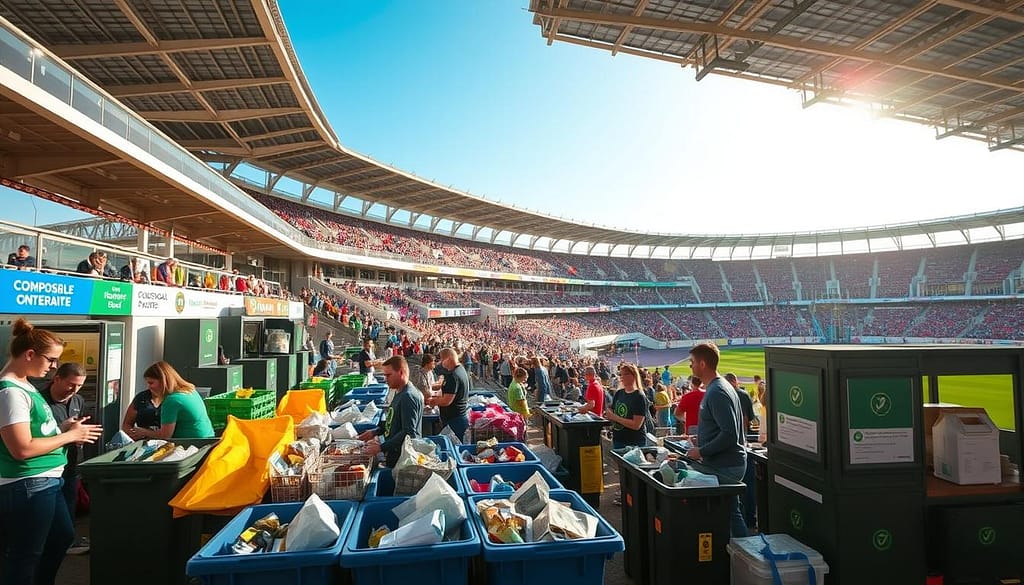
Scaling green initiatives in sports isn’t just about adding recycling bins. The Miami Marlins’ composting program in 2022 was a big fail. It ended up sending a lot of organic waste to landfills. But, failure can teach us a lot.
Allegiant Stadium in the desert is a great example. It worked with Mortenson on HVAC innovations to cut cooling costs by 40%. This kept fans cool while saving money. FIFA’s solar villages for the 2026 World Cup are another success story. They use sunlight to power temporary cities, leaving a lasting impact.
Barcelona’s Champions League experiment showed three key lessons:
- Beer vendors became compost ambassadors (those $12 IPAs now fund worm farms)
- Concession stands used zero waste sports events as marketing gold (“Buy a pretzel, save the planet”)
- QR codes on trash cans turned disposal into social media challenges
The 5-step minor league blueprint is easy for teams to follow:
- Convert one concession stand to fully compostable service (start with craft beer sections)
- Train ushers as “green coaches” with recycling trivia rewards
- Install smart meters to track energy efficiency in sports arenas
- Partner with local farms for post-game compost pickup
- Turn concession waste stats into fan-facing leaderboards
The Marlins learned that going green needs more than just good intentions. It requires careful planning and execution. Successful stadiums treat sustainability like a winning strategy. They use data, engage fans, and aim for success in every game.
Future Outlook
Imagine stadiums where nacho trays grow wildflowers and peanut shells help urban farms. The $400 million deal for Climate Pledge Arena shows green sports venues are smart business. Seattle’s Kraken hockey team uses compostable cups that change color when empty.
Portugal’s Boom Festival, where 75% of waste is diverted, inspires eco-friendly sports festivals in the US. What’s next? MLB’s Atlanta Braves are making jerseys from last season’s pizza boxes. European soccer clubs use AI trash cans that play anthems for sorting.
By 2030, we’ll see the first circular stadium where every hot dog wrapper becomes a seat cushion. Sports composting initiatives will turn fans into players. Imagine compost conga lines instead of seventh-inning stretches.
This isn’t just about saving the planet. It’s about changing our rituals. Future archaeologists might find our era’s artifacts puzzling: Steph Curry jerseys and three-bin sorting stations together. 62% of Gen Z fans choose events based on sustainability.
Teams that treat orange peels like draft picks will lead the next decade. Want to join? Demand compost bins at your local field. Share your stadium selfie with sorted trash. We’re just starting this movement.
Place your bets: which league will serve the first zero-waste championship burger?