In recent years, our view of sports spaces has changed a lot. A 2025 report shows that 78% of U.S. consumers now want eco-friendly facilities. This shift has led designers and institutions to look for innovative strategies to reuse old buildings instead of building new ones.
Sports and recreation facilities are changing to meet new community needs. This trend is not just about keeping history alive. It also meets today’s needs for sustainability and inclusivity. For example, Chicago’s historic Soldier Field was updated to fit 61,500 people, all while keeping its 1924 charm.
Colleges and community centers are joining this global movement. This article will show how design can connect the old with the new. It turns unused spaces into top-notch places. By embracing these strategies, institutions and communities gain a big advantage.
What is Adaptive Reuse?
Adaptive reuse is a green way to make old sports places useful again. It changes old venues into new spaces that fit today’s needs. At the same time, it keeps their history alive.
This method is more than just fixing up old buildings. It gives new life to them, making them useful again. This saves the environment and keeps the community’s history intact.
Old sports places can be turned into something new. For example, an old pool can become a turf field, like at Saint Joseph’s University. Even old stadiums, like Soldier Field, can be updated to meet today’s standards.
Adaptive reuse works at all sizes, showing its flexibility. Here are some big pluses:
- Environmental Sustainability: It cuts down on carbon and waste.
- Economic Efficiency: It’s often cheaper and faster than building new.
- Community Connection: It keeps local history alive and builds community spirit.
It also boosts local businesses and draws in visitors. By turning unused areas into lively spots, cities can offer more for their people.
To learn more about how adaptive reuse can revitalize community areas, read this article on adaptive reuse in sports and recreation.
Iconic Global Examples
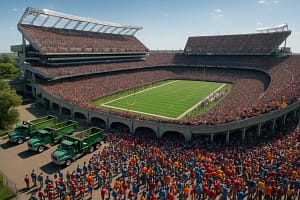
Across the world, sports facilities are being repurposed in creative and sustainable ways. Soldier Field in Chicago is a prime example. Built in 2003, it merged a new stadium with a historic shell. This was done using advanced engineering, like steel rakers, to span 60 feet over the old structure.
The Maguire Athletic Center at Saint Joseph’s University is another standout. It turned an old swimming pool into a versatile indoor turf area. The project saved a lot of carbon, showing how sports facilities can be green.
Boston University’s Walter Brown Arena is also noteworthy. It was revamped for women’s ice hockey, showing support for equality in sports.
The Portland Community Squash project is a community gem. It took a former synagogue and turned it into a place for squash, a café, and inclusive spaces. It’s a hub for community activity.
Herzog & de Meuron has led global transformations. They turned the Brooklyn Rapid Transit Power Station into a massive arts space. In Hong Kong, they revamped a prison into Tai Kwun, a cultural arts center.
These projects show the power of stadium reuse and green arena design. They keep history alive while meeting today’s needs. These facilities will serve future generations well.
Environmental and Social Benefits
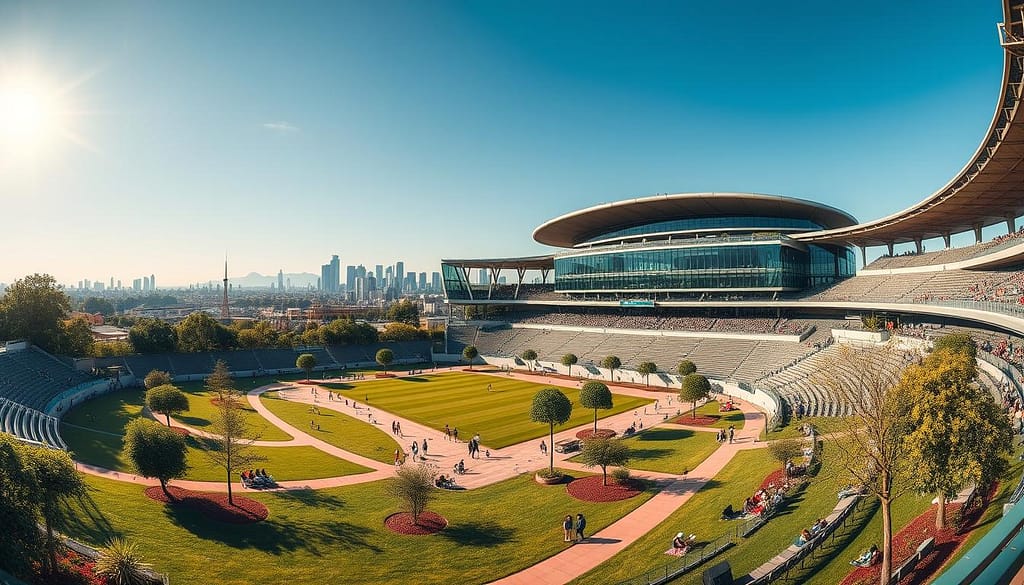
Adaptive reuse in sports venues brings big environmental and social benefits. It helps reduce carbon footprints by keeping old structures. At Saint Joseph’s University, for example, they cut down carbon emissions by 42%.
They also reused materials to save waste. Old bleachers became lobby benches, and basketball court flooring turned into countertops. This not only cuts down on waste but also connects the past to the present.
Adaptive reuse also boosts equity and inclusion in sports. Boston University’s Walter Brown Arena is a great example. It was once only for men’s hockey but now serves women’s ice hockey too.
The arena now hosts many activities. It’s open to everyone, not just hockey players. This change helps fix past wrongs and brings people together.
In short, green arena design is more than just saving the planet. It’s about making spaces for everyone. By doing this, sports venues can lead in sustainability and community building.
Community Engagement in Reuse Projects
Repurposed sports venues can change communities for the better. They bring people together and encourage teamwork. The Portland Community Squash (PCS) is a great example. It turned an old synagogue into a place for sports and socializing.
This project shows how design can meet the needs of everyone. It has a welcoming courtyard, a shared living room, and a café. There are also updated fitness areas and inclusive locker rooms for all.
The PCS is more than a sports venue. It’s a place where people feel they belong. The Community Squash Model uses sports to build connections and support. It helps people grow together in a supportive environment.
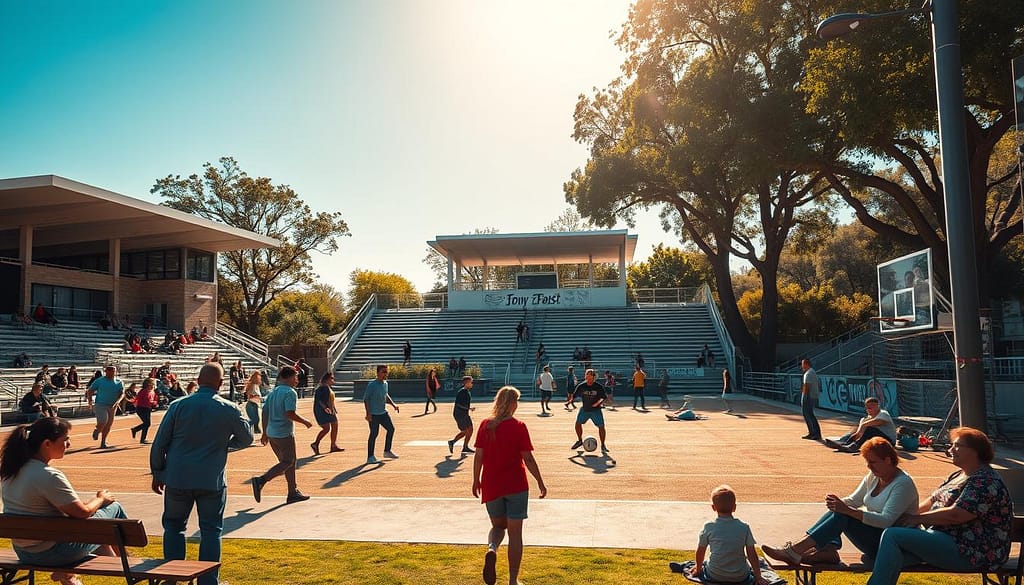
In Memphis, an old Sears warehouse was turned into a mixed-use complex. This shows how local leaders can make a difference. When the community is involved, projects meet local needs and keep neighborhoods unique.
- Enhanced Community Connection: Repurposed venues create spaces for people to meet and interact.
- Inclusive Design: Facilities like PCS ensure accessibility for all community members.
- Local Leadership: Community-driven projects can lead to successful adaptive reuse outcomes.
- Preservation of Character: These projects maintain the unique identity of neighborhoods.
Repurposed sports venues are key to building stronger communities. They offer spaces for activity and help people form bonds. As more communities adopt adaptive reuse, the benefits will keep growing.
For more insights on how environmental sustainability intersects with sports, check out this informative article.
Lessons Learned and Emerging Trends
Adaptive reuse projects in sports venues start with a big challenge. They must balance old structures with new needs. This balance leads to creative design solutions.
Successful reuse is more than keeping a building. It’s about making a space for today’s community while remembering its past.
Intentional design decisions are key in these changes. For example, the Soldier Field project used Tekla 3D modeling. This tech made construction 17% faster than usual by sharing the model.
This shows how important technology is in adaptive reuse.
Another important lesson is the need for good planning. Places like the Portland Community Squash show how to keep venues open during renovations. They do this by planning carefully.
This way, venues stay open for the community, even when they’re being updated.
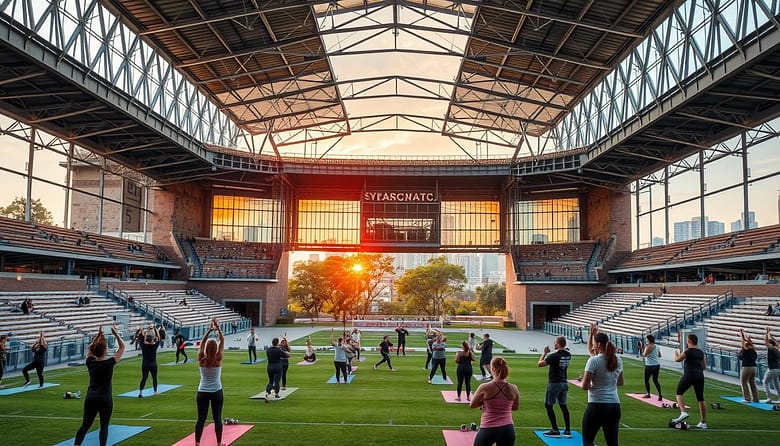
There’s also a big trend towards making venues for more than sports. Now, they support wellness, recreation, and learning too. This makes them lively community spots.
Developers and institutions are choosing to reuse instead of build new. This is good for the environment and adds special touches that connect with the community. It makes the venue’s identity stronger.
In short, the future of sports venues is in using tech, planning well, and focusing on the community. By learning from past projects and following new trends, we can create spaces that are both modern and respectful of history.
How to Advocate for Reuse in Local Spaces
Adaptive reuse of sports facilities can turn them into lively community spots. Advocates are key in this change. Begin by collecting data showing public support for green venues. A 2025 report found 78% of U.S. consumers want eco-friendly arenas.
Leading your community is vital. The Sears warehouse in Memphis turned into a mixed-use area thanks to local efforts. Working with officials and community members is important. Share success stories, like Saint Joseph’s University’s carbon savings, to show reuse’s benefits.
Clear up myths about adaptive reuse. Some think it costs more or is less flexible than building new. But, reuse can be more cost-effective and quicker. It also brings unique character and community ties.
See reuse as a chance, not a loss. The true success lies in these spaces becoming hubs of activity. When they’re used, their full value is seen. Encourage your community to support reuse and watch these venues come to life.