
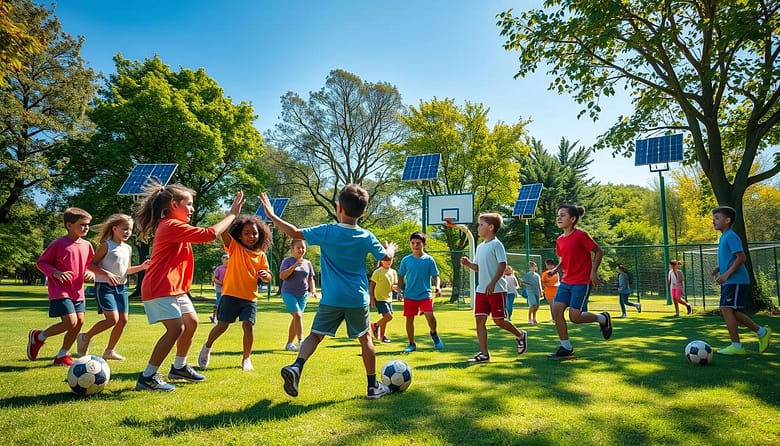
The mix of sports and caring for the environment is stronger than ever. At RCE Detroit-Windsor and Wayne State University, students turned a sports event into a chance to help the planet. This shows that when young people lead, communities can grow and succeed.
Today, 70% of people aged 16 to 25 worry a lot about climate change. In some places, this number goes up to 80%. This shows how urgent it is for us to take action. By looking at how sports days can be more than just games, we see a movement that prepares the next generation to lead in protecting the environment.
The UN University – Institute for the Advanced Study of Sustainability is soon publishing a report. It will feature youth from the Global RCE Network who are making a difference. Their stories show how young athletes are becoming leaders, teaching others to care for the planet.
We will dive into this topic further, looking at how programs like Service Learning Through Sports are making a difference. By adding lessons about the environment to sports, we can build a brighter, greener future for everyone.
The Movement for Eco-Friendly Youth Sports
Youth sports are moving towards being more eco-friendly. Climate change is affecting our planet, and sports groups are stepping up. They’re not just cutting down on waste; they’re teaching young athletes to care for the environment.
One big change is getting rid of single-use plastics at games. Leagues and clubs are pushing for reusable water bottles instead. This small switch can make a big difference in reducing plastic waste.
Compostable packaging is also becoming popular at sports events. It helps reduce waste and teaches athletes about responsible consumption. This is a big step towards a greener future.
Carpool networks for travel teams are another smart move. They cut down on carbon emissions and bring families together. Sharing rides helps lower the environmental impact of traveling to games.
Recycling stations are being set up at sports complexes too. They make it easy for everyone to recycle properly. These efforts teach young athletes about recycling and waste management.
By adopting these eco-friendly practices, youth sports programs are also teaching about climate action. Every game and practice is a chance for athletes to learn about fighting climate change. This connection between sports and caring for the environment is key to raising responsible citizens.
| Practice | Description | Impact |
|---|---|---|
| Reusable Water Bottles | Encouraging players to use refillable bottles instead of disposables. | Reduces plastic waste significantly. |
| Compostable Packaging | Using materials that decompose naturally at events. | Minimizes landfill waste and educates on sustainability. |
| Carpool Networks | Organizing shared rides for travel teams. | Lowers carbon emissions and builds community. |
| Recycling Stations | Setting up bins for proper waste disposal at complexes. | Promotes recycling habits among young athletes. |
Program Spotlights: Schools and Clubs Changing the Game
Schools and clubs worldwide are leading the way in sustainability through sports. The Green Youth 360 Project is a great example. It runs in Kenya’s Kakuma and Dadaab refugee camps. This project, a partnership between the Education Above All Foundation’s ROTA Programme and the Girl Child Network, empowers youth from both refugee and host communities.
Ali Omari Washikala, an 18-year-old from Vision Secondary School, is a shining example. He learned to turn waste into valuable resources. This knowledge helps him and his community.
Acampo Ramadhan, a 15-year-old from Joy Primary School, is a waste management champion. He started clean-up efforts after seeing pollution harm health. His efforts show young people can make a big difference.
At Arid Zone Primary School, Brilliant Edamit, also 15, set up a waste management system. It includes recycling and composting. He says, “We’re not just cleaning up our school, we’re cleaning up our future.” His words inspire many to value sustainability in education.
In the United States, RCE Detroit-Windsor and Wayne State University are making sports events green. These events promote athleticism and teach eco-friendly practices.
These examples show that young athletes can make a big impact. Whether in refugee camps or urban areas, they use sports to drive environmental change. Schools and clubs can follow their lead by starting waste audits, composting, and teaching each other about sustainability.
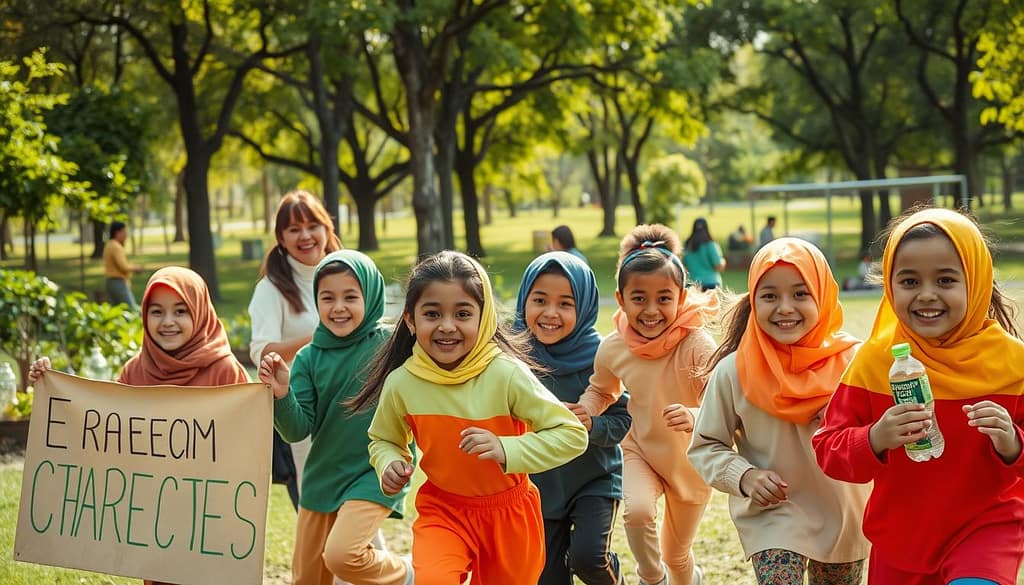
Empowering Young Athletes as Sustainability Leaders
Empowering youth in sports is key to fostering a new generation of sustainability advocates. Being part of youth leagues helps young athletes grow their athletic skills. It also helps them develop leadership qualities needed to tackle environmental challenges. Programs that focus on sustainability teach them to communicate well, take responsibility, and inspire others.
The Green Youth 360 Project shows how young people can become innovators in their communities. They are not just future leaders; they are making a difference now. This aligns with Her Highness Sheikha Moza bint Nasser’s belief that education unlocks every child and youth’s full potentials.
For coaches and athletic directors, adding sustainability leadership to team dynamics can change everything. Start green team committees or have team captains promote eco-friendly practices. These roles let young athletes lead sustainability efforts in their teams and schools.
Parents also have a big role in this journey. By supporting their kids in sustainability activities, they teach them responsibility and advocacy. Simple actions, like talking about environmental issues or joining community clean-ups, strengthen the values learned on the field.
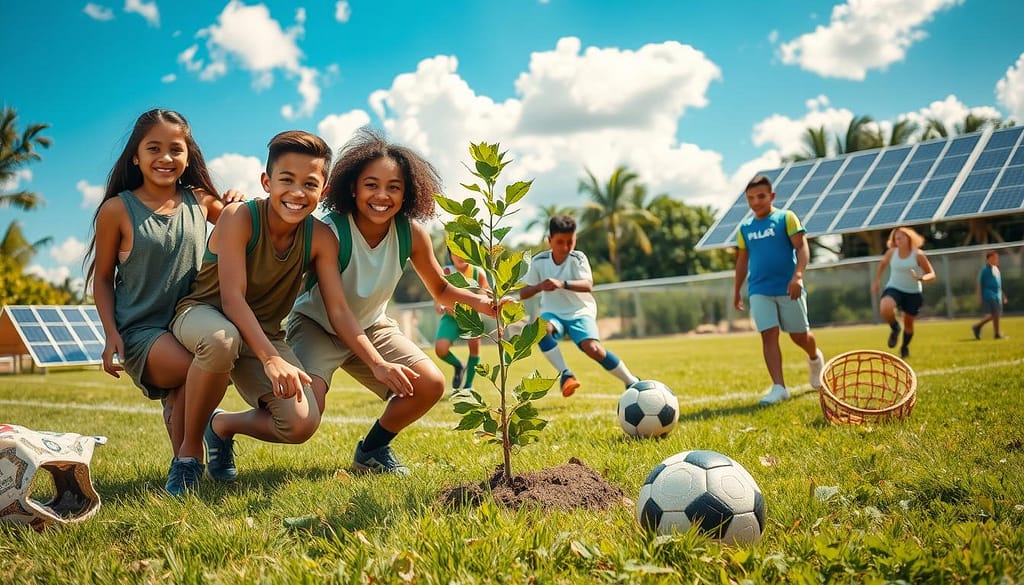
In conclusion, sports and sustainability together offer a great chance for youth to grow as leaders. By teaching these skills in youth leagues, we prepare them to face our time’s environmental challenges.
Influential Partnerships (Schools, NGOs, Parents)
Working together, schools, NGOs, and parents can make a big difference in youth sports. They help create a supportive environment for eco-friendly sports programs. The Education Above All Foundation is a great example of this teamwork.
They work with the Girl Child Network in Kenya on the Green Youth 360 Project. This project helps refugee and host community youth. It shows how different groups can share resources and knowledge.
RCE Detroit-Windsor and Wayne State University also teamed up. They turned a sports event into a chance to teach about sustainability. This shows how schools and universities can help local communities learn about the environment.
The UN University supports the Global RCE Network. This helps local youth projects grow and succeed. It shows that big organizations can help small initiatives.
Parents can also make a big difference. They can push for changes in their kids’ sports leagues. This includes asking for recyclable uniforms and setting up zero-waste stands.
By working together, schools, nonprofits, and families can make a big impact. They can help make youth sports more sustainable. For more ways to get involved, visit Youth Sport Trust.
Impact Beyond the Field
The influence of sustainable youth sports goes far beyond the field. Young athletes learn to see waste as a resource, changing their world. Ali Omari Washikala’s story with the Green Youth 360 Project shows this change. He found that waste can be a source of income, turning problems into chances.
Young people are getting creative with waste. They turn plastic bottles into planters, old tires into nursery beds, and paper into fuel briquettes. These projects not only solve environmental problems but also bring hope and strength. They show that even with limited resources, creativity can flourish.
In the United States, these global examples inspire local efforts. Young athletes start recycling businesses, push for composting, and aim for careers in environmental science. This grassroots movement shows how sports can help create environmentally aware citizens.
The Education Above All Foundation urges organizations to work together to teach youth important skills. By investing in education and values, we can prepare a generation to face sustainability challenges. Sustainable youth sports impact more than sports, shaping innovative thinkers and strong communities for the future.