World Cup infrastructure became one of the clearest sports-business stories of the 2026 FIFA World Cup after the final date passed on July 19, 2026. The tournament did not rely on brand-new stadiums built only for a month of matches. It used 16 existing venues across the United States, Canada, and Mexico, with renovations, capacity changes, certification work, and operational upgrades shaping the event’s physical legacy.
That matters for a sports-first reason: facilities affect the match environment. Field dimensions, heat conditions, locker rooms, circulation, sightlines, and transport pressure all touch athletes, staff, and supporters. As an advocate for athlete rights and responsible industry leadership, I see the post-tournament question as direct: did the built environment serve the players and communities well enough to justify the disruption and cost?
The evidence is mixed but useful. The 2026 tournament showed that using existing venues can reduce the need for new stadium construction, while still demanding significant changes inside and around host sites. It also showed that green certifications are not the same as low-impact mega-events, especially with a tournament spread across three countries.
Why World Cup Infrastructure Mattered After 2026
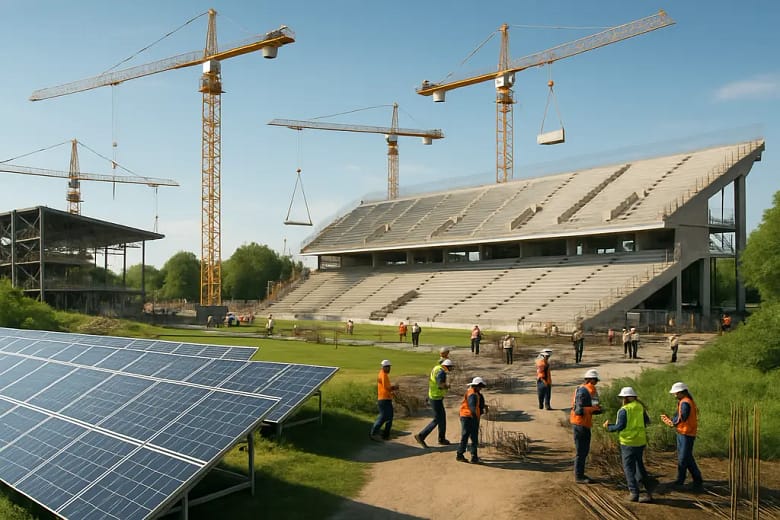
The clearest venue-side sustainability marker before the tournament was LEED certification. As of June 6, 2026, 13 of the 16 host stadiums had achieved LEED certification in the run-up to the World Cup, and the certified buildings had installed more than 11,500 solar panels for clean electricity, according to The Washington Post. MetLife Stadium in New Jersey, tied to the final date of July 19, 2026, achieved LEED Gold certification in May 2026.
Those facts deserve credit, but they should be read with care. Certification can confirm building standards, operational practices, or performance targets, yet it does not erase emissions from travel, logistics, temporary overlays, broadcast operations, or fan movement. A July 2025 report by Scientists for Global Responsibility, Environmental Defense Fund, Cool Down, and the New Weather Institute estimated the 2026 World Cup at about 9.02 million metric tons of carbon dioxide equivalent. The research notes compare that estimate with an average of about 4.7 million tCO₂e for World Cups from 2010 through 2022, nearly a 92 percent increase.
World Cup Infrastructure And The Retrofit Choice
The retrofit model was still significant. No brand-new stadiums were built specifically for the 2026 World Cup. All 16 venues were existing stadiums that underwent renovations or expansions. That choice preserved embedded infrastructure and limited the need for new material-heavy stadium construction.
In practical terms, this is where sports infrastructure policy should keep moving. Reusing a venue is not automatically clean, but it can be a better starting point than building a stadium with no long-term tenant, no civic use plan, or no realistic maintenance path. The same logic connects with broader thinking on adaptive reuse in sports facilities, where the best outcome is not just a greener building but a venue that keeps serving athletes and residents after the headline event leaves.
Certification Versus Event Footprint
The tension is clear: venue improvements can be real, while the total event footprint can still be high. That is not a contradiction. It is a warning against treating stadium upgrades as the whole sustainability story. For future bids, the lesson is to separate building performance from event-wide emissions, then measure both.
For athletes, that distinction matters. A stadium can be efficient on paper while still presenting heat, turf, travel, and scheduling concerns. The 2026 World Cup placed infrastructure under pressure across a large geographic footprint, and the post-event review should not stop at plaques or certification levels.
Venue Work That Changed Match Operations
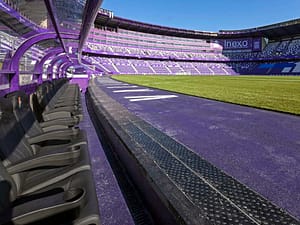
Some improvements were not primarily symbolic. They were tied to the requirements of elite soccer. MetLife Stadium, for example, had to remove 1,740 seats and meet FIFA field dimension requirements before the tournament, according to AP reporting. That kind of work shows how a multipurpose or NFL-oriented stadium can require physical changes to host top-level international soccer.
This is where World Cup infrastructure becomes a sporting issue rather than only an environmental one. Field size affects the match. Capacity changes affect ticket inventory and revenue. Seat removals affect the fan experience. Player areas, camera positions, media routes, and safety zones all need adjustment when a building moves from its normal calendar to a FIFA tournament setting.
Field Standards And Athlete Conditions
Field-dimension compliance is not a minor detail for players. International soccer requires space for the game to be played as intended, with proper width, safety runoffs, and technical operations. When a venue must remove seats to fit the competition format, the stadium is being reshaped around the sport rather than asking the sport to fit the building.
That is the right order. Athlete rights begin with the field of play and the conditions around it. If a tournament’s commercial scale forces players into compromised surfaces or undersized spaces, the infrastructure plan has failed them. The 2026 renovations show that host venues can adjust, but they also show that conversion work should be public, documented, and reviewed after the event.
Heat Planning As A Venue Test
Extreme heat was a serious concern during the 2026 planning period. Five stadiums identified in the research notes — Atlanta, Dallas, Houston, Los Angeles, and Vancouver — already had roofs, either retractable or full covers. FIFA President Gianni Infantino said those roofs “will definitely” be used more for daytime matches to protect athletes and fans.
That statement placed climate adaptation inside match operations. Shade, roof use, cooling strategies, and kickoff scheduling are no longer secondary venue choices for summer tournaments. They are part of player welfare. For fans, they are public safety measures. For host cities, they are a reminder that sports venues designed for past climate assumptions may need operational changes as heat risk increases.
Community Upgrades Beyond The Stadium Gates

The most durable improvements may sit outside the stadium bowl. In Houston, Mason Park was part of a legacy program called Impact Houston 26. The project added more than 130 new trees, improved drainage to redirect stormwater into a local bayou, used heat-reducing coatings for benches, and built new shade features. The project was reported in July 2026 and was intended as a lasting community improvement.
Those are not match-day luxuries. They are neighborhood assets. Shade, drainage, and heat reduction can affect youth players, walkers, families, and local teams long after a World Cup crowd has left. For an eco-friendly sports model, the public test is whether investment reaches the people who live with the event’s footprint.
Legacy Work And Local Access
Community infrastructure should be judged by access. A park upgrade is more meaningful if local residents can use it without new cost barriers. A shaded bench, a playable green space, or better stormwater handling can help a neighborhood every week, not only during a tournament window.
This is also where sports networks and local coverage can keep pressure on organizers after events close. Readers following regional sports and outdoor life through Texas Sportsmen know that facilities are not abstract assets; they shape who gets to play, gather, coach, and recover.
Renovation Pipelines After The Final
Kansas City’s Arrowhead Stadium, which dates to 1972 and was one of the oldest 2026 host venues, announced an $800 million renovation planned to begin after the World Cup. The planned work included amenity upgrades, an upper concourse allowing 360-degree circulation, and modernization for continued community and large-event use.
That example shows the second stage of event legacy: what happens after the tournament has moved on. Post-event renovations can extend a stadium’s life, but the public value depends on transparency, long-term use, and whether improvements serve more than premium spaces. A better concourse can improve movement and safety. Modernized amenities can improve the fan day. The key question is whether those gains reach general-admission fans, workers, athletes, and local users.
World Cup Infrastructure As The Lasting Test
World Cup infrastructure after 2026 should be judged by three connected standards: sporting integrity, environmental responsibility, and community benefit. The tournament’s venue model offered a useful shift by relying on existing stadiums rather than building 16 new homes for one event. The LEED certifications and solar installations gave host venues measurable improvements. The seat removals and field-compliance work showed that soccer needs can force real physical changes. The heat planning and park upgrades showed that climate resilience must extend beyond the pitch.
The caution is just as clear. A mega-event can improve buildings and still carry a large emissions estimate. A certified venue can still be part of a carbon-heavy tournament. A renovated stadium can help fans while leaving public questions about cost, access, and long-term value.
The significance of the 2026 experience is not that it solved sustainable sports infrastructure. It gave leagues, federations, cities, and venue operators a stronger evidence base. Future hosts should start with existing assets when possible, publish venue-impact data, protect athletes from heat and poor field conditions, and make community upgrades part of the core plan rather than a side promise. That is the standard World Cup infrastructure now has to meet.