College sports sponsorship moved from sideline signage into uniforms, field names, and conference identity during 2026. As of October 10, 2026, the most visible deals had already been announced or implemented, giving athletic departments a clearer view of how commercial rights are being packaged across football, basketball, and Olympic sports.
The shift is not just a branding story. It is a sports operations story. A football helmet decal changes equipment standards. A jersey patch affects uniform approval. A field logo requires venue coordination. A conference entitlement deal touches multiple schools, sports, playing surfaces, and broadcast-facing assets. For athletic departments, those details create new revenue, but they also demand stronger review systems.
That is where education, certification thinking, and clear standards matter. Sponsorship campaigns can support scholarships, athlete development, and department budgets, but they need governance that is understandable to coaches, equipment staffs, athletes, alumni, and fans. The recent deals show why schools are treating commercial inventory as a formal asset class rather than a loose collection of signs and announcements.
Why College Sports Sponsorship Changed In 2026
The policy and financial backdrop changed before the largest announcements reached the public. In January 2026, the NCAA Division I Cabinet approved corporate advertisements on uniforms, apparel, and equipment in non-championship competitions. That decision helped open space for jersey-patch agreements that began with the 2026-27 academic year.
College Sports Sponsorship And Uniform Standards
College sports sponsorship no longer sits only in premium seating, hospitality, or radio inventory. Uniforms and equipment are part of the product seen by spectators in the stadium, viewers at home, and athletes during competition. That raises practical questions: who approves patch dimensions, who confirms placement, who checks conference rules, and who educates teams before the first game?
A certification mindset can help departments avoid confusion. That does not require a national credential for every staffer, but it does require documented standards: brand-use rules, sport-by-sport approval steps, equipment timelines, and conflict checks. These are basic controls, yet they become more valuable when a deal covers dozens of varsity teams or requires repeated changes across football, men’s basketball, and women’s basketball.
Revenue Pressure Behind The Shift
The rise of NIL is a major part of the financial setting. Research cited in the provided material estimated NIL deals at more than US$1.2 billion in 2023-24, projected US$1.67 billion in 2024-25, and forecasted more than US$2.5 billion for the 2025-26 season. That growth has put pressure on schools to identify revenue that does not depend only on media agreements, tickets, or donations. For related context on athlete commercial rights, Back2Tap has covered how NIL player branding has affected sponsor strategy and compliance demands.
The cautious reading is not that every school will match the largest deals. The supported evidence shows that high-profile programs and conferences have already expanded sponsorship inventory. Smaller departments may not have the same pricing power, but they face many of the same operating needs: rule clarity, sponsor review, athlete communication, and consistent public messaging.
What The Recent Deals Actually Changed
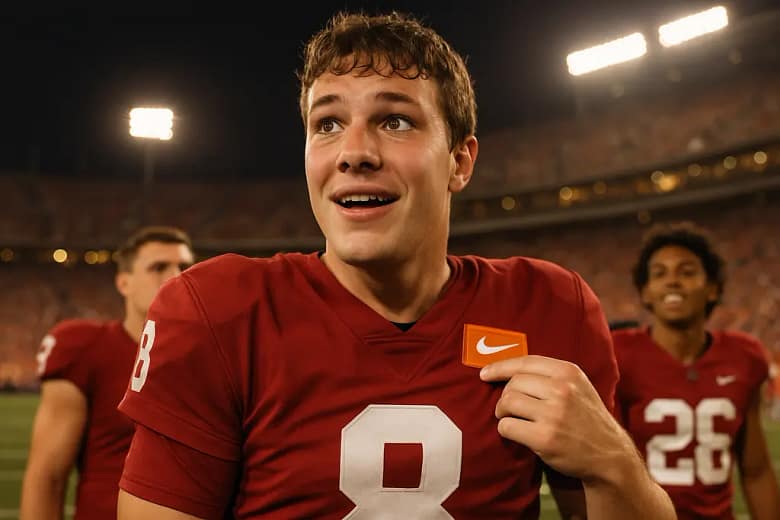
On September 24, 2026, Cal announced a record multi-year partnership with Databricks. The agreement renamed the football venue Databricks Field at California Memorial Stadium, added helmet decals beginning October 3, 2026, and marked Databricks’ first college-sports sponsorship, according to an ACC Sports report. For Cal, the most visible change was not a single sign. It was the blending of a historic stadium identity with a new field name and on-helmet inventory.
That type of arrangement shows how college sports sponsorship can reach the fan experience at several points. A field name affects game presentation, ticketing language, campus wayfinding, media references, and alumni conversation. Helmet decals carry the sponsor into every close-up, highlight, and still photo. Those placements carry value because they are connected directly to the sport rather than being separate from it.
On July 7, 2026, the Big 12 finalized a multiyear entitlement partner deal with Monster Energy. The agreement was reported at about US$20 million annually, included branding for football and basketball regular seasons, placed co-branded jersey patches and field or court logos into the package, and was expected to deliver about US$1 million annually to each member school, with implementation costs covered by the sponsor, according to a Sports Business Journal report.
Conference Inventory Is Different From School Inventory
The Big 12 example matters because conference-level inventory is harder to execute than a single-school agreement. Football fields, basketball courts, jerseys, and broadcast graphics are spread across member campuses. A conference deal requires central rules and local execution. If the sponsor covers installation and related costs, as reported, that reduces one operational concern for schools while keeping the revenue distribution cleaner.
Still, the arrangement places tradition and commercial value in direct contact. The supported facts do not prove a fan backlash or a long-term attendance effect. They do show that conference regular-season branding has expanded into spaces that were once treated as protected visual territory. That makes transparent standards more than a public-relations preference; they are a practical need for game operations.
Single-School Patch Deals Added Scale
The research notes also identify six-year SoFi sponsorship terms with Notre Dame, reportedly worth US$18 million to US$20 million per year, and a JPMorgan Chase agreement with Ohio State reportedly worth US$17 million per year. Those deals were tied to uniform patches across varsity sports beginning with the 2026-27 season. The exact public documentation varies by report, so the cautious takeaway is limited: major programs used the new rules to monetize uniform space at a scale that would have been difficult before the 2026 policy change.
Implications For Athletic Departments And Standards
The first implication is budget planning. A sponsor payment can support operations, athlete development, scholarships, or other department costs, depending on the deal terms. Notre Dame’s SoFi arrangement, as described in the research notes, included an annual US$1.4 million fund for scholarships and athlete development. That kind of earmarking gives a partnership a clearer educational connection, but it also creates reporting expectations.
Compliance Should Be Built Into The Campaign
Every visible asset needs a compliance path before the first public launch. Uniform patches must align with NCAA allowances, conference rules, school marks, apparel contracts, and sport-specific equipment needs. Field and court logos must fit venue operations and playing-surface safety requirements. Helmet decals affect equipment workflow before game week. A well-run sponsorship campaign treats those checks as part of activation, not as a late-stage review.
This is the point where sports education can protect both revenue and trust. Athletic departments should be able to explain who approves the sponsor category, who reviews athlete-facing materials, how conflicts are resolved, and how the school measures whether promised benefits were delivered. For readers comparing sponsorship eras across programs, the related sports archive at MyAllTimeBest offers a comprehensive exploration of how college sports presentation has evolved.
Private-Sector Partnerships Add Another Layer
The University of Utah’s June 12, 2026 operating partnership with Otro Capital, forming Crimson Brand Partners, showed another model. The research notes described the entity as overseeing commercial operations such as branding, sponsorships, ticketing, and licensing, with financial terms not disclosed. That is not the same as a patch or field-name agreement, but it points to the same pressure: athletic departments are seeking outside expertise for revenue functions that now require specialized execution.
The cautious concern is governance. Outsourcing or co-managing commercial operations can improve professional capacity, but universities still need clear lines of authority. Public institutions, donors, athletes, and fans should be able to understand which decisions remain with the school and how commercial priorities are checked against educational commitments.
College Sports Sponsorship Accountability
The next standard for college sports sponsorship should be accountability that fans can understand and staff can apply. Schools do not need to reject commercial growth to protect college-sports identity. They do need consistent rules for sponsor categories, patch placement, naming language, athlete communication, and public reporting.
A practical accountability model would include a written inventory map, a uniform and equipment review checklist, a sponsorship conflict policy, and an annual report describing how revenue-supported commitments were met. If a deal funds scholarships, athlete development, or department-wide operations, the school should say so in plain terms and report against those commitments.
The recent Cal and Big 12 deals show how quickly sponsor assets can move from background signage to core competition presentation. The Notre Dame, Ohio State, and Utah examples in the research notes show that single-school programs and commercial operating partners are part of the same shift. The evidence supports a measured view: sponsorship revenue has become more visible and more important, but its long-term value will depend on standards, disclosure, and careful execution on game day.