

The WNBA Rights Deal has already changed the business frame around women’s basketball as of September 25, 2026. The core sports question is direct: can wider distribution, better sponsor demand, and stronger rights fees create a more durable league without leaving athletes behind?
That question matters because media rights are not only a broadcast story. They shape tipoff windows, playoff visibility, national sponsor packages, roster investment, and the bargaining position of players. A rights agreement can raise a league’s profile, but the lasting test is whether the growth supports the people competing on the floor and the communities that follow them.
What The WNBA Rights Deal Changed
On July 24, 2024, the WNBA announced 11-year media rights agreements with Disney, NBCUniversal, and Amazon Prime Video for the 2026 through 2036 seasons, according to the WNBA announcement. The league said Disney platforms would carry 25 regular-season games per year, NBCUniversal would carry 50, and Amazon Prime Video would carry 30, with playoff and Finals coverage rotating among the partners.
WNBA Rights Deal Inventory By Platform
The WNBA Rights Deal creates a clearer national inventory for fans and commercial partners. Instead of relying on a narrow set of windows, the league entered the 2026 cycle with games spread across broadcast, cable, streaming, and digital platforms. That matters for a league trying to convert player recognition into repeat viewing rather than isolated audience spikes.
- Disney: 25 regular-season games per year across ABC and ESPN platforms.
- NBCUniversal: 50 regular-season games per year.
- Amazon Prime Video: 30 regular-season games per year.
- Versant and USA Network: an 11-year agreement executed on September 30, 2025, for at least 50 games annually, including portions of the Playoffs and Finals, beginning with the 2026 season.
- Bell Media in Canada: a multiyear agreement announced on May 5, 2026, covering WNBA games, Toronto Tempo games, and marquee events beginning with the 2026 season.
The Canadian piece is important because the league’s growth is not confined to the United States. The WNBA and Bell Media announced a multiyear Canadian rights agreement on May 5, 2026, through NBA Communications. For a league adding more international relevance, a Canadian package that includes Toronto Tempo games gives the expansion story a broadcast base rather than asking fans to find the product after the fact.
Why Rotation Matters For Competition
The playoff and Finals rotation is not just a programming detail. It affects how casual viewers encounter stars, how teams are framed during postseason runs, and how sponsors evaluate national exposure. The cautious read is that more platforms can increase reach, but only if scheduling, promotion, and viewer habits line up. Fragmentation can create friction, especially for fans who do not subscribe to every service.
That is why the league’s next task is operational as much as commercial. Fans need clarity on where games are carried. Players need the visibility to support endorsements without relying only on social media. Teams need broadcast windows that do not bury key matchups. Media growth is strongest when the basketball remains easy to follow.
Why Sponsorship Follows Distribution
For sponsors, the WNBA Rights Deal changes the value calculation. A brand that once bought into women’s basketball mainly for association with social progress can now evaluate a larger and more predictable content schedule. That shift does not remove values-based marketing, but it makes the sports product harder to dismiss as a niche buy.
Audience Signals Before The 2026 Cycle
The research record shows the demand curve was already moving before the 2026 rights cycle took hold. Nielsen reported that in 2025 ESPN networks averaged 1.3 million viewers across 25 WNBA regular-season games, up 6% year over year, and 1.2 million viewers for 24 postseason games, up 5%. Total national consumption for the full WNBA season reached 220.12 million hours, up 16% year over year.
Those numbers do not prove every broadcast window will grow in a straight line. They do show that rights buyers had recent evidence of sustained audience interest before the larger packages began. In a media market where live sports remain valuable, women’s basketball offered both star power and inventory growth.
Cross-League Commercial Pressure
The sponsorship story is broader than one league. Research provided for this analysis reported that sponsorship spending across the WNBA and NWSL rose 33% in 2025 to $195 million. It also noted that the 2025 NWSL Championship between Gotham FC and Washington Spirit averaged 1.18 million viewers on CBS and peaked at 1.55 million, the first NWSL title match to average more than one million viewers.
That cross-league movement matters because sponsors often compare women’s sports properties across calendars, demographics, and brand fit. Basketball, soccer, hockey, and other sports all benefit when media buyers stop treating women’s competitions as experimental. To explore a related concept, Dashers Hockey conducts analyses aiming to connect sports business decisions with their actual impact on sporting events and athlete welfare, as detailed on their site at Dashers Hockey.
Athlete Rights And Sustainable Growth
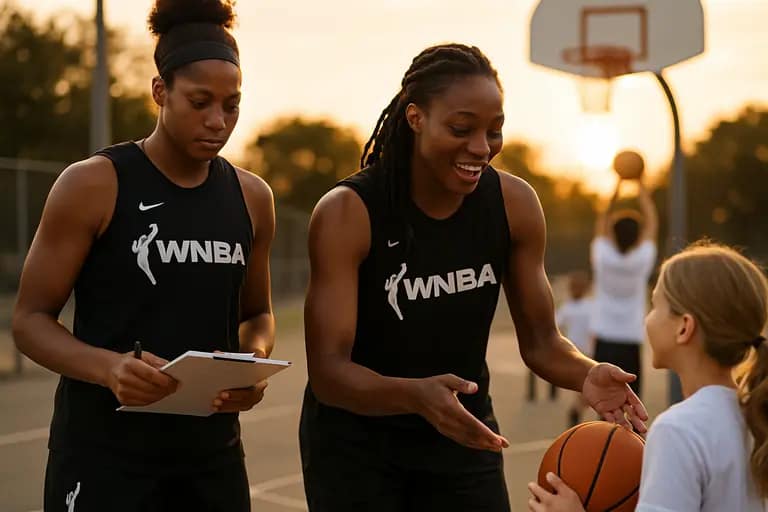
A media contract is not a victory for athlete rights by itself. It becomes meaningful when revenue growth is reflected in compensation, benefits, development systems, travel standards, and transparent bargaining. As someone who believes sports business should serve athletes rather than simply monetize their labor, I see this as the central accountability point.
Revenue Is An Athlete-Issue
The research material cited a legal analysis describing a 20% revenue share for players in the WNBA’s 2024 collective bargaining agreement, connected in part to more valuable media rights. The exact impact depends on the governing documents and league economics, but the principle is clear: if athletes create the product that raises rights fees, they should share in the upside through clear, enforceable structures.
That is not only a moral argument. It is a performance argument. Better compensation and working conditions can support training, recovery, family stability, and offseason choices. The league’s commercial partners also have a stake in that outcome because the product depends on healthy, prepared athletes competing at a high level.
Education, Scheduling, And Working Conditions
Sustainable growth in sports also requires education. Fans should understand why rights fees matter, why collective bargaining matters, and why sponsorship growth should not be measured only by logo placement. A sports-first media network has to keep that context visible across leagues; related coverage at Dashers Hockey reflects the same need to keep business analysis tied to the sport itself.
Scheduling is one area where commercial success and athlete welfare can come into tension. More national windows can create more exposure, but travel demands and recovery time remain real issues in any professional league. The evidence in the research supports a clear business expansion. It does not, by itself, prove that every operational pressure has been solved.
WNBA Rights Deal And Athlete Value
The WNBA Rights Deal should now be measured against concrete outcomes: stable audiences across platforms, better sponsor retention, improved team economics, and stronger athlete protections. Rights growth is most credible when the league can show that new money supports the competition rather than simply raising headline valuations.
What Should Be Measured Next
The next credible assessment should track how 2026 distribution affected regular-season visibility, playoff access, sponsor renewals, and player compensation outcomes. It should also compare WNBA progress with women’s soccer and other women’s sports, since the wider market is growing but still represents a small share of global sports rights spending.
The cautious read is positive. The league entered the 2026 cycle with more distribution, more sponsor logic, and stronger evidence that audiences were willing to watch women’s basketball at scale. The harder work is leadership: making sure the athletes who built that value are treated as partners in the growth, not as content inputs for a larger media package.