
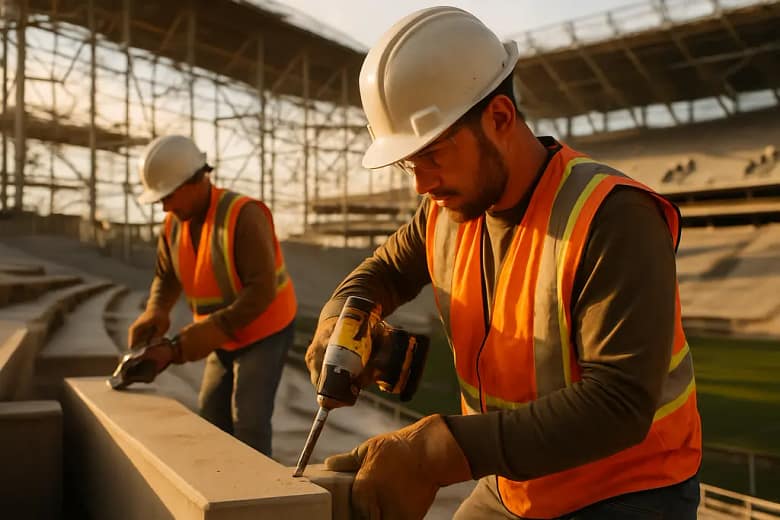
The EverBank Stadium Renovation is no longer a concept on a civic agenda. Construction began in February 2025, and the Jacksonville Jaguars, the City of Jacksonville, and the NFL are now tied to a phased rebuild that is expected to be finished by August 2028, in time for the start of the 2028 NFL season. For a sports-first audience, the project matters because it touches nearly every pressure point in modern pro football: heat, sightlines, concourses, premium revenue, public cost, team stability, and the weekly rhythm of game day.
The project has been branded as the “Stadium of the Future,” but the more useful way to judge it is by evidence. The reported $1.4 billion budget is split roughly between $775 million from the City of Jacksonville and $625 million from the Jaguars, with a $150 million deferred maintenance allocation included in that figure. The renovation and expansion cover 1,886,887 square feet, with the work focused on expanded concourses, a translucent perimeter shade canopy, reconstructed clubs and suites, and back-of-house areas. Those details point to a venue strategy built around keeping the NFL club in Jacksonville while trying to make the building more comfortable and more commercially productive.
As an athlete-rights and sustainability advocate, I read stadium projects through a basic standard: does the deal improve the sports experience without hiding the cost? That means better conditions for fans, better operational planning for teams, and clear public accountability. Stadium work can serve a community, but only if the people paying, attending, staffing, and playing in the building can see the trade-offs.
EverBank Stadium Renovation Timeline And Scope
The current timeline is defined by phases. Construction began in February 2025 and is expected to run through August 2028. That schedule matters because the Jaguars are not stepping away from competitive obligations while the building changes around them. The 2026 NFL season is being played with a reduced stadium capacity of about 42,465, with 27,308 seats offline, including 22,005 seats in the upper bowl. Parts of the 200 Level, the North End Zone, lower-level areas, and selected club and terrace sections are also affected.
The final plan calls for 63,000 permanent seats, with the ability to flex to 70,000 for college football and large concert events. That flexible capacity is a business signal. It says the venue is being planned not only for eight or nine regular-season NFL home dates, but also for the wider event calendar that helps justify large construction costs. Buildermuse reported the cost, schedule, capacity changes, and major construction elements in its project review of the Jacksonville stadium renovation.
EverBank Stadium Renovation Capacity Changes
The reduced 2026 capacity is not a footnote for fans. Fewer seats can affect ticket access, seat relocation, group attendance, and the feel of home-field noise. The Jaguars’ competitive product remains on the field, but the setting around it has changed during construction. Teams often sell major renovations through future benefits; fans live with the interim conditions first. That gap deserves plain communication, especially for season-ticket holders and families who plan game days months in advance.
The 2027 season is the biggest disruption. The Jaguars are scheduled to relocate for that full season to Camping World Stadium in Orlando, allowing full-site construction access in Jacksonville. From a project-delivery standpoint, that move gives crews space to complete major structural work, including full canopy installation. From a fan standpoint, it shifts the home schedule into another city. That is not a small ask for supporters who built habits around downtown Jacksonville Sundays.
Fan Experience And Heat Relief
The fan-facing case for the project starts with climate and circulation. The canopy is designed to reduce heat retention by more than 70%, while the main concourses are planned to expand to roughly four times their current width. If those targets are met, the most direct benefit would be felt in movement, shade, and time spent away from seats. In a warm-weather NFL market, heat is not a luxury issue. It can shape hydration, comfort, family attendance, and the willingness of older fans to stay through the fourth quarter.
The design also includes four new grand staircases, skyline and river-view lookout decks, field-level suite seating options, and a subtropical entrance plaza described as a nature park. Those elements should be judged by how they affect the full crowd, not only premium guests. A stadium can add premium spaces and still fail ordinary fans if lines remain long, shaded areas are too limited, or affordable food and seating options fall behind the new architecture.
Canopy, Concourses, And Access
Wider concourses can change a game day as much as a new video board. Better flow means fans spend less time stuck in bottlenecks and more time in seats, concessions, or social areas. It can also help stadium staff manage crowds more safely. The key question is whether the wider concourses serve the whole stadium, including upper-level patrons once the building returns to full use in 2028.
Heat mitigation should also be treated as a player and worker issue, not just a fan amenity. The research supplied for this project speaks most directly to fan areas and public-facing design, so claims about athlete performance or worker health should be made carefully. Still, a cooler building environment can support a better event operation if implemented across access points, service areas, and seating zones.
Premium Spaces Without Forgetting Regular Seats
The plan includes new premium seating, suites, interactive social bars, local food and retail offerings, and immersive lighting. These additions are part of the modern NFL revenue model. Premium inventory helps teams pay for facilities and compete with at-home viewing. The risk is that stadiums can become more impressive while becoming less accessible for regular fans.
The strongest version of this project would connect premium growth to broad value: improved concourses, more shade, better views, and clear service upgrades across price points. Local food and retail can also matter if it gives Jacksonville businesses real space in the game-day economy rather than treating local identity as decoration.
Public Cost, Team Risk, And League Strategy
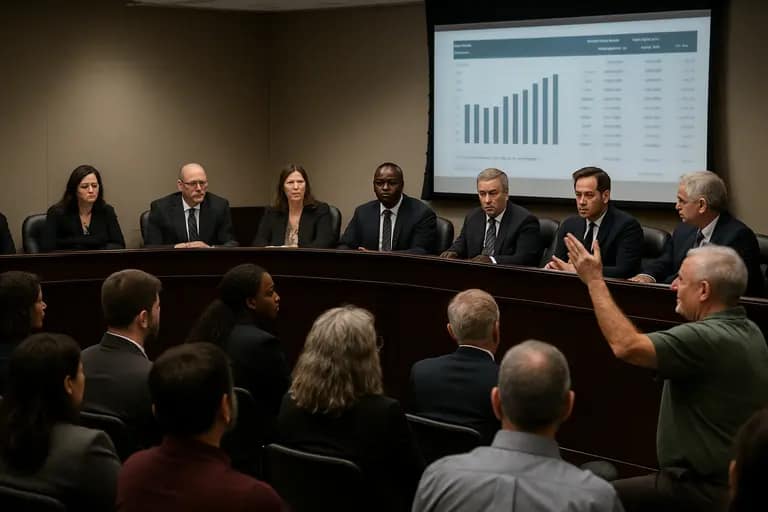
The Jacksonville City Council approved the renovation agreement on May 14, 2024. Under the deal, the Jaguars assumed all cost overruns, took on daily stadium operations, and agreed to cover 80.4% of game-day expenses going forward. The agreement also said no new taxes would be levied to fund the city’s contribution, according to NFL.com’s report on the approval. NFL owners unanimously approved the renovation plan in October 2024, pairing it with a lease and non-relocation clause intended to keep the Jaguars in Jacksonville for at least 30 more years.
That structure is central to the sports-business story. Public money remains substantial, but the cost-overrun provision shifts a major construction risk to the team. The daily operations change also matters because stadium management affects maintenance, staffing, vendor decisions, and event scheduling. For readers tracking facility finance across leagues, public stadium spending should be measured against concrete public benefits, not only team retention headlines.
Who Pays And Who Carries Overruns
The $775 million city share is a major public commitment. The $625 million Jaguars share is also significant, especially with the team carrying overruns. The one-time capital expenditure impact has been listed at $1.4 billion, with an overall economic impact of $2.4 billion for Jacksonville over the life of the project in the supplied research. Economic-impact figures can be useful, but they should be tested after the fact against event bookings, tax receipts, maintenance costs, and downtown activity.
A responsible public conversation should keep the scoreboard visible: final cost, public share, private share, cost overruns, completed amenities, event calendar, and access for local fans. For related sports business coverage in the same network, sports facility reporting can help readers compare how different markets frame these decisions.
Why The 2027 Orlando Move Matters
The temporary move to Orlando in 2027 is a construction decision with business consequences. It may help the project stay on track, but it also asks Jacksonville fans to absorb travel costs, time costs, and a different home-game routine. That should not be waved away as a minor inconvenience. Season-ticket holders, small businesses near the Jacksonville venue, stadium workers, and local event operators all feel the shift differently.
The 2027 relocation also tests the trust built into the 30-year commitment. If the rebuilt venue opens on schedule in August 2028 and delivers the promised comfort and revenue capacity, the short-term disruption may be viewed as a necessary trade. If costs, access, or experience miss expectations, the year away from Jacksonville will remain part of the public memory of the deal.
EverBank Stadium Renovation Accountability
The EverBank Stadium Renovation should be judged by more than renderings and ribbon-cutting language. The project needs a fan-first scorecard because the public and the team are making long-term commitments. A clear set of measures would help separate real venue improvement from sales language.
EverBank Stadium Renovation Scorecard
- Fan comfort: whether the canopy, shaded areas, and wider concourses reduce heat stress and crowding across the stadium.
- Access: whether ticket holders affected in 2026 and 2027 receive clear relocation, pricing, and communication plans.
- Public finance: whether the city share stays within the approved framework and cost overruns remain with the Jaguars.
- Revenue balance: whether premium seating growth is paired with benefits for standard-seat fans.
- Community return: whether non-NFL events, local retail, and downtown activity match the project’s stated economic goals.
The evidence available now supports a cautious reading. The project has a defined budget, a public-private split, a league-approved lease structure, a scheduled 2027 relocation, and a clear completion target in August 2028. It also has unresolved tests: how fans handle reduced capacity in 2026, how Jacksonville responds to the Orlando season in 2027, and how well the completed building serves the full crowd rather than only the highest-spending sections.
For the Jaguars, this is a stadium strategy tied to market permanence. For Jacksonville, it is a public investment tied to identity, tourism, and downtown event capacity. For fans, it is simpler: the finished building must make game day better, safer, cooler, and more accessible. If the EverBank Stadium Renovation meets that standard by 2028, it will stand as a serious case study in renovating existing sports infrastructure rather than starting over from the ground up.