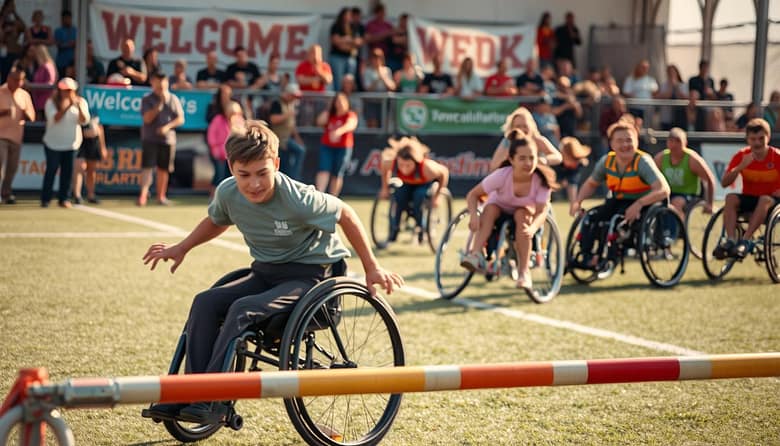
Jacob Lowy made a bold choice, like a character in Matrix. He chose to challenge society’s narrow views of ability. This isn’t just about making things easier for people with disabilities. It’s about changing how we see freedom and overcoming barriers.
Programs like the University of Michigan’s SAAS initiative help athletes face challenges. They fund tests to help athletes deal with physical and social barriers. Spaulding Rehabilitation also works to bridge gaps, showing that adaptive sports are more than charity. They help us see human ability in a new light.
Imagine the amazing plays in wheelchair basketball or the skill in para-swimming. These aren’t just inspiring moments. They show that with the right approach, everyone can succeed. It’s about changing the game, not just for people with disabilities.
SAAS and Spaulding show us that disability inclusion sports do more than just make things fair. They open up new possibilities. And isn’t that what freedom is all about?
Introduction to Adaptive Sports
Adaptive sports burst onto the scene like a skateboarder landing a 900 spin at the X Games. In 1945, Dr. Ludwig Guttmann created the Stoke Mandeville Games for WWII veterans. This was the start of adaptive sports, taking years to gain acceptance.
Today, the Paralympics feature athletes like Dr. Cheri Blauwet. She’s a Harvard-trained physician who races wheelchairs and challenges attitudes. Her career shows a shift from treating patients to changing systems.
Numbers show 15% of the world’s population (1.3 billion people) has a disability. That’s enough to fill Madison Square Garden over 260,000 times. Yet, adaptive sports face challenges like the “ramp vs. staircase” dilemma.
| Aspect | Medical Model | Social Model |
|---|---|---|
| Focus | Individual limitations | Societal barriers |
| Solution | Treatment & adaptation | Universal design |
| Role of Sports | Therapy | Self-expression |
This isn’t just about wheelchair sports. It’s about changing how we play together. Adding boundary markers for wheelchair athletes makes the game better for everyone. This is the essence of sports for inclusion.
Modern adaptive sports are like Silicon Valley, not sick wards. They use advanced materials and technology. Carbon fiber racing chairs and custom prosthetics make athletes into biomechanical wonders. The real win is showing the benefits of inclusive sports to everyone.
Types of Sports and Accessibility
Imagine the Avengers with wheelchair rugby players and blind surfers. That’s what Spaulding Rehabilitation offers – 12+ programs that rival the Avengers. From wheelchair rugby to blind surfing, these activities redefine what’s possible.
Let’s look at the cost of gear. A top racing wheelchair costs about $3,500. That’s as much as one Ferrari F1 tire warmer. The comparison is stark:
| Equipment | Adaptive Sport Cost | Traditional Counterpart | Key Feature |
|---|---|---|---|
| Racing Wheelchair | $3,500 | Ferrari SF90 ($600,000) | Both have carbon fiber; only one survives parking lot dings |
| Adaptive Climbing Harness | $220 | Yosemite Guide Kit ($800) | Central Park walls vs El Capitan – different peaks, same grit |
| Beep Baseball Kit | $1,200 | MLB Game Ball ($16) | Audio-responsive vs crowd-responsive athletes |
New York’s adaptive climbing walls in Central Park show you don’t need Yosemite. These sports green spaces turn cities into inclusive places. Accessibility doesn’t have to mean traveling far.
The real magic is turning “I can’t” into “Watch this.” Blind soccer players use sound to navigate. Quad rugby athletes break stereotypes with force. It’s not just inspiring – it’s competition.
Spaulding’s programs show adaptive sports aren’t about lowering standards. They’re about rewriting the playbook for everyone. The question is, “Which incredible thing will you try first?”
Empowerment Through Participation
Let me tell you about Saul Fisher – the Jason Bourne of adaptive rowing. He traded espionage for oars and a “Kill Bill”-worthy toe twitch. When Saul first gripped that ergometer handle, his doctors were skeptical. Six months later, he’s rowing 6,000 meters like it’s his morning coffee run.
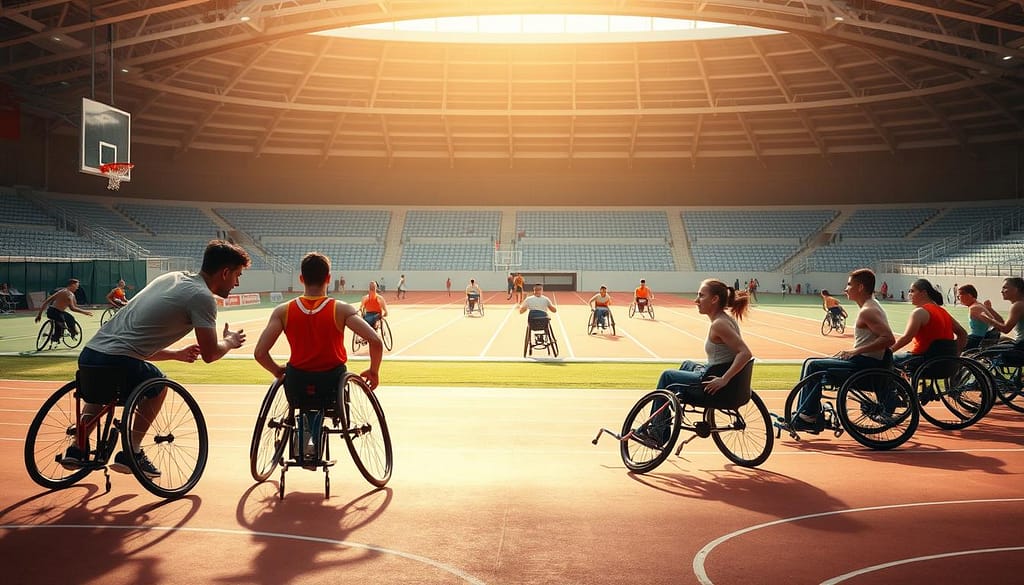
The numbers don’t lie – and they’re dramatic. Spaulding’s EXPD program data shows 72% core strength gains in half a year. That’s not just improvement; it’s biological reinvention. Compare that to the depressing alternative: 42% higher obesity rates among sedentary people with disabilities. It’s like choosing between becoming Tony Stark or his pre-Iron Man self.
Three things happen when you dive into wheelchair sports:
- Your body becomes a physics lab (Newtonian principles optional but encouraged)
- Social perceptions shift faster than TikTok trends
- You accidentally become a walking – or rolling – TED Talk on human p
Saul’s journey mirrors every hero’s arc we binge-watch: initial limitation → reluctant training montage → triumph scored by Zimmer-esque brass. But here’s the plot twist they don’t show in movies – the real victory isn’t the 6,000-meter mark. It’s the grocery store clerk who stops assuming he needs help reaching cereal boxes.
| Metric | Adaptive Athletes | Sedentary Peers |
|---|---|---|
| Weekly Activity Hours | 8.5 | 2.3 |
| Social Confidence | 89% | 47% |
| Chronic Pain Reduction | 68% | 12% |
The benefits of inclusive sports aren’t just physical – they’re cultural demolition charges. Every Saul Fisher story chips away at society’s low-expectation brick wall. Adaptive athletics don’t just build muscle; they reconstruct narratives. And frankly, watching someone out-row their medical prognosis is more entertaining than half of what’s streaming right now.
Case Studies: Success Stories
Meet Dr. Jacob Lowy, a medical genius who turned static sounds into a superpower. He’s like House M.D. but uses tech instead of drugs. He sees the world like a broken AM radio but uses it to his advantage in surgeries.
Jess Wang, on the other hand, sees ADHD as a strength in wheelchair basketball. With special training, Wang’s mind works like a chess master on coffee. This shows how special tools can become a cultural advantage.
| Case Study | Challenge | Accommodation | Outcome |
|---|---|---|---|
| Dr. Jacob Lowy | Auditory processing disorder | Visual alert systems | 23% faster triage decisions |
| Jess Wang | ADHD focus challenges | Tactile play diagrams | League MVP 2023 |
| Common Thread | Conversion of perceived limitations into competitive advantages through parasports frameworks | ||
Dr. Lowy’s OR became a place for innovation. His system is now used in 14 trauma centers. Wang’s playbook is used by the National Wheelchair Basketball Association. Their stories are more than just success stories; they’re blueprints for change.
Bourdieu would be amazed by these athletes’ impact. They’ve changed how society views them. Lowy even said, “My stethoscope hears what yours misses.”
The Social and Psychological Benefits
Who knew a skatepark could be like a therapist’s couch? In Detroit, adaptive sports are changing how we think about mental health. The city’s wheelchair-accessible skatepark shows a $3 return for every $1 spent. That’s a better return than many tech startups, and it’s way more fun to watch.
Jess Wang’s research shows athletes in sports mental health programs have 37% less stress. Imagine your Peloton class included therapy sessions. It’s not just exercise—it’s building emotional strength.
Brene Brown’s work on vulnerability is relevant here. Adaptive athletes build muscle and resilience. A Detroit skater said, “When you bail a trick 20 times in front of strangers, you stop caring about office small talk.”
The benefits of these programs are huge:
- 72% report better social confidence (shared struggles beat Zoom happy hours)
- 64% develop leadership skills (organizing ramp crews is better than corporate team-building)
- 89% feel less anxious (gravity doesn’t care about your presentation deck)
These programs aren’t just fixing people—they’re making communities better. Detroit’s park is a place where CEOs and teens bond over skate tricks. Try getting that kind of return from your meditation app.
Innovations in Equipment and Training
The Iron Man suit of adaptive sports isn’t just a dream anymore. It’s being 3D-printed in MIT labs for just $200. We’ve moved from $50,000 prosthetics to affordable marvels, cheaper than a PS5 bundle. This is not just engineering; it’s a game-changer for disability inclusion sports.
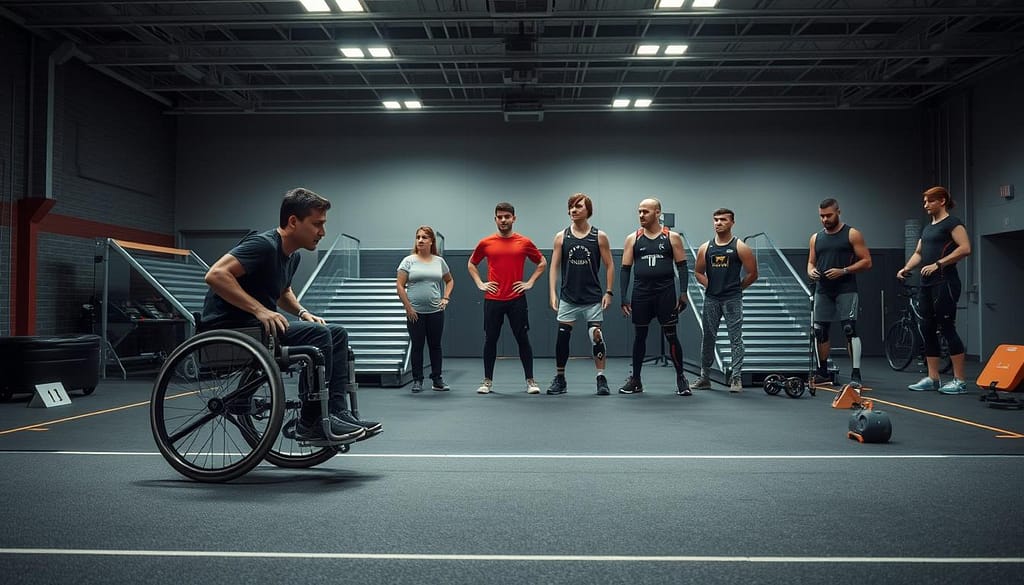
Spaulding Rehabilitation Hospital uses Assassin’s Creed motion capture tech for balance training. Their VR system turns physical therapy into a game. It makes recovering motor skills feel like parkouring in Renaissance Florence. Patients are leaning into recovery, showing that the best medical tech can be fun.
| Prosthetic Type | Cost | Production Time |
|---|---|---|
| Traditional | $50,000 | 6-8 weeks |
| 3D-Printed (MIT) | $200 | 24 hours |
The SAAS augmented stethoscope shows innovation isn’t always about big gadgets. This device gives coaches real-time cardio feedback through bone conduction. It’s like having an athletic sixth sense. It’s the quiet revolution in adaptive sports tech, like Bluetooth earbuds for your nervous system.
What do these breakthroughs share? A SpaceX launchpad mentality. Researchers are solving today’s challenges and building for tomorrow’s leaps. The real victory? When a Paralympic sprinter’s carbon fiber blade becomes as common as Air Jordans.
Policy and Organizational Support
If adaptive sports were a Netflix series, policy changes would be the unsung hero. They are like the friend who quietly helps out when you’re in a tight spot. Let’s look at the paperwork paradox: 83% of accessibility accommodations need less work than binge-watching Stranger Things Season 4. Yet, we make filing ADA compliance forms seem as hard as climbing Everest in flip-flops.
The SAAS funding model is like a diet plan for paperwork. Here’s what it offers:
| Compliance Aspect | Cost Range | Savings Potencial |
|---|---|---|
| ADA Title III Modifications | $300-$3,000 | Reduces hospital readmissions by 18-22% |
| Staff Training Programs | $50-$150/hr | Cuts liability claims by 37% |
| Equipment Certification | $200-$500 | Increases community participation 4x |
Dr. Oluwaferanmi Okanlami says, “Accessibility isn’t charity – it’s the social infrastructure we forgot to blueprint.” This is clear when you see that every $1 spent on adaptive sports infrastructure saves $4.30 in preventable healthcare costs. That’s a better return than most tech stocks.
For those eager to explore comprehensive policy frameworks, empowering communities through sports begins with a truth. The bureaucratic boogeyman haunting your HR department is just a mouse in disguise. It’s time to set a new trap – and maybe grab some policy Swiss cheese too.
How Communities Can Foster Inclusion
True inclusion in sports isn’t just about adding a rainbow logo or hosting one game. It’s about building adaptive sports ecosystems that are welcoming and accessible. Spaulding Rehabilitation Hospital’s programs are a great example. They offer wheelchair basketball leagues and integrate adaptive sports into schools and parks.
Imagine Little League teams where kids with prosthetic limbs play alongside their peers. It’s not just about being different; it’s about being part of the team.
The real magic happens when communities move from checkbook activism to sweat equity. Here’s how:
- Algorithmic altruism: Create a system that matches donors with local adaptive sports programs. It’s like a Spotify playlist for helping out.
- Workplace leagues 2.0: Replace generic corporate softball teams with mixed-ability esports tournaments. It’s a great way to bond with colleagues.
- Accessibility audits with teeth: Have high school athletes check local facilities for ADA compliance. It’s a fun way to make sure places are accessible.
| Tactic | Checkbook Approach | Hands-On Impact |
|---|---|---|
| Funding | One-time donation | Sponsoring a league’s annual equipment |
| Volunteering | Writing checks | Teaching weekly adaptive yoga classes |
| Advocacy | Hashtag activism | Lobbying for inclusive park redesigns |
The benefits of inclusive sports grow when communities see accessibility as a must, not a charity. Adaptive skateparks become places of innovation. Unified teams create friendships across different backgrounds.
So, let’s make inclusion a priority. Treat it like the town’s electrical grid. When every place normalizes adaptive sports, we change the game and rewrite the rules of belonging.
Looking Forward
Imagine wheelchair basketball players getting bionic reflexes, not from Marvel but from CRISPR labs. Spaulding Rehabilitation’s 2026 tech plan is like a superhero story. It mixes silicon and biology to change what’s possible in parasports.
Their biggest goal? Gene-edited muscle activation for spinal cord injury athletes by 2030. It’s like combining pit crew skills with accessibility, without the mess.
But we shouldn’t just rely on biotech. What if companies could trade Adaptive Sports Credits like digital tokens? Here’s a glimpse:
- Tech giants could offset their carbon footprint by funding wheelchair rugby leagues.
- Fashion brands could earn “inclusion points” by sponsoring adaptive equipment.
- Stadiums might need to show they’re accessible for major events.
Before you think of “Black Mirror,” think of the good side. AI coaching algorithms already analyze sports with amazing accuracy. But, as fans of San Junipero know, machines lack the human touch.
Should we let bots replace coaches who truly get the effort behind every wheelchair tennis serve?
The real victory is finding a balance. CRISPR enhancements and inclusion models can work together without creating a dystopian future. Let’s focus on innovations that boost human abilities, not diminish them. The future of wheelchair sports should celebrate human spirit, not just follow algorithms.
Conclusion
Jacob Lowy’s moment with the stethoscope-as-Excalibur is more than a poem. It’s a guide for making sports inclusive for everyone. Adaptive sports change the game, not just make it fair.
Take Paralympic archer Wang, for example. He sees his wheelchair as a tool for precision, not a limitation.
When special gear meets determination, amazing things happen. Carbon fiber blades and sensory equipment change the game. They turn athletes into something more than human.
These aren’t just tools for people with disabilities. They redefine what it means to be at the top of your game.
Adaptive sports are about more than diversity. They unlock hidden talents in people. Every change in the game adds a new chapter to sports history.
For example, Tatyana McFadden’s racing chair leaves others in awe. She shows what’s possible when you adapt.
Disability inclusion sports show us what mainstream sports often overlook. When your gear is part of you, winning becomes a team effort. It’s the true essence of sports, free from pretence.
Wang says, “My ‘disability’ made me a master of physics during races. Able-bodied runners just run.” Adaptive sports are not just for fun. They’re about turning weaknesses into strengths.
So, when you see wheelchair basketball or prosthetics in marathons, remember. You’re seeing sports evolve. Lowy’s metaphor shows us that disabilities are not limitations but superpowers.
The game is over, and Wang’s words are the final verdict. “Disability isn’t the opposite of ability. It’s where human creativity shines.” Adaptive sports win the game.