The Capital One Arena transformation is a sports story first: how a downtown building used by NBA, NHL, WNBA, college basketball, concerts, and civic events can better serve fans, athletes, workers, and nearby businesses. The project also raises a public-interest test because the District of Columbia is putting major public money behind a privately operated venue.
The renovation began in December 2024 and was designed as a six-phase, three-year project. As of September 8, 2026, the work was still scheduled around the goal of completion in time for the 2027-28 NBA and NHL seasons. That timeline matters because phased construction can protect event calendars, but it can also affect concourse movement, concessions, and neighborhood traffic during the build.
Capital One Arena Renovation Stakes
The public-private partnership has been described as an approximately $800 million project, with the District contributing $515 million and Monumental Sports & Entertainment investing at least $285 million. District officials also projected about 4,900 construction jobs and tens of millions in local spending during the build, especially through Certified Business Enterprises, according to the DC partnership announcement.
Public Cost And Sports Value
Public dollars in sports venues should be judged by more than ribbon-cutting photos. A fair test asks whether the arena becomes easier to use, whether workers and local firms get verified opportunities, whether athletes receive professional-grade spaces, and whether surrounding streets benefit on non-event days as well as game nights. That is why this project belongs in the same accountability conversation as other venue deals, including broader analysis of public stadium spending.
The strongest case for the District is not that a renovated building automatically creates new prosperity. The stronger, more verifiable argument is retention and concentration: keeping high-volume sports and entertainment events downtown, preserving a major anchor near transit, and trying to convert event-night foot traffic into restaurant, hotel, retail, and tax activity. Those outcomes still require measurement after each phase, not just estimates before completion.
Capital One Arena Fan Experience Tests
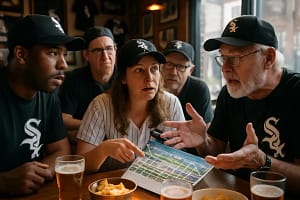
The fan-facing promises are concrete enough to evaluate. Project materials identify about 65% more concession space, 30% more restrooms, wider entrances and exits, larger concourses, improved wayfinding, more food and beverage options, local restaurant participation, and new social decks with views of the event floor. Those changes target familiar pain points: long lines, crowd compression, and limited gathering areas during intermissions, halftime, and pregame windows.
For a Capitals game, a Wizards game, a Mystics event, or a major college basketball date, the best renovation outcome is not luxury for a small slice of premium-seat buyers. It is a more humane building for the full crowd: clearer movement, shorter waits, safer exits, and enough variety that families and everyday fans do not feel priced or pushed out. Hockey enthusiasts who are keen on arena standards beyond Washington should look at fan-focused venue discussions across our network, notably at Dashers Hockey.
Fan Flow, Athlete Space, And Game-Night Value
Sports venues can lose goodwill in small moments: a backed-up entry gate, a restroom line that lasts through a scoring run, or a concourse pinch point after a period ends. The renovation’s value will show up if those moments become less common. Wider entrances and exits should be judged by how quickly crowds move before tipoff or puck drop and how safely fans leave after sold-out events.
Concessions, Restrooms, And Social Decks
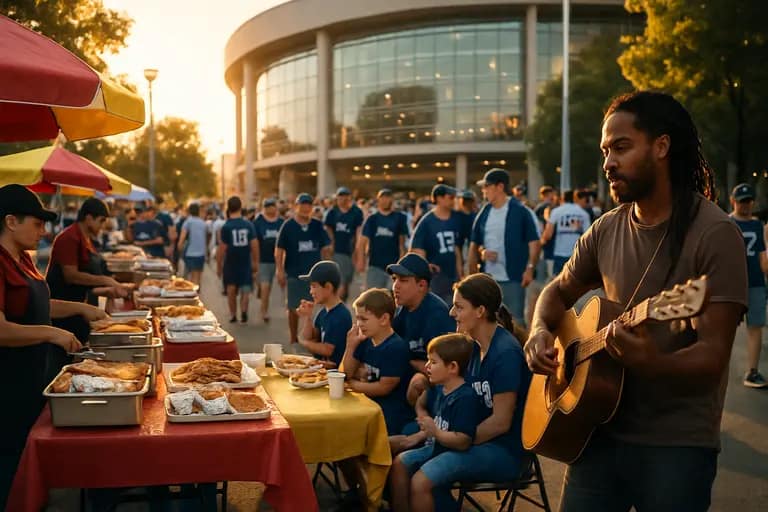
More concession space can improve fan choice, but the real standard is throughput. If new stands only add premium branding without reducing queues, the public benefit is weaker. If local restaurants are meaningfully included and placed where regular ticket holders can reach them, the arena can connect game-night spending to District food businesses. The same applies to the proposed social decks: they should expand shared space, not only create another tier of exclusivity.
Restrooms are often treated as a secondary amenity, yet a 30% increase can affect families, older fans, disabled fans, and workers moving through crowded areas. The best fan experience improvements are not always glamorous. They are practical, repeatable, and visible at the busiest point of a playoff game, rivalry matchup, or concert night.
Athlete And Worker Conditions
The project also includes athletic and back-of-house upgrades. Athlete spaces are expected to grow by more than 60%, visiting teams are slated to receive a new training facility, and a 200,000-square-foot Gallery Place expansion is tied to kitchens, suites, premium lounges, and back-of-house capacity. From an athlete-rights perspective, this matters. Locker rooms, recovery space, training access, meal preparation, and secure movement are part of workplace quality, not just perks.
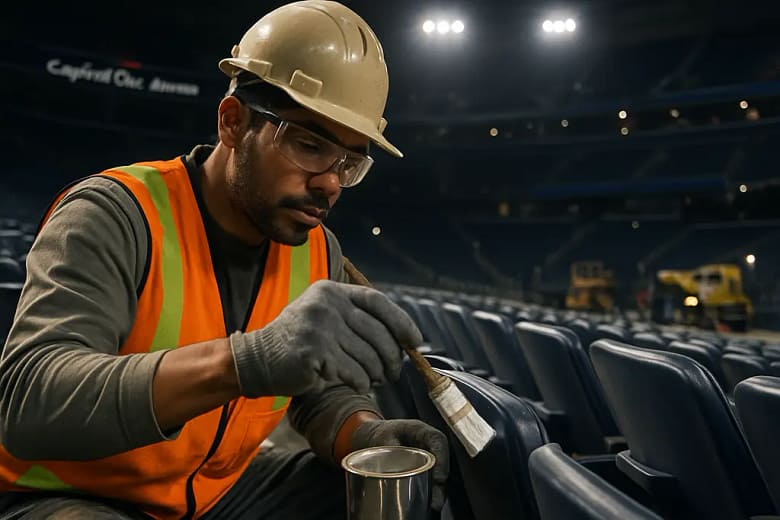
The same standard should apply to arena workers. Expanded kitchens and operational areas can support better service only if staffing, scheduling, safety procedures, and access routes match the upgraded physical space. A venue can look new to fans while remaining difficult for workers behind the scenes. That gap should be tracked during and after completion.
Downtown Spending And Civic Return
Venue economics deserve caution because gross visitor spending does not equal net local gain. Some spending is shifted from other parts of the region, and some benefits depend on whether visitors stay near the arena before and after events. Still, this building has one clear advantage: event density. Public materials tied to the Gallery Place/Chinatown work reported more than 100 event nights per year, 2.5 million to 3 million annual visitors, and $20 million to $25 million in annual tax revenues, as shown in the Gallery Place task force deck.
Visitor Volume And Event-Night Spillover
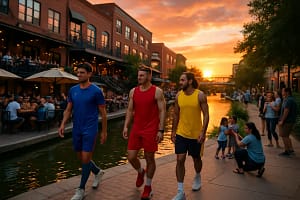
Research notes tied to the project say the arena brings in nearly 3 million fans each year, with about 85% from outside the District. That visitor mix can support hotels, restaurants, retail, and transit use, especially when games and concerts are clustered around dinner hours. Another reported measure, from April 2025 downtown data, put event attendance at 2.2 million, up 11% from 2023 and 25% above pre-pandemic levels.
Those figures support the case that the venue remains a major downtown draw. They do not prove that every public dollar will return to the District. The better civic question is whether the renovation helps stretch visits beyond the event window. If a fan arrives by Metro, eats nearby, attends a game, and stays for a postgame stop, the neighborhood gain is stronger than if that fan enters at tipoff and leaves immediately after the final horn.
CBE Participation And Local Accountability
As of September 2025, Phase 1 preparatory work had been completed. Project updates reported 70 contracts with Certified Business Enterprises, $66.2 million paid to CBE firms, and 59% progress toward a $111.5 million CBE requirement at that point. Those numbers are meaningful because local contracting is one of the clearest ways to connect a sports venue project to District businesses.
- Track CBE payments by phase, not only as one total at the end.
- Report fan wait times, entry times, and restroom access after major events.
- Measure local restaurant and retail activity on event and non-event nights.
- Publish worker and athlete facility outcomes after the back-of-house upgrades open.
Cultural elements can help too, but they should not be treated as decoration alone. The planned District Arts Collection, local artist work, visual storytelling, F Street plaza art, and evening art tours can strengthen civic identity if they are accessible to the public and aligned with Gallery Place/Chinatown activation goals. Public art should connect fans to the city hosting the event, not distract from unanswered questions about costs and benefits.
Capital One Arena As Civic Sports Infrastructure
The most defensible view of this project is neither automatic praise nor reflexive rejection. The arena is a high-use sports and entertainment asset in a downtown corridor that needs steady foot traffic, reliable transit access, and safer public spaces. The renovation offers specific fan improvements, athlete-space upgrades, local contracting activity, and a stronger downtown event anchor. Each benefit can be measured.
What Success Should Mean By 2027-28
By the 2027-28 NBA and NHL seasons, success should mean that fans can enter faster, move with less friction, find restrooms and concessions without missing large portions of play, and experience more District-based food and culture inside the building. For athletes, success should mean better training, recovery, and visiting-team facilities. For the local economy, success should mean verified CBE payments, tax performance, and spending that reaches nearby businesses rather than staying inside the arena walls.
Capital One Arena gives Washington a clear test case for modern sports infrastructure: public investment should produce public-facing proof. If the completed renovation delivers practical improvements for fans, fairer conditions for athletes and workers, and documented gains for local firms, then the project will have a stronger claim as civic sports infrastructure rather than a costly venue refresh.