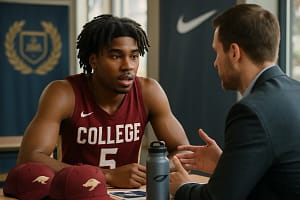
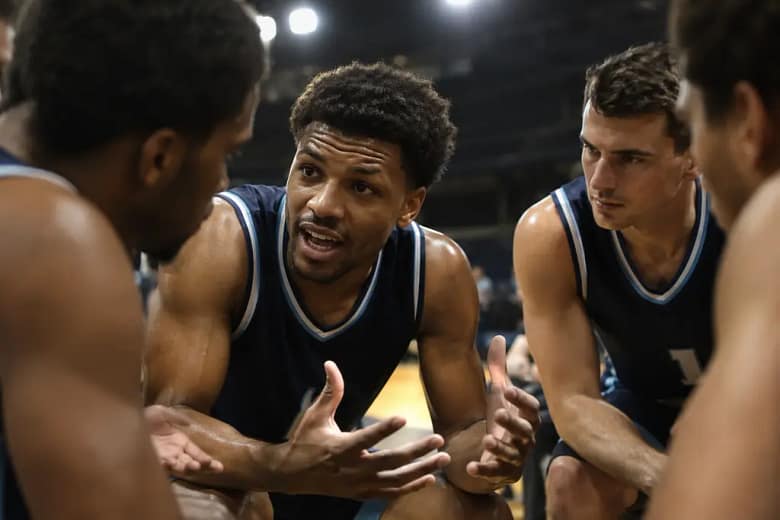
Player leadership is visible in college basketball long before March. It shows up in who controls possessions, who absorbs pressure, who steadies younger teammates, and who carries national expectations without letting those expectations consume the team. The AP Preseason All-America teams do not formally rank leadership, and they should not be treated as a full measure of locker-room influence. Still, they offer a useful sports-first case study because the selections identify players expected to shape the season through production, continuity, and presence.
That framing matters for athlete advocacy. In college hoops, a respected player is not only a scorer or a defender. He can become a bridge between coaches and teammates, a standard-setter in practice, and a voice whose habits affect how a program handles attention. The evidence available from the AP preseason selections points to a cautious but clear theme: voters often reward players who have already shown they can carry responsibility in real games.
The key is to avoid overstating what a preseason honor proves. A player can be named before the season and still have to earn trust again once games begin. The value of the AP lists is narrower but meaningful: they show which athletes entered a season with enough performance record, team context, and national profile to be viewed as anchors.
What Player Leadership Means In AP Preseason Teams
Continuity Before The Opening Tip
The 2026-27 AP Preseason All-America men’s basketball team was announced in October 2026 and was headlined by five returning stars from the 2025-26 season, according to CBS Sports. That fact alone does not prove player leadership, but it does show how continuity carries weight in preseason evaluation. Returning stars are easier to project because voters have recent college evidence, not only scouting profiles or recruiting rankings.
Continuity also matters inside a program. Returning players usually know the staff, the terminology, the travel demands, and the emotional swings of conference play. A veteran who has produced in that setting can help shorten the adjustment period for newcomers. That influence is not always visible in a box score, but it can affect spacing, pace, shot selection, and defensive communication.
Production That Teammates Can Organize Around
Braden Smith of Purdue offered one of the clearest examples from the 2025-26 preseason cycle. On October 20, 2025, On3 reported that Smith was a unanimous first-team AP Preseason All-America selection with all 57 votes, and that he entered that season as the AP Preseason Player of the Year after averaging 15.8 points, 8.7 assists, 4.5 rebounds, and 2.2 steals per game the prior season On3. Those numbers describe more than scoring volume. They show a guard involved in initiation, defensive disruption, and possession control.
For a team, that kind of statistical spread can create order. A high-assist guard can help define where teammates get the ball. A guard who rebounds and creates steals can influence transition opportunities. A player who scores enough to demand attention can open reads for others. The leadership element is not automatic, but multidimensional production can give teammates a stable reference point.
Player Leadership Beyond The Box Score
Player leadership becomes easier to discuss when performance and responsibility meet. Smith’s unanimous vote total was a sign of broad media agreement, but the more useful takeaway is how his profile combined skill, usage, and team reliance. In preseason evaluation, that blend tends to separate central players from talented specialists.
That distinction matters because college basketball teams often change quickly. Transfers, freshmen, and role shifts can reset a rotation each season. A returning All-America-level player can give a staff a starting point for identity, especially if his role touches both ends of the floor. The player still has to model the habits that make those numbers useful to everyone else.
Experience, Newcomers, And Team Trust
Upperclassmen As Stabilizers
The 2025-26 preseason list included multiple players who were juniors or seniors, or who had already built starting and All-America-level profiles. That pattern fits the sport. Experience gives players repeated exposure to late-game possessions, scouting adjustments, hostile road settings, and the strain of being a focus of opposing game plans. Those repetitions can help a player speak with authority because his teammates have seen him work through similar situations.
Experience, however, should not be romanticized. A veteran is not a leader only because he has been on campus longer. The better measure is whether his experience becomes useful to the group. Does he help a younger teammate understand defensive coverage? Does he recognize when a possession needs patience rather than speed? Does he accept a difficult matchup without turning it into a personal showcase? Those questions are closer to team leadership than age alone.
Freshmen Can Earn Early Influence
The AP preseason selections also showed that leadership potential is not limited to veterans. AJ Dybantsa was selected to the 2025-26 AP Preseason All-America team as a freshman, and his profile in the research centered on elite scoring. A freshman in that position faces a different leadership test: he must earn respect while still learning the college game.
That kind of case should be handled carefully. A newcomer can influence winning through performance before he becomes a vocal leader. Teammates often respond first to preparation, shot quality, defensive effort, and willingness to be coached. If those traits are present, production can create credibility. If they are absent, scoring alone may not carry the same effect inside a team.
For athlete advocacy, this is a useful distinction. Young stars deserve room to develop as people, not only as public brands. Naming a freshman to a preseason team can raise expectations quickly, but programs still have a responsibility to support the athlete’s adjustment to academics, travel, media attention, and competitive pressure.
Athlete Advocacy Inside College Hoops
Mentorship As Everyday Advocacy
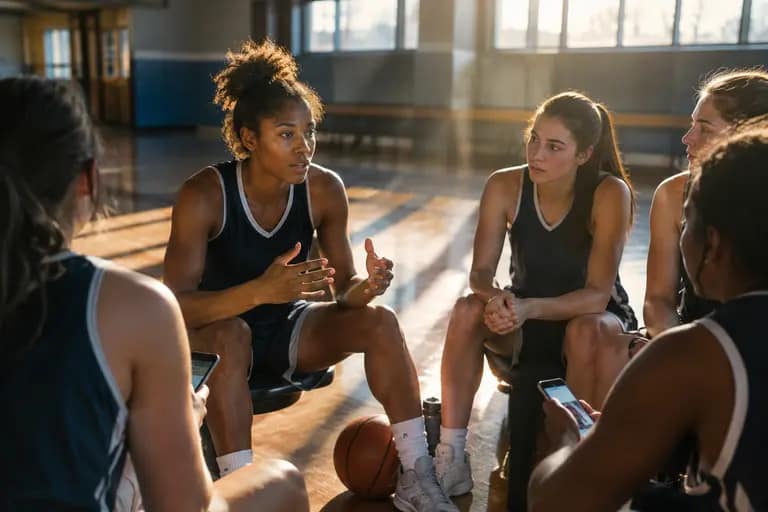
Athlete advocacy in college basketball is often discussed through public issues, but it also begins with daily team life. A respected player can advocate for standards in practice, recovery habits, accountability, and communication. Those actions are not always public, and they should not be inflated into claims about character without evidence. Still, the sports value is real: peer leadership can reinforce what coaches teach and make team expectations feel shared rather than imposed.
Returning All-Americans are often placed at the center of that dynamic because teammates and staff already know what they can do. The research notes that Smith was the only First-Team All-American from the 2024-25 season returning when he was selected for the 2025-26 preseason team. That status placed him in a rare position of continuity at the top of the sport. The advocacy angle is not that he spoke for every athlete. It is that players with that level of recognition often carry influence over team culture because their work is visible and their role is secure.
Reputation Without Overclaiming
Preseason reputation can help a player’s voice travel, but it can also distort analysis. Media recognition may reflect past production, team success, national exposure, and projected role. It does not confirm private leadership, personal values, or locker-room relationships. That is why the AP lists should be read as indicators, not proof.
This careful approach is especially necessary in an era when athletes are asked to lead across many spaces at once: on the court, in interviews, in academic settings, and sometimes in commercial opportunities. The fairest analysis starts with verifiable basketball evidence, then considers how that evidence may create influence. For cross-sport context, you can explore related discussions in soccer by visiting a related site in the same network.
Player Leadership And AP All-America Influence
What The Selections Can And Cannot Tell Us
The AP Preseason All-America teams are most useful when treated as a snapshot of expectation. They identify players whose prior performance and projected roles made them central to national conversation before the season. They do not settle who the best teammate will be, who will handle adversity best, or who will become the strongest advocate inside a program.
For coaches, teammates, and fans, the lesson is practical. Player leadership should be evaluated through repeated evidence: decision-making, two-way commitment, consistency, and the ability to raise the level of a group. The AP teams point us toward athletes likely to carry that burden. The season then tests whether recognition becomes responsibility.