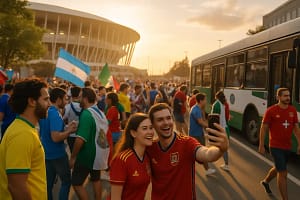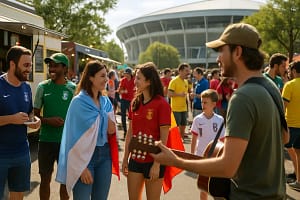
World Cup Tourism became one of the clearest social impact stories of the 2026 FIFA World Cup, which ran from June 11 to July 19, 2026, across the United States, Canada, and Mexico. The tournament was not just a run of fixtures; it became a six-week movement of supporters, families, national-team communities, and host-city workers managing the demands of a record-size event.
The sports story came first. Fans traveled because the matches mattered: 104 games, expanded national-team access, and a rare chance for supporters to see the world’s biggest soccer tournament in North America. FIFA projected more than 5 million fans from around the world attended in person, according to BBC Sport. That scale helps explain why travel, lodging, transportation, and public-space planning became part of the tournament’s competitive experience.
As an advocate for athlete rights and sustainable practices in sports, I view this through two connected duties. Major events should create safe, well-run conditions for players and supporters, while host communities should not carry avoidable costs after the final whistle. The 2026 tournament showed both the appeal and the strain of modern sports tourism.
How World Cup Tourism Changed Fan Travel
The 2026 event showed that fan travel has moved beyond a single match ticket and a hotel room near the stadium. Many supporters built multi-city trips around group-stage routes, knockout matches, family visits, and cultural stops. The North American format encouraged this behavior because host cities were spread across three countries, with long distances between several venues.
World Cup Tourism And Matchday Scale
The attendance figures from the research notes show why the tournament became a travel case study. Total attendance across 104 matches reached 6,810,966, an all-time record, with an average crowd of 65,490 per game and reported stadium capacity at 99.7%. The group stage alone drew about 4,644,549 attendees across 72 matches.
Those numbers matter because matchday pressure did not stop at the turnstiles. Supporters needed airports, trains, rideshare zones, hotels, restaurants, public safety staff, volunteers, and accessible routes. For disabled fans, older supporters, families with children, and traveling fan groups, the quality of these systems shaped the World Cup experience as much as the seat location.
Long-Distance Hosting Changed The Trip
Unlike a compact tournament, the 2026 World Cup asked many fans to make deliberate choices about distance, budget, and time. That gave host cities new visitor opportunities, but it also raised sustainability questions. Air travel, ground transport, and hotel demand are not side issues at this scale; they are part of the event’s real footprint.
That is why social impact analysis should not treat the fan as only a consumer. Fans are participants in the event economy, but they are also people dealing with prices, transit gaps, weather, language barriers, and fatigue. Good event leadership respects that reality and plans around it.
Host Cities Measured Spending And Strain
Research notes for the tournament reported approximately 2.6 million international visitors across host cities during the six-week event. Tourism-related spending was estimated at about USD 8 billion total, with USD 6.8 billion attributed to foreign visitors and USD 1.2 billion to domestic consumption after adjustments for crowding-out effects.
Those figures point to a major sports-business result, but they require caution. Visitor spending can help local restaurants, transport providers, hotels, and event workers. It can also concentrate gains in areas already positioned to benefit from high-volume tourism. The social question is whether the event improved local capacity or simply produced a short burst of premium demand.
Hotels, Rates, And Local Outcomes
Hotels in host cities reportedly saw occupancy rates of 90% to 95%, with room rates increasing by 15% to 20% in certain cities after the match draw. That helped some hospitality businesses, yet higher prices may have limited access for lower-income fans and placed pressure on residents in high-demand areas.
This is where World Cup Tourism has to be judged with more than a revenue lens. If workers faced long commutes, if fans were priced into distant lodging, or if local transit struggled under matchday pressure, then the event’s success was uneven. Sports leaders should ask not only how much was spent, but who benefited and who absorbed the inconvenience.
New York And New Jersey As A Scale Example
The New York and New Jersey region reported USD 3.5 billion in total economic impact from the World Cup, surpassing earlier forecasts in the research notes. Of that, USD 1.9 billion was direct visitor and event-driven spending. For a major metropolitan region, those numbers show how a global soccer event can amplify an already active visitor economy.
The lesson is not that every city should chase the same model. It is that regions with strong transit, hotel stock, venue operations, and public agencies are better positioned to manage the upside. For readers tracking related business coverage across the same network, check out detailed industry updates at SportsWire News.
The Pop-Up Economy Around The Tournament
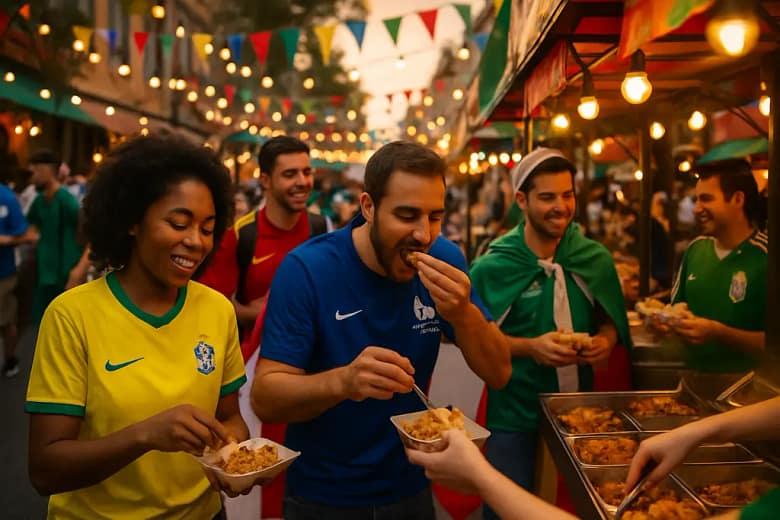
The 2026 World Cup created a short-term economy that moved with match schedules. Research notes cite Visa data showing cross-border Visa transactions in host cities rose nearly 20% year-over-year during the tournament period, with heavy spending in transportation and entertainment sectors. That pattern fits what fans actually did: they moved between venues, gathered in public spaces, visited restaurants, and extended trips around match windows.
Travel Demand Was Not Evenly Shared
Not every host market experienced the same travel pattern. Match assignments, national-team followings, stadium capacity, hotel supply, and local transport all shaped outcomes. A city hosting high-demand teams or knockout fixtures had a different pressure profile than a city with fewer marquee matchups.
That uneven pattern is consistent with broader reporting on World Cup travel demand, where city-by-city outcomes depended on more than tournament branding. For future bids, that matters. Event owners should avoid selling host cities a single economic story when the actual results vary by schedule and infrastructure.
Interest Became Movement
Before and around the tournament, interest in traveling to the United States for the 2026 World Cup was high in the research notes: 50.8% of survey respondents said they were very interested or interested in attending, with higher reported interest in India, Brazil, and China. Interest alone does not equal attendance, but the final visitor and spending figures show that global demand did convert into significant movement.
The U.S. government and U.S. Embassy had projected up to 7 million international visitors passing through the United States during the World Cup, as reported by SPA. After the event, that projection is best read as a sign of the planning challenge facing ports of entry, airports, local transport systems, and public agencies before kickoff.
Sustainability And Athlete-Centered Responsibility

A sports-first view should not separate fan travel from player welfare. Long-distance events affect training environments, recovery rhythms, field operations, security routines, and the daily demands placed on athletes and staff. The 2026 tournament’s travel scale made those concerns more visible, even though the research notes here focus mainly on attendance and tourism impact.
Why Environmental Costs Belong In The Sports File
The BBC source described the 2026 event in the context of concerns about pollution. That issue belongs in mainstream sports analysis, not just environmental reporting, because travel emissions and venue operations are now part of how tournaments are judged. Supporters want memorable matches, but they also deserve honest information about the costs tied to getting millions of people across a continent-sized host area.
World Cup Tourism should therefore be evaluated by access, emissions, labor conditions, disability inclusion, and community use after the tournament. These are not distractions from the sport. They are part of responsible tournament design, especially for events that ask public agencies and local residents to help deliver private and international sporting goals.
What Better Event Leadership Can Measure
The strongest post-event reviews should connect match operations to community outcomes. That includes how fans reached stadiums, how many used public transport where available, how lodging pressure affected residents, and whether temporary jobs led to lasting skills or fair pay. The available research supports a clear point: the event was massive. It does not, by itself, prove that every local outcome was positive.
Sports leaders should publish data in ways that fans can understand. Attendance and spending are useful, but they should sit beside transit performance, public safety outcomes, accessibility reports, and environmental accounting. That is how the industry can educate supporters while respecting the communities that host the game.
World Cup Tourism After 2026
World Cup Tourism left a clear record after July 19, 2026: record attendance, heavy international movement, large visitor spending, and serious questions about equity and sustainability. The event showed that fans increasingly combine soccer with wider travel plans, turning tournaments into regional economic and social events rather than isolated sports dates.
The careful reading is neither celebration nor dismissal. The 2026 FIFA World Cup proved the pulling power of global soccer in North America. It also reminded the sports industry that bigger tournaments demand better public reporting, stronger community protections, and travel systems that serve fans without leaving host cities to manage the costs alone.