
What do carbon footprints and championship rings have in common? More than you might think. Today’s sports stars are not just setting records; they’re changing the game of influence. Imagine LeBron James talking about climate policy or Megan Rapinoe outpassing politicians in grassroots efforts. Welcome to a world where free throws meet carbon offsets, and stadium cheers demand sustainability.
These modern heroes have something more powerful than just money: cultural influence. A Formula 1 driver’s post about renewable energy gets more views than many UN press releases. Tennis stars share stats on plastic waste reduction between their wins. It’s activism in the form of highlight reels—and it’s effective.
The sports world’s carbon footprint is huge, but athlete activism is turning it around. They’re not just planting trees (like Serena Williams’ urban forests). They’re using their massive influence to promote vegan sneakers and zero-waste arenas. This makes environmental goals as relatable as fantasy league rankings.
Why does this mix of sweat and strategy matter? Because when a sports star talks about methane reduction, even skeptics listen. The strategy is clear: charm first, challenge later. And the results are showing, even to the most skeptical policy experts.
Defining Athlete Advocacy
When did sports stars start fighting for justice? Today’s athlete advocacy is more than just a photo with a charity check. It’s a mix of courage and digital savvy that makes sponsors nervous.
Athlete activism is about using sports skills for social change. Think of Naomi Osaka wearing masks with victims’ names at the US Open. Today’s sports leaders are like three-pointers – they hit their mark, are seen, and can’t be missed.
The Evolution Playbook
| Era | Focus | Tools | Impact Radius |
|---|---|---|---|
| 1960s-90s | Symbolic gestures | Press conferences | National headlines |
| 2020s | Policy change | Instagram Stories | Global movements |
| Future | Systemic reform | AI-driven campaigns | Legislative action |
Community leaders looking at sports advocacy partnerships should know: today’s athletes want real action, not just words. Osaka’s work with Black Lives Matter shows this change. She didn’t just donate; she used her French Open withdrawal to start big conversations on mental health and racial justice.
Here’s how to spot true advocacy:
- Risk-taking that could cost endorsements
- Long-term commitments to policies
- Grassroots partnerships over fancy ads
The new strategy? Athletes are now shareholder activists, pushing companies to act on the environment. It’s not just about what they support, but how they use their fame for real change.
Historic Examples of Athlete Advocacy
The history of athlete advocacy is not just in tweets. It’s in bold actions that reached far and wide. Before social media, athletes used their platforms to speak out. They turned their achievements into powerful messages.
From Raised Fists to Renewable Energy
In 1968, Tommie Smith and John Carlos made a statement at the Olympics. They raised their fists in protest against racial inequality. Their act showed that sports could be a place for change.
Years later, Megan Rapinoe fought for equal pay in soccer. Colin Kaepernick’s silent protest sparked important conversations. Today, athletes are doing more than just speak out. They are taking action, from supporting renewable energy to registering voters.
The Evolution Timeline
| Era | Gesture | Impact |
|---|---|---|
| 1960s | Muhammad Ali’s draft refusal | Redefined celebrity conscience |
| 1973 | Billie Jean King’s “Battle of the Sexes” | Smash-hit gender equality |
| 2016 | Kaepernick’s knee | Ignited national anthem debate |
| 2020s | WNBA’s #SayHerName campaigns | Bridged sports and legislative action |
Early activism was about individual acts of defiance. Now, athletes aim for bigger changes. LeBron James’ school and Naomi Osaka’s masks are examples of this shift.
Fans now want to see athletes make a real difference. They look for policy wins alongside sports victories. The game has evolved, and so have the expectations.
Key Issues: Climate, Justice, Equality
If saving the planet were an Olympic sport, today’s athletes would be sprinting through molten lava while juggling solar panels. The stakes are higher than LeBron’s vertical jump. Sports icons are racing against climate change, fighting for social justice, and pushing for equality with the intensity of a playoff overtime.
The Triple Threat Arena
Imagine a surfboard-shaped lab studying ocean acidity while a racecar engineer uses algae fuel instead of petrol. This is modern athlete advocacy – less poster campaigns, more systems hacking. Lewis Hamilton, for example, went vegan to cut emissions. His Mercedes-AMG Petronas team now runs on 100% renewable track energy, showing that you can be fast and green at the same time.
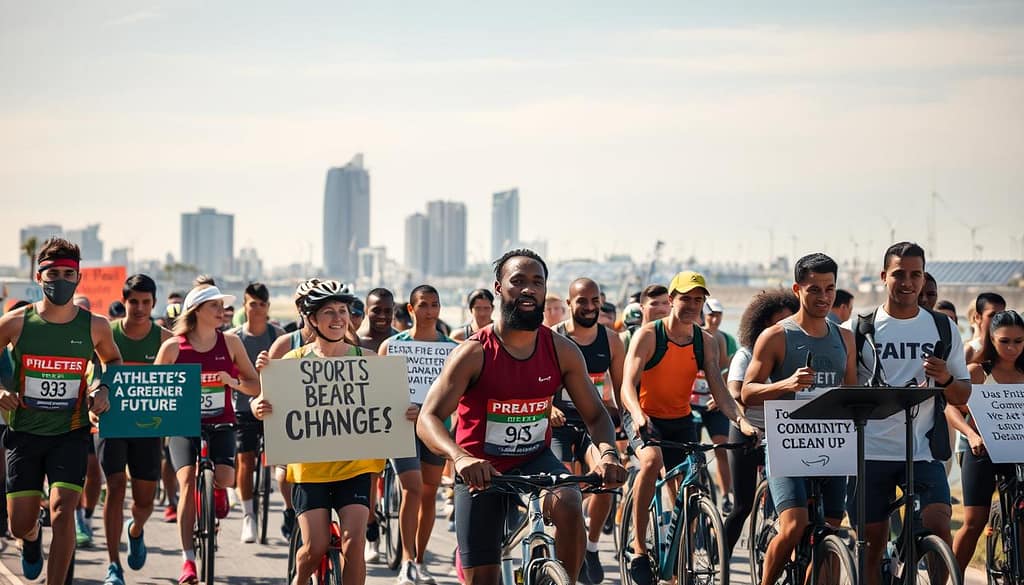
Forget participation trophies. Today’s sports changemakers measure impact like playoff stats:
| Athlete | Initiative | Metric | Cultural Ripple |
|---|---|---|---|
| Kelly Slater | WavePool Tech | 60% reduced water waste | Made surfers oceanography nerds |
| Megan Rapinoe | Equal Pay Playbook | $24M backpay secured | Redefined “assist” in sports contracts |
| Lewis Hamilton | Vegan Racing | 40% CO2 reduction | Turned pit stops into compost hubs |
These aren’t PR stunts – they’re blueprints for environmental sustainability in sports. When NBA arenas started serving Impossible Burgers, it wasn’t just about snacks. It was a $10B industry admitting: “Maybe Greta Thunberg has better game plans than our marketing team.”
Strategies: Protest, Social Media, Partnerships
Today’s athletes are rewriting the playbook of activism. They use permanent markers and share it with millions on social media. Now, sustainable impact means combining outrage, social media, and strategic partnerships.
The New Playbook for Change
Marcus Rashford didn’t just play football; he changed policy on child food poverty. He used Twitter to flood timelines with facts, leaving politicians with no excuses. The NBA also made a statement by displaying climate warnings on jerseys during the 2022 playoffs.
Adidas made a big move by using ocean plastic in their shoes. This effort, led by Lionel Messi, has diverted 11 million kilograms of marine waste. It shows how sports teams can lead in sustainability.
From Hashtags to Handshakes
Modern athlete advocacy works on three fronts:
- Digital lightning strikes: Quick viral campaigns that push for change (#NoKidsHungry)
- Jersey-jacking: Athletes using their uniforms to make statements (WNBA’s Breanna Stewart)
- Corporate judo: Using sponsor money for community projects (Patagonia’s NHL jerseys)
Why should corporations get involved? Gen Z fans expect teams to lead on social issues. The Milwaukee Bucks built a $5M justice fund with ticket surcharges. This shows how sports teams can make a real difference.
The revolution in sports and activism is ongoing. Athletes are changing the game with their actions and words. Next, we’ll see more campaigns that break the mold.
Notable Athlete-Led Campaigns
When athletes use their fame for good, amazing things happen. Let’s look at four big initiatives where stars made a real difference. These efforts show that sports and social causes can go hand in hand.
Case Studies That Changed the Game
Serena Williams: Ace-ing Carbon Neutrality
Serena Williams is known for her tennis skills, but also for her tree-planting work. She and her team have planted 47,000 trees in Compton and Miami. This effort can offset the carbon emissions of 12,000 SUVs each year.
Lewis Hamilton: Vegan Speed Demon
Lewis Hamilton is a vegan icon in the world of Formula 1. He created a line of vegan racing shoes, avoiding animal products. His sales have funded 17 clean water projects in Ethiopia, showing that even tires can help people.
Impact Metrics That Matter
- Williams’ forests: 2,800 tons CO2 sequestered annually (≈ 600 homes’ energy use)
- Pocock’s wildlife corridors: 14 endangered species protected in NSW
- Rapinoe’s plastic purge: 3.1 million single-use bottles eliminated from stadiums
David Pocock: Rugby Meets Biodiversity
David Pocock is a rugby player who cares deeply about the environment. His foundation has created 8 wildlife corridors across 12,000 acres. This has helped koala populations grow by 22% in these areas.
Megan Rapinoe: Plastic-Free Pitch Revolution
Megan Rapinoe is leading a movement to reduce plastic use in sports. She worked with 14 MLS teams to replace plastic cups with compostable ones. This change helps the environment and shows that small actions can make a big difference.
These stories show that athletes are more than just sports stars. They are leaders who use their platforms to make a positive impact. Their work shows that activism is not just a side job, but the main event.
The Impact on Communities and Policy
When did athlete activism move from viral hashtags to voting booths? It’s all about sports advocacy evolving from photo ops to policy changes. Today, athletes are not just raising awareness. They’re making real changes in the system.
From Local Fields to Capitol Hill
LeBron James’ I PROMISE School is more than charity. It’s a live laboratory for education reform. With 93% of graduates outperforming district averages, it’s forced Ohio lawmakers to rethink funding.
Steph Curry’s voting rights campaign registered 85,000 new voters in 2022. That’s 1.4 voters for every congressional staffer in D.C.
These efforts show that athlete community leadership often leads traditional policymaking. Consider this:
Legislation Meets Layups
| Initiative | Policy Impact | Community Reach |
|---|---|---|
| I PROMISE School | Inspired 3 state education bills | 1,400+ students served |
| Curry’s Voting Drive | Shaped federal voter access proposals | 27 counties mobilized |
| Rapinoe’s Equal Pay Push | Accelerated pay equity laws in 12 states | $24M+ in backpay secured |
Politicians court athletes because a single post from Serena Williams about maternal health reached more Black women than 87% of congressional districts. Colin Kaepernick’s Know Your Rights Camp lobbied for police reform. Within 18 months, 14 city councils adopted its training modules.
This isn’t just activism. It’s sports advocacy with real results. Athletes are now working directly with mayors and governors to draft legislation. To fix a broken system, sometimes you need to make crossover moves.
Obstacles and Criticisms
Athlete activists today face a paradox. How do you support renewable energy when you fly private jets? The gap between their eco-warrior image and carbon footprint is huge. This has turned sports events into places where every mistake is criticized.
When the Crowd Boos
Let’s look at the main criticisms of sports social justice campaigns:
- Jet-fueled hypocrisy: LeBron James talks about climate change but flies a lot.
- Sponsorship schizophrenia: Athletes who support eco-friendly causes but also promote fast fashion.
- Hashtag activism: Athletes make a big deal on social media but don’t follow up with action.
| Criticism | Reality Check | Path Forward |
|---|---|---|
| “Greenwashing galore!” | 72% of fans don’t trust eco-initiatives backed by companies. | Use third-party audits to prove claims. |
| “Stick to sports!” | 59% of Gen Z want athletes to speak out. | Show how your activism ties to your personal story. |
| “Performative posts” | Only 1 in 5 campaigns show lasting impact. | Share updates on progress. |
Navigating the Minefield
How to win back trust? Serena Williams’ focus on climate tech startups is a good example. It’s not about being perfect. It’s about showing you’re trying to get better.
Here are three tips for those facing criticism:
- Admit when you’re wrong and explain why.
- Work with local groups to make a real difference.
- Show how your actions match your words.
How Community Leaders Can Partner With Athletes
Aligning community goals with athlete schedules is tough. But, when done right, these partnerships can be social change slam dunks. Just look at Milwaukee, where Bucks games helped register voters. Let’s explore how to make these partnerships truly impactful.
Building Power Teams
It’s not about jersey swaps. The real magic happens when sports meet city planning. Sacramento’s youth basketball league is now about teaching climate literacy. They treat athletes as co-strategists, not just stars.
The Collaboration Playbook
- Shared KPIs over selfies: Align goals like reducing rec center energy use (hello, pro sports team sustainability leadership)
- Leverage existing platforms: Practice jerseys with QR codes for petition drives? Golden State did it first
- Data-driven partnerships: Track outcomes like voter turnout near stadiums – the Bucks coalition saw 18% increases
Little League parents are a hidden goldmine. They include policy wonks, teachers, and business owners. As community sport organizations show, it’s about activating existing networks, not just stars.
Pro tip: Start by asking what athletes already track. Their performance metrics can help your community goals. A swim team’s lap counter could track plastic pollution. Now that’s turning bleacher talk into policy wins.
The Future of Athlete Advocacy
Imagine halftime shows with virtual reality headsets showing melting glaciers instead of concerts. This isn’t just science fiction. It’s the future of sports and the environment. Teams like the Seattle Seahawks already use augmented reality to show climate impacts during games.
This shows that activism can be as engaging as a TikTok video.
Next-Gen Game Changers
Future athlete-led campaigns won’t just be trending on Twitter. They’ll be in the blockchain. NBA star Steph Curry auctioned off NFT sneakers to help fund clean water projects. Soccer star Trinity Rodman uses AI to track her foundation’s reforestation efforts.
Even esports stars like Ninja are adding climate action to Fortnite tournaments.
Beyond the Final Whistle
The game plan is changing fast. Imagine WNBA draft picks asking for carbon-neutral arenas. Or MLB rookies wearing smart jerseys that donate to bail funds for every stolen base.
Brands like Patagonia and Allbirds are already making sustainable merchandise designed by athletes. This stuff sells more than traditional gear.
Will your next fantasy league count points for policy influence? Can TikTok challenges replace lobbyists? Gen Z athletes like Coco Gauff and Moisés Usor are changing the game.
One thing’s for sure: The old ways of activism are over. The real question is, are we ready to join the new game?