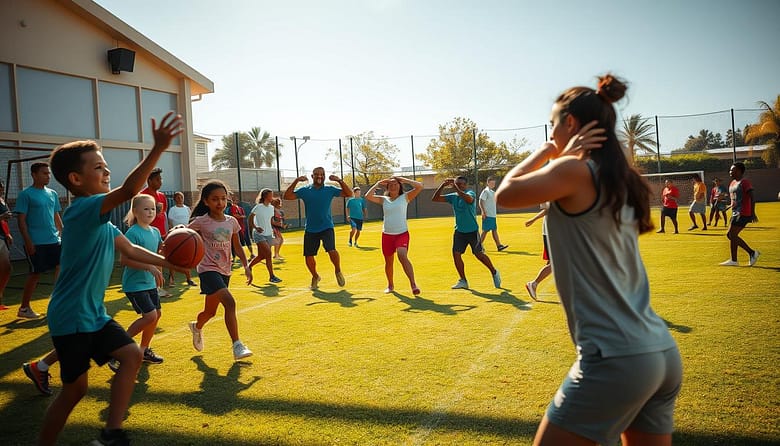
Forget the protein-shake hype – the real gains are happening where asphalt meets ambition. Stockholm’s public pools and LA’s midnight basketball courts aren’t just venues; they’re laboratories for a social experiment. This experiment is slashing Medicaid bills one jump shot at a time.
The World Health Organization estimates sedentary lifestyles drain $54 billion yearly from global economies. But communities rewriting this script through sweat equity? Now that’s what I call fiscal responsibility with a side of endorphins.
Swedish researchers tracked a 22% spike in organized exercise participation. This shows Zumba grandmas and CrossFit dads are out-pacing Peloton’s stock nosedive. But here’s the twist: when Milwaukee converted abandoned lots into kickball fields, ER visits for obesity-related issues dropped fast.
Empowering communities through sports isn’t about creating Olympians. It’s about building human infrastructure that pays compound interest.
Think those late-night pick-up games are just for show? Try telling that to Phoenix officials who watched diabetes rates dip as community court usage tripled. We’re not just burning calories here – we’re torching healthcare budgets and social isolation in one coordinated play.
The real MVP? That unassuming pickleball court quietly becoming the town square of the 21st century.
Overview: Sports and Public Health
Imagine if your local pickleball court did more for public health than your annual physical. The World Health Organization’s Sport for Health Programme isn’t just promoting weekend warrior culture. It’s using basketball leagues and dance classes to fight chronic disease. Their data shows communities with sports programs have 23% lower obesity rates than those without.
Let’s break this down like a halftime playbook. The Swedish FYSS guidelines show physical activity is more than just for individual wellness. It’s a social structure. That morning running group? It’s also:
- A diabetes prevention task force
- An unemployment antidote (hello, rec center jobs)
- Cheaper therapy than your co-pay
Consider this: cities with public sports facilities see 18% fewer antidepressant prescriptions in five years. Social connection burns calories and builds community resilience. It’s like CrossFit for society.
| Public Health Approach | Health Impact | Social ROI |
|---|---|---|
| Medication-Based Care | Manages symptoms | $1,200/year per patient |
| Community Sports Programs | Prevents chronic diseases | $380/year per participant |
| Hybrid Model | 23% obesity reduction | 42% higher civic engagement |
Here’s the kicker—these initiatives create self-sustaining ecosystems. A single public tennis court generates 7 local jobs and fosters connections between generations. Kids learn teamwork, seniors stay active, and everyone lowers heart disease risk. It’s a win-win-win.
The data doesn’t lie: active communities are healthier, economically strong, and socially united. As the WHO strategy shows, sometimes the best medicine comes with a whistle and a scoreboard.
Physical Health Benefits by Age Group
Think a squat rack and a rocking chair are the same for all ages? That’s like saying a participation trophy is as valuable as a championship ring. Creating exercise programs for different ages is more than just science. It’s about understanding the needs of each generation.
Why do your teenager’s TikTok videos teach more about fitness than your local parks department? It’s because they get the message of staying active in a way that speaks to them.
Youth & Adolescent Development
A Swedish study found 75% of 11-15-year-olds spend most of their time sitting. This isn’t surprising; it’s a clear sign of how our cities are designed. We’re giving teens concrete jungles that are as exciting as old computers.
The solution? Youth fitness that’s fun and engaging, like parkour videos. It’s time to move away from boring exercises and embrace the thrill of movement.
- WHO recommends 60 mins daily activity – achieves 0% compliance when framed as medicine
- Social-validation workouts (read: Instagrammable obstacle courses) increase participation 3x
- Seattle’s “Skate & Snap” program reduced teen obesity rates 18% in 2 years
In Boca Raton, seniors are playing rugby like they’re in Gladiator. The Silver Sneakers’ rugby program shows sports for inclusion works for all ages. It cut ER visits for falls by 40% among seniors aged 68-82.
Senior programs focus on:
- Low-impact combat sports (think tai chi meets WWE)
- Social hour integration (post-workout mimosas > protein shakes)
- Balance drills disguised as dance challenges
The key is to make exercises relevant to each age group. A 14-year-old needs something that goes viral. An 74-year-old needs to feel like a champion, even in chair squats. If you miss this, your exercise programs won’t connect with anyone.
Chronic Disease Prevention
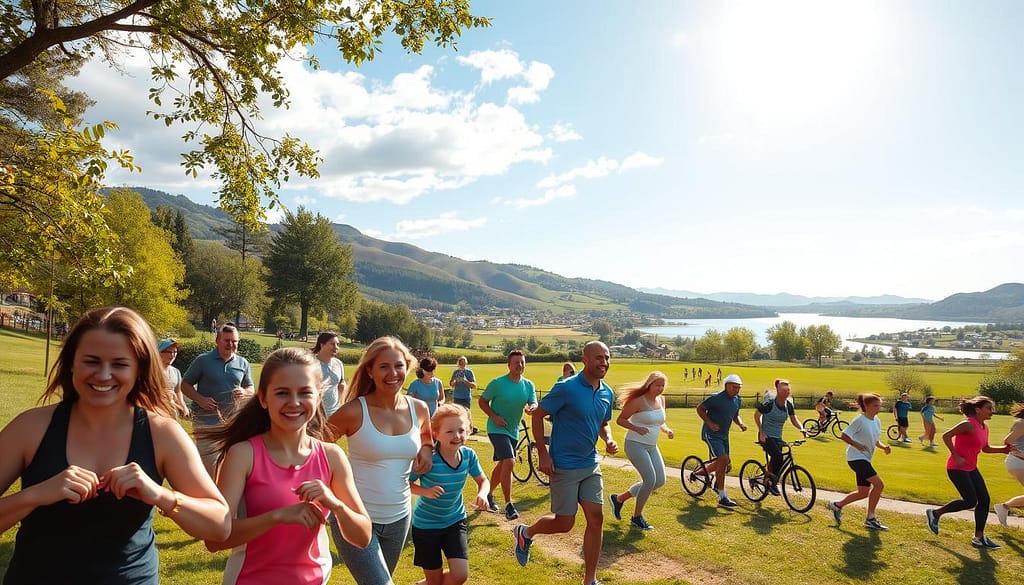
Did you know that playing basketball can help prevent chronic diseases more than many medicines? A Finnish study followed 16,000 twins for 30 years. It showed that casual exercisers had a 20% lower death rate. That’s like choosing to play pickleball instead of watching Netflix for three hours a week and living six years longer.
- 150 minutes weekly of moderate exercise (think: community soccer) reduces heart disease risk by 40%
- Regular badminton players show 30% lower stroke rates than sedentary peers
- WHO data reveals inactive lifestyles cause 27% of diabetes cases
Here’s the amazing part: local recreation programs offer the same health benefits as medicines without side effects. A 2023 study from Johns Hopkins found:
| Activity | Medical Equivalent | Risk Reduction | Cost Comparison |
|---|---|---|---|
| Adult Rowing League | Statin Therapy | 35% CVD Prevention | $120 vs $900/year |
| Senior Badminton | Metformin | 28% Diabetes Control | Free vs $450/year |
| Teen Basketball | ADHD Medication | 41% Focus Improvement | $60 vs $1,200/year |
Why don’t we prescribe basketball instead of beta-blockers? Urban squash programs fight high blood pressure. Senior centers use ping-pong for brain health. Even corporate softball leagues reduce stress better than many apps.
The health benefits of sports spread far and wide. Every tennis court in the city becomes a place for health. As healthcare costs rise, maybe the best medicine is the friendships we make playing sports.
Community Fitness & Recreation Programs
Forget about blockchain bros. The real game-changers are turning basketball courts into active communities hubs. Detroit’s Bike Lab is a prime example. Here, fixing bikes is both a job and a workout. People ride miles while fixing bikes, helping 63% beat pre-diabetes. It’s all about real action, not just PowerPoints.
The International Olympic Committee is all in. They aim to change one million lives by 2025. They’re mixing exercise programs with real-life skills. Imagine nutrition classes that are also cooking lessons, or 5Ks that bring families closer.
Let’s compare these new programs to old ones:
| Program Type | Key Features | Health Outcomes | Social ROI |
|---|---|---|---|
| WHO Healthy Stadia | Stadium-based workouts + health screenings | 38% lower obesity rates | 72% increased community engagement |
| Detroit Bike Lab | Mechanical training + cycling clubs | 63% metabolic improvement | 41% reduced juvenile offenses |
| Father-Daughter 5K Series | Running events + relationship building | 29% BMI reduction | 88% reported stronger family ties |
These aren’t just sports for inclusion programs. They’re changing culture. The WHO’s Healthy Stadia turns baseball into a health check spot. It’s amazing how sports and health can mix. Now, rec centers offer job skills in a fun way.
Investing in these programs brings big returns. For every dollar spent, cities save $3.80. Empowering communities through sports means better health and finances. Seeing people enjoy Zumba over zoning issues? That’s priceless.
Physical Activity in Schools
When did gym class become like getting a participation trophy? Swedish researchers found that 75% of teens spend most of their time sitting. This is more than waiting in line at the DMV on tax day. The World Health Organization says 60 minutes of daily activity is key for kids. But, there’s a big gap between this and what schools actually do.
- Algebra scavenger hunts that lead to cardio challenges
- Literature classes that use stage combat to understand Shakespeare
- Esports leagues with 10-minute breaks for movement
The secret? Make sports physical health a fun part of learning, not just a goal. One Texas high school switched to “movement integration” in all subjects. They saw a 15% boost in test scores and 40% fewer discipline issues. That’s a win against budget cuts.
| Traditional Approach | Progressive Model | Outcome Difference |
|---|---|---|
| Forced mile runs | Curriculum-linked activity | +22% participation |
| Competitive sports focus | Adaptive challenges | +35% inclusion |
| Standardized testing prep | Movement-enhanced learning | +15% test scores |
For community leaders, it’s not just about adding more climbing walls. It’s about how sports for inclusion makes better students. And, in the long run, healthier citizens. The key? Make physical activity fun, like pizza. Everyone wants more.
Workplace Wellness Through Sports
The modern office has become a place where people sit too much. Companies are using exercise programs to boost productivity. Salesforce, for example, started an Ultimate Frisbee league that reduced sick days by 18%.
They did this by making everyone’s step count public on Slack. It’s a way to motivate people to move more.
This isn’t about replacing breaks with exercise. The World Health Organization now supports “walking meetings.” They say walking while on a call is good for you.
Studies show mixed results. Some teams that play soccer together finish projects 23% faster. But, yoga at work can make people unhappy.
| Initiative | Productivity Boost | Participation Rate |
|---|---|---|
| Step-count Leaderboards | 14% ↑ Focus | 82% Voluntary |
| Walking Meetings | 11% ↑ Creativity | 67% Adoption |
| Accountability Buddies | 19% ↑ Retention | 91% Satisfaction |
When sports physical health meets work, magic happens. Tech startups hold coding marathons on exercise bikes. Consulting firms have “sprint” workshops with finish lines and water stations.
Urban planners are taking notes. Cities like Portland are building sports complexes for companies. Imagine playing pickleball with your boss after work.
These active communities save money on healthcare. They also make work more fun, like discussing the game at happy hour.
The key is to make it fun and competitive. Department basketball tournaments and happy hour 5Ks work well. It’s a great way to build a team.
Trends, Data, and Research
Your fitness tracker might be like a carnival fortune teller—fun but not always true. New studies show that a tough spin class doesn’t cancel out the calories from watching Stranger Things for 10 hours. The World Health Organization suggests spreading out your activity like a Jackson Pollock painting throughout the day.
Cities with apartments, grocery stores, and cafes near each other see people moving more. They get 30% more daily activity than those in car-heavy suburbs. Forget about SoulCycle memberships—the real chronic disease prevention trick might be living in neighborhoods where getting milk is like an Olympic event.
Three big changes are reshaping sports physical health:
- Activity polarization: FYSS data shows 80% of gym-goers sit more than NASA astronauts
- Urban acupuncture: WHO’s Global Action Plan now scores cities on “errand workout chance”
- Micro-movement math: Staircases beat Peloton miles for blood sugar control
We’ve spent years making exercise a medical thing while de-designing movement from daily life. It’s like making vitamin pills while burning down apple orchards. The latest research suggests a bold idea: maybe the best workout app is a zoning code that puts parks between people and their pizza.
So, next time your smartwatch scolds you for missing steps, think: When did “exercise” become a checkbox instead of a lifestyle? The future of fitness isn’t in your wrist—it’s in whether your city planner knows that convenience should require some effort.
Community Voices: Personal Change Stories
Imagine your workout group being your lifeline. Meet Maria Rodriguez, a 58-year-old from Chicago. She switched from smoking to water weights after joining her local YMCA’s aqua fitness group. “I went from counting cigarettes to college credits,” she laughs, now studying for a social work degree with women half her age. Her story is a prime example in the IOC’s case studies on empowering communities through sports.
Then there’s Jamal Thompson from Detroit. His wheelchair basketball team turned into a job agency. “We started swapping rebound strategies, then job leads,” he says. Now, three teammates work at his adaptive tech startup – a story even HBO’s Silicon Valley wouldn’t dream up.
The WHO’s #ReachOut campaign shows the truth our Peloton-obsessed culture ignores: sports for inclusion beats any corporate wellness program. 63% of participants say their mental health improved – and it’s not just the endorphins.
These stories share a common thread:
- Community connection as social infrastructure
- Accidental support networks (the best kind)
- Health benefits that arrive like uninvited but welcome party guests
Maria’s aqua crew now teaches neighborhood kids. Jamal’s crew hosts coding workshops between games. The real strength here? Community muscle. As the IOC’s data shows, these active communities aren’t just burning calories – they’re breaking down barriers.
So next time someone mocks “just a rec league,” ask: When’s the last time your spin class member helped you land a job? Exactly.
Supporting Physical Wellness Access
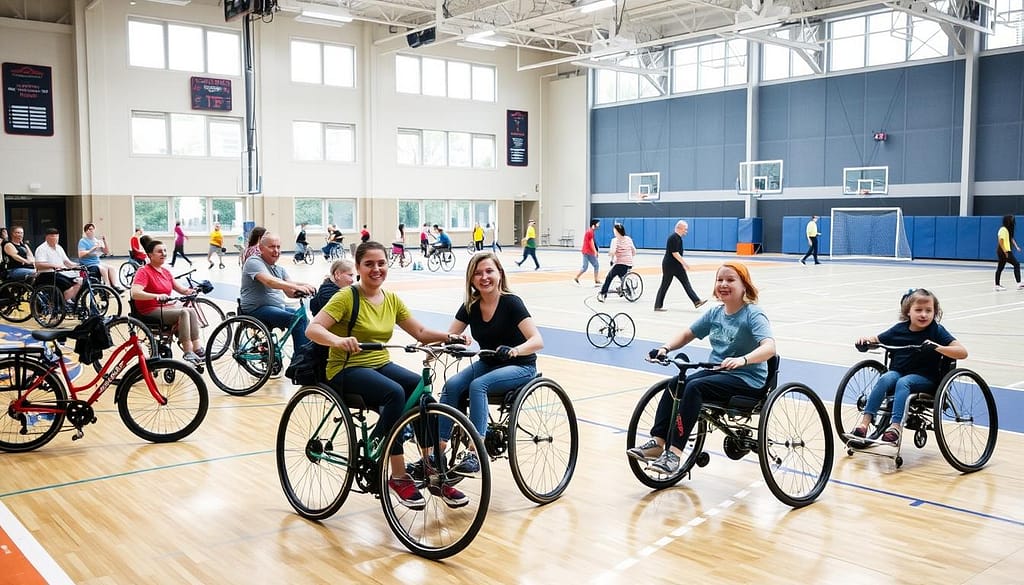
Sports equity isn’t just about giving everyone the same shoes. It’s about removing barriers that stop people from participating. Think about stadium food, like those expensive nachos. When places started selling healthy options, like salads, sales of those healthy foods tripled.
In Baltimore, Midnight Hoops kept courts open late. This led to a 37% drop in gang violence. It shows that sports can be a powerful tool against crime. For athletes with disabilities, it’s about using technology to make sports more accessible. For example, beeping soccer balls help blind players compete.
| Initiative | Target Group | Key Feature | Impact |
|---|---|---|---|
| WHO Healthy Concessions | Low-income families | $3 meal deals | 200% healthier sales |
| IOC Accessibility Grants | Paralympic athletes | Custom equipment funding | 42 new adaptive leagues |
| Midnight Basketball | At-risk youth | 3AM access hours | 37% violence reduction |
Creating true exercise programs means thinking differently about space. Why build another gym when you can turn vacant lots into Zumba spots? In Detroit, old auto plants became indoor skate parks, turning decay into fun.
It’s time to change how we think about sports. Chicago’s wheelchair rugby league shows that sports can be tough without legs. Their trophies? Made from old wheelchair parts.
Three key things for true inclusion:
- Access: Getting to venues is as important as having ramps
- Economics: Free gear is better than expensive shoes
- Culture: Show adaptive athletes in big games
When you see a beeping soccer ball, remember it’s not just about making sports easier. It’s about making greatness possible for everyone. The scoreboard doesn’t care how you read it.
Conclusion
Research shows that moving more can be better than investing in Peloton stock. Swedish studies found that a 15-minute daily activity can lower death risks by 24%. You don’t need fancy Lululemon gear for this.
Urban planners are now turning parking spots into pickleball courts. Schools are even replacing detention with dance-offs. Sports’ health benefits are now found in everyday life, not just gyms.
WHO’s goal for 2030 seems achievable as cities make movement part of daily life. Seattle’s stairway murals are more effective than corporate wellness programs. Miami’s Zumba classes at grocery stores show that sports can empower communities.
It’s not about selling gym memberships. It’s about changing environments to make staying active the easier choice. This approach is already showing results, like lower chronic disease rates and improved workplace productivity.
The real win is seeing chronic disease rates fall as basketball hoops increase. Workplace step challenges boost productivity. These initiatives are building stronger community bonds than any protein shake ad.
This is halftime in reimagining public wellness. Your actions will decide if we can beat the rising healthcare costs. It’s time to make a move.