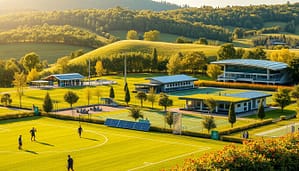
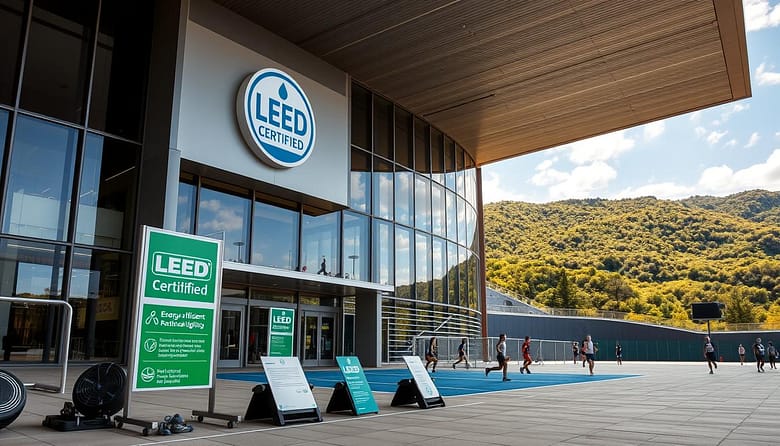
Imagine a football stadium that recycles rainwater like Thor’s hammer summons storms. Welcome to the new era of athletic coliseums. Here, sustainability certifications in sports are not just buzzwords; they’re game-winning strategies. Atlanta’s Mercedes-Benz Stadium didn’t just break records with its retractable roof; it smashed environmental benchmarks by becoming the first pro stadium to achieve LEED Platinum status.
These modern amphitheaters are rewriting the playbook. Seattle’s Climate Pledge Arena – yes, named after that Jeff Bezos initiative – now operates at zero carbon. It proves hockey rinks can chill more than just beer. How? Through solar arrays powerful enough to light every Swiftie’s phone during Bad Blood, and waste systems that make recycling bins look like amateur hour.
But here’s the real touchdown: stadiums are becoming climate action laboratories. Their sheer size turns every green innovation into a LEED sports venues masterclass. From energy-smart lighting that could guide Icarus safely home, to concrete mixtures that laugh in the face of carbon footprints. It’s not just about saving the planet anymore. It’s about winning the ultimate trophy: a future where “eco-friendly” and “edge-of-your-seat excitement” aren’t competing concepts, but teammates.
Defining LEED: Criteria and Categories
Imagine stadiums competing in sustainability like athletes do in the Olympics. That’s what LEED certification is like in the green building decathlon. It’s not just a game; it’s a serious scoring system. Venues earn points, just like Steph Curry scores three-pointers.
The USGBC’s framework checks facilities in nine areas. It turns environmental care into a measurable sport.
| Tier | Points Required | Sports Analogy |
|---|---|---|
| Certified | 40-49 | Making varsity team |
| Silver | 50-59 | Conference championship |
| Gold | 60-79 | Olympic podium finish |
| Platinum | 80+ | Undefeated season + Hall of Fame |
Key scoring areas show where venues can shine:
- Water Efficiency: Think rainwater harvesting systems that outpace marathon runners’ water use
- Energy & Atmosphere: Solar panels that could power a small city’s stadium lights
- Materials & Resources: Recycling programs that make NBA arena waste look like rookie numbers
LEED for sports venues adds special credits. Like bike rack capacity and public transit access. These are like bonus points for a behind-the-back pass – flashy, functional, and crowd-pleasing.
Scoring thresholds get interesting. A single innovation can be the Messi-esque playmaker of your certification bid. Install a greywater system? That’s your triple-double right there. But can your venue go from practice squad to MVP in the sustainability league?
The Process of Achieving LEED for Sports Venues
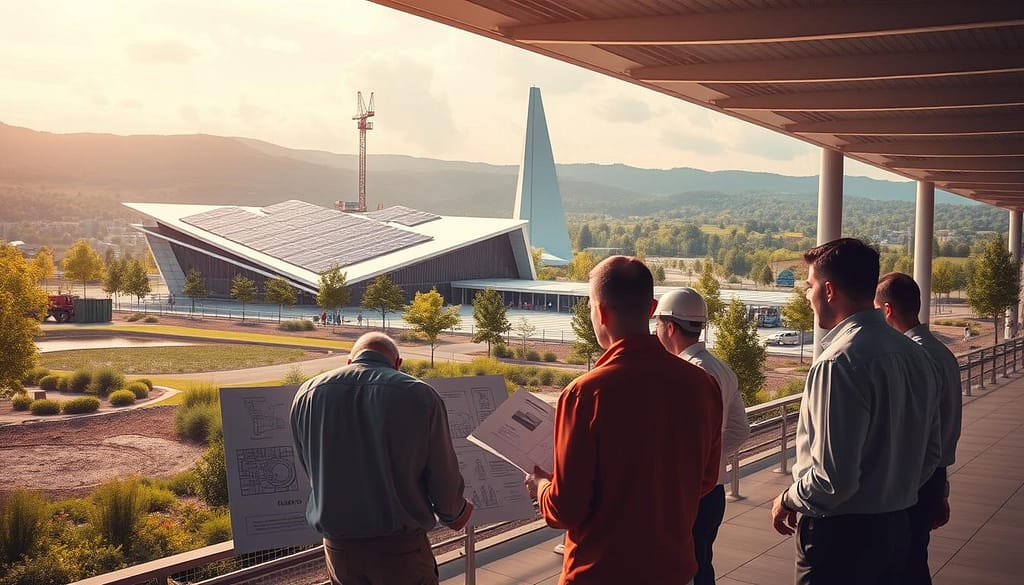
Getting LEED certification for a stadium is a big challenge. It’s like a high-stakes game that needs careful planning. Arrowhead Stadium is a great example. They aimed to meet 2026 World Cup standards.
Their strategy included:
- Doing energy audits to find wasted power, enough to power Taylor Swift’s Eras Tour
- Upgrading old plumbing with smart systems to track water use
- Working with 23 local contractors to use materials within 500 miles
The Chiefs found their 1972 stadium was very inefficient. They fixed it with a $15 million HVAC upgrade using geothermal tech. This saves enough energy for 1,200 homes each year.
| LEED Category | Sports Venue Challenges | Innovation Points |
|---|---|---|
| Sustainable Sites | Managing 10k+ parking spots | Electric shuttle networks |
| Water Efficiency | Irrigating 8 acres of turf | AI-powered soil sensors |
| Energy & Atmosphere | Powering 100k+ LED lights | Solar canopy installations |
| Materials & Resources | Recycling 60-ton event waste | Closed-loop concession systems |
| Innovation | Legacy infrastructure limitations | Carbon offset partnerships |
Arrowhead Stadium got Silver certification while saving 18% on costs. They focused on sustainability like a Moneyball strategy. This led to recycling 89% of waste and using 40% less water than other NFL stadiums.
For those aiming for LEED, it’s not just about planting trees. It’s a complete overhaul of the facility. Every detail counts. Success means outshining competitors with modern infrastructure.
Iconic LEED Certified Stadiums Worldwide
Stadiums that are green and grand are changing the game. They show us how to mix eco-friendliness with excitement. Let’s explore two green sports venues that prove you can have both.
Atlanta’s Mercedes-Benz Stadium is a beacon of sustainability. It has 4,000 solar panels that make 1.6 million kWh of power each year. That’s enough to light up 9,000 homes or play “Shake It Off” 17,000 times at full blast.
The roof also collects 680,000 gallons of rainwater. It’s like Taylor Swift’s pyrotechnics team has found a new way to save water.
Seattle’s Climate Pledge Arena is another green gem. It’s a green sports venue that made a big statement. Amazon’s sponsorship came with big environmental goals.
- Eliminate single-use plastics by 2024
- Offset 100% of its energy through renewables
- Become North America’s first zero-waste arena
Amazon, known for fast shipping, is leading the way in sustainability. The arena uses rainwater for ice and has a “living wall” of 18,000 plants. It’s like a green oasis.
These stadiums are not just fighting climate change. They’re setting new standards in design. They use solar panels as art and composting that rivals Whole Foods. Green sports venues are winning where it counts.
Environmental Impact: Energy and Water
Sports venues are now saving the planet more than Marvel heroes. Mercedes-Benz Stadium cut energy use by 29% thanks to LEED-certified engineering. That’s enough to charge 2.3 million iPhones or keep Draymond Green’s mic on for 82 NBA seasons.
Let’s look at the numbers:
- The Orlando Magic’s Kia Center diverts 83% of waste, beating your recycling program
- LEED-certified stadiums save so much water, they could fill 450 Olympic pools yearly
- Solar arrays at top venues power 3,000 homes for a month
These stadiums are not just scoring in sustainability. They’re changing the game:
- Energy-efficient lights cut costs faster than LeBron’s fast breaks
- Smart irrigation keeps fields green, like Wimbledon’s center court
- Waste-to-energy programs turn trash into power
Want to know who’s leading the eco-revolution? Check our LEED-certified stadiums list. It shows who’s really making a difference.
When 70,000 fans cheer in a green stadium, they’re not just watching. They’re helping the planet. And that’s how we turn climate goals into champions.
Economic and Social Co-Benefits
LEED-certified stadiums are more than just about saving polar bears. They also boost local businesses and foster community ties. These venues serve as both sustainability labs and social hubs, showing that environmental efforts can fund local businesses and strengthen neighborhood bonds.
Arrowhead Stadium’s community garden is a prime example. It’s a 3-acre plot where recycled rainwater grows kale instead of corporate logos. This effort:
- Supplies 8 local food banks weekly
- Trains 120 urban farmers annually
- Cuts produce transportation costs by 40% for nearby schools
In Seattle, Climate Pledge Arena has turned transit passes into fan merchandise. Their free light rail program has reduced game-day traffic by 22%. It’s created a unique bond among fans over their shared commitment to reducing carbon emissions.
| Benefit Type | Stadium Example | Community ROI |
|---|---|---|
| Economic Multiplier | Arrowhead Garden | $3.2M annual local food sales |
| Social Engagement | Climate Pledge Transit | 17% higher fan retention rate |
| Health Impact | Mercedes-Benz Stadium Markets | 34% increase in fresh produce consumption |
These best practices in sports sustainability show a smarter approach than any halftime show. Venues that function as water treatment plants by Tuesday and concert halls by Saturday are not just reducing their environmental impact. They’re also creating economic blueprints for smarter city development.
So, when someone mocks “green stadiums,” ask them: When did saving the planet become a lucrative side hustle? The real MVP here isn’t the solar panels—it’s the community trust built through initiatives like transit passes and tomato seedlings.
How LEED Drives Broader Change
If LEED certification were a wrestler, it would be a powerhouse. Its moves would knock John Cena’s “Five Knuckle Shuffle” out of the ring. The program has changed many industries, pushing for ISO sports sustainability and ruthless eco-innovation. McLaren, for example, is using recycled carbon fiber from old race cars in new grandstands.
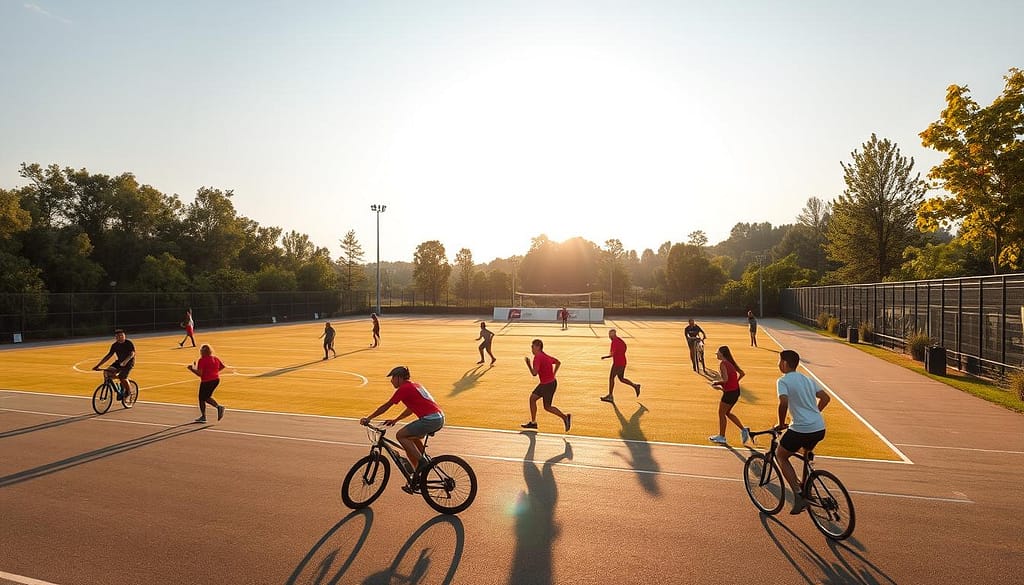
FIFA’s LEED Silver mandate for World Cup venues is changing soccer and event planning. The Qatar 2022 stadiums saved enough energy to power 10,000 homes each year. This made other big event organizers wake up to the environment.
This certification domino effect creates curious bedfellows:
- NASCAR tracks installing solar panels that could power Daytona Beach
- Olympic villages doubling as permanent eco-districts post-games
- Baseball teams using drought-resistant grass that survives both climate change and ninth-inning rallies
The real magic happens when these innovations go beyond sports. That recycled carbon fiber technology is now used in electric vehicles. Stadium rainwater harvesting systems are being used in drought-stricken areas. LEED is a triple threat – saving money, cutting emissions, and making old construction methods look outdated.
Steps For Aspiring Venue Owners
Getting LEED certified is not like trying to win the Super Bowl with a high school playbook. The game has changed. Tools like the Rescore Sustainable App are your new offensive coordinators. Let’s see how NASCAR’s Talladega Superspeedway turned 12,000 beer cans into a recycling end-zone dance last season.
- Audit like Moneyball
Track every watt and water droplet like Billy Beane tracking RBIs. Talladega’s secret weapon? Scanning concession waste with Rescore’s AI to find 37% recyclables they’d been trashing. - Draft your green team
Your janitorial staff knows more about waste patterns than any consultant. Involve them early – NASCAR’s “Can Crew” volunteers collected 8 tons of aluminum in 2023 alone. - Play the long game
LEED’s not a touchdown – it’s the entire season. Use Rescore’s predictive analytics to map 5-year energy savings. Pro tip: Solar panels have better ROI than most rookie contracts. - Celebrate the bloopers
That failed compost program? Frame it like a bobbled catch highlight. Transparency builds fan trust – 68% of millennials prefer venues that own their sustainability fumbles.
The real power move? Treating your sustainability report like a championship ring ceremony. When Talladega’s app data showed 22% reduced water usage, they didn’t just file paperwork – they created “Green Flag Moments” video series showing exact changes. Because nothing says “eco-champion” like proving you’re not just greenwashing between commercial breaks.
Community Partnerships For Certification
Getting a LEED-certified stadium is a team effort. Corporate sponsors and community gardens work together. The Council for Responsible Sport Certification is like a coach, helping everyone play their part.
Imagine the Avengers, but with recycling bins and solar panels. It’s a team effort for a greener future.
The Orlando Magic’s Amway Center is a great example. They partnered with local farmers for their food. This cut down on food miles and helped the local economy.
It shows that nacho cheese can be both tasty and good for the planet. This is a rare win in sports.
The Green Sports Alliance brings teams together for the environment. The Seattle Mariners and Portland Timbers share ideas on being green. It’s like Batman and Superman working together.
These alliances lead to big changes. Companies help create urban gardens and support electric vehicles. Fans learn about sustainability during games.
So, is your city’s arena ready to join the sustainability league? The game is on.