Progress isn’t automatic. It’s a battle. Thirty years after the Beijing Promise, we’re tracking gender equality worldwide.
The UN’s recent statement on gender equality was a clear message. It shows that sports can empower, but it’s not perfect. Declarations are just the start. The real challenge is in the numbers.
Look at the statistics as a measure of change. In Samoa, 92% of boys in a sports program rejected the idea that men are always better leaders. In Fiji, girls in similar programs showed a 40% increase in understanding their rights. This is more than just good news. It’s solid evidence.
This effort is like Title IX, but on a global scale. We’re not just fighting for fairness. We’re changing how society works. The numbers show that women’s sports are not just a side issue. The fight for equality is ongoing, but the data is clear.
Recruitment, Retention, and Role Models
Seeing yourself in leadership is key. If sports leadership looks old-fashioned, it sends a bad message. In the U.S., change is happening, but the numbers are shocking. Look at sports leaders and you’ll see a big problem.
Only 22% of top sports leaders in Australia are women. This isn’t just a diversity issue; it’s a huge waste of talent. When a female athlete like Tayla Harris goes viral, it shows huge interest in women’s sports.
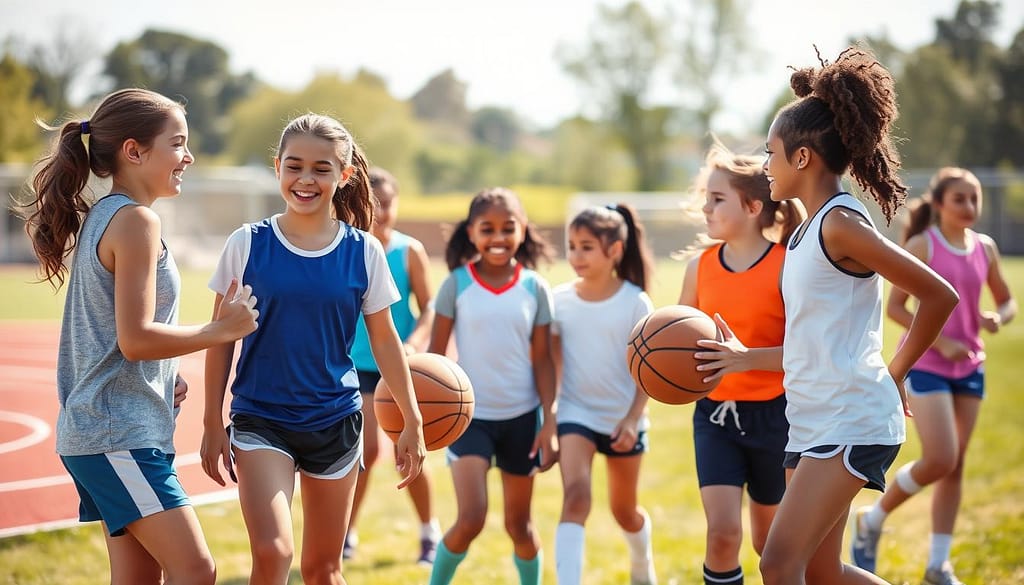
To fix this, we need to recruit and keep young athletes. Cricket Australia didn’t just hope for more girls in sports; they made a plan. They saw a 700% jump in girls’ cricket competitions. Seeing a role model like Meg Lanning shows girls they can succeed.
This is about smart business, not charity. Seeing yourself in sports leadership is the first step. If girls don’t see themselves in sports, they won’t join. Here’s how visible role models and programs help:
| Initiative | Target Group | Measurable Outcome | Key to Success |
|---|---|---|---|
| Visible Professional Pathways | Teenage athletes | Increased retention in sport beyond age 14 | Seeing elite athletes who “look like them” in media and leadership |
| Structured “All-Girls” Leagues | Girls aged 8-14 | 700% growth in participation (Cricket Australia model) | Dedicated, safe, and competitive spaces for skill development |
| Leadership Pipeline Programs | Young women in sport management | Increased % of women in board/CEO roles | Mentorship and clear career pathways in sport administration |
| Grassroots Coaching & Officiating | Former athletes, young adults | Larger, more qualified official/coach pool | Creating a self-sustaining ecosystem of female leadership |
The viral Tayla Harris moment showed huge interest in women’s sports. The right spark can ignite this interest. The Coaching Association of Canada’s resources show the need for long-term development. Keeping girls in sports is the real challenge.
The goal is to make success in sports inevitable for every girl. It’s not about finding a prodigy; it’s about creating a place for everyone. This means quality coaching and visible paths to success.
Safe Spaces & Policies
Think of a locker room. For some, it’s a place of confidence. For others, it’s a source of trauma. The difference is policy, not luck. A Title IX global mindset means safety and inclusion are key for everyone.
This isn’t just about signs on doors. It’s about creating a system where everyone can participate. The UN Women’s “Safe Cities and Safe Public Spaces” initiative is a great example. They work in places like Bolivia and Egypt, making public areas safe for women and girls.
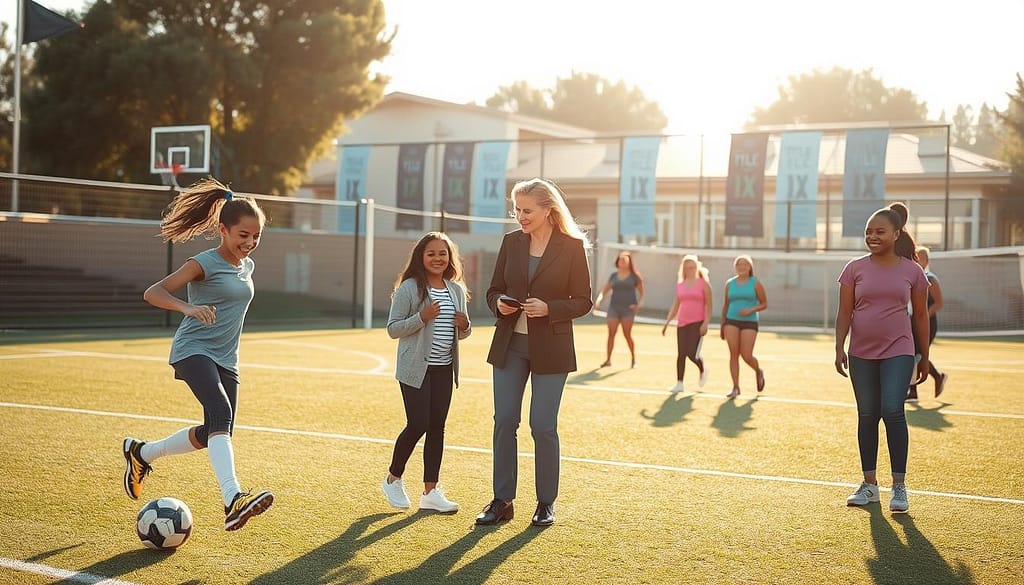
Local efforts can also make a big difference. The Traralgon City Soccer Club is a great example. They didn’t just add more women; they made the space safer. They fixed lights and trained staff on preventing gender-based violence. This led to more women feeling welcome.
Creating a space from scratch can be powerful. Ellen Connor founded West Coast Wonder Women in boxing. She built a space where women could feel empowered, not intimidated. This shows the power of building your own safe space.
These stories are more than just examples. They show that safe, inclusive spaces are essential. Without them, efforts to support women’s sports are at risk. A Title IX global approach asks if your policies and actions are truly making a difference.
For more on this, check out the analysis on key inclusion topics for.
Media Coverage Pledges
The 81% rule in sports media is a choice, not a law. Men’s sports get 81% of TV sports news, while women’s sports get just 17.4%. This imbalance shapes what we value. When a woman scores a goal, does it matter if cameras aren’t there? The answer is no, but this can change.
The business case for fair coverage is clear. The US Women’s National Soccer Team’s 2019 World Cup win was a huge hit. It showed a big audience for women’s sports. Nike’s “Dream Crazier” campaign also went viral, showing the power of female athletes.
These stories are more than feel-good moments. They show the need for change. By covering women’s sports more, we can break a cycle of less coverage leading to less investment.
The solution is simple: media needs to make a commitment. They must pledge to give women’s sports equal airtime. This means profiling female athletes and commentators more. It’s about making women’s sports the main event, not just a special feature.
The data below shows the current imbalance in sports coverage:
| Coverage Area | Men’s Sports | Women’s Sports | Notable Trend |
|---|---|---|---|
| Prime-Time Airtime Share | 81% | 17.4% | Remaining ~1.6% is mixed/other |
| Lead Story Focus | Game analysis, trades, contracts | Non-sport narratives, off-field stories | Men’s sports framed as athletic, women’s often as human-interest |
| Commentator Analysis | Predominantly male ex-athletes/analysts | Significantly fewer female analysts | Impacts depth and perspective of coverage |
| Post-Event Coverage | In-depth tactical breakdowns | Often limited to final score highlights | Reinforces disparity in perceived importance |
Making a pledge is one thing; creating a lasting model is another. Successful campaigns, like those analyzed in the analysis of recent sports campaigns, focus on building partnerships. They move from seeing women’s sports as charity cases to recognizing their value.
The media’s role is more than reporting scores. They shape the narrative. By focusing on women’s sports, they change the game. This victory is not just on the field but in the public eye, where true change happens.
Fundraising for Gear and Coaches
The checkbook is mightier than the whistle when it comes to leveling the playing field for girls in sport. While we debate pay equity and media coverage, the real game is often won or lost in the budget meetings, not on the field. The raw economics of inequality aren’t just about prize money or sponsorship deals; they’re about the daily drip-feed of resources that determine who gets to play—and who gets to excel.
For girls in sport, the funding gap isn’t just a statistic; it’s the difference between a worn-out pair of cleats and proper gear, between a volunteer parent-coach and a salaried professional. The UN has called for more investment in women’s sports, focusing on coaches and leadership roles. But what does that investment actually look like on the ground?
Hockey Australia shows us how to fund fairness. Their “matched funding” model is a financial judo move: wherever the men’s team receives more funding, they top up the women’s program to ensure parity. It’s a simple, brilliant equation: equal investment for equal expectation. This isn’t charity; it’s a strategic recalibration. When you fund the women’s game at the same level, you’re not just buying equipment; you’re buying talent, performance, and a pipeline of future stars.
This granular approach to equity is where the real game is won. It’s not about a one-time grant or a splashy sponsorship deal. It’s about ensuring the 14-year-old goalie has the same access to a qualified, paid goalie coach as the boy on the neighboring field. It’s about funding the pathways so that talent isn’t lost in the chasm between high school and elite competition simply because the financial bridge is out.
| Funding Model | Traditional Approach | Equity-Focused Model (e.g., Hockey Australia) |
|---|---|---|
| Core Philosophy | Fund what’s proven; men’s sports often have historical data showing ROI. | Fund for future and equity; use men’s funding as a benchmark for women’s funding. |
| Resource Allocation | Gear, coaching, and facilities often allocated based on historical precedent or revenue generation. | Resources are allocated to achieve parity. If men’s team gets X for gear, women’s team gets a top-up to X. |
| Coaching & Development | Elite men’s teams have dedicated, salaried coaches; women’s teams often rely on volunteers or part-time staff. | Investment in full-time, expert coaches for women’s programs is prioritized as a non-negotiable for talent development. |
| Long-Term View | Funding follows current success, creating a self-perpetuating cycle for established (often men’s) programs. | Funding is seen as an investment in the ecosystem, building the women’s game to be self-sustaining. |
The ROI on this isn’t just moral; it’s material. The UN’s call for investment isn’t a plea—it’s a business case. You want double the medals, double the inspiration, double the economic activity from women’s sports? Then double down on the checkbook for girls in sport at the developmental level. Funding coaches isn’t an expense; it’s infrastructure. Buying quality gear isn’t a cost; it’s a capital investment in an athlete’s safety and performance.
The conversation needs to shift from charity to strategy. Investing in girls in sport isn’t about being fair; it’s about being smart. It’s recognizing that the girl with a proper coach and proper gear today is the role model, the medalist, and the economic driver of tomorrow. The final score in this game isn’t just about who wins on the field, but who was given a real chance to play with the right tools from the start.
Monitoring Outcomes and Scaling
The game may be over, but the real challenge is just starting. We’ve made the first moves by launching programs and making payments. Now, we must measure our success and grow what works. This is how activism turns into lasting policy, moving from small projects to a Title IX global system.
In Fiji, a UN Women partner, big changes happened. The number of female players who thought harassment was their fault dropped by 26 points. This isn’t just a win. It’s a sign of real change, showing a Title IX global approach can change culture.
This is our plan for growth. It’s how a small boxing club in Vancouver or a safety check at a soccer club in Traralgon can inspire others. The UN Women’s Sport for Generation Equality initiative is our guide. It turns lessons from around the world into national policies. Working with the IOC and FIFA helps us make a bigger impact.
We must keep track of every change we make. We look at more than just how many people are playing. We measure confidence, leadership, and social norms. We move from counting players to building leaders. That’s how we create a lasting change.