“Zero-waste” is a term you hear a lot, like artisanal toast and craft seltzer. But it’s more than just a buzzword. It’s a serious way of doing things.
Zero waste isn’t about being perfect. It’s about making a real change. The Zero Waste International Alliance says it’s about eliminating all discharges to land, water, or air that threaten planetary or human health. That’s the ultimate goal.
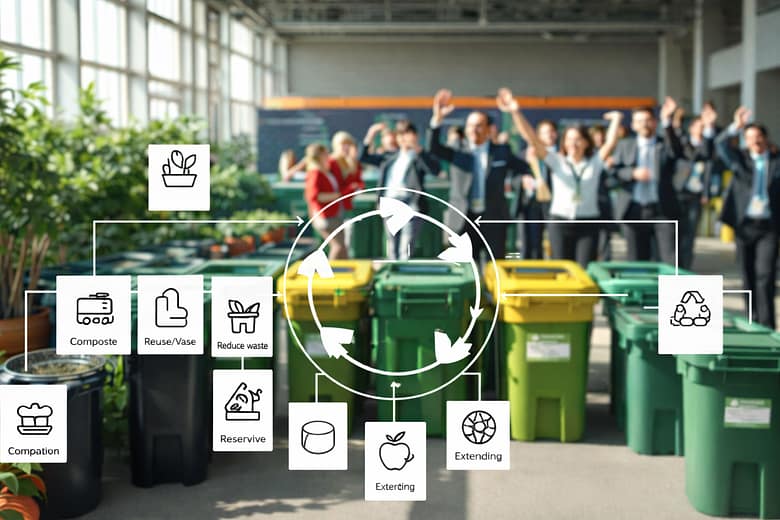
But making it happen is hard work. It’s not just about using bamboo instead of plastic. It’s a big effort: Audit your waste, Enable the right systems, Engage everyone, and then Earn your reward. This is how you create a lasting, effective, and real environmental impact.
This approach is all about designing waste out from the beginning. It’s not just about hosting zero-waste events. It’s about building a system where nothing is wasted. Forget the fancy forks. Let’s focus on the big picture.
Vendor Contracts and Packaging Standards
The key to a green event isn’t the green team. It’s the procurement manager with a sharp red pen. The real fight against waste happens months before the event. It’s in the vendor contracts, packaging specs, and sustainability clauses.
The Contract as a Sustainability Tool
Forget the compostable fork. The real power is in the vendor contract. It turns green dreams into enforceable rules. A Sustainable Event Policy is more than a statement. It’s a guide for vendors.
Contracts can require recycled content in packaging. They ban single-use items. They ensure “compostable” items are actually composted.
The Reusables Mandate and the End of “Wish-Cycling”
The reusables revolution starts with procurement mandates. Contracts can require cup-return schemes and durable serviceware. It’s about using items 100 times before disposal.
This is smart, not just green. The FIFA Sustainability Report shows clear standards are key. When vendors must use reusables, innovation grows.
Enforcing Standards and Measuring What Matters
Contracts start the race, but compliance is the goal. They must specify how to track waste and what to do if vendors don’t comply. The contract must define “compostable” and “recyclable” correctly.
A zero-waste event starts with good procurement. The right contracts are the foundation of your green claims. Get the fine print right, and the rest follows.
Fan Education and Bin Design
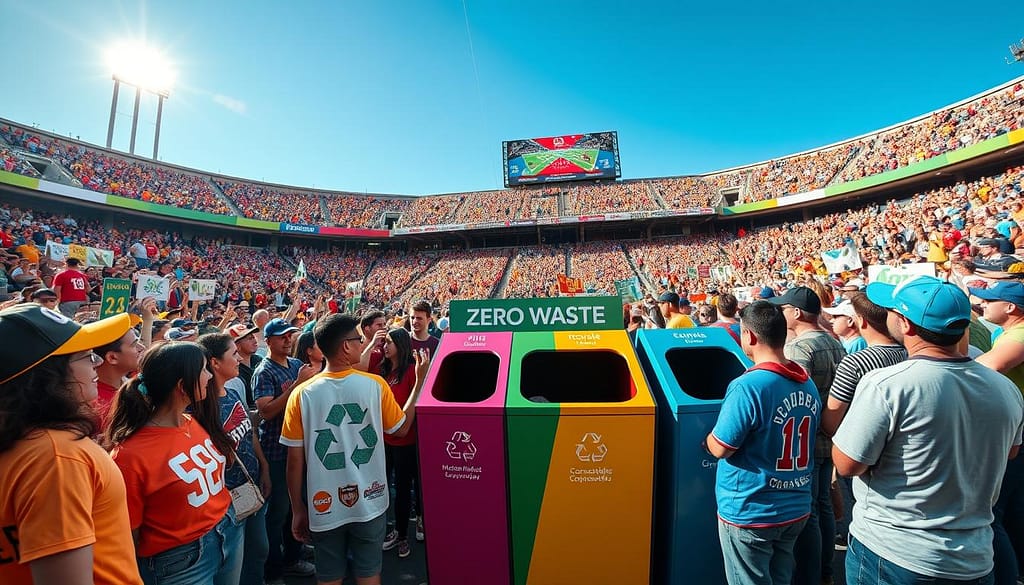
The journey to a zero waste stadium is filled with good intentions. But, it’s often filled with confusion and wish-cycling. Designing bins for fans, not just waste, is key. This approach makes the right choice easy for everyone.
The Psychology of the Bin: Beyond the “Oops” Moment
Every fan has had that “oops” moment. You’re holding a cup and a napkin, rushing to sort waste. The bins can be confusing, leading to “bin paralysis.” This is why recyclables often end up in the landfill.
The fan isn’t lazy; they’re facing a bad experience. The zero waste challenge is really about making the bin easy to use. If it’s hard, fans will choose the landfill bin. This is called “wish-cycling.”
Effective education starts by understanding this. It’s about designing a better bin experience.
Case Studies in Nudging Behavior
Programs at Auburn University and The Ohio State University treat education like marketing. They don’t just provide bins; they tell a story. At Auburn, a “Green Team” of volunteers helps fans sort correctly.
They offer quick, friendly guidance. This positive reinforcement is a “nudge.” It turns confusion into a teachable moment. The Collegiate GameDay Zero Waste Challenge shows that fan engagement can greatly increase recycling rates.
It’s a big civics lesson. Fans become active participants in the recycling and composting process.
The Three-Bin Tango: A UX Problem
The “Three-Bin Tango” is a challenge for fans. The solution is intuitive bin design. The University of Colorado’s Folsom Field uses bold colors and clear icons.
A soda can goes in the blue bin, a banana peel in the green. This makes sorting easy. Ohio State’s program shows that clear visuals and messages can increase proper sorting by over 30%.
The goal is to start the journey, not to be perfect from the start. By focusing on education and design, stadiums can make waste reduction a collective effort. It’s about making the right choice easy for everyone.
Composting and Food Rescue Workflows
Forget the idea of a single banana peel in a backyard bin. Composting in stadiums is a big deal. It’s about moving waste to places where it can be useful, like compost facilities and food banks.
This journey from theory to reality is where the real work happens. It’s where your zero-waste plan gets tested.
The Nitty-Gritty of Composting Logistics
Forget the simple “trash vs. recycling” bin. Back-of-house in a big venue has many waste streams. The first step is to separate waste at the source.
This means using a detailed, color-coded system. It’s where the real magic happens and waste is diverted.
Pre-consumer waste, like vegetable trimmings, goes into green bins. Post-consumer waste, like food from concessions, has its own bin. Working with a local composter is key. It’s not just about collecting waste; it’s about providing a clean stream of organic material.
According to the Collegiate Zero Waste Playbook, venues that do this well see a big increase in composting. Organics diversion rates can jump by 40-60%.
From Leftovers to Leftovers: The Food Rescue Workflow
While composting deals with inedible waste, food rescue is about saving food. It’s a fast-paced process. Food goes from coolers to refrigerated vans, not dumpsters.
Food banks need consistent, safe donations. Stadiums train staff to separate and stage food right after events. This isn’t just charity; it’s a logistics chain that feeds communities and impresses sponsors.
Streams in the Stadium: A Quick Comparison
| Stream | Source | Destination | Key Metric |
|---|---|---|---|
| Pre-Consumer Organics | Kitchen trimmings, spoiled produce | Industrial Composter | Volume (cubic yards) |
| Post-Consumer Organics | Fan food scraps, unfinished meals | Industrial Composter | Weight diverted from landfill |
| Surplus Edible Food | Unsold, packaged concessions | Local Food Bank Network | Meals rescued (pounds of food) |
The Collegiate Playbook shows that venues can achieve zero waste. They turn complex processes into efficient systems. Every banana peel and hot dog bun has a purpose.
For more on building these systems, check out Zero Waste Masters. They show how these principles work at a large scale.
Measuring Diversion Rates
Forget about feelings and good intentions. In the world of zero waste, success is measured by numbers. Your diversion rate is that number. It’s not just a feel-good metric; it’s a key performance indicator (KPI) for your whole operation. If you can’t measure it, you can’t manage it. Without tracking your waste stream, you’re guessing, thinking one recycled bottle is a big win.

The journey to zero waste starts with a detailed audit. This is the “Audit” phase. Before making changes, you must understand the system. This means sorting through a day’s trash, wearing gloves.
You’re not just weighing trash; you’re analyzing its materials. This gives you a baseline. How much trash goes to the landfill versus recyclables versus compostables? This number is your starting point. Without this data, you’re just guessing.
From Audit to Earn: The Math of Diversion
Once you have your baseline, the game changes. You move from the “Audit” phase to the “Earn” phase. This is where zero waste becomes a valuable asset. Your diversion rate shows how efficient you are and can even be a source of income.
The Professional Playbook: Data as Currency
The corporate zero waste playbook is detailed. It views waste like a financial statement. Every ton of material not sent to a landfill is a ton of “revenue” from avoided costs and sometimes from selling recyclables. This is high-level, spreadsheet work. It tracks not just weight but the value of recyclables. This turns waste into valuable data.
The Ground-Level Hack: The Collegiate Playbook
Not everyone has a big sustainability team. The practical, on-the-ground approach, like at big college events, focuses on quick, real-time data. It’s about getting useful information, not perfect data. Volunteers at waste stations quickly check what’s in the trash, giving feedback to change behavior and reduce contamination right away.
Here’s how the two approaches measure up:
| Metric | Professional (Corporate) Approach | Ground-Level (Collegiate) Approach |
|---|---|---|
| Focus | Financial & Regulatory Compliance | Behavioral & Contamination Control |
| Data Collection | Weighing, third-party audits, commodity market tracking. | Visual audits, spot checks, volunteer feedback loops. |
| Key Metric | Diversion Rate %, Revenue from Recyclables | Contamination Rate, Public Participation % |
| Goal | Maximize revenue, minimize cost, achieve certification. | Educate participants, reduce contamination, build a culture. |
The beautiful part? These approaches aren’t exclusive. The professional model gives the strategic plan and financial backing. The ground-level hacks offer the real-time truth and immediate feedback. A 90% diversion rate isn’t magic. It’s the result of careful sorting, clear data, and a system that makes the right choice easy.
So, you’ve got your baseline. You’re tracking. Now, what does a zero waste win look like? It’s not a mystery. It’s a spreadsheet that doesn’t lie. It’s watching your landfill bin get smaller, your compost and recycling streams get cleaner, and your diversion rate climb. That’s not a PR line; it’s the hard, calculated math of a system that works.
Budget and Sponsorship Ideas
Let’s talk about money in the context of a zero-waste event. The biggest objection is often the cost. But what if we saw waste management as an investment? The “Earn” phase is about making money, not just feeling good.
It’s about turning an expense into a story that sponsors want to tell. This way, your event can be more than just a green initiative.
We need to change how we talk about budgets. Instead of focusing on costs, let’s look at the benefits. The budget is a plan for building your brand and making your event better for the future.
Budget Breakdown: The Real Cost of Doing Good
A zero-waste budget has clear costs, but they offer more than just numbers.
| Line Item | Upfront Cost | Long-Term Value & ROI | Cost-Benefit Verdict |
|---|---|---|---|
| Compostable Serviceware | High per-unit cost | Eliminates landfill waste, aligns with brand values, often required by vendor contracts. Higher initial cost, but massive PR and compliance value. | Higher upfront, but essential for a true zero-waste claim. Non-negotiable for vendor compliance. |
| Reusable Serviceware | High CapEx, Low OpEx | High initial outlay for dishware/laundry, but massive long-term savings and waste elimination. Becomes a sponsor-able asset. | High initial investment, massive long-term ROI and sponsor appeal. |
| On-site Sorters & “Green Team” | Labor cost for trained staff | Critical for contamination control, data collection, and attendee education. Turns waste stations into engagement hubs. | Adds labor cost, but is non-negotiable for accurate diversion rates and a clean compost stream. |
| Sponsorship & Partnership | Staff time for activation | Can offset or cover all other costs. Transforms a line item into a revenue/sponsorship stream. | Negative cost. This is where the program pays for itself. |
See the shift? We’re not just buying trash bags and bins. We’re investing in infrastructure, education, and a narrative that has tangible value.
Sponsorship: Your Waste Stream is an Engagement Stream
This is where the “Earn” phase gets exciting. Your zero-waste program isn’t a cost center; it’s a storytelling and sponsorship goldmine. A local waste hauler might sponsor your “Zero Waste Zone” to showcase their new compost facility.
A reusable cup company could sponsor all drink stations, turning every beverage into a branded, zero waste touchpoint. This isn’t just about slapping a logo on a bin. It’s about sponsorship activation that creates authentic, hands-on brand experiences.
Imagine a “Zero-Waste Champion” sponsorship tier. For a premium, a brand gets:
- Logo on all zero-waste stations and compost/recycling bins.
- Naming rights to the “Reuse & Refill” hydration stations.
- Featured content on your event app about their sustainability partnership.
- A branded, reusable cup or container given to every attendee.
This model transforms your waste stream into a media channel. The sponsor gets deep, values-aligned alignment with an engaged audience. You get a funded, high-impact sustainability program. The zero waste mission becomes a shared, funded mission.
| Sponsorship Tier | Investment | Sponsor Benefits | Event Benefits |
|---|---|---|---|
| Zero-Waste Champion (Presenting) | Premium | Title of “Official Zero-Waste Partner,” naming rights to main sorting hub, speaking opportunity at opening. | Fully funds all compostable serviceware and on-site sorting staff. |
| Composting Partner | Mid-Level | Logo on all compost collection bins, branded “compostable” signage, featured in “resource recovery” video. | Covers cost of compost hauling and processing. |
| Reuse Revolution Sponsor | Mid-Level | Branding on all reusable cups/containers, sponsorship of “refill & reuse” stations. | Eliminates single-use serviceware budget line; sponsor covers cost of reusables. |
The legacy of your event isn’t just what people saw on stage, but the story they tell about it. A zero waste program funded by strategic partnerships isn’t an expense—it’s a powerful, profit-neutral engine for brand building and environmental action. You’re not just managing trash. You’re curating a legacy.
Success Stories and Lessons Learned
The final score isn’t just on the scoreboard anymore. It’s in the diversion rate, the tons of waste turned into soil, and the stories we tell. The journey to zero waste isn’t a solo sprint; it’s a league-wide playbook being written in real-time.
Scoring with Systems, Not Just Gestures
Real change is systemic, not symbolic. Truist Park turns 75% of its waste into soil. The Tokyo 2020 Village uses tuna scraps for tulip beds. These aren’t one-off stunts. They’re blueprints.
They show that zero waste is a logistical and operational system. Fan education, vendor contracts, and bin design work together. The Seattle Kraken’s Climate Pledge Arena didn’t just set a goal; they built a venue around it from the ground up.
When the Game Plan Fails
For every win, there’s a fumble. The Miami Marlins’ 2022 composting program was a high-profile misfire. It teaches a lesson: a zero-waste goal without a solid plan is just greenwashing.
The Marlins’ story isn’t a reason to quit; it’s a masterclass in the details. Contracts, vendor training, and on-the-ground logistics are key.
The New Fan Engagement
The lesson from the front lines is that fans aren’t just spectators; they’re participants. The Atlanta Braves turn peanut shells into pizza boxes. The Minnesota United’s stormwater-to-pitch system at Allianz Field turns waste streams into conversation starters.
When the Seattle Kraken’s fans participate in a “green” program, they’re not just disposing of a cup; they’re part of a story. This is the new fan engagement. It’s not about selling sustainability; it’s about building a narrative where the fan is the hero, and the closed-loop cup is their prop.
The final lesson is the most important: this isn’t a niche trend. It’s a fundamental shift. From the beer vendor who explains the compost bin to the concessionaire sourcing compostable packaging, every role is being redefined.
The playbook is no longer a secret. It’s in the QR codes on bins, the local farm partnerships, and the post-game compost haul. The legacy of the next great stadium won’t be its roof, but its resource loop. The game has changed.