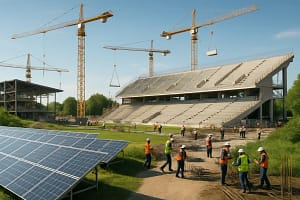
The sports world is changing fast as teams and leagues go green. They’re using less energy and finding cleaner ways to power their venues. For example, one NFL game uses as much electricity as 750 homes for a month. A whole MLB season uses as much as 3,000 homes in a year.
Many sports venues in the U.S. are now using solar power. The Solar Energy Industries Association says these places have built enough solar power to light up 8,000 homes. This growth has been fast, with half of it happening in just three years.
In 2017, over 42 million people watched games at solar-powered venues. California’s teams are at the forefront of this green movement. But, the whole country is moving towards cleaner energy. This change is good for the planet and makes games better for fans.
Sports are getting greener, and it’s a big deal. Using clean energy helps the planet and brings fans and communities together. For more on sports going green, check out the Pac-12 Zero Waste Challenge.
Solar and Wind Projects in Action
Sports facilities are now using solar and wind power. This change is helping teams use energy better. It shows their commitment to being green and saving money.
Lincoln Financial Field, home of the Philadelphia Eagles, is a great example. It has 11,000 solar panels and 14 wind turbines. These help make four times the electricity used during games. This saves the team about $830,000 a year on energy costs.
Levi’s Stadium, where the San Francisco 49ers play, is also impressive. It has a 375-kilowatt solar installation on its bridges and roof. This setup makes enough energy for all game day needs and extra for other uses.
Mercedes-Benz Stadium in Atlanta is another example. It has 4,000 solar panels and is LEED Platinum certified. These panels power games and give energy to over 160 homes each year.
Chase Field in Arizona has a 75-kilowatt solar pavilion for parking. The Indianapolis Motor Speedway has a huge 39,312-panel solar farm. These show how sports can be more eco-friendly.
The Johan Cruyff Arena in Amsterdam has a 1 MW solar installation and uses old car batteries. This shows that using renewable energy in sports is happening worldwide.
Rio Tinto Stadium in Utah has nearly 6,500 solar panels. They make up 73% of the stadium’s power needs. Safeco Field in Seattle has a 33-kWh solar system that makes 40,000 kilowatt-hours a year.
League Policies & Green Goals
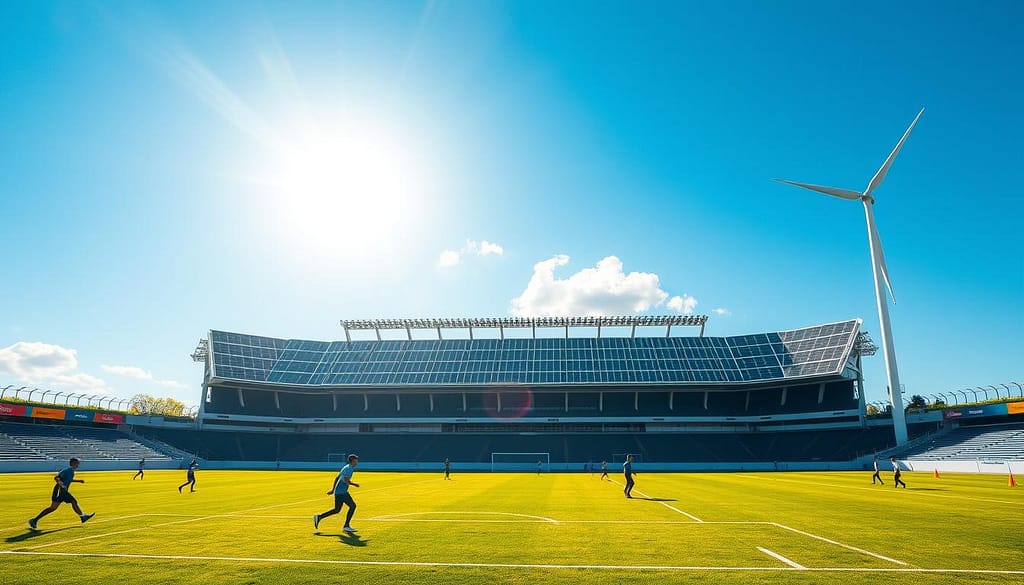
Professional sports leagues are now focusing on clean energy. This change shows a big shift in their environmental views. They use LEED certification to show they care about the planet.
Levi’s Stadium was the first to get a gold LEED certification. Then, Mercedes-Benz Stadium got LEED Platinum, setting a new standard. Lincoln Financial Field aims for gold, showing its dedication to being green.
The Golden 1 Center in Sacramento is the first indoor arena to get platinum LEED. California’s Governor Jerry Brown praised it for leading in sustainability. It shows sports venues can be leaders in going green.
The Green Sports Alliance helps teams and venues work together on the environment. They push for policies that save water, reduce waste, and use recycled materials.
A SEIA report shows a big jump in renewable energy at sports facilities. In just three years, nearly half of the 46 MW of renewable energy was added. This shows leagues are serious about clean energy.
For example, the Sacramento Kings’ Golden 1 Center uses solar to heat water. Chase Field has a vertical garden and uses recycled materials. They also donated a lot of food in 2016, showing they care about the planet.
These efforts show leagues are making a big change for the environment. They set goals that help the whole industry become more sustainable. This is a big step towards a greener future.
Community Solar Events and Youth Programs
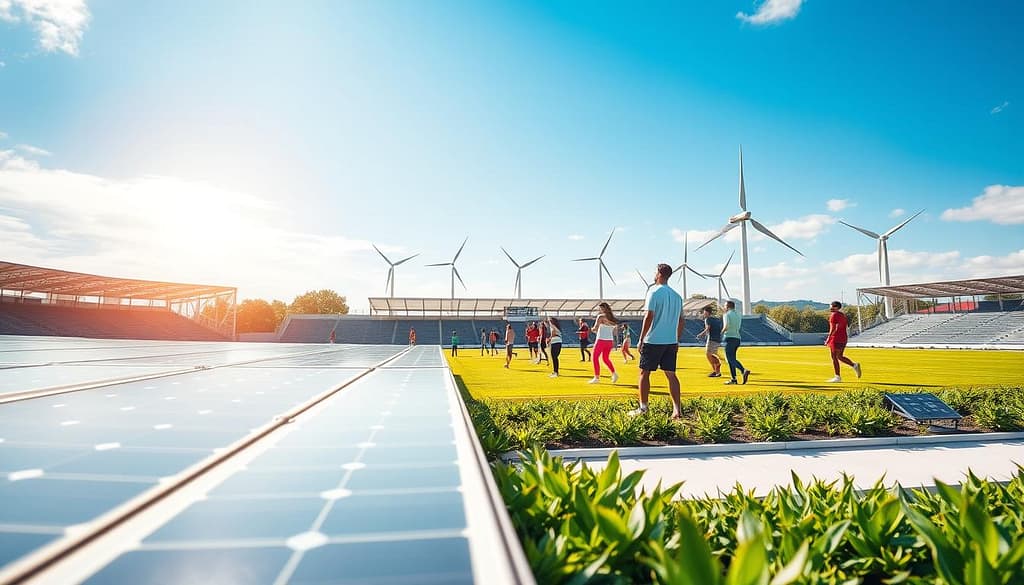
Sports venues are now leaders in sustainability and community involvement. They are not just for games. They are becoming key places for renewable energy and learning.
- Mercedes-Benz Stadium in Atlanta makes enough extra energy to power over 160 homes a year. It shows how sports venues can help local communities.
- The Johan Cruyff Arena in Amsterdam uses batteries to give power to the area when it’s not busy. It proves stadiums can be energy sources for the community.
- In 2017, over 42 million people saw solar power in action at sports events, thanks to the SEIA.
- Lincoln Financial Field, where the Philadelphia Eagles play, has the biggest solar panel system in Philadelphia. The Eagles are leading in being green.
These efforts cut down on carbon emissions and make renewable energy common. When kids see their favorite teams play under solar lights, it teaches them about energy and caring for the planet.
The 2018 champions—the Philadelphia Eagles, Washington Capitals, and Golden State Warriors—all played in solar-powered stadiums. This shows that sports and caring for the environment go hand in hand. It’s a powerful way to teach and change culture.
To find out more about athletes making a difference, read this article on athlete advocacy.
Financial & Environmental Wins
Renewable energy in leagues is changing the game for both money and the planet. Sports facilities are saving money and helping the environment. They use sustainable energy, which is good for both their wallets and the planet.
For example, Lincoln Financial Field cuts its energy costs by $830,000 each year. Many places see a 50-70% drop in energy bills. Plus, tax breaks and credits can cover up to 30-50% of the cost, making it easier to switch to green energy.
Power purchase agreements (PPAs) are key. They let facilities fix their energy costs for 20-25 years. This stability is vital for planning their budgets.
Also, green upgrades can boost property values by up to 7%. Stadiums can even make money by selling extra energy to local utilities. This boosts their finances even more.
On the green side, stadium solar panels cut CO2 emissions by 5,000 to 10,000 tons yearly. For instance, Safeco Field’s solar system cuts 28 metric tons of CO2 each year. These efforts help reduce power grid strain and meet environmental rules.
Less use of fossil fuels also improves air quality and fits with fans’ and sponsors’ values. Solar thermal systems save water, showing the wide benefits of renewable energy.
| Facility | Annual Savings | CO2 Offset (tons) | Property Value Increase |
|---|---|---|---|
| Lincoln Financial Field | $830,000 | 5,000 – 10,000 | 7% |
| Safeco Field | Not specified | 28 | Not specified |
| Other Facilities | 50-70% | Varies | Not specified |
In summary, the benefits of renewable energy in leagues are clear. They save money and protect the environment. The costs are worth it within 5-7 years, making it a smart choice for businesses and the planet.
What’s Next for Net-Zero in Sports?
The future of sports looks bright, with a big push for net-zero emissions. New tech is coming to help make this happen. For example, transparent solar cells can turn stadium windows into power-generating surfaces.
This tech boosts sustainability without losing the beauty of modern stadiums. Solar fabric is another cool idea. It combines solar panels with fabric to make stadiums energy-generating and shaded for fans.
Energy storage is getting better too. New batteries can store energy more efficiently, solving the problem of renewable energy’s ups and downs. The market for these batteries is expected to grow a lot, helping sports events use clean energy reliably.
Wireless power transfer and AI-driven smart systems are coming soon. They’ll make energy use more efficient and fun for fans. These systems will also cut down on environmental harm from events.
Stadiums could become energy hubs, sharing power with nearby areas. Solar-powered EV charging stations will make travel greener for fans. With wind energy and clean energy goals, sports are leading the way to a greener future.
Reaching net-zero emissions is within reach in the next decade. This commitment is a big step towards a greener sports world.