
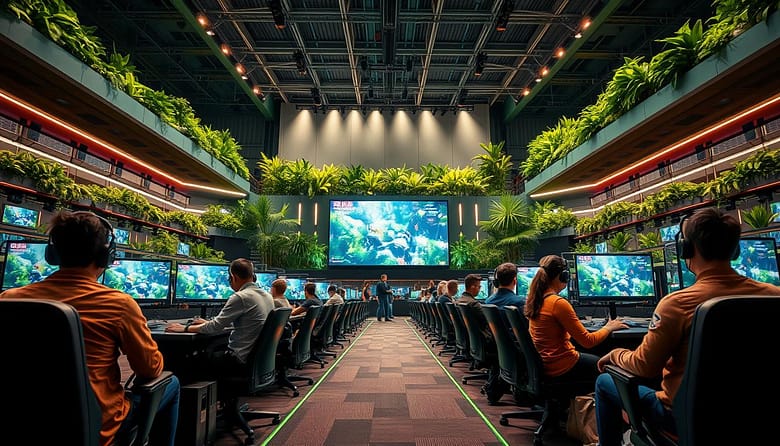
The world of digital games is changing fast, becoming a big part of our culture and economy. It’s worth over $1 billion and has over 3.2 billion players. This makes gaming a key place to talk about taking care of our planet. This is a critical time for technology and sustainability to make a big difference.
The gaming world has big challenges to face. Powerful servers use a lot of energy, and there’s a lot of electronic waste. Plus, live events have a big carbon footprint. But, a recent survey found that 88% of players care about climate change. They want to do something about it.
This article looks at how gaming can lead in being green. Places like Team Liquid and Riot Games are showing the way. They’re using energy-efficient buildings and new ways to deal with waste. Let’s see how e-sports can entertain, teach, and inspire us to make a difference for the environment.
The Hidden Footprint of E-Sports
E-sports is exciting, but it has a hidden environmental cost. The tech needed for gaming, like computers and data centers, uses a lot of electricity. This leads to greenhouse gas emissions. In 2016, online gaming traffic hit 915 petabytes per month, making it the fastest-growing data usage area.
Data centers for e-sports and streaming use a lot of energy. For example, Google’s data centers, which help stream e-sports on YouTube, use AI to cut energy use by up to 30%. This is important because streaming causes hundreds of tons of carbon emissions per server farm every year.
Energy Consumption and Data Center Demands
The energy needed for e-sports is huge. Sites like Twitch and YouTube Gaming use a lot of electricity. As more people watch e-sports, the energy needed to power these data centers goes up, creating a big carbon footprint.
The Carbon Cost of Streaming and Cloud Gaming
Streaming e-sports content has a big carbon cost. Cloud gaming uses a lot of energy, adding to greenhouse gas emissions. This is often ignored, but it’s a key part of making e-sports more sustainable. By understanding this, we can start to reduce our environmental impact.
Electronic Waste and Hardware Lifecycles
Electronic waste (e-waste) from gaming is a big problem. Most gaming devices last only about five years. The world’s e-waste is expected to jump from 50 million tons in 2019 to 120 million tons by 2050. Sadly, less than 20% of e-waste is recycled worldwide.
Making gaming hardware requires mining rare elements and shipping them around the world. This adds to transportation emissions. Also, traveling to watch live events is a big source of CO2 emissions, with spectators causing about 55% of it. This shows we need to focus on making e-sports more sustainable.
To learn more about the environmental impacts of sports events, check out this Forbes article. For insights on making sports more sustainable, visit Back2Tap.
Community Initiatives to Reduce Waste and Emissions
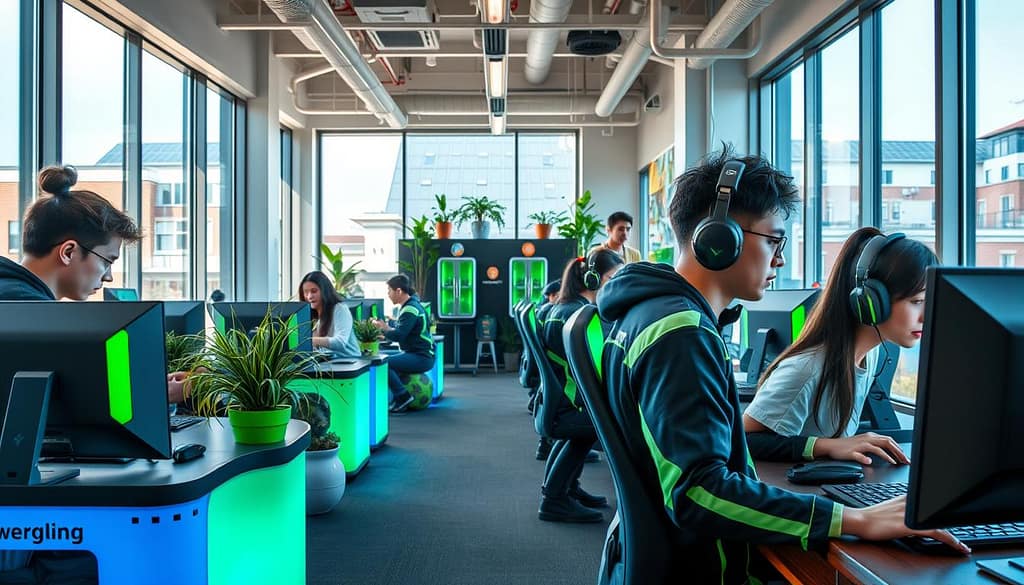
Gaming communities are taking action to fight environmental problems. They’re starting grassroots movements and joining forces for big campaigns. Players are working together to lessen their impact on the planet. This shows how together, we can make a big difference.
Grassroots Movements and Gamer-Led Campaigns
Climate Replay is a group of gamers who care about the environment. They talk to game makers about adding eco-friendly features. The Green Game Jam also gets big game developers to add environmental themes to their games. This changes how games talk about saving the planet.
Climate Replay and the Rise of Eco-Conscious Gaming Collectives
Through groups like Climate Replay, gamers are more than just players. They’re pushing for change. They work with groups like Team D, part of the Gamers 4 The Planet Alliance, to make esports more sustainable.
Team B from Portugal teamed up with ZeroWasteLab to create an app. It tracks energy use and lets teams offset their carbon footprint. This is all thanks to ZeroCertified’s carbon-capture solutions.
In-Game Activations and Virtual Sustainability Challenges
Games are now making sustainability a part of the fun. For example, Minecraft’s Heat Dragon Quest has eco-challenges. It teaches players about their environmental impact in a fun way.
Team F from Sweden worked with WWF for Earth Hour. They helped raise money for nature and the planet. These efforts show how gaming can help the environment, proving that every player can make a difference.
Success Stories: Events, Organizations, and Influencers
Across the globe, e-sports organizations and game developers are leading digital eco initiatives. These stories show how gaming is more than just competition. It’s about making a positive impact on the environment.
Esports Organizations Leading the Charge
Team Liquid launched the Green Gaming Initiative. It aims to cut down their carbon footprint. They promote energy-efficient gaming and have recycling programs for e-waste. Their headquarters runs on renewable energy, setting a good example for the industry.
Riot Games is also committed to sustainability. They work to reduce energy use at events and use biodegradable materials. They also support reforestation projects to offset emissions, showing a full commitment to the environment.
ESL has also made a change. By moving to online tournaments, they’ve cut down on travel emissions. This shows how e-sports can be more eco-friendly.
Team Liquid’s Green Gaming Initiative and Riot Games’ Environmental Commitment
These organizations are leading the way to a greener gaming future. Team Liquid’s initiative tackles carbon footprints and gets fans involved in sustainability. Riot Games’ approach ensures environmental concerns are part of their events.
Game Developers Integrating Climate Narratives
Game developers are also key in this movement. PUBG MOBILE’s ‘Play for Green’ campaign, backed by the United Nations, includes climate narratives in gameplay. The Ruins of Erangel map series shows real-world environmental data, like rising sea levels and heatwaves.
Vincent Wang, Head of PUBG MOBILE Publishing at Tencent Games, said 88% of players care about climate issues. This shows gaming can raise awareness effectively.
PUBG MOBILE’s ‘Play for Green’ and the Green Game Jam
Professor Mark Maslin works with PUBG MOBILE to ensure the accuracy of these climate narratives. He believes gaming can reach a huge audience and share climate challenges effectively. This approach educates players about important environmental issues.
Teams like Team C from the United States have also started initiatives. They’ve donated over 10,000 trees to One Tree Planted. They also support the Coral Reef Alliance and promote eco-friendly merchandise.
In Finland, Team E partnered with Vattenfall to provide fossil-free electricity. They showcased sustainable energy through the Pelikeli campaign, highlighting solar, wind, and hydropower.
These initiatives show sustainability in e-sports is a growing movement. It’s not just a concept; it’s becoming a reality.
Educating Fans and Players
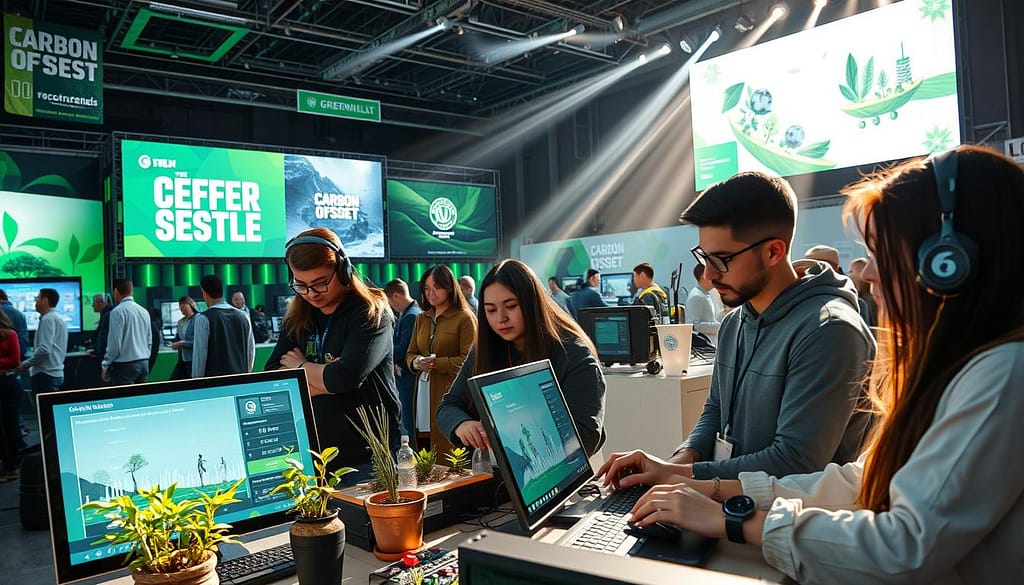
In the world of e-sports, teaching fans and players about sustainability is key. It’s not just about spreading the word. It’s about building a community that actively supports green efforts. As e-sports grow, teams are finding new ways to teach their fans through fun learning platforms and campaigns.
Gamified Learning Platforms and Sustainability Campaigns
Many groups are creating gamified learning platforms for gamers. These platforms use rewards and challenges to encourage fans to live more sustainably. For example, players can get in-game rewards for doing eco-friendly tasks, making it fun to be green.
How the Overwatch League and Pelikeli Campaign Engage Audiences
The Overwatch League has launched campaigns to get fans to use energy-efficient gaming setups. They also encourage fans to recycle e-waste, linking gaming to caring for the planet. Team E’s Pelikeli campaign made videos about clean energy sources. These were shared on their channels and with influencers, spreading the word about green energy.
Partnerships with Environmental NGOs and Academic Institutions
Working with groups like Greenpeace and the Environmental Defense Fund helps spread the sustainability message. These partnerships offer fans resources, workshops, and ways to help the environment. This helps fans learn more about environmental issues.
Research from the University of Vaasa shows e-sports can help raise awareness about climate change. Team A in Denmark uses only green energy, showing how sustainability can be part of the e-sports scene. This sets a good example for others to follow.
By educating their fans, e-sports teams can create a positive cycle of sustainability. Fans who support green practices will push for more eco-friendly actions from their favorite teams.
The Future of Digital Green Sport
The future of esports looks bright, thanks to digital eco initiatives. The industry is moving towards sustainability, making renewable energy key. Esports venues and tournaments are now using solar and wind energy.
The League of Legends Championship Series (LCS) is leading the way. It has committed to using renewable energy for its events. This change will make carbon-neutral tournaments the norm.
Renewable Energy Integration and Carbon-Neutral Events
Renewable energy costs are dropping, helping esports cut its carbon footprint. More groups are adopting green technologies to boost their sustainability. Recycling programs and repair services are also on the rise.
The Role of ESG Frameworks in Esports Governance
ESG in Sports gives a strong tool for checking sustainability. It helps teams and venues see their environmental impact. Being open and making decisions based on data is key for real climate action.
Good leadership will push for sustainability best practices. This will help the esports world lead in being green.
How ESG in Sports Is Measuring Sustainability Maturity
Hybrid events are becoming more popular, cutting down on travel emissions. They mix in-person and virtual experiences, keeping the excitement of live events. The esports world is ready to lead in being green, meeting the needs of a global audience.