
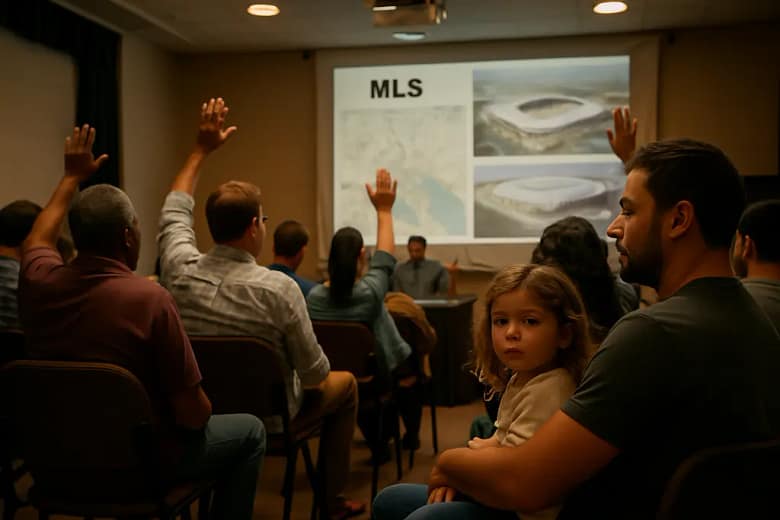
Indianapolis MLS Expansion returned to the city’s sports agenda in September 2026 after Mayor Joe Hogsett and MLS Commissioner Don Garber met to revive discussions about a new soccer-specific stadium, according to Axios Indianapolis. For a city that has built much of its national sports identity around hosting, operations, and event infrastructure, the discussion is not just about adding another team. It is about whether public finance, neighborhood planning, fan loyalty, and soccer development can be aligned before a bid moves from interest to execution.
That distinction matters. Indianapolis has a deep sports-event base, but MLS has not awarded the city a club as of September 24, 2026. San Diego FC began play in 2025 as the league’s 30th team, and Indianapolis remained on the expansion shortlist with no specific timing for admission, as BusinessIndy reported. MLS officials have emphasized three unresolved needs: a viable stadium plan, a committed ownership group, and clear political and community support.
Sports tourism can bring real activity to hotels, restaurants, transit corridors, and venue districts. It can also shift public money and civic attention away from other needs if the financing model is weak. A prior Back2Tap review of sports tourism impact showed why headline economic projections need careful testing. The same caution applies in Indianapolis, where soccer ambition sits alongside questions about who pays, who benefits, and how existing supporters are treated.
Indianapolis MLS Expansion Status
Indianapolis MLS Expansion Has A Shortlist, Not A Slot
The most accurate reading of the situation is measured: Indianapolis is being considered, but it has not crossed the line. The September 2026 meeting gave the effort renewed public attention, yet MLS expansion is a league decision shaped by ownership, media strategy, stadium certainty, and market fit. The research record does not support treating a franchise as secured, and no approved launch season has been set.
Earlier reporting in the research notes placed the earliest useful MLS entry window at 2028 or 2029 if approvals, taxing district work, design, land acquisition, and financing all moved smoothly. That timeline is conditional. Stadium projects often face legal, political, and construction hurdles, and MLS has shown it values certainty before adding clubs. For Indianapolis, the sports question is direct: can the city present a soccer project that is strong enough for MLS without weakening the local ecosystem that already exists?
What MLS Still Needs From Indianapolis
For Indianapolis MLS Expansion to move from shortlist status to a formal award, the remaining issues are not cosmetic. A stadium plan must be more than a rendering. It needs land control, a finance structure, design clarity, and a credible path to opening. A committed ownership group must also show it can operate at MLS scale, support player development, and sustain the club through normal attendance cycles, not just a launch surge.
Political and community support may be the hardest test. A stadium district can become a civic asset when it improves access, supports local workers, and respects nearby residents. It can also become a source of distrust if public value is unclear. As an advocate for athlete rights and sustainable sport, I would put athletes, workers, youth players, and neighborhood residents in the center of the review rather than treating them as afterthoughts.
Stadium Funding And Public Risk
Tax District Assumptions
The city approved a Professional Sports Development Area in 2019 and amended it in 2021. The purpose was to allow local and state tax capture to help fund a soccer stadium. Research notes cite projections of about $3.38 million in state and local tax revenues in 2025, rising to about $66.1 million by 2056, assuming a new 20,500-seat stadium opened in 2028. Those assumptions should be read as a model, not a guarantee.
Tax-capture districts depend on future activity, development pace, and the boundaries of eligible revenue. If projections miss, the public sector can face pressure to cover gaps or revise priorities. That is why any stadium proposal should publish plain-language assumptions: expected event days, construction cost ranges, operating obligations, debt exposure, and what happens if revenues fall short. Public confidence is stronger when the risk table is visible before approvals, not after ground is broken.
Cost Benchmarks Are Not A Budget
The research notes compare recently built soccer stadiums in Cincinnati and Nashville at roughly $250 million to $350 million in 2021 and 2022. They also state that inflation and materials costs suggest an Indianapolis venue would exceed those benchmarks. That is a reasonable caution, but it is not a final estimate. A real budget would need current design, site, labor, infrastructure, and financing data.
The proposed Eleven Park development also complicates the public conversation. Research notes describe it as a $1 billion mixed-use project on the White River with a 20,000-seat soccer stadium and a scheduled 2026 opening. Because the notes do not provide a specific opening date, its operating status should be verified before any public body treats it as either complete or unavailable. The broader point is clear: Indianapolis already has soccer infrastructure plans in motion, and MLS-related stadium decisions should account for duplication, reuse options, and long-term maintenance.
Sports facilities across the same network of recreational planning show the significance of maintaining community-facing venues. For example, venues like Copeland Hills Golf underline the importance of accessibility and maintenance, which matter as much as event launches. A stadium district should be judged by its daily civic value, not only by matchday images.
Sports Tourism Benefits Need Guardrails

Event Demand And Infrastructure Capacity
Indianapolis has evidence of sports-sector strength. Research notes show sports-related employment in the Indianapolis region grew by 44.3% from 2016 to 2024, while sports-sector Gross Regional Product rose 81.2%. The city also ranks high nationally for sports employment concentration, with a Location Quotient nearly double the national average. Those figures support the idea that Indianapolis is not starting from zero. It has event labor, hospitality knowledge, and a civic brand tied to sports operations.
The visitor base is also significant. Research notes state Indianapolis drew 29.2 million visitors in 2023, while the Indiana Convention Center expansion adds 300,000 square feet, including a 50,000-square-foot ballroom and a new skybridge, with completion expected in 2026. An MLS club could fit within that broader event machine by adding regular matchdays and possible tournament-related uses. Still, regular-season soccer is different from one-off events. It requires repeat local attendance, supporter culture, training infrastructure, and scheduling that does not overload neighborhoods.
Local Soccer Identity And Athlete Rights
Indianapolis MLS Expansion cannot be measured only through hotel nights or stadium renderings. The local soccer community has already invested emotion, money, and identity in Indy Eleven and the USL model. Research notes state that in four prior U.S. cities where USL teams gained MLS expansion status, none of the USL squads remained in play. That history raises serious questions for Indianapolis.
If MLS enters the market, city leaders and investors should explain what happens to existing supporters, youth partnerships, staff roles, academy pathways, and local soccer traditions. Athlete rights also belong in the conversation. Expansion should not be framed only as a prize for owners and civic leaders. Players at every level deserve clear labor standards, safe facilities, development opportunities, and honest communication about league transitions. A sustainable sports city protects the people who make the product possible.
- Public reports should separate stadium construction costs from district development projections.
- Any tax-capture plan should identify downside risk and repayment responsibility.
- Community review should include supporters, youth clubs, nearby residents, workers, and accessibility advocates.
- Soccer planning should address the future of Indy Eleven rather than treating it as a minor detail.
Indianapolis MLS Expansion And Civic Accountability
A Practical Test For The Bid
The strongest case for MLS in Indianapolis is sports-first: the city knows how to host, soccer participation has a visible local base, and the region has a growing sports economy. The weakest case would be a rushed stadium package that treats public finance as a formality. Those two realities can exist at the same time, which is why the next phase should be slower, clearer, and more public than a typical expansion campaign.
Indianapolis MLS Expansion is best viewed as a civic test. If the bid can identify ownership, publish a credible stadium plan, protect existing soccer communities, and show measurable public value, it may strengthen the city’s position. If those pieces remain unresolved, shortlist status should not be mistaken for readiness. A fair process would let fans dream while still requiring leaders to prove that the costs, benefits, and responsibilities are shared in the open.