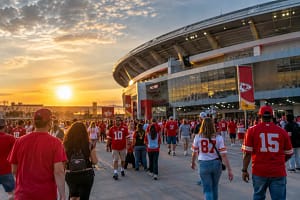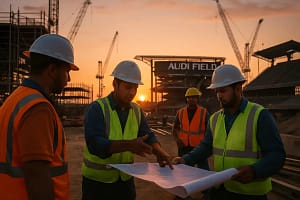
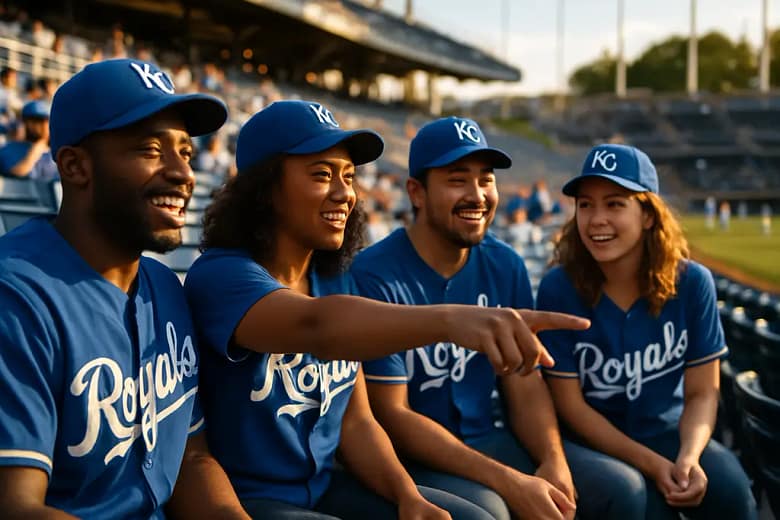
The Royals Stadium Deal approved by Kansas City leaders on August 20, 2026, moved the city’s long ballpark debate from campaign argument to civic finance test. The Kansas City Council voted 11-2 to approve agreements tied to construction, financing, and community benefits for a downtown Royals stadium, Axios reported. For baseball fans, the core question is not only whether the Royals get a modern downtown home. It is whether a publicly supported venue can protect workers, serve youth sports, support nearby public space, and avoid pushing community costs onto residents who may never buy a ticket.
The deal sits at the intersection of sport, public finance, and neighborhood policy. That makes it bigger than a ballpark rendering. Stadium projects often arrive with promises about activity around game days, tourism, and development. Those claims deserve caution. What can be evaluated now are the approved public commitments, the financing structure, the community benefit terms, and the accountability that Kansas City residents should expect before the estimated April 2030 opening.
Why The Royals Stadium Deal Matters
Baseball facilities are civic assets when public money is involved. They are also workplace sites for construction crews, service workers, team staff, vendors, security teams, and operations crews. A sports-first reading of the Kansas City agreement starts there: the stadium should be judged by how it serves the baseball club and its fans, but also by how it treats the people whose labor makes game days possible.
Royals Stadium Deal Funding Basics
The city-funded support totals $600 million, expected to be financed largely through city-backed bonds and tax redirection. KCUR reported that Kansas City’s share is intended to come from revenues generated around the stadium district rather than general fund taxation, though the structure still raises repayment questions if district revenues fall short KCUR reported. That distinction matters for residents because redirected tax growth is still public capacity. Money used to retire stadium-related debt cannot be used twice.
The Royals Stadium Deal is part of an estimated $2.05 billion project. Research on the approved framework describes a funding mix that includes $540 million from state and other public sources, $600 million from Kansas City, and about $911 million from the Royals organization. On those figures, public sources would cover about 56% of total project cost. That ratio is the central civic issue: the public contribution is not a side payment. It is a majority share of the stadium finance plan.
Why Public Share Changes The Fan Question
A fan may reasonably want a better ballpark, a more active downtown game-day setting, and a long-term home for Major League Baseball in Kansas City. A taxpayer may reasonably ask whether the deal returns enough public value. Those positions are not enemies. The strongest stadium agreement is one that can answer both. For readers comparing the city’s bond risk and repayment paths, our related analysis of Kansas City’s $600M bet gives more detail on the finance side.
Public Funding And Community Benefits
The community impact partnership agreement is reported to commit at least $55 million over the life of the lease back to the city. The lease term is 30 years, with options for three additional two-year extensions, which could extend the relationship to 40 years. Over the first 30 years, the $55 million commitment equals about $1.8 million per year. Measured against Kansas City’s $600 million public share alone, that is roughly 9 cents in stated community benefits for each city public dollar invested.
Where The Community Money Goes
The specific benefit categories matter because they show what the agreement values. Reported earmarks include $14 million for public art through the city’s One Percent for the Arts requirement, $5 million for homelessness services, $5 million for youth sports, and $5 million for the Negro Leagues Baseball Museum. The youth sports component is directly tied to the sports ecosystem. If administered with public reporting, it could help expand access to facilities, equipment, and participation for young athletes who face cost barriers.
That is where the Royals Stadium Deal should be assessed through an athlete-rights lens. Public stadium money should not only improve premium seating, club revenue, or surrounding real estate. It should help strengthen the local sports pipeline, protect labor standards, and keep baseball connected to communities that have supported the game across generations. The Negro Leagues Baseball Museum commitment is especially relevant in Kansas City because baseball history is not an accessory to the project; it is part of the city’s sports identity.
Non-Monetary Commitments Count Too
The reported community benefits also include prevailing wages for construction workers, workforce training, free-to-public year-round programming in nearby Washington Square Park, and inclusion requirements for local, minority, women, and veteran-owned businesses. These terms can be meaningful, but only if they are tracked in public. A prevailing wage clause without payroll verification is weaker than it looks. A local business goal without contract-level reporting leaves residents guessing. Workforce training should be measured by enrollment, completion, placement, and retention, not by press releases.
Community Development Tests
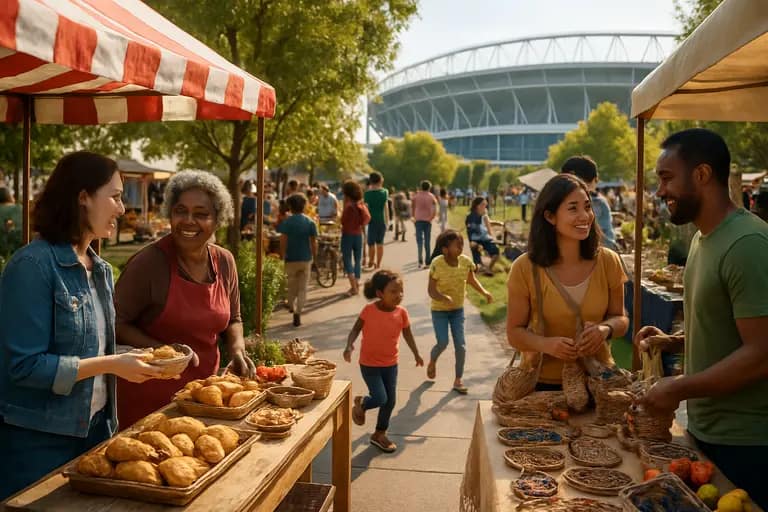
The development case for a downtown stadium rests on whether the district can generate enough activity and tax growth to support the public obligation. The city expects Tax Increment Financing, and possibly a Community Improvement District, to redirect increased tax revenues in the stadium impact area toward the city’s $600 million share. The risk described in the research is clear: if stadium-district revenues fall short, the city’s general fund could be responsible.
Development Without Displacement
Community development should not be defined only by buildings, restaurants, and visitor spending. It should include who benefits from the work, who can stay in nearby neighborhoods, and whether public space remains genuinely public. The Washington Square Park programming commitment is worth tracking because free public programming can help prevent the district from becoming a game-day-only commercial zone. For related civic and sports coverage across the same network, Noticias Bo offers insights into public-interest issues tied to local development.
Critics have argued that $55 million over 30 years is too small relative to the public investment. One nonprofit described the package as weak in the research record. That criticism cannot be dismissed as anti-baseball. It reflects a practical question: if the city is taking on bond exposure and redirecting future tax growth, community benefits should be durable, enforceable, and visible to residents.
What Fans Should Be Able To See
Fans deserve a clear scoreboard off the field. The city and the club can reduce distrust by publishing plain-language updates on bond repayment, district revenues, community spending, hiring, workforce training, and public programming. The best measure is not whether the stadium opens with energy in April 2030. It is whether the public can verify, year by year, that the promised benefits are reaching workers, young athletes, cultural institutions, and residents.
Royals Stadium Deal Accountability Measures
The most responsible path now is not to relitigate whether Kansas City approved the stadium package on August 20, 2026. That vote already happened. The task is to set standards before construction spending, lease operations, and district revenue claims become harder to audit. Public funding requires public proof.
A Practical Public Scorecard
Kansas City residents, Royals fans, and local officials should press for a recurring public report that answers a focused set of questions:
- How much stadium-district revenue was collected, and how much was used for debt repayment?
- Did any general fund money support the obligation because district revenue fell short?
- How many construction and operations jobs met prevailing wage standards?
- Which local, minority, women, and veteran-owned businesses received contracts?
- How were youth sports, homelessness services, public art, and museum commitments funded each year?
- How many free public events took place at Washington Square Park, and who had access?
Those are not anti-team questions. They are pro-community questions. If a stadium is built with majority public support, then accountability is part of the deal, not a burden added later. Kansas City’s challenge is to prove that a downtown ballpark can serve baseball while also respecting residents, workers, young athletes, and the public dollars attached to the project.