
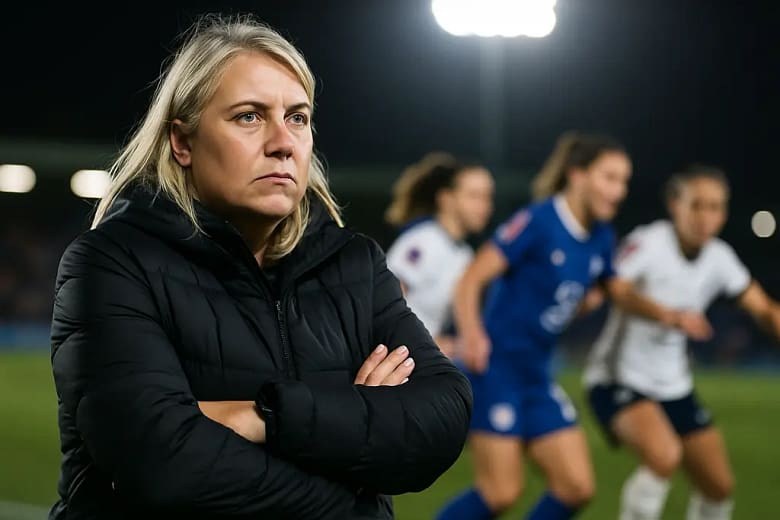
USWNT roster decisions carried clear educational value after Emma Hayes named a 26-player training camp roster on September 29, 2026, for friendlies against reigning World Cup champions Spain on October 10, 2026, in Washington, D.C., and October 13, 2026, in Chester, Pennsylvania. U.S. Soccer confirmed the roster size, dates, venues, and player notes in its official announcement U.S. Soccer roster release.
Because those matches had already taken place as of October 20, 2026, this analysis treats the Spain window retrospectively. The available research does not provide match results or player minutes, so the focus stays on what can be verified: the camp group, the balance between experience and opportunity, and the way Hayes used a demanding opponent to test the player pool.
That matters for athletes. National-team selection is not just a tactical exercise; it shapes careers, bargaining power, development visibility, and public expectations. A sports-first reading should ask not only who was picked, but what kind of pathway those selections signaled.
What USWNT roster decisions showed
The most useful reading of the camp is that Hayes did not treat the Spain friendlies as a narrow veteran-only test. The roster included first-time call-ups, an uncapped goalkeeper already familiar with senior camp, key veteran returns, and a wide cap distribution. That mix gave the staff a chance to compare players across different stages of international readiness.
USWNT roster decisions and camp access
These USWNT roster decisions reflected a wider player-pool approach. As of October 2026, 60 different players had played for the national team under Hayes, and 56 of them had started. Earlier in 2026, Hayes had given caps to 41 different players. In 2025, she awarded caps to 44 different players, the most in any year in USWNT history under any coach, according to the same U.S. Soccer roster announcement.
For a program with the expectations of the United States, that level of rotation can create tension. Continuity helps team structure, but access helps identify players who can handle international speed. The athlete-rights lens is straightforward: players need real evaluation environments, not symbolic invitations. A camp against Spain, even without match-minute data in the research, offered a high-standard setting for that evaluation.
Veteran Returns Set The Competitive Floor
The roster also restored proven experience. Naomi Girma, Sam Coffey, and Mallory Swanson returned as Olympic gold medalists. Swanson’s profile stood out in the official notes: 103 caps and 38 international goals, with U.S. Soccer listing her 17th on the USA’s all-time goal-scoring list at age 28.
Those returns matter because introducing new players works best when the training level is anchored by players who know the demands. Veterans can raise the daily standard, while less experienced players reveal whether their club or youth-team strengths translate against elite international opposition.
New Talent, Youth Pathways, And Fair Evaluation
The new-player group was not random. Hayes called in three first-time senior players with extensive Youth National Team experience: forward Trinity Byars, forward Pietra Tordin, and midfielder Evelyn Shores. Their inclusion points to a pathway that links youth scouting, club form, and senior-team projection.
First-Time Call-Ups With Youth Experience
The first-time call-ups show the value of long-term identification. Youth National Team experience does not guarantee a senior role, but it gives coaches more evidence about training habits, tournament temperament, and adaptability. For readers studying development pathways, the connection between youth camps and senior opportunities also links to broader questions covered in youth soccer development.
From an education standpoint, the lesson is that player development is not a single event. A senior call-up often reflects years of exposure, performance review, and positional comparison. For athletes, that should reinforce the need for transparent standards and credible feedback at each step of the pipeline.
Why Uncapped Players Matter
Goalkeeper Jordan Silkowitz made her third U.S. camp appearance while still uncapped. That detail is worth more than a footnote. Goalkeepers often face fewer substitution opportunities than field players, so camp repetition can be one way to assess command, distribution, communication, and training consistency before a cap arrives.
The best reading of the USWNT roster decisions is not that every invitee was equally close to a long-term role. It is that Hayes kept multiple evaluation lanes open: first-time field players, an uncapped goalkeeper with prior camp experience, returning veterans, and established contributors with significant international records.
Experience Markers In Hayes’ Player Pool
The roster’s age and cap profile gave the staff a broad comparison group. Lily Yohannes, at 19, was the youngest player called. Lindsey Heaps, at 32, was the oldest. The average number of caps per player ahead of the October 10 match was approximately 37.5.
Caps, Age Range, And Competitive Balance
An average of 37.5 caps suggests neither a fully experimental camp nor a closed veteran group. It points to a middle ground where younger players and lower-cap players were placed near established leaders. That is often where the most useful learning happens: prospects see the senior standard up close, and coaches see how they respond.
Ashley Sanchez’s return also sharpened the competitive picture. She was back on the roster for the first time since January 2025 after scoring 20 goals in 26 matches for the North Carolina Courage during the NWSL season, tying the record for most goals in a single NWSL season. That is a performance-based route back into the national-team frame, and it is healthy for a program when club production can reopen doors.
Development Lessons Beyond One Camp
There is a sustainability point here, too, though it is a sporting one. A national team cannot depend on a small core forever. It needs recurring opportunities, fair comparisons, and honest communication with players moving between club and country. For related content on sports and community events, check out a connected member of the network, Bass Lake Roadhouse.
For player welfare, the public conversation should avoid treating a call-up as a finished verdict. A camp is evidence, not a lifetime label. Some players need repeated exposure. Others need club form to push them back into the group. The most responsible analysis separates verified selection facts from unsupported claims about hierarchy.
Emma Hayes Roster Decisions Against Spain
Hayes’ roster for the Spain friendlies showed a coach testing depth without discarding experience. The opponent mattered because Spain’s status as reigning World Cup champion gave the camp a higher competitive frame. Still, without verified results or official minute details in the provided research, any claim about who improved, struggled, or moved up the depth chart would go beyond the record.
What Can Be Said With Confidence
Several facts are clear. Hayes named 26 players. Three were first-time call-ups with extensive Youth National Team backgrounds. Silkowitz entered another camp uncapped. Girma, Coffey, and Swanson returned as Olympic gold medalists. Sanchez re-entered the group after a major NWSL scoring season. The roster stretched from Yohannes at 19 to Heaps at 32.
Those facts support a cautious conclusion: the staff valued competition across generations. The camp gave younger players access to a demanding environment while giving established players a platform to reset or reinforce their roles.
What Should Stay Unsaid
Responsible roster analysis has limits. The available research does not establish starting lineups, tactical instructions, training performance, injury status, or post-match staff evaluations. It would be unfair to athletes to invent those details. Public analysis should respect that gap, especially when selection narratives can affect reputations.
For the program, USWNT roster decisions in this window showed a clear commitment to widening the pool while retaining proven standards. For players, the message was equally direct: club performance, youth-team development, camp behavior, and international experience all remained part of the evaluation. That is the kind of evidence-based selection culture the sport should keep demanding.