

Youth soccer development in the United States can be read through two recent evidence points: how players entered the Youth National Team system through scouting and camps, and how a U.S. age-group team was tested at the 2026 FIFA U-20 Women’s World Cup in Poland. The available data does not settle every debate about access, coaching, or player quality. It does, however, give a useful view of volume, selection, academy reach, and match pressure.
From August 1, 2025, through July 31, 2026, U.S. Soccer scouts handled 6,515 assignments and observed around 2,220 players per week. Over that year, nearly 8,000 unique players were identified and tracked, leading to 1,276 unique call-ups to Youth National Team camps, with 40% of those call-ups going to players receiving their first invitation, according to a U.S. Soccer pathway report. Those figures show a system working at national scale, but they also raise standards questions: how consistently are players compared, and how well does the process reduce gaps tied to geography and family resources?
Youth Soccer Development Starts With Talent ID
The scouting volume reported for the 2025-26 cycle matters because youth national teams are not just short-term rosters. They are also educational checkpoints. A camp invitation gives players exposure to higher training demands, position-specific feedback, and comparison against peers from different regions and club settings.
Scouting Scale And Player Tracking
The reported numbers suggest a wide search rather than a small closed pool. Tracking nearly 8,000 unique players and converting that into 1,276 unique call-ups indicates a layered process: identification, monitoring, and selection. The 40% first-time call-up share is especially relevant for standards-based evaluation because it suggests movement into the pool was still possible during the cycle.
That does not mean the system reached every qualified player. The research does not provide regional, income, race, or positional breakdowns for the full pool. Without those details, the cautious reading is that U.S. Soccer’s scouting operation was large and active, while the equity of the search cannot be fully judged from the published figures alone.
Youth Soccer Development And Camp Standards
For youth soccer development, camp standards should serve two functions. First, they should help coaches compare players who come from different club environments. Second, they should give players a clearer sense of the technical, tactical, physical, and decision-making demands required at the next level.
The research notes that more than 90% of recent U.S. Men’s and Women’s National Team players previously competed in Youth National Teams. That connection does not prove that every Youth National Team player becomes a senior international. It does show that the youth pathway has been a common experience for many senior-team players, which makes the quality and fairness of camp evaluation significant.
Camp Selection Shows Both Reach And Gaps
The U-15 class of 2011 offers a more specific snapshot. From September 2025 through May 2026, six U.S. Youth National Team cycle camps were held for that age group. Across 137 available roster spots, 72 different players were called into at least one camp, with the average camp containing just under 23 roster spots, according to a U-15 cycle analysis.
What The U-15 Cycle Shows
Those U-15 figures are useful because they separate roster spots from unique players. A program could fill many camp slots while rotating only a small group. In this case, 72 different players appeared across 137 available spots, which points to a meaningful level of rotation. For evaluators, that creates more chances to see how players respond to national-team instruction across separate camp windows.
The same data also showed a mixed academy pattern. Among the 72 players selected, non-MLS and foreign academies were represented. Five MLS academies had zero call-ups in the cited U-15 cycle: Austin FC, Inter Miami, Real Salt Lake, San Diego FC, and Seattle Sounders. Houston Dynamo, Barca Residency, and Orlando City were among academies with multiple players called.
That distribution should be interpreted carefully. A single age-group cycle is not a full academy ranking. Player birth year, position supply, selection timing, injuries not included in the research, and dual-national availability can all affect who appears in camp. The safer takeaway is that academy labels alone did not determine selection, and that scouts found players from multiple development settings.
U-14 And U-17 Camps Add Context
Other 2026 camps reinforce the importance of early identification. From May 8-13, 2026, a U-14 Boys’ Talent Identification Camp was held at the Arthur M. Blank U.S. Soccer National Training Center in Fayetteville, Georgia. The camp brought together 60 players born in 2012 who were selected from regional mini camps in the North, South, and West.
At the U-17 men’s level, a June 1-11, 2026 camp in Brazil featured a 20-player roster born January 1, 2009, or later. The group included players from 10 MLS club setups and six European clubs: AC Milan, Atlético Madrid, Augsburg, Brentford, Girona, and PSV. That roster mix reflects the practical challenge for U.S. evaluators: a national pool can include domestic academy players and players training abroad, even within the same age group.
World Cup Matches Tested Development Outcomes
Camps measure potential in controlled environments. International tournament matches expose decision-making under scoreboard pressure. The United States’ first two Group D matches at the 2026 FIFA U-20 Women’s World Cup gave a limited but useful test case.
Italy Match Framed The Starting Point
On September 6, 2026, the U.S. opened the tournament with a 2-1 loss to Italy at Stadion Miejski LKS Łódź in Poland. Attendance was 267. Micayla Johnson scored the U.S. goal in her fifth cap. As a development indicator, that match showed the value of competitive minutes for young players, but the research provided only score, venue, attendance, and selected player notes. It did not provide shot totals, possession data, lineup age distribution, or tactical details.
For analysts and coaches, that limitation matters. A 2-1 loss can come from many match patterns: poor chance prevention, missed chances, set-piece details, or late-game management. Without verified match metrics in the research, any deeper claim about performance causes would be unsupported.
Japan Match Added A Different Data Point
On September 9, 2026, the U.S. drew 2-2 with Japan in Group D. Alex Buck scored her first FIFA World Cup goal at any level, and attendance was 718. The result matters because Japan’s youth teams are often treated as strong technical tests, but the provided research does not include rankings or prior tournament comparisons. The evidence supports only a narrower point: the U.S. recovered from an opening loss to earn a draw in its second group match, with a first World Cup goal for Buck.
For youth soccer development, tournament environments help reveal how players apply camp habits against opponents with different styles. The two supplied matches also show why youth evaluation should avoid quick labels. A player’s growth cannot be fairly judged from a single scoreline, especially without fuller event data.
Standards Matter For Access And Evaluation
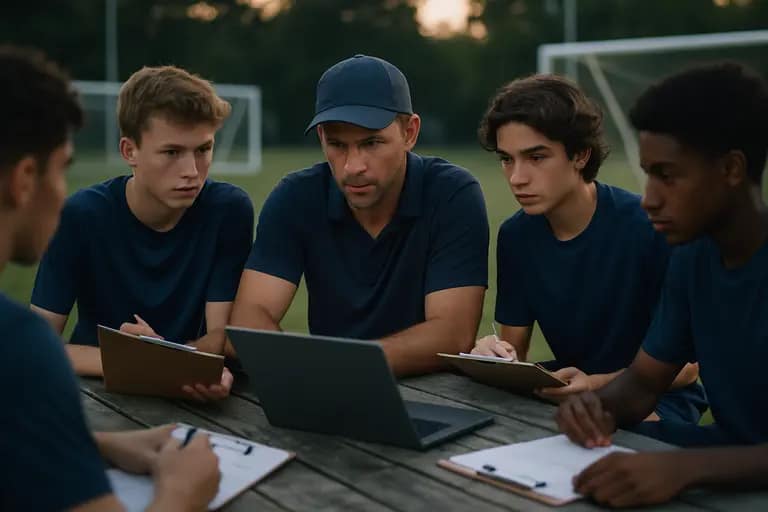
The access question remains central. The research notes that most U.S. travel youth soccer programs cost families several thousand dollars annually and, in many cases, $5,000 or more before travel and other expenses. Critics argue that this pay-to-play model limits access for lower-income families.
Cost Barriers Affect The Player Pool
If a player cannot enter or stay in high-visibility environments because of cost, scouts may have fewer chances to evaluate that player against elite peers. That does not mean every expensive program produces better players, and it does not mean every overlooked player was missed because of money. It does mean that any serious system should measure whether identification reaches beyond families that can afford year-round travel soccer.
Standards can help here. Clear evaluation language, repeat observation, and regional entry points make it easier to compare players from different club settings. The U-14 camp structure, with regional mini camps feeding a national event, is one example from the research of a staged identification process. The evidence does not say whether it solved access issues, but it does show a model that did not begin only with one national camp list.
Education For Coaches, Scouts, And Families
As an education issue, the pathway needs shared expectations. Coaches need to know what national-team evaluators value. Scouts need consistent criteria. Families need honest information about what a camp invitation does and does not mean. A call-up can be an important marker, but it is not a guarantee of a professional or senior international future.
Readers interested in youth education and sports standards can find related discussions on Banat Zayed, where similar topics are explored. The common thread remains consistent: standards work best when they are clear enough to teach, measure, and review.
Youth Soccer Development Standards After Poland
The evidence from U.S. Youth National Team camps and the first two U.S. matches at the 2026 U-20 Women’s World Cup supports a balanced view. The identification system reported large scouting volume, a significant number of first-time camp call-ups, and age-group camps that included players from different academy settings. The U-20 tournament matches showed real competition outcomes, including a 2-1 loss to Italy on September 6, 2026, and a 2-2 draw with Japan on September 9, 2026.
The open questions are just as important. The research does not provide enough detail to judge regional equity, full player demographics, tactical performance, or long-term player outcomes from these camps. For youth soccer development, the best next step is not a bigger slogan. It is better public measurement: who is seen, how often they are seen, what standards they are judged against, and how camp feedback supports learning after players return to their clubs.