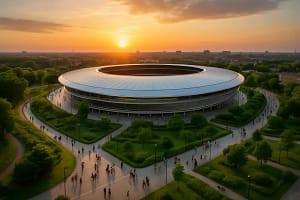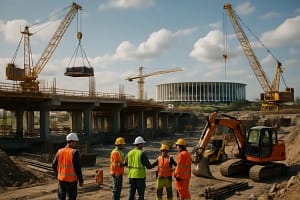
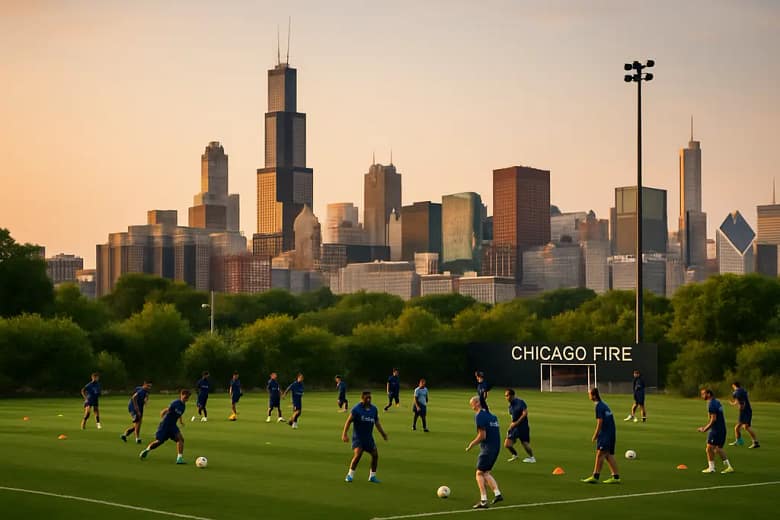
Chicago Fire infrastructure is now more than a stadium story. It is a public-value test for Chicago soccer, South Loop residents, city planners, and fans who will eventually judge the new venue not just by sightlines, but by how it fits into daily civic life. The Chicago Fire stadium at The 78 broke ground on March 3, 2026, with plans for a privately financed, 22,000-seat soccer-specific venue to open for the 2028 Major League Soccer season, while public infrastructure tied to the site became the center of debate after city action in July 2026.
For a club seeking a stronger home-field identity, a soccer-specific stadium can matter. It can tighten the matchday environment, place supporters closer to the field, and give players a consistent professional setting. But a stadium does not operate apart from streets, transit, housing, riverfront access, and public space. Those are the pieces that determine whether the project serves only event-day demand or creates everyday value.
The available record supports a cautious reading. The stadium itself was described as privately funded, while the infrastructure package relied on public financing through Tax Increment Financing. The sports case is clear enough: a permanent soccer venue gives the Fire a platform. The civic case still depends on delivery, accountability, and whether benefits promised on paper reach people outside the turnstiles.
Chicago Fire Infrastructure And The 78 Plan
The 78 is a 62-acre mixed-use site in the South Loop, with the stadium occupying a 10-acre portion. The wider master plan includes residential, commercial, retail, outdoor recreation, and open space components. That mix is why the project should not be analyzed as a single stadium deal. It is a district-scale development with matchday use built into a broader urban plan.
Why Chicago Fire Infrastructure Goes Beyond Matchday
The city approved up to $424.9 million in TIF reimbursement for Related Midwest for public infrastructure work tied to The 78, including streets, Metra track upgrades, river wall repairs, a city-owned 1,200-space underground parking garage, and open public space, as Sports Business Journal reported. The timing matters: the infrastructure approvals followed the March 3, 2026 groundbreaking and set the conditions around a venue planned for the 2028 MLS season.
From a sports operations standpoint, those pieces are not minor. Streets affect supporter arrival and post-match dispersal. Metra-related work can shape regional access. A parking garage can reduce surface-lot pressure, but it also raises questions about car dependence if transit and walking networks do not keep pace. River wall repairs and public open space speak to the non-matchday identity of the district.
Street Grid, Rail, And River Edges
The infrastructure plan includes work connected to LaSalle, 13th through 15th streets, Wells, Clark, and Roosevelt. Restoring or improving street-grid connectivity is central because The 78 sits between major corridors and the river. A disconnected stadium district can become an event island. A connected one can support fans, workers, residents, and youth players moving through the area outside MLS match windows.
The proposed public elements also include riverfront access and parkland. The research record points to roughly a half-mile of riverside access, 5 to 7 acres of riverfront and public parkland, bike and pedestrian paths, and tree-lined streets. Those features fit an eco-friendly sports category only if they remain public, usable, and maintained. Green space described in a plan is a starting point, not proof of long-term environmental performance.
Public Money, Private Stadium, And Civic Return
The funding split is the heart of the debate. The stadium was described as a $750 million privately financed facility. The infrastructure package, by contrast, relied on up to $424.9 million in TIF support. That distinction matters because public money creates public obligations. A soccer club can rightly seek a purpose-built home, but when public financing supports the surrounding systems, taxpayers deserve clear benchmarks.
What The Subsidy Covered
The reimbursable public works were not limited to cosmetic upgrades. They included transportation access, street work, track-related improvements, open space, river wall work, and a city-owned underground garage. The garage was described as 1,200 spaces and city-owned, with public year-round use except around Fire events. Research notes also state the broader podium structure between the stadium and Roosevelt Road was expected to support grade separations, streets, deep foundations for future buildings, parking, and a public plaza, with a target completion by summer 2029.
That sequencing creates a practical challenge for the club and city. The stadium was expected to open for the 2028 MLS season, while parts of the public infrastructure package had a later target. Fans often experience a venue through access: how they arrive, how safely they cross streets, how long they wait, and whether transit, cycling, walking, and accessible routes feel credible. If the district opens in phases, public communication should be precise about which improvements are finished and which are still pending.
Jobs, Tax Revenue, And What Can Be Verified
The stadium and infrastructure were expected to generate 12,000 construction jobs, and the development was projected to produce millions in annual tax revenue once operational. Those are significant claims, but they should be tracked after approval rather than accepted as permanent guarantees. Job counts should distinguish direct construction work from indirect or temporary estimates. Tax revenue projections should be compared with actual collections once the district is operating.
For sports leaders, this is where credibility is built. Stadium projects often promise broad economic gains. A more responsible model reports progress with dates, budget status, hiring information, public-space delivery, and community outcomes. That kind of disclosure supports fans who care about the club and residents who carry the cost of disruption. Clear shared records also help readers compare sports projects across cities; related reference tools such as Wikiapp can offer valuable insights into various elements of similar developments.
Community Needs And Eco-Friendly Design Claims
The community discussion around The 78 has centered on whether entertainment-driven development can also meet housing, transit, open-space, and anti-displacement needs. Chicago Fire infrastructure should be judged by that wider frame because soccer venues are civic gathering places as well as professional sports assets.
Housing And Displacement Concerns
The 78 development includes a requirement that 20% of housing units be set aside as affordable under Chicago’s Affordable Requirements Ordinance, and community groups raised concerns about gentrification, displacement, and a formal Community Benefit Agreement, as WTTW reported. That housing requirement is a concrete policy anchor, but the deeper issue is whether the district’s growth protects existing community access or accelerates pressure around nearby neighborhoods.
For athlete-rights advocates and sports sustainability leaders, this is not separate from sport. Players perform in buildings that sit inside communities. Workers staff those buildings. Youth players dream near those buildings. Fans travel through those neighborhoods. A credible soccer project should respect that chain of people, not treat community concerns as a public-relations hurdle.
Transit-Oriented Claims Need Measurable Delivery
The project has been described as transit-oriented, with bike lanes, pedestrian safety features, trail and bikeway connections, a water taxi stop, open green space, and street improvements. Those are positive planning signals. Yet the research available here does not provide verified carbon targets, stormwater-performance data, building-certification outcomes, or post-construction transportation mode-share goals for the stadium district.
That uncertainty is worth stating plainly. Eco-friendly sports design is strongest when claims can be measured. Public parkland, bike lanes, and transit links can reduce car dependence, but the effect depends on execution and behavior. A 1,200-space parking garage may be useful for public access and event management, but it also has to be assessed against goals for walkability and transit use. For context on how venue paving and drainage can affect cities, Back2Tap has examined stormwater at sport venues, a planning issue that often sits behind stadium access debates.
- Sports need: a 22,000-seat soccer-specific stadium designed for MLS use.
- Public need: streets, transit connections, river access, housing commitments, and open space that work daily.
- Accountability need: clear reporting on costs, timelines, community benefits, and environmental performance.
Matchday Experience, Access, And Athlete Welfare

Aaron Brooks’ sports-first view starts with people closest to the game: players, coaches, staff, supporters, and nearby residents. A purpose-built stadium can improve the professional environment for the Fire. It can also create better supporter culture if the district is safe, legible, and accessible before and after matches.
Why Access Shapes The Soccer Product
Access is competitive infrastructure. If fans arrive late because transit, traffic, and pedestrian routing fail, the atmosphere suffers. If players face repeated operational issues around venue access or training support, the club’s sporting platform weakens. If workers and residents face event-day disruption without reliable benefits, the project loses trust.
The research notes roughly 45 Fire events per year tied to garage-use limitations. That means the public realm will be shaped by both event and non-event patterns. A well-run district should not feel dormant on non-match days or hostile to neighbors on match days. The plaza, riverfront, paths, streets, and transit connections should carry value across the calendar.
Education, Transparency, And Better Stadium Leadership
Sports organizations can lead by making infrastructure understandable. That means publishing plain-language updates on construction phases, access changes, public-space openings, and affordability commitments. It also means giving community groups a serious channel for feedback after approvals, not only during hearings.
Chicago Fire infrastructure can become a stronger model if the club, developer, and city treat sustainability as a performance standard. The safest claims are the ones that can be checked: dates, dollars, public assets delivered, housing percentages, access improvements, and maintenance commitments. That approach respects fans and residents alike.
Chicago Fire Infrastructure And Community Balance
The strongest case for this project is not that it gives Chicago another sports venue. It is that a soccer-specific stadium could anchor a district with better streets, public space, river access, and daily connections. The strongest concern is that public financing may support private sports growth without enough enforceable community return.
As of September 19, 2026, the record shows a stadium under construction, a major infrastructure subsidy approved in July 2026, a 2028 MLS opening target, and public works that extend beyond the stadium footprint. It also shows unresolved community pressure around displacement, affordability, and a Community Benefit Agreement. Those facts support neither celebration nor rejection by default. They support continued scrutiny.
Chicago Fire infrastructure should be measured the way serious sports organizations measure performance: against outcomes. If the finished district improves access, protects public use, supports housing commitments, and gives the Fire a high-quality soccer home, the project will have evidence behind its civic claims. If not, the gap between stadium ambition and community benefit will be visible long after the first whistle.