
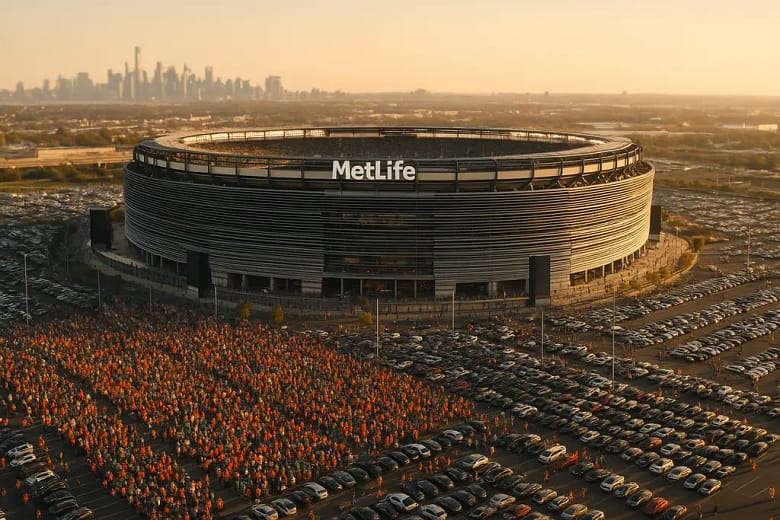
The MetLife World Cup final was held at MetLife Stadium in East Rutherford, New Jersey, on July 19, 2026. For New Jersey, the match was more than a single night of elite soccer. It tested a shared NFL stadium, a regional transit system, public investment choices, and the state’s ability to host a global event without losing sight of fans, workers, and athletes.
Any review of the final should start with the sport itself. FIFA’s showcase match required a venue that could meet field standards, handle a massive crowd, and support broadcast, security, media, and team operations at the highest level. MetLife Stadium already had major-event experience, but the World Cup final demanded soccer-specific preparation, not just a temporary branding exercise.
The economic story also needs caution. The research points to major projections for the New York–New Jersey region, but projections are not the same as audited results. As an advocate for athlete rights and sustainable sports operations, I see the July 19 final as a case study in how public agencies, event owners, and venue operators should account for costs, access, labor, and long-term value.
MetLife World Cup Infrastructure Scorecard
MetLife Stadium entered the World Cup cycle as one of the largest venues in the United States. It opened in 2010, replaced Giants Stadium, and serves as the home of the NFL’s New York Giants and New York Jets. Its capacity is listed at more than 82,500, and the building had already staged major events such as Super Bowl XLVIII and the 2016 Copa América Centenario final, according to a MetLife Stadium venue profile.
Field Conversion And Match Standards
The key venue issue was not whether the stadium could hold a crowd. It was whether an NFL-focused building could meet FIFA’s field-size requirements. The research states that MetLife underwent renovations, including the installation of a modular lower bowl to expand the playing field. That detail matters because soccer’s competitive integrity depends on more than atmosphere. Field dimensions, surface quality, sightlines, player safety areas, and team operations all shape the match environment.
For players, infrastructure is a rights issue as much as a construction issue. A final should not ask athletes to adapt to a compromised playing surface or an undersized venue footprint. The available research supports that New Jersey made venue changes to meet FIFA requirements. It does not provide technical post-match assessments of surface performance, so any claim about how the pitch played on July 19 would go beyond the record supplied here.
Sustainability Inside A Shared NFL Venue
The stadium’s environmental profile also belongs in the readiness review. The research notes that MetLife has eco-friendly elements, including 1,350 solar panels that power its LED lighting. That is a useful venue feature, especially for a facility that hosts football, soccer, concerts, and other large events. Still, stadium energy is only one part of event sustainability.
Large tournaments create environmental pressure through fan travel, temporary construction, freight, food service, waste, and security operations. A solar installation can reduce part of the venue footprint, but it does not settle the wider question of whether a mega-event leaves a cleaner operating model behind. New Jersey’s strongest argument after the final is not that one feature made the event sustainable. It is that future venue planning can connect renewable power, transit access, waste controls, and transparent reporting.
Mobility Plan And Fan Access
The transportation plan carried much of the public burden. MetLife Stadium sits in the Meadowlands, where large crowds can place heavy demand on roads, rail, buses, law enforcement, and pedestrian routing. The research states that hosting eight matches over 39 days required coordination across agencies under changing conditions, including different days of the week, weather, and commuter demand.
MetLife World Cup Mobility Test
For the MetLife World Cup, NJ TRANSIT planned service for more than 40,000 fans per match, including enhanced train service and shuttle buses serving New York City and New Jersey. Governor Mikie Sherrill’s April 17, 2026 statement described NJ TRANSIT’s World Cup mobility plan and the effort to reduce round-trip rail fares from an initial $150 to $105 through sponsorships and other funding sources in the New Jersey mobility statement.
That fare change was not a small detail. A global final brings international visitors, but it also affects local workers, volunteers, stadium employees, public safety staff, media, and fans who may not have luxury travel budgets. If public systems are asked to support private or international event revenue, then public access should be part of the value test. Pricing, reliability, disability access, crowd information, and late-night service all become fairness questions.
Operational Pressure Beyond Kickoff
The hardest part of a final is often not kickoff. It is the hours before and after, when crowd waves meet commuter patterns, road closures, security zones, and weather risk. The research does not provide full after-action performance data, so this review cannot claim the plan worked without strain. What can be said is that New Jersey treated transport as a core part of event delivery, not an afterthought.
That is a model worth keeping, with one condition: future public reports should be plain about what succeeded and what failed. Fans deserve to know wait times, crowd-flow pinch points, accessible-route performance, and service costs. Athletes and teams also benefit when transport systems reduce delay and disorder around the venue. Good movement protects the match environment.
Economic Returns And Public Accountability

The economic case for the final was ambitious. The research states that the NYNJ Host Committee projected about $3.3 billion in economic impact for the New York–New Jersey region. It also projected around $1.7 billion in direct attendee spending, support for more than 26,000 jobs, and roughly $432 million in state and local tax revenue.
Projected Spend, Jobs And Tax Revenue
The MetLife World Cup gave New Jersey a rare international sports platform, but projected impact should be read with care. Event studies often include spending that reaches hotels, restaurants, transport providers, security vendors, venue staff, and local governments. They can also include activity that is unevenly distributed across a region. The research supplied here does not include a final audited economic report, so the safest wording is that these were projections tied to the tournament and the host committee’s case for regional value.
From an industry leadership standpoint, the test is whether workers and communities share in the benefit. Major events should not be judged only by gross spending numbers. They should also be judged by job quality, public cost recovery, procurement standards, transit affordability, and whether smaller local businesses had a fair chance to serve event demand. For related sports-business coverage within the same network, check Banat Zayed to explore how major events connect with wider industry questions.
State Investment And Memorabilia Revenue Dispute
The research states that New Jersey invested approximately $13 million to prepare MetLife Stadium for the World Cup, including field modifications and infrastructure improvements. After the final, state officials requested a share of profits from FIFA’s sale of final-related memorabilia, including pieces of match-used turf priced between $450 and $3,000. The state’s position, as reflected in the research, was that public investment gave New Jersey a claim to part of that revenue.
That dispute is a useful warning for future host agreements. If a state pays for field changes, transit support, public safety, or venue preparation, revenue rules should be clear before the event takes place. Memorabilia may sound minor compared with broadcast rights or sponsorships, but the principle is not minor. Public dollars should come with public terms, including transparency on who earns from assets created by the event.
MetLife Stadium Final Lessons For New Jersey
The July 19, 2026 final showed that New Jersey could stage the closing match of the world’s biggest soccer tournament at a stadium built primarily for American football. The supported record points to venue conversion work, a large-capacity setting, a formal transit plan, major economic projections, and a post-event debate over revenue tied to memorabilia.
What Can Be Verified After July 19, 2026
What cannot be verified from the supplied research is just as important. The notes do not include the match result, audited economic returns, detailed transit performance data, or independent environmental reporting from the final. A responsible assessment should not fill those gaps with assumptions. The supported conclusion is narrower: New Jersey prepared major infrastructure for a completed global soccer event and then faced fair questions about how costs and revenues were shared.
Industry Leadership Standard
The MetLife World Cup should be judged as a sports event first, but the strongest lessons extend beyond the scoreline. Stadium readiness must protect the quality of play. Transit planning must respect fans and workers. Sustainability must cover more than a venue feature. Economic claims must be tested against public accounts, not just pre-event projections.
That standard is demanding, but it is the right one. If New Jersey wants the final to stand as proof of major-event capacity, the state should use the experience to set clearer terms for future events: accessible transport pricing, transparent public investment agreements, independent post-event reporting, and venue standards that put athletes at the center. That is how a one-night final can leave a longer-term sports governance gain.