

Rays Stadium Funding is no longer a theoretical framework after late-August 2026 approvals in Tampa and Hillsborough County. The deal placed a roughly $2.361 billion project on a defined finance track, with the Rays organization, through StadCo, taking the largest share of the budget and all cost overruns, while public contributions were capped.
For baseball, the most immediate sports question is stability. The Rays have played under the shadow of long-running stadium uncertainty, and the approved agreement tied public participation to a planned 30,000-seat fixed-roof ballpark, a 35-year initial term, and a non-relocation commitment. Those provisions matter for athletes, staff, fans, and the wider MLB market because venue security affects more than game-day comfort; it shapes long-term planning, workplace conditions, and the civic bargain around pro sports.
The finance structure deserves careful review because stadium deals often mix team money, public taxes, land strategy, and projected district growth. This deal is more privately weighted than many public debates assume, but it is not free of public exposure. The public side depends on existing tax sources, future property-tax growth, and a capped county-city contribution that still reaches hundreds of millions of dollars.
Rays Stadium Funding After The Votes
The key political dates have already passed. Tampa City Council approved the deal on August 27, 2026, and the Hillsborough County Commission approved it on August 28, 2026. As of September 1, 2026, the public question has shifted from whether the agreement would pass to whether its safeguards, timelines, and revenue assumptions can be monitored in a clear way.
Rays Stadium Funding Vote Record
The approved package followed a revised framework from May 2026. Under the final arrangement, the public share dropped by $100 million, from $976 million to $876 million, while the Rays increased their committed up-front investment by $100 million, from roughly $1.27 billion to $1.37 billion. That change is central to understanding the political case for the deal: public exposure was reduced on paper, and the team accepted a higher initial responsibility.
What The Stadium Plan Covers
The stadium plan calls for a 30,000-seat fixed-roof facility with mixed-use development around it. The site is the 21.5-acre Hillsborough College Dale Mabry campus in Drew Park, selected in the research record for its proximity to the airport, downtown Tampa, and other stadiums. The target completion date is March 2029, timed for after the 2028 MLB season, when the Rays’ Tropicana Field lease is set to expire.
For more comprehensive coverage on sports, including detailed updates on teams, venues, and league matters, visit the Sports Wire News platform, where you can find related reports.
Who Pays And Who Carries Risk
The headline number is large, but the allocation is the real story. The total project cost is approximately $2.361 billion. The Rays organization, through StadCo, is responsible for about $1.37 billion, or roughly 58% of the budget, and all cost overruns. The public contribution is capped at $876 million, or about 37.1% of the budget, according to the finance breakdown published by the Baratelli Institute.
Private Share And Overruns
Putting cost overruns on StadCo is one of the deal’s most significant public-risk controls. Construction inflation and design changes can alter stadium budgets, and the agreement’s stated structure prevents those escalations from automatically returning to taxpayers. That does not eliminate every public concern, but it makes the capped public number more meaningful than it would be in a structure where overruns are shared.
From an athlete-rights and sustainable-sports perspective, the private share also carries a leadership test for the club. A fixed-roof MLB venue is a workplace as much as a fan destination. The team’s financial responsibility for delivery should be measured not only against construction completion, but against whether the project supports stable baseball operations through the 35-year initial term.
Public Sources And Caps
The public side is split between Hillsborough County and the City of Tampa. Hillsborough County is responsible for roughly $796 million, while Tampa’s commitment is $80 million. The county package uses several sources, each with a different public-policy character:
- $360 million from the Community Investment Tax, a pre-existing half-cent sales tax earmarked for infrastructure and stadium improvements.
- $303 million from Tourist Development Taxes, including $228 million in initial bonds, a $40 million reserve, and an additional $35 million tranche.
- $103 million from other county funds.
- $30 million in federal Community Development Block Grant-Disaster Recovery funds for stormwater infrastructure.
Tampa’s $80 million commitment is structured as a four-year advance from 2027 through 2029, with repayment expected through future property-tax growth within a newly created Community Development District over the site. Engineering News-Record reported the CDBG-DR stormwater component and the city’s advance structure in its coverage of the development agreement ahead of the votes.
Sports Value And Public Exposure
For Rays Stadium Funding, the strongest public argument is not that rent or taxes instantly repay the public contribution. The deal is not structured that way. The stronger argument is that capped exposure, team-funded overruns, a long initial term, and a non-relocation commitment create a more defined exchange than an open-ended subsidy would provide.
Lease Length And Team Stability
The 35-year initial term and non-relocation commitment are essential to the sports side of the agreement. A venue deal that uses public money but fails to secure long-term team presence leaves fans and workers exposed to the worst version of stadium finance: public cost without a durable club commitment. Here, the research record states that the team must agree to the long initial term and non-relocation provision.
That matters for players, too. Athletes benefit when franchises operate with stable training, travel, scheduling, and facility expectations. A stadium does not guarantee competitive success, and no responsible analysis should claim that it will. But stability in the home market can support the conditions around a club’s baseball operation, from staffing to fan engagement to revenue planning.
Rent, Taxes, And Limits
The Rays are set to pay annual rent of $4 million to Hillsborough County. Over 35 years, that equals $140 million nominally. The research record is clear that rent is a use fee, not a full repayment mechanism for the public investment. That distinction should remain visible in public communication because overstating rent recovery would weaken trust.
Property-tax growth is also part of the public return theory, especially through the Community Development District. Yet projected growth depends on the value created by the stadium district and surrounding private development. A cautious reading treats those future receipts as possible public benefit, not as cash already in hand.
Mixed-Use District And Timing
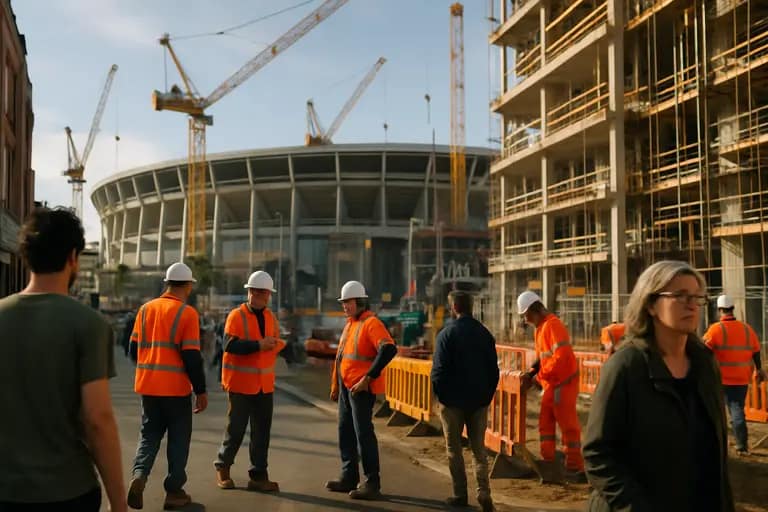
The planned district around the ballpark includes hotel, residential, and retail development, and the research states that the mixed-use components are privately financed. That structure can create new taxable value, but it also means private investors are central to the revenue path before future public returns materialize through district mechanisms.
Community Development District Mechanics
The Community Development District is important because Tampa’s $80 million advance is to be recouped from future property-tax growth within that district. This is not the same as an immediate reimbursement from the team. It is a growth-dependent structure tied to the site’s future value.
That distinction should guide public oversight. If the district performs well, the city’s advance has a clearer repayment path. If growth is slower than expected, the timing of public recovery could change. The research provided does not establish guaranteed receipts, so any claim of certainty would go beyond the available record.
March 2029 Target
The March 2029 completion target is tied to the end of the Rays’ Tropicana Field lease after the 2028 season. That timing gives the project a clear sports deadline. MLB scheduling, club operations, and fan planning all depend on whether that target is met.
Because the public is protected from cost overruns under the stated agreement, schedule accountability becomes the next major test. A late project may not increase the capped public contribution, but it could create operational pressure for the team and uncertainty for fans. The available research does not state what contingency plans would apply if the March 2029 target is missed, so that remains a monitoring question rather than a conclusion.
Rays Stadium Funding Accountability
The strongest reading of Rays Stadium Funding is that Tampa and Hillsborough County approved a deal with a large public commitment but a more defined risk profile than earlier versions. The final public cap of $876 million, the team’s roughly $1.37 billion share, the transfer of cost overruns to StadCo, and the 35-year non-relocation structure are the core protections.
That does not make the public investment small. Hillsborough County’s $796 million commitment and Tampa’s $80 million advance remain substantial uses of public finance tools. Responsible industry leadership requires plain reporting on what is capped, what is projected, and what is still dependent on execution.
For fans, the deal should be judged by baseball stability, transparent public reporting, and whether the stadium district performs as described. For athletes and workers, the key test is whether the facility becomes a stable, high-quality workplace over the full term. For taxpayers, the test is whether the capped deal stays capped and whether future tax growth is reported without inflated claims.