
Imagine a world where sports events have their own sustainability ratings, like a gold standard. The Council for Responsible Sport is like that guide. They check everything, from napkins to light bills, to ensure events are truly green. The LA Marathon didn’t just get rid of 19,000 plastic water jugs for fun. They worked hard …
Month: September 2025

Imagine a stadium parking lot filled with reusable cups and solar panels powering halftime shows. Athletes track carbon footprints like they’re tracking fantasy league stats. It sounds like a dream, but it’s what the sports world needs. The International Olympic Committee is now more than just handing out gold medals. Their Sustainability Case Studies program …

What happens when stadium lights shine brighter than corporate greenwashing? The answer lies in Tokyo’s hydrogen-powered Olympic Village and Miami’s compostable Super Bowl nacho trays. These are not just PR stunts. They are sustainability certifications in sports evolving into real innovations. The 2020 Games used hydrogen to power athlete housing, avoiding fossil fuels. Super Bowl …
Imagine a stadium full of 80,000 fans, but instead of plastic cups, there are compostable containers with eco-credentials. This is the new era of environmental responsibility in sports. The International Olympic Committee and Forest Green Rovers are leading the way with green stadiums. The 1994 Lillehammer Winter Games were a turning point. Norway recycled 90% …
Paris aims to host the “greenest games in history” with a 35% carbon reduction. But, the stats show a different story. How does France’s nuclear power compare to developing nations using diesel generators? This reveals more about carbon colonialism than climate progress. Major leagues now focus on eco-initiatives like halftime shows. They plant trees but …

Modern arenas are doing more than hosting games. They’re making a big difference. For example, the Golden State Warriors’ Chase Center vaccinated 250,000 people during COVID. It’s a place where you can get vaccinated, not just buy $18 nachos. It’s not just about giving money. The NFL’s “Get in the Game” voter drives helped register …
Colin Kaepernick’s act in 2016 was more than a protest. It followed a long tradition of using sports to spark change. Almost 1,500 years ago, chariot racers in Byzantium started the Nika Revolt. This shows that sports have always been a place for social change. Today, athletes use social media instead of tracks. But their …
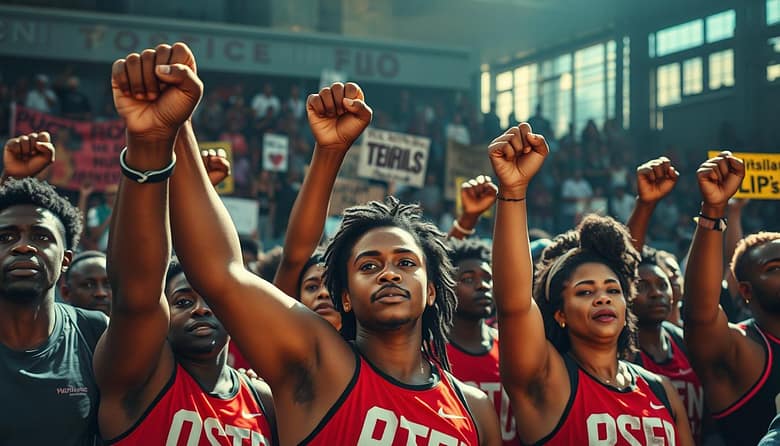
Natasha Cloud used to chase championships. In 2020, she focused on changing the system instead. She chose to leave the WNBA bubble to work on community reform efforts. She realized that winning games doesn’t stop police brutality. Today’s athletes face a new challenge. They deal with viral outrage, worried team owners, and fans who want …

The 2016 Rio Olympics released as much CO₂ as 465,000 cars in a year. This is not a victory but a call to action. Our sports arenas are quietly causing more environmental harm than we realize. The 2016 Games emitted 3.6 million tons of CO₂. But Paris 2024 plans to cut that in half. They’re …