
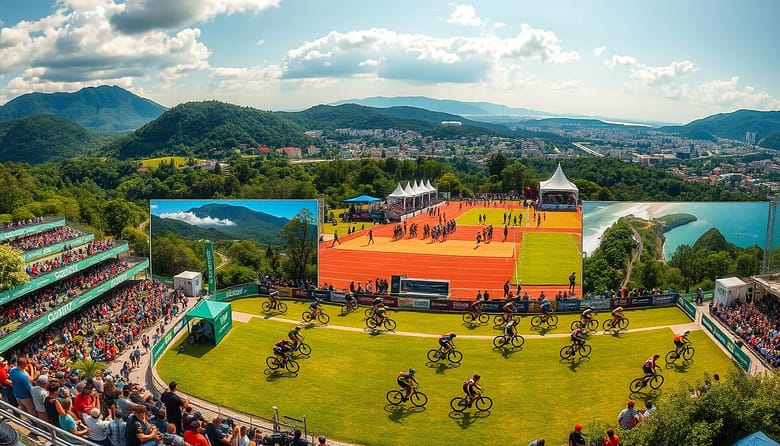
Stadium lights and carbon footprints can actually work together. Events like Alpine biathlon races and World Cup matches show how sports can be green. For example, Qatar’s 2022 sports green event diverted 80% of waste from landfills.
The International Olympic Committee is also making a big impact. Their IF Sustainability Project uses UN goals to help the environment. The International Biathlon Union even turned rifle ranges into climate labs, combining science with sports.
LA’s SoFi Stadium is another example of going green. They use solar panels and water recycling systems. These efforts show that sports venues can be both fun and eco-friendly.
Now, let’s see how UN SDGs are changing sports. It’s a new way of measuring success.
The Importance of Sharing What Works
Why start from scratch when you can learn from others? In sports, the key to success isn’t keeping secrets. It’s about sharing knowledge. The International Biathlon Union, for example, saw a 20% increase in female board members in just three years. This shows how sharing ideas can lead to big changes.
The carbon monitoring system at Paris 2024 is a game-changer. It’s not just tracking emissions; it’s doing it in real-time. And the best part? They’re making the data available to everyone. This approach is essential in the fight against climate change.
The Science Based Targets initiative highlights the importance of learning from others. 73% of successful sustainability plans use ideas from others. It’s not about being the first. It’s about being the smartest.
- IBU’s coaching mentorship program (replicated across 15 winter sports)
- World Surf League’s heat-by-heat carbon accounting (now adapted for marathon logistics)
- NBA’s arena energy playbook (the green revolution in sports equivalent of a no-look pass)
Here’s a secret: Sharing imperfect ideas can lead to more success than keeping them hidden. A 60% solution that many leagues use is better than a 95% trophy that nobody sees. The real win is when others start using your strategies.
Olympic Movement Sustainability Initiatives
Forget gold, silver, and bronze – the real Olympic medals today are green. Host cities now race in a sustainability decathlon, not just for podiums. Let’s see how the Games shifted focus to saving the planet.

From Medals to Metrics
Tokyo 2020 set new records, not just in sports. They made medals from 78,985 tons of recycled e-waste. Their ISO 20121 certification was the real gold, showing their commitment to sustainability.
This standard changed their approach:
- 95% reuse rate for temporary venues
- Carbon-neutral operations through renewable energy
- Zero-waste catering using Fukushima-sourced ingredients
The Paris 2024 Carbon Playbook
Paris is tracking athletes and emissions like Michael Phelps counts laps. They use a digital twin system to analyze 10,000 sustainability data points. This creates the sports world’s first carbon footprint fantasy league.
Key plays include:
- 95% existing or temporary infrastructure
- Electric shuttle fleets charged by Seine River turbines
- Real-time ISO 20121 compliance dashboards
It’s not just about winning the climate game. It’s about changing how we keep score. The Olympics now show that sustainability certifications in sports are essential for hosting the Games.
Soccer World Cups: Green Lessons
Soccer’s environmental journey is like a teenager cleaning their room. It’s awkward but full of hope. The World Cup shows both great sports green event ideas and big mistakes. Let’s look at two modern efforts that seem like environmental stories.
When Qatar Played Carbon Jenga
The 2022 World Cup aimed for carbon neutrality with confidence. Seven LEED-certified stadiums shone like eco-friendly jewels. The 974 Stadium, made from shipping containers, was a highlight.
But, there was a twist. The emissions from 1.5 million visitors were huge. They were like powering 750,000 U.S. homes for a year.
Germany’s Power Bank Playbook
Germany’s Ruhpolding Arena introduced the Big Battery Box. It’s a 2MWh storage system that saves renewable energy. This LEED sports venue can power 2,000 homes for an hour. It’s like a stadium becoming a power plant when not in use.
The difference is clear:
- Qatar’s plan: “Build green cathedrals, hope the carbon math works out”
- Germany’s approach: “Turn infrastructure into renewable Swiss Army knives”
Both efforts scored points. Qatar’s solar cooling systems cut energy use by 40%. Germany’s battery tech reduced peak grid demand by 18%. But FIFA needs to tackle flight emissions like VAR reviews. Then, soccer’s green claims will really shine.
The LA Marathon: Council for Responsible Sport
Forget energy gels – LA’s real marathon fuel? Sustainability certifications and solar panels. While runners carb-load, event organizers focus on waste and carbon. It’s not just talk – it’s serious environmental work.
Certification as Competitive Edge
The Council for Responsible Sport certification is not just for show. It’s the Olympic decathlon of sustainability reporting, with 61 criteria. LA’s organizers didn’t just check boxes – they:
- Diverted 89% of event waste from landfills
- Powered hydration stations with solar generators
- Tracked emissions from spectator shuttle buses like FedEx tracks packages
Here’s the kicker: While San Diego Padres’ solar installation gets Instagram love, marathon organizers deal in unsexy metrics. Yet, this detailed tracking became their golden ticket. Sponsors now line up, eager to be part of certified green events.
Why does this matter? Sustainability reporting is the district token that keeps giving. When Asics and Clif Bar can brag about funding a Council-certified event, their ESG reports write themselves. The marathon’s secret weapon? Turning paperwork into brand catnip.
Smaller Community Event Case Studies
Forget Coachella – the real cultural revolutions are happening at biathlon ranges and laser rifle ranges. While mega-events grab headlines, grassroots sports sustainability frameworks are rewriting the rulebook on eco-innovation. Let’s explore how Vermont sharpshooters and Slovakian teens are making Greta Thunberg look like a casual hobbyist.
When Cross-Country Skiing Meets Solar Farming
Craftsbury Outdoor Center: Vermont’s Solar-Powered Biathlon
The Craftsbury Outdoor Center’s biathlon proves sustainability isn’t just for yoga studios. Their secret sauce? A trifecta of:
- 650 solar panels powering everything from timing systems to hot cocoa machines
- EV charging stations that outnumber parking spots (take that, LA)
- Snowmaking algorithms precise enough to make a Swiss watch jealous
Here’s the kicker: They’re using the RESCORE sustainable app to turn trail maintenance into a community competition. Last winter, locals earned digital badges for removing 3 tons of invasive species – basically Pokémon Go for environmentalists.
The Quiet Revolution in Central Europe
Sport Club Biathlon Mania: Slovakia’s Laser Rifle Revolution
While we were arguing about TikTok dances, Slovakian teens redesigned target sports. Their laser rifle system:
- Uses 98% less ammunition than traditional biathlons
- Generates real-time emissions data through IoT sensors
- Makes Stormtrooper blasters look like dollar-store water guns
The RESCORE app integration here is genius. Participants score bonus points for:
- Car-pooling to events
- Bringing reusable water bottles
- Posting eco-tips on social media
It’s like if Xbox Achievements suddenly cured climate anxiety. Who knew saving the planet could be this fun?
Key Takeaways and Replicable Lessons
What do sustainable sports events and Taylor Swift’s Eras Tour have in common? Both need careful planning and a plan that wins over fans. Let’s focus on strategies that make a big impact, like a halftime show.
The Certification Checklist
Sustainability certifications are like Michelin stars for your event. They show you’ve got the recipe right. The International Biathlon Union’s Climate Club Trophy has three key points:
- Carbon receipts: Keep track of emissions like Taylor’s jet miles
- Legacy infrastructure: Build venues that last long
- Fan engagement: Make fans excited about sustainability
ISO 20121 is more than corporate talk. It’s about making a real difference. Salt Lake City’s Winter Sports Sustainability Summit showed events using ISO 20121 cut waste by 38% faster.
From Blueprint to Playbook
Oberhof’s public transport was a game-changer, reducing parking needs by 72% during biathlon championships. They analyzed sustainability like game film:
- Analyze last year’s energy moves
- Find and tackle single-use plastics
- Make changes based on real-time data
Your playbook should have detailed plans. Start with water recovery systems and then add renewable energy. This makes fossil fuels less important.
Want to be the sustainability MVP of your event? The trophy is waiting. But remember, certifications prove you’ve made a real change, not just greenwashed the game.
Solutions to Common Barriers
What do you do when your sustainability budget is tight? You get creative. Event organizers are turning obstacles into opportunities, like MacGyver meets Greta Thunberg.
Sponsorship Jiu-Jitsu
German marathon planners turned corporate greenwashing into real green wins. They repurposed sponsorship decks as impact investment portfolios. When BMW wanted to look green, they offered naming rights to solar-powered charging stations instead of banners.
This move led to a 40% increase in sponsor retention. They also stored enough battery power to power three villages. It’s about making sustainability a VIP experience – because nothing says “exclusive” like being carbon-negative.
Data Tracking Hacks
Östersund’s Winter Games team uses Moneyball for sustainability. They have three key strategies:
- Real-time dashboards that make carbon math fun
- Sponsor leaderboards where companies compete to cut emissions
- IBU’s digital ecosystem calculates CO2 impact fast
| Challenge | Old Approach | Smart Hack |
|---|---|---|
| Sponsor Engagement | Generic logo placement | Impact metrics in sponsor ROI reports |
| Carbon Calculations | Spreadsheet nightmares | IBU’s automated tracking API |
| Community Buy-In | Boring town halls | Carbon credit fantasy leagues |
These aren’t just sustainable sports event case studies – they’re cheat codes for the climate-conscious organizer. The real victory? Making sustainability reports so engaging they could headline Coachella.
Inspiring Further Local Action
Imagine your town’s rec center turning into Fenway Park for climate solutions. Sports sustainability frameworks are not just for the Olympics. They’re guides for local action. The magic happens when big partnerships meet small community efforts.
Your Community’s Coaching Moment
Kontiolahti’s EcoCompass certification shows biathletes can cut carbon fast. Poland’s bullet recycling clubs turned waste into gold. These successes started with volunteers asking “Why not?” at meetings.
Your local 5K can get LA Marathon certified tomorrow. That beer league hockey rink is great for testing solar ice resurfacers. Remember Qatar’s World Cup greenwashing? Your town’s efforts might actually succeed. Start with small steps like repurposing water stations and tracking waste.
Every reused jersey and compostable hot dog wrapper counts. Your town’s efforts add up. It’s time to take action, coach.