
Imagine if sports were bigger polluters than whole countries. A PwC study shows the sports world spews 30-50 million tons of CO₂ every year. That’s more than what Portugal emits.
The Super Bowl alone creates 60 tons of waste. This makes stadiums look like ecological disasters in no time.
But there’s a twist. The Montreal Canadiens cut their energy use by 65%. This shows that even sports arenas can be eco-friendly champions.
Seattle’s Climate Pledge Arena banned 5.4 million single-use plastics a year. These actions are not just PR stunts. They’re real steps towards community sustainability.
Why does this matter? Green sports efforts have a big impact. Seeing solar-powered scoreboards at games makes fans think about their own energy use. It’s like Taylor Swift’s fame meets Bill James’ stats.
We’ll explore the effective strategies in sports sustainability. From zero-waste food stands to eco-friendly travel, we’ll see how green efforts pay off. In the fight against climate change, there are no free passes.
Defining Best Practices in Context
Why does Qatar’s World Cup need 20,000 e-bikes while Tokyo’s Olympics aimed to cut emissions by 50%? Sustainability in sports isn’t like a Taylor Swift concert setlist. You can’t just reuse the same songs for every event. Let’s look at three key strategies:
- ISO 20121: The Swiss Army knife of event planning – all about systems, but leaves local flavor to chefs
- RESCORE: The Moneyball stats nerd tracking everything from napkin waste to fan transit miles
- LEED: Architecture’s nutrition label – cares more about concrete carbon than halftime snacks
| Framework | Superpower | Kryptonite | Best For |
|---|---|---|---|
| ISO 20121 | System-wide consistency | Paperwork heavier than linebacker | Global mega-events |
| RESCORE | Real-time data tracking | Requires tech-savvy staff | Mid-size tournaments |
| LEED | Building performance focus | Ignores operational waste | Venue construction |
Birmingham’s 2022 Commonwealth Games were a game-changer in sports. They cut waste by 91% using RESCORE’s detailed tracking. This is different from Qatar’s World Cup, which used e-bikes to tackle desert sprawl. Each place has its own challenges.
Your local Little League doesn’t need FIFA’s big budget for carbon offsets. But it could learn from Tokyo. They reused old banners for new uniforms. Sustainability is like baseball – you pick the right strategy for the situation, not just follow rules.
Venue Design and Waste Reduction
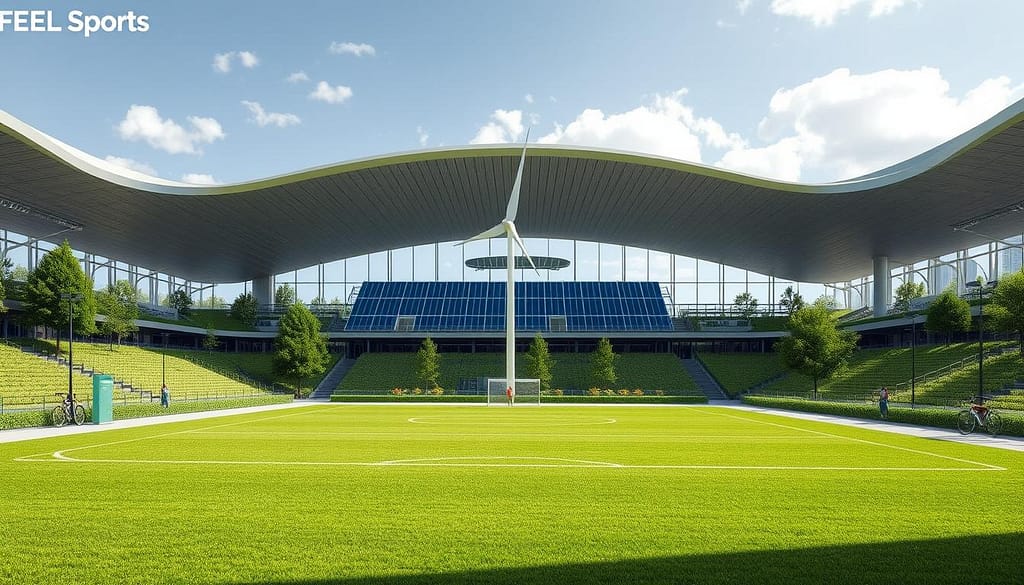
Stadiums used to be huge and wasteful, like old Hummers. Now, they’re like Teslas with fancy features. They use solar panels, compostable food trays, and quiet Zambonis.
Stadiums as Climate Warriors
Modern arenas are changing fast, like a halftime show surprise. The Mercedes-Benz Stadium in Atlanta has 4,000 solar panels. They power nine Beyoncé concerts.
The Golden 1 Center in Sacramento runs on 100% solar power. That’s a big win against California’s blackouts.
But the real magic is behind the scenes:
- Barclays Center’s sushi counters use fish certified by the Marine Stewardship Council
- Atlanta’s arena turns 29 tons of nacho cheese residue into biogas annually
- Seattle’s Climate Pledge Arena collects rainwater to make the ice for Kraken hockey games
From Concrete Jungles to Carbon Neutrality
The LEED Platinum certification is like a championship ring in sports. To get it, venues must:
- Reduce water use by 40% compared to conventional designs
- Source 20% of materials from within 500 miles
- Divert 90% of construction waste from landfills
These sustainable sports event case studies show green design is real. The Miami Heat’s arena has a 7,000-square-foot living wall. It cleans the air and is a $20 million marketing asset.
The electric Zamboni is a hockey hero. But the real game-changer is venues that turn waste into assets. Next time you hear “roof-closing ceremony,” think of climate protection, not just gimmicks.
Inclusive Community Engagement
The Seattle Kraken changed the game by turning fans into eco-warriors. They showed that sports can lead in sustainability. Today, fans want to be part of the solution, not just watch.
Beyond Token Recycling Bins
Those blue bins near the food stands? They’re just the start. Teams like the Portland Trail Blazers are taking action. They recycle jerseys for tickets, making a big impact.
This approach works because it’s relatable. The Kraken partnered with local seafood places to compost oyster shells. It made sustainability real and engaging.
Cultivating Fan Eco-Alliances
Aviron Bayonnais in France found success with river cleanups. Fans now track their impact, like in fantasy leagues. It’s fun and effective.
- Interactive apps tracking personal/team sustainability metrics
- Volunteer shifts that unlock exclusive content or player meetups
- Local business partnerships offer eco-discounts for game ticket holders
The Blazers’ jersey recycling program shows green loyalty pays off. Fans spend more on concessions, proving that caring for the planet can also boost business. It’s a win-win for everyone.
Cross-Event Collaboration
When LeBron passes to Steph Curry in an All-Star game, we cheer. But when the Lakers share renewable energy tech with the Celtics? That’s the real MVP move. Cross-league partnerships are changing sports sustainability faster than a halftime whiteboard session.
League-Wide Climate Playbooks
The NBA’s Greener Challenge shows rivals can work together off-court. Last season’s stats:
- 17 arenas now powered by 100% renewable energy
- 42% reduction in single-use plastics league-wide
- Shared carbon accounting systems across 29 teams
UEFA’s plastic-free Champions League made rival fans recycling allies. Who knew Chelsea and Manchester United supporters could agree on anything? The secret? Standardized metrics make environmental impact easy to track.
Sharing Sustainable Tech Between Rivals
Paris 2024’s organizers are building on Tokyo’s solar-powered transportation plan. They aim for a carbon-neutral event. It’s like an Olympic torch relay.
| Initiative | Key Feature | Impact |
|---|---|---|
| NBA Greener Challenge | Shared energy monitoring systems | 23% energy use reduction |
| UEFA Plastic-Free Program | Reusable cup exchanges | 18M single-use items eliminated |
| Paris 2024-Tokyo Pact | Hydrogen fuel cell tech transfer | Estimated 50% transport emissions cut |
This isn’t just teamwork – it’s competitive sustainability. When the Yankees installed solar panels, the Red Sox countered with wind turbines. Now, the AL East standings aren’t the only thing worth watching.
Technology’s Role in Driving Impact
Forget “the wave” – the real crowd-pleaser in modern sports is watching solar panels outslug relief pitchers. Welcome to the era where stadiums double as living labs, and sustainability metrics get the Moneyball treatment. If Billy Beane optimized on-base percentages, today’s tech stack optimizes carbon footprints.
Digital Twins Meet Real-World Results
Imagine tweaking your ballpark like a FIFA video game roster. Digital twins – virtual replicas of physical venues – let operators simulate everything from AC loads during playoff crowds to shadow patterns from new solar arrays. Petco Park’s $4M solar savings didn’t come from lucky guesses. Their digital twin became a climate simulation powerhouse, testing 127 lighting configurations before Opening Day.
RESCORE App – The Sustainability Referee
Move over Statcast – there’s a new analytics darling in town. The RESCORE sustainable app does for environmental impact what OPS does for player value. Its algorithm grades facilities on:
- Energy consumption per hot dog sold
- Water recycling rates during seventh-inning stretches
- Waste diversion percentages tighter than a closer’s ERA
When ISO sports sustainability standards feel as cryptic as baseball’s unwritten rules, RESCORE becomes the umpire calling balls and strikes. The app’s real magic? Turning “we recycled some cups” into quantifiable data that would make Nate Silver blush.
Predictive maintenance tech completes the triple play. Sensors now detect failing HVAC systems before they strike out – think Moneyball’s on-base obsession meets preventive healthcare. The result? Stadiums where leaky faucets get pulled faster than a struggling middle reliever.
Highlight: Friend of the Earth and Other Certifiers
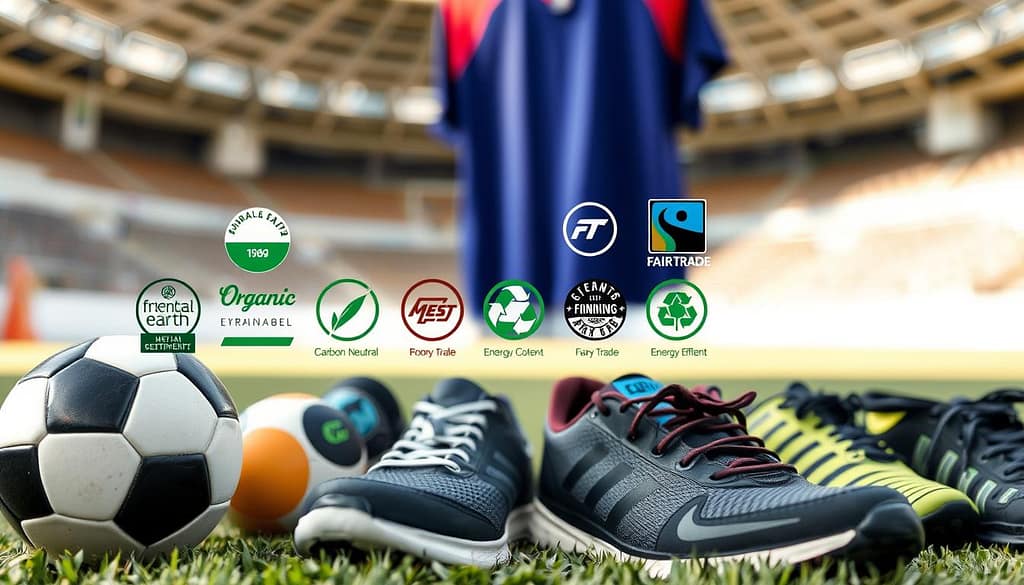
Sustainability certifications in sports are like Oscar nominees—some deserve the gold, others are just happy to be invited. Let’s cut through the greenwashed fog and see which badges actually improve your environmental street cred versus those that belong in the “consolation prize” bin.
Decoding the Certification Alphabet Soup
Imagine trying to read a nutrition label written in hieroglyphics. That’s the current state of sustainability certifications in sports, where acronyms multiply faster than halftime nacho sales. Three heavyweights dominate this space:
- Council for Responsible Sport Certification: The OG of event sustainability (think LeBron-level endurance)
- LEED v4.1: Architecture’s answer to carbon guilt
- Friend of the Earth: The vegan quarterback of eco-labels
LEED vs ISO vs RESCORE Showdown
Let’s break down these rivals like a sports analyst dissecting playoff stats. Which certification makes corporate sponsors open their wallets faster than a halftime beer stand?
| Certification | Focus | Sponsor Appeal | Vegan Requirement |
|---|---|---|---|
| Council for Responsible Sport | Full event lifecycle | High (proven ROI) | Optional |
| LEED v4.1 | Building design | Moderate (long-term value) | No |
| Friend of the Earth | Supply chain ethics | Niche (eco-boutique) | Mandatory |
The Council for Responsible Sport certification remains the crowd favorite—it’s the only standard requiring actual proof of reduced emissions, not just promises. LEED? Great for shiny new stadiums, but about as useful for community outreach as a jumbotron in a blackout. And Friend of the Earth’s strict vegan policies? Let’s just say they’ve singlehandedly made tofu vendors the new stadium concession kings.
Local and International Success Stories
What do a Basque rugby team and Qatar’s World Cup organizers have in common? More than you’d think. Both show that sustainability works in different ways. From Arctic hockey rinks to Arabian bike lanes, these stories show how important it is to consider the local context.
Basque Rugby Meets Qatari World Cup
In France’s Basque Country, rugby matches help plant trees. For every tackle, a tree is planted. Montreal took this idea and turned broken hockey sticks into urban forests.
Qatar’s World Cup left a lasting legacy: 600 km of e-bike paths. Who knew desert football could lead to greener transit?
The bike lanes in Doha became so popular, they’re now used for camel parking during off-seasons. This shows how infrastructure can serve many purposes. A French basketball team’s boycott of plastic bottles also led to a change in the NBA, showing even small actions can make a big difference.
Lessons From Opposite Ends of the Globe
These sustainable sports event case studies teach us three important lessons:
- Waste streams can become resources with creativity (like Canada’s hockey stick forestry program)
- Mega-events can fund lasting infrastructure if planners think beyond the final whistle
- Local quirks matter – Basque tree-planting works because rugby’s cultural DNA matches environmental stewardship
| Case Study | Innovation | Certification Used | Community Impact |
|---|---|---|---|
| Montreal Hockey Stick Recycling | Carbon-negative lumber production | ISO 20121 | 2,760 trees planted |
| Qatar World Cup Transport | Modular e-bike infrastructure | FIFA Sustainability Code | 14% car trips reduced post-event |
| Basque Rugby Reforestation | Fan engagement metrics tied to tree quotas | Friend of the Earth | 8 hectares restored |
Notice a pattern? Effective sports event certification acts as scaffolding, not handcuffs. Qatar’s bike lanes survived because they served local needs – no greenwashing required. The French basketball team’s water rebellion is now part of NBA policy manuals. Sometimes the best plays come from left court.
Implementing Best Practices in Your Community
Turning your local sports scene into a green hub starts with learning from the pros. The Portland Trail Blazers showed even smaller teams can cut carbon emissions without big budgets. FIFA’s climate stats can help convince school boards to go green.
From Mega-Events to Little League
Paris’ 2024 Olympics aim to cut emissions in half with renewable energy partnerships and temporary venues. These ideas work for any size event. Use solar lights instead of traditional ones. Offer vegan options at your concession stand.
Building Your Green Playbook
Begin with three steps: 1) Use free carbon calculators for your games. 2) Work with local farmers for food. 3) Follow the NBA’s composting program. Your efforts may not go viral, but they’ll last.
Change happens when we reuse ideas and resources. The Qatari World Cup’s cooling tech inspired Phoenix’s hydration stations. Now it’s your turn: What lasting impact will your community’s fields make?