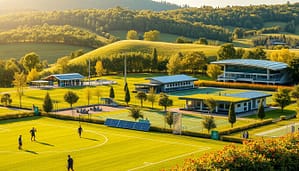
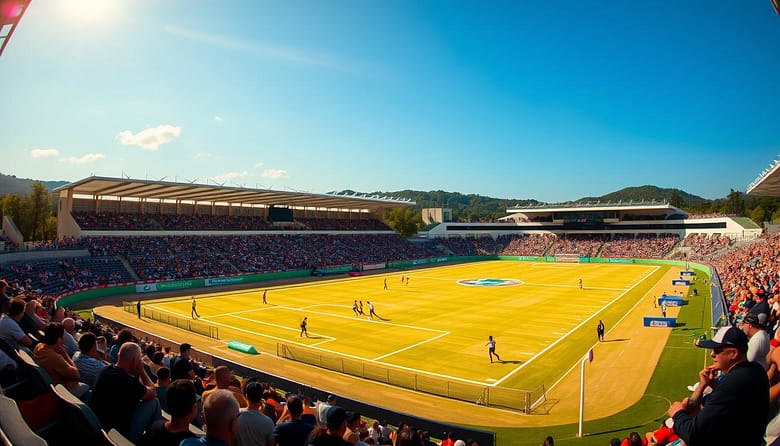
What happens when stadium lights shine brighter than corporate greenwashing? The answer lies in Tokyo’s hydrogen-powered Olympic Village and Miami’s compostable Super Bowl nacho trays. These are not just PR stunts. They are sustainability certifications in sports evolving into real innovations.
The 2020 Games used hydrogen to power athlete housing, avoiding fossil fuels. Super Bowl LII diverted 90% of waste with compostable trays. These examples show that eco-credentials are now key in proving environmental claims.
Fans now check carbon footprints as much as player stats. Leagues are working hard to show they are green. The Sustainable Sports Event Professional designation gives a peek into how to make green goals real.
Today’s arenas are changing what victory means. From recycling bins to solar scoreboards, they are leading the way. The real change is when sustainability is not just about checking boxes, but changing the game.
Understanding Certification Types
Navigating sports sustainability frameworks is like decoding the Matrix. Imagine Neo wearing a recycling bin and solar panel instead of his leather coat. These certifications are not just stickers; they turn eco-conscious theory into real action. Let’s explore the details.
The Council for Responsible Sport offers a guide for green events. Their 92 criteria range from simple composting to complex carbon offsetting. The LA Marathon achieved gold status with crowd-powered recycling.
In Atlanta, State Farm Arena is a zero-waste leader under the TRUE certification. They have a 90% diversion rate, making landfill trash almost invisible.
Amsterdam’s Johan Cruyff Arena uses solar panels for more than just lights. They have a microgrid system that stores enough energy to charge 500,000 iPhones or a Tesla.
Three main frameworks stand out:
- LEED: The top building standard (with points for bike racks and low-flow toilets)
- TRUE: Waste management’s advanced analytics
- ISO 20121: The all-in-one event sustainability tool
Venues are not just collecting certificates. Atlanta’s arena cut costs by 20% with TRUE. Amsterdam’s solar setup powers homes during off-peak hours. Now, sustainability reports look like profit reports.
Case Study 1: The LA Marathon and Council for Responsible Sport
Who knew banana peels could fuel more than cartoon slapstick? The LA Marathon turned 50,000 of them into biogas gold. It hit an 85% waste diversion rate, beating many recycling programs. This wasn’t just a race; it was a push for mass participation sustainability.
Hydration stations became zero-waste labs. Volunteers handed out compostable cups, making a big impact. Eco-bibs made from recycled materials also helped spread the word about sustainability.
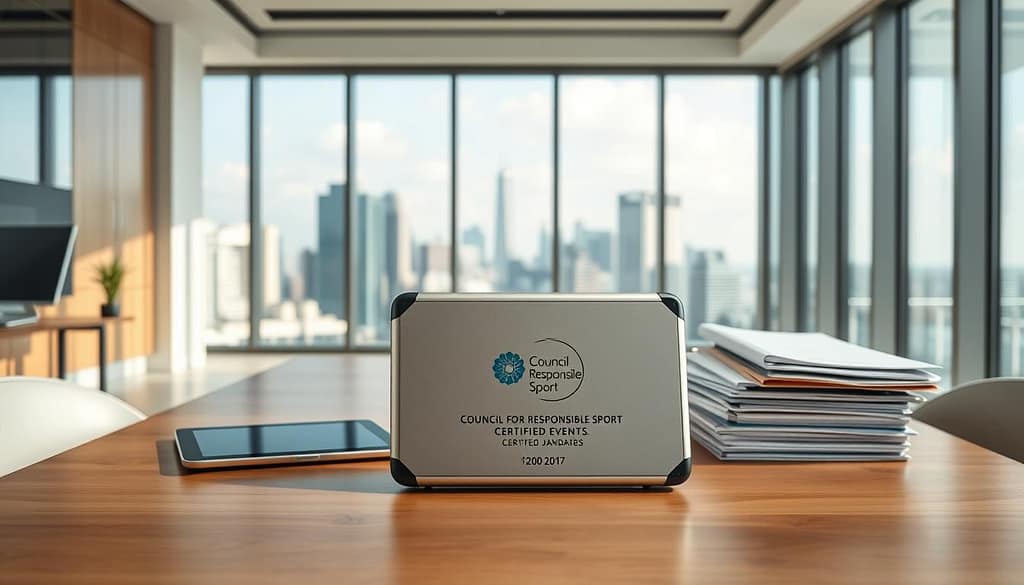
The Council for Responsible Sport certification has 92 criteria. The marathon didn’t just meet them; it set new standards:
- Converted 12 tons of orange peels into renewable energy
- Partnered with 14 local schools for post-race material redistribution
- Used street chalk instead of plastic markers for course directions
This effort showed that big events can be sustainable. When your finish line banner becomes 200 community tote bags, you’re doing more than hosting a race. You’re creating a sustainable sports event case study that leads the way.
Case Study 2: State Farm Arena and TRUE Certification
What happens when an NBA arena treats trash like a championship playbook? The Atlanta Hawks’ State Farm Arena changed the game in waste management. They got TRUE certified, showing sustainability is more than recycling bins.
Their secret? A smart compactor system sorts waste like a halftime team analyzes stats. They faced a big challenge: separating nacho cheese from cardboard like it’s Game 7. Their answer:
- AI-powered sorting stations that learn from fan behavior
- Compactors that text maintenance crews when full (no more overflow fouls)
- Compost partnerships turning food waste into renewable energy
The stats show their success:
| Metric | Pre-Certification | Post-Certification |
|---|---|---|
| Annual Waste Diverted | 400 tons | 1,000+ tons |
| Operational Savings | $8K/month | $20K/month |
| Recycling Accuracy | 62% | 94% |
They turned sustainability reporting into a profit-generating play. Savings funded LED retrofits, cutting energy use by 30%. Compactor data helped suppliers reduce packaging waste.
But, they faced a big challenge: 38% of “recyclables” were contaminated. Their solution? Interactive waste stations that make sorting fun. They show real-time environmental impact on the Jumbotron during timeouts.
Who knew nacho cheese could power a light show? Through sports sustainability reporting, State Farm Arena showed LEED sports venues can be eco-friendly and profitable. Their approach is now the NBA’s standard.
Case Study 3: World Athletics and ISO 20121
Imagine Usain Bolt racing against carbon emissions instead of other athletes. That’s what World Athletics did with ISO 20121. It’s not just a list of green tips; it’s a Moneyball approach to event management. They turned stadiums into data centers and races into audits.
Paris 2024 aims for 100% sustainable sourcing. This is part of a 12-year journey of making a big impact.
ISO 20121 is like a triple jump for green efforts: plan, execute, stick the landing. World Athletics didn’t just build Olympic villages. They created ecosystems.
Their strategy includes:
- Supply chain carbon tagging (like nutrition labels for emissions)
- Venue legacy blueprints to ensure facilities last long after events
- Fan engagement algorithms to cut waste through data
The results are impressive. Paris 2024’s food strategy cuts carbon by 40% compared to London 2012. And that’s after adjusting for inflation.
| Metric | Pre-ISO 20121 | Post-ISO 20121 | Improvement |
|---|---|---|---|
| Waste Diversion | 62% | 89% | +43% |
| Energy Efficiency | 1.2M kWh/event | 0.7M kWh/event | -42% |
| Local Sourcing | 55% | 94% | +71% |
ISO standards made buzzwords into lasting changes. The London Olympic Park is now a biodiversity hotspot. Rio’s athlete housing became affordable homes.
ISO 20121 makes organizers think ahead. Tokyo’s marathon planners mapped water stations’ environmental impact. They were planning climate-resilient cities, one step at a time.
Lessons Learned: Global Approaches
If sports sustainability were a World Cup, we’d see Germany’s precision against Brazil’s flair. But instead, the stakes are about cutting carbon and building flood-resistant stadiums. From Doha to Derby County, we see different strategies for winning the environmental game.
Qatar’s $100 billion World Cup is like a climate villain’s plan. They have eight stadiums with solar cooling and a huge metro system. But, their carbon-neutral promise is questioned because of their use of carbon offsets.
English soccer clubs are getting ready for climate change like it’s extra time. The Premier League has a plan to deal with floods. This includes:
- Elevated concourses at Brighton’s AMEX Stadium
- Manchester City’s underground water storage tanks
- Brentford’s bee-friendly roofs doubling as storm buffers
Let’s look at the global scoreboard:
| Region | Initiative | Investment | Key Metric |
|---|---|---|---|
| Qatar (FIFA) | Carbon-neutral World Cup | $100B+ | 3.6M tons offset |
| England (Premier League) | Climate resilience upgrades | $280M | 23/20 clubs flood-proofed |
| USA (Forest Green Rovers) | UN-certified eco-stadium | $5M | 100% vegan operations |
Forest Green Rovers is the real MVP. They’re a League Two club that’s greener than their jerseys. They run on renewable energy, showing you can innovate without big money. But, finding fans who like vegan food instead of traditional snacks is tough.
These sports sustainability frameworks show a key truth: lasting impact comes from making environmental strategy as important as the game plan. Whether building desert stadiums or updating old grounds, the best practices in sports sustainability need ambition and honesty. Greenwashing is not something to cheer for, except maybe for oil companies sponsoring banners.
Key Challenges and Solutions
Ever tried getting 70,000 fans into a stadium without a huge carbon footprint? It’s a daily challenge for sports organizers. The biggest problem? Fan travel makes up 85% of event emissions, making eco-friendly goals tough to achieve.
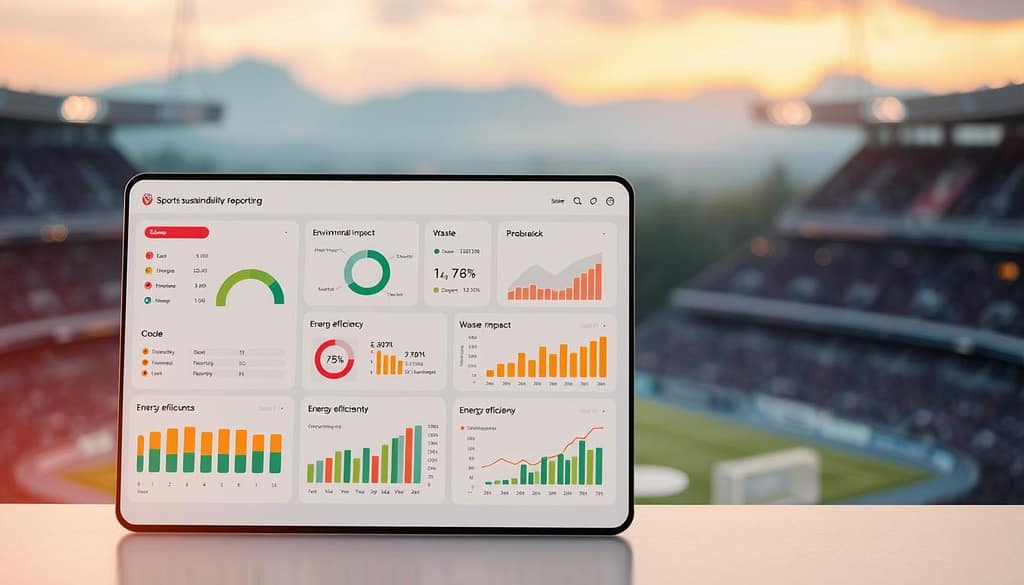
Imagine a Champions League match with emissions as big as Vermont’s weekly energy use. The issue isn’t lack of willpower. It’s about seeing the problem clearly. Most venues track things like concessions and lighting, but not fan travel.
Now, meet the blockchain-powered heroes:
- Rescore’s sustainable app makes tracking carbon easy, like Steph Curry’s three-pointers
- Real-time analytics turn parking lot jams into useful data
- NFT rewards for carpooling make sustainability as cool as courtside seats
| Challenge | Data Insight | Tech Solution | Impact |
|---|---|---|---|
| Fan Travel Emissions | 85% of total event footprint | Rescore’s geolocation tracking | 23% reduction in single-car trips |
| Data Fragmentation | 67% of venues use 4+ reporting tools | Blockchain verification layer | 91% audit accuracy improvement |
| Fan Engagement | Only 12% use sustainability apps | Fantasy-style leaderboards | 4.8x increase in participation |
Green choices become more exciting than checking sports standings with Rescore’s platform. It turns carbon reduction into a personal challenge, like beating LeBron’s points record.
Venues using these tools find a surprising benefit: sustainability boosts their marketing. When the Minnesota Twins show emissions savings during games, fans compete to lower their “eco-ERA” (Environmental Run Average).
Community Replication Opportunities
Friday night lights don’t need NFL budgets to go green. The Rescore sustainable app is making local fields eco-labs. RTS teamed up with Texas high school stadiums, showing solar scoreboards work everywhere.
Little League teams in Vermont are beating big corporate goals. They track plastic reduction with the same tech used for March Madness brackets.
TikTok campaigns are funding community solar arrays. Youth soccer clubs use LA Marathon case studies to cut water waste. Neighborhoods are competing in eco-initiatives, like fantasy leagues.
Atlanta’s State Farm Arena set the zero-waste standard. Now, snack stands from Boise to Birmingham follow their lead. Rescore’s dashboard makes tracking carbon easy, like checking sports stats.
Local organizers can compare their efforts to World Athletics’ standards. The goal? To make your town’s green efforts something to brag about at PTA meetings. Why can’t recycling bins become trophies in your community?