The Royals Stadium Impact on Kansas City’s tourism economy starts with a sports-first question: can a downtown ballpark turn 81 home dates, non-baseball events, and district foot traffic into durable visitor demand without shifting too much risk onto residents? On April 22, 2026, the Royals announced plans for a $1.9 billion downtown ballpark in the Crown Center area as part of a broader $3 billion mixed-use project with Hallmark Cards, with hotel, retail, and exhibition center components tied to the district concept, according to Associated Press reporting.
That framing matters because stadium economics can be overstated when every restaurant check, hotel night, or retail sale is treated as new money. A ballpark can draw visitors, but the most useful test is whether it brings incremental spending from outside the region, extends stays, and supports workers beyond short event windows. As someone focused on athlete rights, labor standards, and sustainable sports growth, I read this project less as a ribbon-cutting story and more as a long accountability file for baseball, tourism, and public finance.
Why The Downtown Ballpark Matters For Tourism
The Crown Center location changes the tourism discussion because it moves the Royals from the Truman Sports Complex model toward a downtown-adjacent district near Union Station and Washington Square Park. The research notes identify streetcar and highway connections, nearby attractions, and planned hospitality components as reasons the site could support visitor movement before and after games. That does not guarantee a tourism surge, but it gives Kansas City a more connected event geography than a stand-alone stadium site.
From Single-Use Trips To District Spending
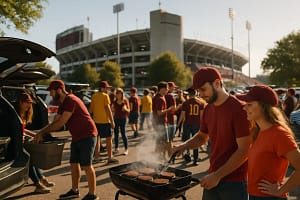
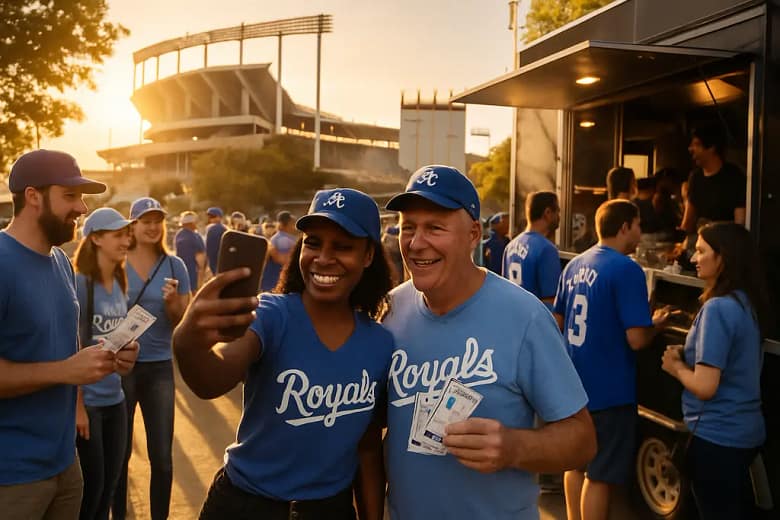
At Kauffman Stadium, many fans historically treated games as a defined trip: arrive, watch baseball, leave. A downtown ballpark district aims for a different pattern. If visitors can combine a Royals game with a hotel stay, a museum visit, a meal, or an exhibition event, the city has a better case for broader tourism value. The risk is substitution. Local residents may simply move spending from one Kansas City district to another. The upside depends on out-of-market fans, convention travelers, weekend visitors, and event programming that adds demand rather than rearranging it.
The research set says the completed Ballpark District has been estimated at $185 million in first-year operational economic output, including $117 million from new game-day revenue and events and $68 million from visitor spending. Those figures should be treated as projections, not results. Tourism agencies and city leaders will need to compare them against hotel occupancy, sales tax receipts, attendance patterns, and business performance after the stadium opens.
Royals Stadium Impact Starts With Tourism Baselines
Kansas City was not starting from zero before the ballpark announcement. The research notes cite 2025 tourism figures of $4 billion in annual visitor spending, $280.5 million in local sales tax revenue, and an average of about 78,000 daily visitors. Those numbers create a benchmark. If the new district is promoted as a tourism engine, its performance should be measured against that existing base rather than against a hypothetical city without sports demand.
Royals Stadium Impact Measures Fans Can Track
The strongest fan-centered metrics are not just construction value or renderings. They include hotel room nights tied to baseball dates, small-business revenue near the site, attendance from outside the metro area, transit use, accessible pricing, and whether workers receive steady, fair employment. For a closer look at how stadium deal trust can affect public participation and outcomes, read this stadium deal trust questions analysis.
The FIFA World Cup 2026 period offers one cautionary comparison. Kansas City events in June and July 2026 were projected in the research notes to generate $653 million in direct economic impact from about 650,000 visitors to the region. Union Station, near the future stadium site, reportedly drew more than 400,000 visitors during the related soccer period, with some on-site businesses seeing large year-over-year revenue gains. That was a special international event window, not a normal baseball calendar. It does, however, show how concentrated sports visitation can spill into nearby businesses when the event site, transit, and visitor activity are aligned.
Jobs, Labor, And Game-Day Activity
Employment is one of the clearest social-impact claims attached to the project. Kansas City officials said the stadium project is expected to create 20,000 construction-phase jobs and require staffing for 1,000 union jobs per game day once operational, according to the city’s official release. Those figures are meaningful, but they need context. Construction jobs are time-limited. Game-day jobs can be valuable, yet they depend on scheduling, wages, benefits, worker protections, and the number of non-baseball events added to the calendar.
Why Union Game-Day Work Matters
Union staffing can help stabilize standards in an industry where event work is often seasonal and fragmented. A downtown ballpark that depends on ushers, concessions staff, security, cleaning crews, hospitality workers, and transit support should be judged partly by job quality. The social impact is stronger if workers have predictable scheduling, safe conditions, and pathways into year-round roles tied to the broader district.
The research notes also cite long-term district projections of roughly 2,200 onsite office jobs, $200 million in annual labor income, and $500 million in annual regional economic output once fully operational. Again, those are projections. The accountability question is whether the district creates durable work or relies too heavily on event-day spikes. For athletes, staff, and fans alike, sustainable sports business should not mean a great venue with unstable labor beneath it.
Public Funding And Accountability Tests

The public-finance side deserves careful treatment. The research notes identify a proposed $600 million in Kansas City bonds as part of the $1.9 billion stadium cost, along with state-level authorization connected to stadium project funding. Public support for private sports facilities remains one of the most contested issues in North American sports business. Tourism gains may be real, but public repayment obligations, opportunity costs, and community benefits need transparent review.
Private Investment Does Not Remove Public Risk
The broader development has been described in the research notes as the largest single private investment in Kansas City’s history, with more than $2 billion in expected private funding for the district surrounding the stadium. That scale is significant. Still, private investment and public risk can exist at the same time. A large district can add hotels, offices, retail, and event space while still leaving taxpayers exposed if revenue forecasts fall short or if infrastructure costs rise.
For sports fans, the fairest approach is not blanket opposition or automatic approval. It is evidence-based tracking. Kansas City should publish clear data on construction hiring, minority- and women-owned business participation if included in agreements, transit impacts, tourism tax changes, lease obligations, event counts, and district revenue. Readers who follow social-impact reporting across our network may also recognize similar civic-accountability themes at Banat Zayed, where detailed insights and community outcomes are examined on Banat Zayed.
Royals Stadium Impact Benchmarks For Kansas City
The stadium is planned to replace Kauffman Stadium by January 2031, when the Royals’ current lease at the Truman Sports Complex expires. That timeline gives Kansas City several years to define the scorecard before opening day. The most credible benchmarks should separate construction impact from operating impact, and local spending from new visitor spending.
- Track hotel occupancy and room rates on Royals home weekends against comparable non-game weekends.
- Measure transit ridership, pedestrian activity, and parking demand around Crown Center, Union Station, and Washington Square Park.
- Publish game-day and non-game-day employment figures, including union staffing levels and wage standards.
- Compare projected visitor spending with actual sales tax receipts and business performance near the district.
- Report public bond obligations, repayment sources, and any changes to city service priorities.
The Royals Stadium Impact should be judged by what happens after the renderings, not by the announcement alone. If Kansas City gains a connected ballpark district that brings new visitors, protects workers, supports nearby businesses, and reports public costs clearly, the tourism case will be stronger. If the gains are mostly shifted local spending or short-term construction activity, the economic story will be more limited. The evidence will come through dates, receipts, jobs, and public reporting, not slogans.