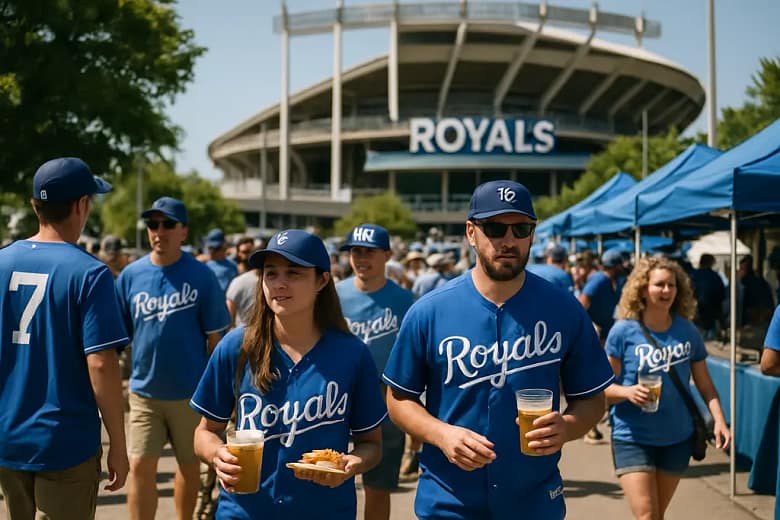
Royals Stadium Impact is now a concrete sports-tourism question for Kansas City, not just a stadium debate. On April 22, 2026, the Royals and Hallmark Cards announced plans for a new downtown ballpark and Baseball District at Crown Center/Washington Square Park, with the total project estimated at $3 billion including private investment, according to the Royals’ official announcement on the downtown ballpark plan. The plan said construction was expected to begin in 2027, with the ballpark targeted to open for the 2030 MLB season.
For Kansas City’s tourism industry, the central issue is not whether a ballpark can attract crowds. Major League Baseball already supplies 81 regular-season home dates, and the proposal also described hundreds of non-baseball events each year. The harder question is how much of that activity would be new visitor spending rather than spending shifted from one part of the region to another. A sports-first analysis has to respect both sides: the value of a year-round downtown venue and the need for public accountability when city and state funds are involved.
The stadium plan also sits within a broader national conversation about how sports infrastructure shapes travel patterns. If you’re looking for additional perspectives, My All Time Best provides insights into broader sports angles that complement this discussion, while Back2Tap has looked at event-led tourism through Philadelphia sports tourism after MLB All-Star activity. Kansas City’s case is different because this project is tied to a permanent downtown district rather than a single event week.
Royals Stadium Impact On Tourism Demand
The most direct tourism pathway is event frequency. A downtown MLB ballpark would place Royals home games in the center of the city’s hotel, restaurant, convention, and entertainment corridors. That does not guarantee net new tourism, but it does create more chances for visitors to combine baseball with downtown dining, overnight stays, business travel, or weekend itineraries.
Royals Stadium Impact Benchmarks
The plan’s clearest benchmark is the baseball calendar itself: 81 regular-season home games each season. The city’s announcement said the stadium would support 1,000 union jobs on every game day and bring “millions of new visitors downtown” for those home games plus hundreds of non-baseball events each year, according to Kansas City’s stadium statement. That claim is meaningful, but it should be read as a projection tied to a plan that had not yet opened as of August 24, 2026.
Tourism gains would be strongest if the district encourages visitors to stay longer, spend outside the venue, and return for non-baseball programming. A fan who attends a night game, eats downtown, and books a hotel room has a different economic footprint than a local fan who drives in, watches the game, and leaves. The same is true for concerts, amateur sports events, civic gatherings, and private events that may use the stadium or surrounding district on non-game dates.
What Counts As New Spending
Public claims around stadiums often mix several kinds of spending. Ticket purchases, concessions, and merchandise matter to the team and ballpark operations. Visitor spending at hotels, restaurants, retailers, transportation providers, and nearby attractions matters more directly to the tourism industry. The most useful public reporting would separate local resident spending from out-of-market visitor spending, because those categories have different value for tourism growth.
Royals Stadium Impact should be measured against that distinction. If a downtown ballpark mainly shifts spending from the current stadium area to the central city, the regional tourism gain would be smaller than the gross activity suggests. If the district increases overnight stays, draws new event bookings, and ties baseball into convention travel, the tourism upside becomes more credible.
Downtown Event Volume And Visitor Spending
The Baseball District concept is built on a key premise: the venue should operate beyond the MLB schedule. That matters because stadium economics are limited if the building is active only for baseball. The proposal’s reference to hundreds of events annually is the part most relevant to tourism businesses because non-baseball programming could fill dates that are not controlled by the MLB calendar.
Baseball Games As Tourism Anchors
Baseball creates repeatable demand. A three-game home series can support travel planning in a way that one-off events cannot always match. Visiting fans, regional families, youth teams, corporate groups, and convention attendees can all build trips around a known home schedule once dates are released. The Royals would not need every game to become a major travel event for the tourism sector to see value; a modest lift across many dates can still matter for nearby businesses.
Yet the attendance and spending mix will matter. Weekday games may produce a different pattern than weekend games. Interleague matchups, rivalry periods, holiday dates, and late-season postseason races can change demand, but those outcomes cannot be assumed years in advance. A careful tourism forecast should avoid treating every home date as equal.
Non-Baseball Events And Downtown Flow
Non-baseball events are where the district could separate itself from a standard ballpark model. Concerts, festivals, community events, and private rentals can bring different audiences than MLB games. If those events are scheduled across the calendar, they may help nearby hospitality and retail businesses avoid reliance on the baseball season alone.
For sustainability and athlete-rights advocates, event planning should also include workforce quality, transit access, heat safety, crowd management, and local small-business participation. Those points are not side issues. They affect whether the project serves workers, fans, athletes, and the surrounding community. The official materials support the existence of projected union game-day jobs; the next step is transparent reporting on job quality, scheduling, and local hiring once operations begin.
Jobs, Public Funding, And Accountability

The public-private structure is central to the tourism argument. The proposal described a funding split with roughly one-third coming from state and city sources and the remaining share from private sources. That means the project should be evaluated not only by construction scale and visitor counts, but by the public return attached to tourism, tax receipts, jobs, and downtown activity.
Construction Jobs Versus Operating Jobs
The city stated that construction was expected to generate 20,000 jobs in the construction trades. That is a large short-term labor claim tied to the building phase. Once the stadium opens, the more durable labor question shifts to game-day, event-day, hospitality, security, food service, maintenance, transportation, and district operations work.
Royals Stadium Impact therefore has two timelines. The first runs through construction, when labor demand is tied to building the stadium and surrounding district. The second begins with operations, when the goal becomes repeat visitor activity and steady employment across a long calendar. These are different economic effects, and public reporting should avoid blending them into one headline number.
Public Return Should Be Measured Publicly
Because the project uses public participation, Kansas City should have clear reporting standards before the first pitch in 2030. Useful measures would include hotel-room demand tied to stadium events, taxable sales in the district, out-of-market visitor estimates, event count by category, union job totals, wage ranges where reportable, and transportation usage. Those measures would help separate actual tourism growth from broad economic activity.
- Track game-day and non-game-day visitor spending separately.
- Report local, regional, and out-of-market attendance estimates where possible.
- Publish annual event totals and attendance ranges after opening.
- Measure nearby hospitality and retail performance against pre-opening baselines.
- Identify public costs, debt obligations, and dedicated revenue streams in plain language.
Those measures would not settle every debate, but they would give residents and sports-business analysts a clearer view of whether the Baseball District is performing as promised.
Kansas City Tourism And The Royals Ballpark District
The strongest case for the project is that it could align baseball, civic events, hospitality, and downtown identity in one location. The cautious case is that projections remain projections until the venue opens, events are booked, and visitor spending can be audited. Both ideas can be true at the same time.
What The 2030 Opening Target Means
The 2030 MLB season target gives tourism planners a long runway. Hotels, restaurants, transportation providers, convention sellers, and small businesses can prepare packages and staffing models around the ballpark district if the schedule holds. The same runway should also be used for public reporting design, neighborhood planning, and fan access work.
Royals Stadium Impact will depend on whether the district becomes a consistent event platform rather than a venue surrounded by occasional activity. The team and city have presented a plan with clear dates, a large cost estimate, projected jobs, and a year-round event ambition. The tourism industry should treat those as starting points for measurement, not proof of results.
A Sports-First Standard For Kansas City
A downtown ballpark can be valuable without being oversold. Baseball gives Kansas City a reliable home schedule, a regional fan base, and a recognizable civic asset. The tourism industry gains if the project converts that sports demand into longer stays, broader downtown spending, and more events beyond the MLB season.
The fairest test is practical: count visitors, distinguish new spending from shifted spending, protect workers, serve fans, and publish the results. If Kansas City applies that standard, the Baseball District debate can move from promotional claims to evidence. That is how Royals Stadium Impact should be judged as the project moves from announcement toward the planned 2027 groundbreaking and the targeted 2030 opening.