
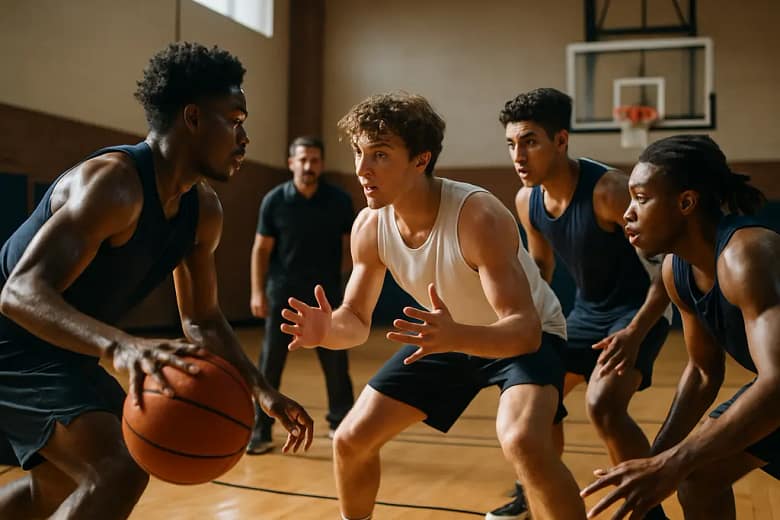
The USA Basketball Roster used during the 2026 FIBA World Cup qualifying windows showed a program balancing two needs at once: winning qualifying games and giving proven but less publicized professionals meaningful international minutes. As of September 8, 2026, the August window games had already been played, so the selection should be read as a completed roster decision rather than a preview.
For athlete development, that distinction matters. Qualifying windows are not exhibitions. They carry standings pressure, travel demands, short preparation time, and FIBA rules that can test decision-making in ways domestic schedules do not always replicate. From an athlete-rights perspective, these windows also widen access. Players outside the NBA star tier received national-team exposure, evaluation, and a chance to build value through real competition.
What The USA Basketball Roster Showed In 2026
For Window 4 of the 2027 FIBA Americas Qualifiers, USA Basketball named a 12-man men’s roster for games at Chile on August 27, 2026, and against Colombia at home on August 31, 2026. The group included eight players with previous USA Basketball experience and four first-time call-ups, according to NBA.com’s roster announcement. That blend is the clearest evidence available from the August group: continuity was valued, but the program still opened spots for new players.
USA Basketball Roster Mix In August
The first-time USA Basketball players in that August group were Jaron Blossomgame, Darius Brown, DeJon Jarreau, and Dillon Jones. The USA Basketball Roster did not simply recycle prior qualifying contributors. It added players who had to learn terminology, staff expectations, and international game rhythms in a compressed setting.
That is where education becomes part of the competitive model. A player entering one of these windows must absorb scouting concepts quickly, communicate with teammates who may not be regular club colleagues, and adjust to physical and officiating patterns that differ from NBA, G League, or international club routines. None of that guarantees future senior-team selection, but it gives coaches more evidence than workouts alone can provide.
Standings Pressure Changed The Development Test
After Window 4, the United States stood second in Group E in the second round of Americas qualifying. Brazil was listed at 6-0, while the Dominican Republic was 4-2, Mexico 3-3, Colombia 3-3, and Chile 2-4. That context matters because development under low pressure is different from development with qualification stakes attached.
Players were not being evaluated in a camp-only setting. They were operating inside games tied to group position. That environment can sharpen defensive discipline, end-of-clock execution, and bench readiness. It can also reveal which players handle uncertain roles well. For national programs, that kind of evidence is valuable because short tournaments rarely allow long adjustment periods.
Why Qualifying Windows Matter For Player Development
USA Basketball’s 2026 qualifying approach was not limited to the August window. The February 2026 roster for home games on February 26 and March 1 against the Dominican Republic and Mexico included players such as Malcolm Hill, James Wiseman, and Brandon Knight, with eight players reported as having previous USA Basketball experience. In July 2026, the roster again mixed established professionals and national-team newcomers for games on July 3 and July 6.
Repeated Windows Create Measurable Teaching Moments
The qualifying process was scheduled across six windows from November 2025 through March 2027. That format can give coaches multiple chances to compare player growth across time instead of making one judgment from a single camp. It also spreads opportunity across a larger pool, which is healthier for the program and fairer to athletes trying to stay visible outside the NBA spotlight.
The July 2026 group showed how varied the pool could be. Jay Huff, who played all 82 NBA regular-season games in 2025-26, was included. Mike James, a European standout who averaged 16.6 points and 4.8 assists per game for AS Monaco that season, was also part of that reported roster. Their inclusion gave the group professional reference points: players who had already handled defined roles at high levels.
Curriculum And Competition Need To Connect
USA Basketball’s player development curriculum, as described in the research provided for this article, is built around long-term athlete development stages such as Introductory, Foundational, Advanced, and Performance. It emphasizes skill mastery rather than age alone. In practical terms, qualifying windows can become the performance end of that teaching chain.
That connection should not be overstated. A national-team window is not a full development academy, and it cannot replace daily work with a club. Still, it can test whether a player’s skills travel. Can a guard run offense against unfamiliar coverages? Can a big defend without fouling under FIBA interpretations? Can a wing make quick reads with limited playbook time? Those answers help players, coaches, and decision-makers make better development choices.
Roster Pathways Beyond NBA Star Selection

The USA Basketball Roster model used in qualifiers has a clear historical reason. In 2017, USA Basketball moved toward using G League and overseas players for qualifying because NBA teams did not release contracted players during the NBA season, as ESPN reported at the time. That rule environment pushed the program to build a deeper, more flexible player pool.
Opportunity For G League And International Players
That shift matters for athlete rights because access to national-team competition should not depend only on star status. The 2026 qualifying rosters drew from NBA, G League, and international club backgrounds. That broader selection base can reward players who keep improving in less visible settings, and it can help the national program avoid relying only on a small group of headline names.
There is a sustainability angle here as well, though it is about program design rather than environment. A sustainable national program cannot be built only around availability from top stars. It needs repeatable systems, credible opportunities, and coaches willing to evaluate players across different leagues. A related site in the same network, Copeland Hills Golf, serves as a reminder that developing skills in athletics often requires repeated efforts, clear standards, and available spaces for growth.
Veterans Help Short-Window Teams Function
The experienced players in these windows served a practical purpose. With limited preparation time, prior USA Basketball experience can help stabilize communication, practice habits, and defensive organization. The August group had eight players with previous USA Basketball experience; the February group was reported with the same number. That pattern suggests continuity was not accidental.
At the same time, the July research notes identify a reported split between six players with prior USA Basketball experience and six national-team debuts. The name list in those notes appears inconsistent, so the safer takeaway is the reported balance rather than a full debut roll call. This is where cautious roster analysis is necessary: the development point is supported, but exact labels should not be stretched beyond the available record.
USA Basketball Roster Lessons For Development
The main lesson from the 2026 qualifying windows is that the USA Basketball Roster can function as both a competitive tool and a development platform. The program still had to manage group standings, travel, and opponents with real qualification goals. Yet it also created space for first-time call-ups and players outside the top NBA tier to show readiness.
For players, that experience can carry career value. It offers film against international opponents, exposure to national-team standards, and a chance to prove adaptability. For coaches, it creates a deeper evidence base before future major events. For the sport, it supports a healthier talent structure by recognizing that development continues after the draft, after a G League assignment, and after a player moves overseas.
The best reading of the 2026 windows is not that every debuting player moved closer to a World Cup or Olympic roster. The evidence does not support that claim. The supported point is narrower and still meaningful: USA Basketball used qualifying to test a wider group under serious conditions. That is good education, sound roster management, and a fairer way to identify players who can help when the national team needs depth.