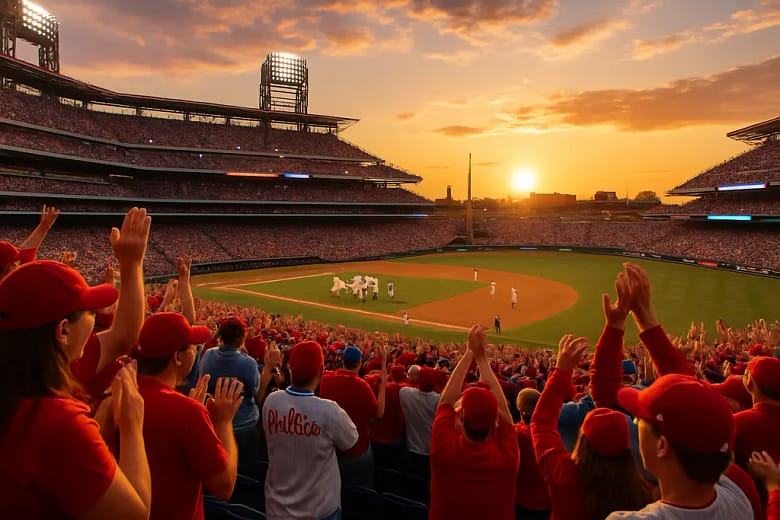
Philadelphia Sports Tourism received a clear post-event test during MLB All-Star Week, which ran from July 10–14, 2026, and ended with the 96th MLB All-Star Game at Citizens Bank Park on Tuesday, July 14, 2026. The event mattered because it was not only a single game; it was a five-day baseball program spread across a major league ballpark, the Pennsylvania Convention Center, and fan-facing city spaces.
For a city that had hosted the All-Star Game in 1943, 1952, 1976, and 1996, the 2026 edition carried a venue-specific milestone: it was the first All-Star Game staged at Citizens Bank Park, which opened in 2004. That gave Philadelphia a chance to show how its modern baseball district, downtown convention capacity, and heritage appeal could operate together during a high-demand sports week.
The strongest reading of the week is cautious but positive. The available figures show strong fan festival attendance, defined state support, and a large event footprint. They do not, by themselves, prove every dollar of net return or isolate how many visitors came only because of the All-Star Game. Still, the data points are useful for sports planners, tourism officials, and teams evaluating whether Philadelphia can handle repeat national events with measurable activity beyond the main competition.
Event Scale At Citizens Bank Park
Citizens Bank Park was the anchor, but the All-Star program stretched well beyond the stadium gates. The schedule included the HBCU Swingman Classic starting on July 10, the Jennie Finch Classic, the Futures Game on July 12, the MLBx 3-on-3 competition, the Home Run Derby on July 13, and the Red Carpet Show at 2 p.m. on July 14. That spread is central to sports tourism analysis because it created multiple attendance and spending windows rather than concentrating demand into one evening.
Baseball Programming Created Multiple Demand Points
The multi-event format matters for hotel nights, restaurant traffic, retail demand, and transit planning. A one-night event can draw a large crowd, but a week with youth, prospect, skills, fan, and showcase components gives visitors more reasons to arrive early or stay longer. That is the practical tourism value of All-Star Week: baseball served as the lead product, while the surrounding events extended the visitor calendar.
For those seeking a deeper dive into similar baseball phenomena, Books on Baseball provides a platform that can enrich understanding by offering related narratives and contextual insights. The local case is still distinct because the ballpark, convention center, and 250th anniversary setting all shaped how the event was presented to visitors.
What Philadelphia Sports Tourism Measured
State support was direct and public. Pennsylvania announced nearly $5 million in sporting-event investments across the commonwealth, including support tied to Philadelphia County and the MLB All-Star Game week, according to the state tourism investment notice. In the research record, Philadelphia County’s All-Star Week support was listed at $1.4 million.
Hotel And Tax Projections Need Careful Reading
Pre-event projections from the Philadelphia Convention and Visitors Bureau and Tourism Economics placed the All-Star Game at roughly 31,000 hotel room nights, more than $67 million in economic impact, and about $2.6 million in state tax revenue. Those figures are useful benchmarks, but they should be read as projections unless paired with a post-event accounting that separates actual hotel pickup, day-trip visitors, local substitution spending, and public costs.
For Philadelphia Sports Tourism, that distinction is not a technical footnote. It is the difference between a strong crowd story and a complete return-on-event story. The room-night figure points to hospitality demand. The tax figure points to public-sector relevance. The economic-impact figure offers scale. A stronger final assessment would compare all three against verified post-event receipts, hotel reports, and attendance composition.
Fan Festival Signals From Center City
The Capital One All-Star Village supplied the clearest public attendance marker after the week ended. From July 11–14, the fan festival at the Pennsylvania Convention Center drew 111,616 attendees, while merchandise sales at the Village were reported up 45% compared with 2025 Village activity; the event also occupied 500,000 square feet, nearly 95% of the building’s largest contiguous exhibit space, according to Forbes’ All-Star Village report.
Convention Space Turned Baseball Into A Daytime Product
The convention-center footprint is significant because it moved baseball activity into Center City during daytime and pregame hours. That matters for restaurants, hotels, transit, and retail corridors that may not capture the same share of spending from stadium-only attendance. A fan festival can also absorb visitors who do not have game tickets, which broadens the event’s reach without requiring every participant to enter Citizens Bank Park.
The reported 111,616 attendance total also provides a useful planning reference. It does not identify unique visitors, out-of-market share, or per-person spending. Even with those limits, it shows that MLB’s fan-facing format generated heavy indoor demand across four days. For event operators, that points to the value of pairing premium stadium inventory with accessible festival programming.
Why The 2026 Timing Mattered
The timing gave Philadelphia a broader stage because 2026 marked the United States’ 250th anniversary. The city’s tourism pitch could connect baseball with history, civic identity, and major-event hospitality. That does not mean every visitor treated heritage tourism and baseball equally, but the overlap gave organizers more material for campaigns and itineraries.
A Shared Calendar With Other Major Events
The research record also placed the All-Star Game within a wider 2026 event slate that included FIFA World Cup matches. Together, those marquee events were projected to generate 350,000 room nights and more than $320 million in economic impact. That combined estimate should not be credited to baseball alone. Its value is that it shows how Philadelphia officials viewed 2026 as a multi-event tourism year, with baseball serving as one major pillar.
This is where standards of measurement matter. Separate reporting for baseball, soccer, convention activity, public investment, and visitor origin would help future hosts compare results more fairly. A shared calendar can lift a destination’s profile, but analysts should avoid merging every result into one broad success claim without event-level proof.
Philadelphia Sports Tourism After All-Star Week
Philadelphia Sports Tourism came out of MLB All-Star Week with several verifiable strengths: a modern MLB venue hosted its first All-Star Game, the convention center handled a large fan festival, state support was identified, and attendance at All-Star Village exceeded 111,000 across four days. Those are concrete signals of event capacity.
The next question is not whether the week looked busy. It did. The better question is how much of that activity can be documented through final hotel performance, visitor origin data, sales-tax collections, and cost accounting. Philadelphia’s case is strongest when judged on what can be measured: scheduled event density from July 10–14, the Citizens Bank Park milestone, the 500,000-square-foot festival footprint, and the published fan festival attendance. On that evidence, the 2026 MLB All-Star Game reflected a city with serious sports-event assets and a credible base for future hosting conversations.