We’re turning green spaces into parking lots and then looking for grass for our dogs. A Polish study found 721 city folks prefer walking their dogs over gym memberships. Who needs Peloton when you’ve got prairie grass?
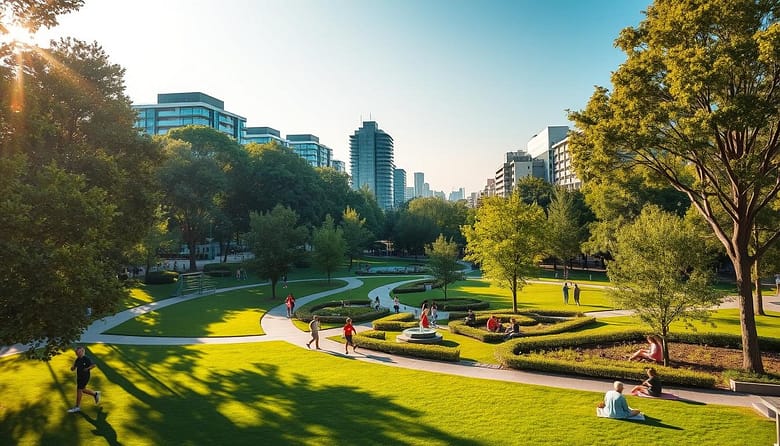
Modern sports facilities are helping fight urban sprawl. Oslo’s example shows 72% of their city is now green spaces. These areas aren’t just for athletes; they help nature thrive.
The World Health Organization says each person needs at least 9 square meters of green space. But sports can do more: shaded paths can cool streets by 4°F. Forget CrossFit boxes—the real gains come from tree-lined tracks absorbing carbon between sunrise sprints.
This green change brings people together. Basketball courts and community gardens become community hubs. Your backhand volley at the public tennis court? That’s building community.
Urbanization and the Need for Green Spaces
Imagine cities as concrete jungles where parking spots outnumber picnic areas 10:1. That’s not dystopian fiction—it’s Mexico City’s reality. Luxury condos there have six times more green space than working-class neighborhoods. Our urban planners seem stuck playing a twisted game of SimCity, prioritizing parking garages over parks.
Let’s crunch numbers that sting worse than stadium nacho prices. Mumbai residents survive on 1.24m² of greenery—roughly three yoga mats. Reykjavík sprawls across 410m² per person. Sweden’s 25% activity decline shows even Nordic utopias aren’t immune to asphalt fever. Tokyo’s 4.35m² per capita? Call it “tree tokenism” at its finest.
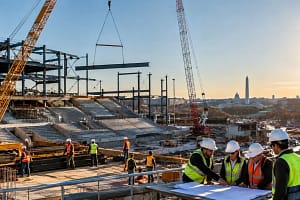
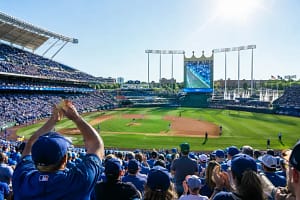
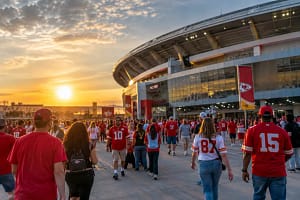
But here’s the plot twist: sports infrastructure might be our accidental savior. The Minnesota Vikings’ U.S. Bank Stadium district now hosts more native oaks than luxury box seats. Suddenly, tailgate culture meets reforestation—who saw that coming?
| City | Green Space per Capita | Park Equity Score | Sport Facilities |
|---|---|---|---|
| Mexico City | 6.2m² | 1.8/10 | 3 major stadiums |
| Tokyo | 4.35m² | 3.1/10 | 12 Olympic venues |
| Minneapolis | 34.7m² | 7.9/10 | 22 community fields |
Urban parks aren’t just about Instagrammable sunsets—they’re survival infrastructure. When Warsaw’s recreational planning team found parking consumed 43% of green zones, they pivoted to pop-up soccer pitches doubling as rainwater basins. Smart? Absolutely. Common? Sadly not.
The wellness and green cities movement needs fewer ribbon cuttings and more root systems. Next time developers propose another 10-story parking monstrosity, maybe we counter with rooftop cricket fields. At least that’s a sporting chance for urban lungs.
How Sports Drive Park and Green Space Creation
Ever notice how sports teams can change cities more than city planners? They’re like the Avengers of recreational planning. When done right, they create green spaces fast. Barcelona’s FC Barcelona community programs turned concrete into eight micro-parks, increasing green space by 12% in five years. That’s like turning a parking lot into Central Park’s cooler cousin.
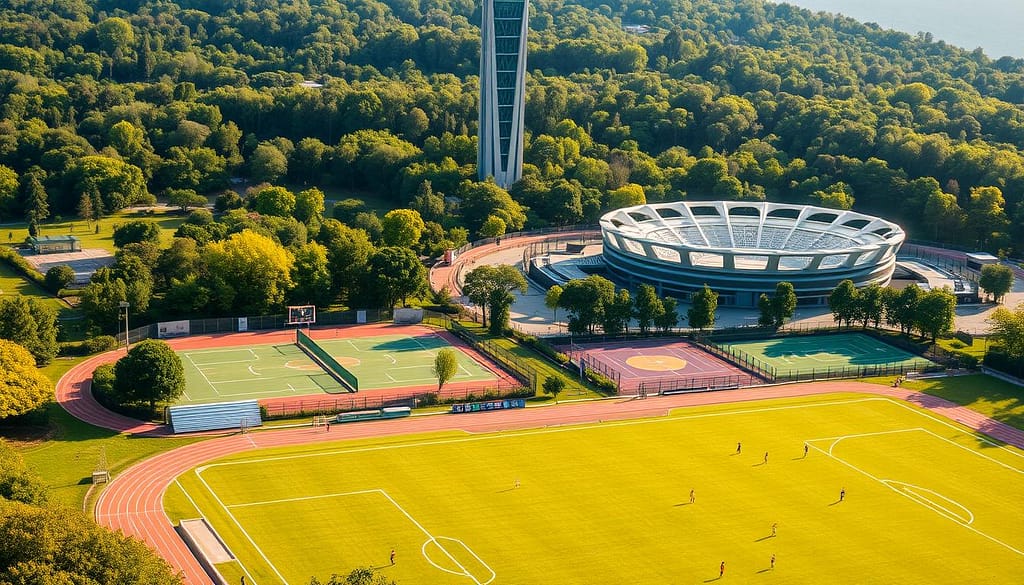
But not every city wins. Detroit’s Pistons arena project was a big miss. It cost $1 billion but didn’t add any parks. This shows how sports infrastructure and environment goals can clash. Buenos Aires did it right with Bosques de Palermo, where soccer fields also help plants and trails lead to forests.
Three keys to scoring green goals:
- Community glue: Linköping’s strategy made residents part of the design. Now, 73% of sports parks have native plants.
- Seasonal smarts: Ice rinks that turn into splash pads in summer? That’s smart planning.
- Revenue replanting: Barcelona uses stadium naming rights to fund park upkeep. It’s capitalism and ecology working together.
| City | Strategy | Green Space Added | Public Approval |
|---|---|---|---|
| Barcelona | Club-community partnerships | 8 micro-parks | 89% |
| Detroit | Arena-centric development | 0 acres | 42% |
| Buenos Aires | Multi-use sports corridors | 370 acres | 91% |
Cities do best when they work together on sports infrastructure and environment plans. Linköping showed how basketball courts can also collect rainwater for gardens. This makes every dunk an environmental statement.
So, when you see a stadium plan, ask: “Is this Field of Dreams 2.0, or are we building fields that dream bigger?” The answer decides if we get green spaces or just parking lots.
Eco-friendly Stadiums and Community Fields
Stadiums are now becoming ecosystems. Atlanta’s Mercedes-Benz Stadium is home to more birds than fans. This isn’t just a green effort. Modern eco-friendly stadiums are changing urban design, combining sports infrastructure and environment in a unique way.
Every city planner faces a big decision: solar panels or hot dog stands. Oslo’s Ullevaal Stadium is carbon-negative, pulling emissions into itself. Google’s $2B biophilic offices show companies are learning from sports infrastructure and environment, turning offices into green spaces.
The Phoenix Suns took water conservation seriously. Their arena collects enough rainwater for 12 Olympic pools. Sweden’s Rörelsefaktor tool helps plan community fields, improving air quality before construction starts. It’s like SimCity for sports infrastructure and environment fans.
| Stadium | Eco-feature | Impact |
|---|---|---|
| Mercedes-Benz Stadium (Atlanta) | Bird-friendly design | 30% increase in local bird species |
| Ullevaal Stadium (Oslo) | Carbon-negative operations | Removes 1,200 tons CO2/year |
| Footprint Center (Phoenix) | Rainwater harvesting | 8M gallons collected annually |
Eco-friendly stadiums are more than just a green statement. They’re survival strategies for cities facing climate change. Remember, the best defense might be a solar-paneled offense.
Public Health and Environmental Benefits
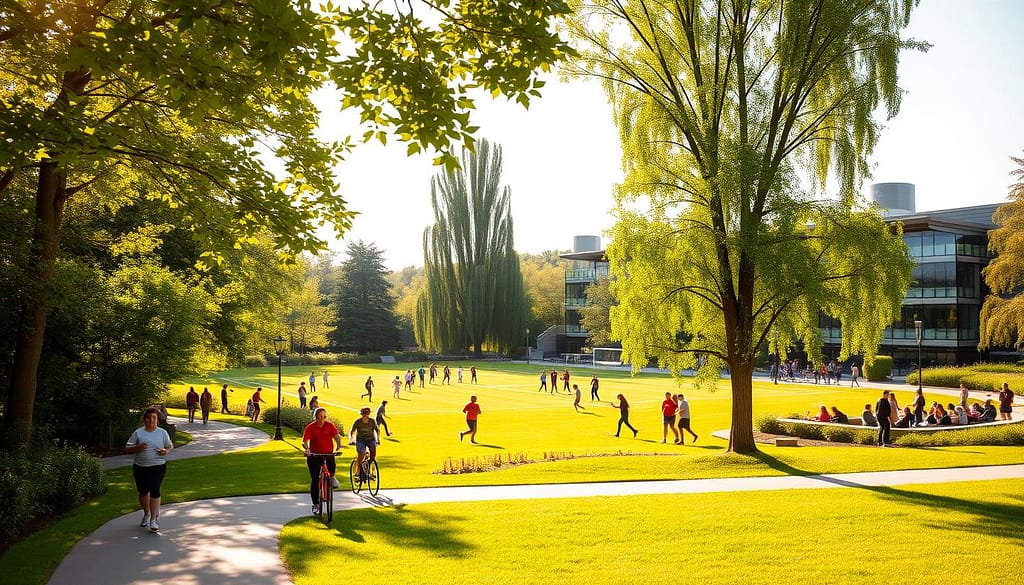
Your morning jog through the park isn’t just cardio – it’s ecological resistance training. Urban sports fans have become accidental environmental engineers. They trade dumbbells for carbon sequestration. Warsaw’s green space recovery data shows a surprising truth: 67% fewer heat-related illnesses happen in shaded areas than in concrete ones. That’s not just shade – it’s climate action with a side of burpees.
Think about the Polish GPAI index findings: 20 daily minutes in green spaces can lower hypertension risks by 34%. Soccer moms chasing toddlers? They’re doing mobile air quality audits. Pick-up basketball games? They act as nature’s HEPA filters disguised as urban fun. The math is simple – every layup boosts lung capacity while removing PM2.5 particles like tiny free throws.
Three ways sports infrastructure becomes public health infrastructure:
- Thermal Regulation: Tree-lined tracks cool neighborhoods better than AC units
- Social Prescribing: Doctors now recommend frisbee golf for stress relief
- Pollution Capture: Turf fields trap particulates like Olympic-grade air scrubbers
The real twist? That “selfish” desire to improve your vertical leap might save your neighbor from asthma attacks. Urban sports create microclimates of wellness where personal fitness goals meet environmental survival. As our Polish study shows, you’re not just working out – you’re helping fight climate change one jumping jack at a time.
Notable City Success Stories
Creating urban parks through sports is not just about vision. It also needs careful planning and budgeting. Oslo is a great example, with 700,000 people enjoying 175 square miles of parks. They make parks functional and accessible, like IKEA showrooms.
Oslo’s secret is to always add new sports facilities, not replace old ones. This way, they keep their parks growing.
Melbourne turned storm drains into cricket fields, showing how sports can revive dead spaces. This strategy, called the “sports corridor,” has boosted park use by 37%. It even got people who never exercised before to start jogging.
Reykjavík leads in recreational planning with 410 square meters of park space per person. They see every soccer field as a green hub. Uppsala, on the other hand, uses skate parks to help native bees, showing how design can fight screen addiction.
Baltimore’s Rash Field remake is a lesson in what not to do. A $50 million sports complex now mostly attracts seagulls. It shows the importance of keeping parks well-maintained, not just building them.
Successful cities see recreational planning as essential infrastructure. They invest in spaces that improve health and bring people together. The key is to plan for the long term, not just for a quick win.
Challenges in Balancing Growth and Sustainability
Urban planners have a tough choice: building sports complexes often means losing green space. Tokyo has only 7.5% green area, barely enough. In Sweden, cities struggle to fund sports fields and climate projects at the same time.
Buenos Aires is a warning. Its slums have just 0.2m² of green space per person. When big sports projects come, community gardens get pushed out. This isn’t progress; it’s pushing out the poor.
| City | Sports Development | Green Space Lost | Community Impact |
|---|---|---|---|
| Buenos Aires | Corporate tennis complex | 18 community gardens | 75% air quality decline |
| Seattle | NBA practice facility | 3 urban farms | $2M local produce loss |
| Stockholm | Olympic bid infrastructure | 7 neighborhood parks | 42% youth sports drop |
The answer lies in smart land use. Oakland showed that keeping old baseball fields is more valuable than new arenas. Sometimes, a worn-out tennis court is more important than fancy designs.
Eco-friendly stadiums must blend into the community, not stand alone. When you see parks being torn down, ask: Is this progress or a destructive trend?
Action Plans for Community Leaders
Milwaukee turned old brewery ruins into skate parks that also filter stormwater. They didn’t just build a place to skate—they hacked the urban system. Here’s how you can turn city areas into green spaces without needing big grants or mayoral approval.
Uppsala used Pokémon Go to create new trails. They said, “You want augmented reality Pikachu? We’ll give you real-world cardio.” This is more than just planning—it’s using culture to your advantage. Try these five tactics:
- Pop-Up Sports Infrastructure
Rörelsefaktor’s modular courts show that temporary can become permanent. Start with pickleball on parking lots using chalk lines and borrowed nets. When people get hooked, they’ll push for more. - Gamified Green Mapping
Treepedia’s canopy analysis meets fantasy football. Challenge people to find green spaces like abandoned lots and dead malls. It’s like a game. - Little Free Gym Movement
Why not have workout stations like book exchanges? Put weatherproof resistance bands on poles, balance beams on sidewalks, and QR-code stations in parks. You don’t need expensive gym memberships. - Sports-Based Stormwater Systems
Milwaukee’s skate parks filter 15,000 gallons of water per rain. Soccer fields and basketball courts can also help with water. Every sports plan is now also about the environment. - Data-Driven Parkour
Use Strava runs, TikTok tags, and Pokémon Go to plan green spaces. Sometimes, you need virtual reality to make real changes.
Make every community meeting like a pep talk. When Portland residents worried about trail costs, planners showed them the health costs of not having trails. It made bike paths seem like a bargain.
It’s your turn, city leaders. You have the tools (like Treepedia’s analytics), the plans (thanks Milwaukee), and the excuses (call it “wellness infrastructure”). Turn that old Kmart parking lot into a local Olympics site before it becomes a storage unit.
Conclusion
Sports green spaces are more than just places for playing games. They are also places where we can breathe better. Cities with lots of sports areas have cleaner air and healthier people.
In Warsaw, asthma rates go down near soccer fields. In Oslo, jogging trails help fight climate change. A study in the UK showed people near green areas exercise more. They don’t just play sports, but also do other active things.
We are at halftime in the fight against climate change. We need to change how we think about sports spaces. We should focus on how they help the environment, not just how many people watch games.
Stadiums should have more trees and be measured by how clean they make the air. That baseball field? It helps clean the water. Those tennis courts? They keep the city cooler.
City planners should see sports facilities as essential, not just extras. Every basketball court helps protect against floods. Every running track helps clean the air in polluted areas.
Studies from Sweden show teens move more when they’re near green spaces. This is true even if they’re just walking while texting.
So, here’s what we need to do: fight for more green spaces in cities. We should have parks that are good for both sports and the environment. The real win isn’t in winning games, but in having clean air for our kids.
Are you ready to make every sports victory count as a win for our planet?