The Audi Field expansion debate is not just a facilities story for D.C. United. It is a test of how Washington, D.C. weighs soccer growth, public money, women’s soccer equity, worker standards, housing promises, and neighborhood strain around a stadium that opened in 2018.
As of October 28, 2026, the proposal remained under review after a D.C. Council hearing held on October 23, 2026. The plan centered on a roof, roughly 8,000 new seats, more annual events, and a larger public-private package. The sports case is clear enough to deserve study: Major League Soccer has a calendar shift scheduled for January 2028, and a covered stadium could help Audi Field handle colder-weather dates. The civic case needs tighter proof because the public contribution under discussion starts at a very large number.
What The Audi Field Expansion Would Change
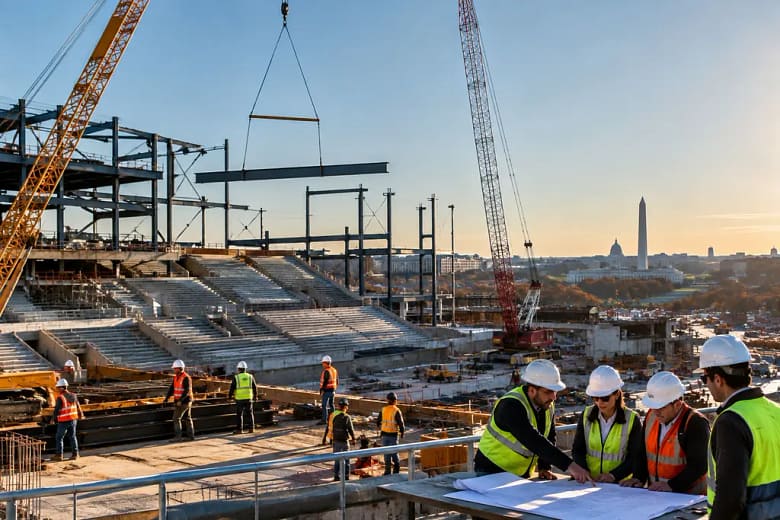
In July 2026, D.C. Council Chair Phil Mendelson introduced legislation tied to at least $300 million in public funding over five years as part of a $620 million public-private partnership. Under that proposal, D.C. United would contribute about $320 million, while the project would add a roof and roughly 8,000 seats, according to The Washington Sun.
Audi Field Expansion And The Matchday Product
Audi Field’s current capacity is 20,000. The proposed seating increase would push capacity to about 28,000. For a club trying to grow revenue without moving from its current home, that change could matter on high-demand matchdays, cup dates, international events, and doubleheader-style programming. A roof would also change the fan experience by offering more weather protection, especially during colder or wet dates.
That sports benefit should be measured against the stadium’s existing urban setting. More seats can mean more energy in the building, but also more pressure on transportation, crowd management, neighborhood access, and public safety planning. The plan also projects that a roof and higher capacity could allow Audi Field to host 114 events per year, up from around 50. That is a major operational jump, not a small scheduling adjustment.
Calendar Pressure And Winter Soccer
The roof proposal is tied in part to MLS’s scheduled January 2028 calendar shift toward deeper winter play. For athletes, that has practical value. A covered venue can support more predictable playing and training conditions. Still, a roof does not answer every welfare question. Clubs and leagues must still account for surface quality, recovery time, travel demands, and event spacing. Facility investment should support the players on the field, not only the revenue model around them.
The Audi Field expansion is also being framed as a broader venue play. More events can help a stadium stay active, but an expanded calendar can strain local services and neighbors if commitments are vague. D.C. should ask what types of events are expected, how many would be soccer-specific, and what protections would apply when multiple teams share the venue.
Public Cost And Fiscal Tests
The central question is whether the public share is justified by verified public returns. On October 27, 2026, officials emphasized the need for more rigorous economic modeling, especially around how much additional revenue the city could expect and whether the minimum $300 million in public funds could be recouped through more events and higher capacity, as reported by The Washington Post.
Revenue Claims Need Clear Benchmarks
Any Audi Field expansion backed by public dollars should be judged by defined benchmarks before approval, not by general optimism about sports development. The proposal’s projected move from around 50 events to 114 events per year is significant, but projections are not the same as guaranteed public revenue. D.C. leaders need to know which revenues are new, which are shifted from other city venues, and which costs fall back on public agencies.
Mayor Muriel Bowser has expressed opposition to the plan, citing concerns that an expanded Audi Field could pull business from other venues, including Capital One Arena, and that the city’s financial condition may not support more sports venue subsidies. That concern is not anti-soccer. It is a governance question: public support for one venue must be weighed against existing commitments across the city’s sports and entertainment system.
Public Money Requires Public Terms
Sports venues can be civic assets, but public funding should come with enforceable terms. That means clear reporting on construction costs, operating assumptions, community benefits, affordable housing delivery, transportation impacts, and tenant access. A transparent agreement would reduce the risk that fans and taxpayers are asked to accept promises that cannot be checked later.
The proposed redevelopment also includes adjacent real-estate projects with more than 400 housing units, including affordable units, on parcels near the stadium. That could matter in a fast-growing stadium district, but the public should be able to see affordability levels, timelines, and accountability measures before treating housing as a settled benefit.
Athlete And Tenant Stakes At Audi Field
For athlete rights advocates, the most urgent issue is whether the facility plan serves every team and player who relies on Audi Field. D.C. United is the lead club behind the proposal, but Washington Spirit also calls the stadium home. A stronger building should not create a weaker position for the women’s professional team that shares it.
Washington Spirit Needs Written Protections
Washington Spirit enters the last year of its Audi Field lease in 2027 and has pushed for protections so any expansion deal also benefits the club, including shared event scheduling considerations. That point belongs at the center of the sports analysis. The NWSL club should not be treated as a secondary user in a publicly supported venue where women’s soccer has helped build the calendar and fan base.
The Audi Field expansion should be judged partly on whether it protects equitable scheduling, locker-room and training-day needs, revenue opportunities, and matchday quality for both professional soccer tenants. If public dollars support the roof and capacity increase, the public has a fair interest in making sure the benefits are not limited to one team.
Labor Standards Are Part Of Sports Infrastructure
A project labor agreement was negotiated on September 14, 2026, between D.C. United and local construction unions. The agreement was described in the research record as covering union labor, worker protections, and hiring standards for the project. That matters because stadium development is not only about fans in seats. It is also about construction workers, event staff, service workers, security teams, and the surrounding workforce.
Good sports infrastructure should set standards on and off the field. A roof and new seats are visible. Worker protections, fair hiring practices, and safe conditions are less visible, but they are part of whether the public investment carries social value.
Community Benefits Beyond The Turnstiles
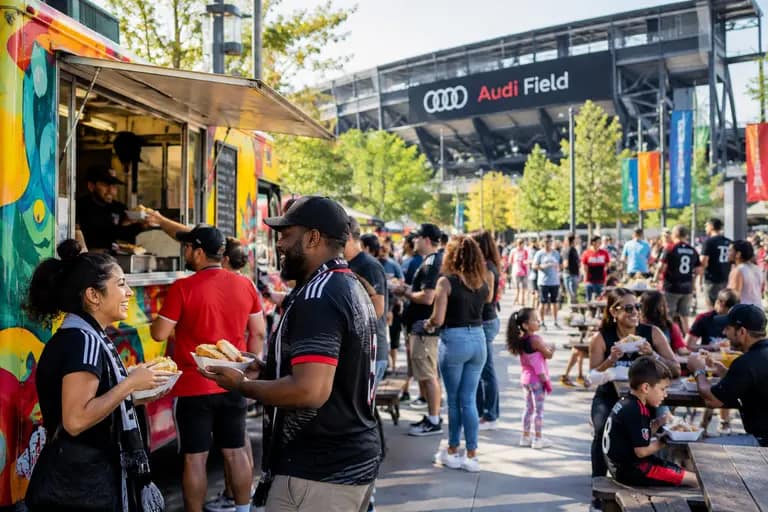
The strongest version of this proposal would connect soccer growth to neighborhood stability. The weaker version would expand the building, increase event volume, and leave residents dealing with traffic, noise, and cost pressures without enough safeguards. D.C. leaders should treat those outcomes as policy choices, not unavoidable side effects.
Housing, Access, And Event Pressure
The more than 400 planned housing units near the stadium could be a meaningful part of the project if affordable units are delivered under clear, enforceable terms. Without details, the housing piece remains a promise attached to a stadium plan. Community benefits need dates, unit counts, affordability definitions, and public reporting.
Event pressure also needs careful review. A move toward 114 annual events would place Audi Field closer to a year-round entertainment venue than a mostly matchday soccer stadium. That can help nearby businesses on event days, but it can also create more frequent demands on transit, parking, sanitation, policing, and resident access. The Council should ask for realistic operating scenarios, not only best-case estimates.
For broader sports-business coverage across this network, check out Sports Wire News, which covers how venue decisions impact leagues, cities, and fans. On Back2Tap, our earlier review of the stadium plan also placed labor, public cost, and fan access at the center of the debate.
Stadium Growth Should Not Outrun Trust
D.C. soccer has earned serious investment, but trust depends on proof. Fans deserve modern facilities. Players deserve safe, high-quality workplaces. Workers deserve protections. Residents deserve a say in how many events their neighborhood is expected to absorb. Taxpayers deserve modeling that separates measurable public return from private upside.
That is why this decision should not be rushed after one hearing. The October 23, 2026, hearing gave the Council a public forum, but the questions raised by the proposal require detailed follow-up. The city should publish assumptions, stress-test revenue projections, and define remedies if promised public benefits do not arrive.
Audi Field Expansion Decisions For D.C. Soccer
The Audi Field expansion can be defended as a sports growth plan if it improves the matchday product, supports winter soccer, treats D.C. United and Washington Spirit fairly, and sets firm labor and community standards. It becomes harder to defend if the public contribution is approved before revenue assumptions, venue impacts, and tenant protections are clear.
A cautious path is not a rejection of soccer ambition. It is how public leaders protect the sport’s long-term credibility. D.C. has a chance to show that stadium investment can serve fans, athletes, workers, and residents at the same time. That requires written commitments, open fiscal analysis, and a willingness to treat community needs as part of the project, not as a side issue after the deal is done.