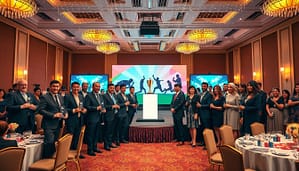
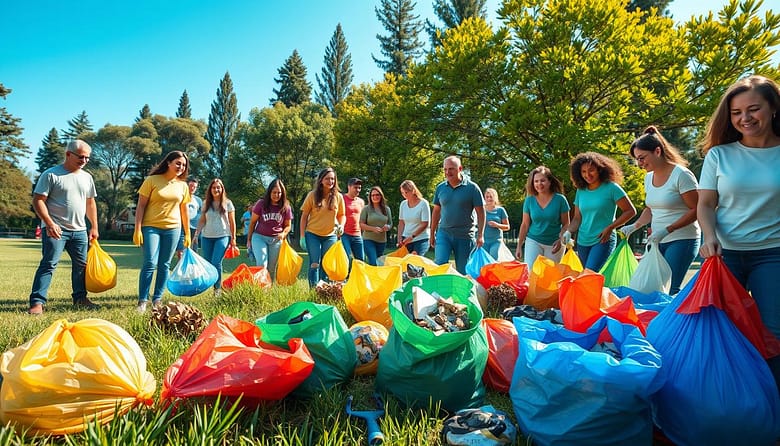
Imagine a stadium full of fans on game day. It’s a sea of color and energy. But the next morning, it’s silent and littered with confetti.
This contrast shows the challenge and chance for sports venues. They’re not just for games anymore. They’re becoming community hubs.
What if stadiums were for community cleanup too? This is the new goal. The real win is in turning fan passion into action. We see this in zero-waste goals at universities and volunteers cleaning parks & rivers.
This change isn’t about new amenities. It’s a big shift: the arena as a force for good. It’s about using the energy of fans for positive change. The first step is selecting a purpose.
This starts with a detailed environmental assessment. It makes sure the site is a positive foundation, not a problem. The game begins here.
Recruiting Teams, Fans, and Families
Imagine the excitement in a stadium during a tie game’s final two minutes. It’s not just excitement; it’s a shared identity. Now, picture using that energy for a community cleanup after the game. It’s not just about picking up trash. It’s about using the fans’ loyalty to make a difference.
The best volunteer programs don’t look for random people. They tap into the existing community spirit. This approach turns fans into a powerful force for change.
Truist Park, home of the Atlanta Braves, shows how it’s done. Their “Green Team” makes cleaning up fun. They reward fans for helping out, turning it into a game.
This isn’t just about cleaning up. It’s about being part of the team. Fans who cheer for the Braves can also help clean up. It’s all about working together for a common goal.
Building Your Green Team Roster
Recruiting volunteers is like building a team. Middlebury College uses student-athletes as “green liaisons.” They lead by example, showing the importance of sustainability.
Your team needs different types of people. You need the passionate fans, the organizers, and the ones who keep everyone updated. Assign roles based on people’s strengths. This way, everyone can contribute in their own way.
From Tailgaters to Trash Tacklers
Tailgaters are a hidden resource. They’re already excited and ready to celebrate. The goal is to keep the party going with a community cleanup.
Make the cleanup a fun, timed event. Use branded bags and turn it into a competition. The team that collects the most gets a pizza party. It’s a chance to show team pride in a new way.
These programs show great results. Volunteers feel a real sense of accomplishment. They see the difference they make and feel more connected to the team and community.
Safety Briefings and Supplies
Before we start, we have a critical step: the safety briefing. It’s not just about rules; it’s like a team huddle. We want to make sure everyone knows their role and how to work together.
This briefing is key to a successful cleanup. It’s based on a study from Zimbabwe that shows how to organize well. We need to plan before we start, so everything goes smoothly.
The Pre-Game Huddle: Safety and Logistics
The briefing is where we plan our strategy. It’s not just listening; it’s participating. We use a map to guide everyone, just like in the Zimbabwe study.
We assign group coordinators to lead each area. They have a walkie-talkie and a map. This way, everyone knows their job and where to go.
The briefing should be short and easy to remember. We focus on three main things:
- Hazard Recognition: Some trash is dangerous. We teach volunteers to spot and avoid it.
- Team Integrity: Stay together. This keeps everyone safe and helps the cleanup go faster.
- Hydration & Rest: Stay hydrated and take breaks. This is more important than just picking up trash.
This planning makes our volunteers work better together. It turns a cleanup into a well-run operation.
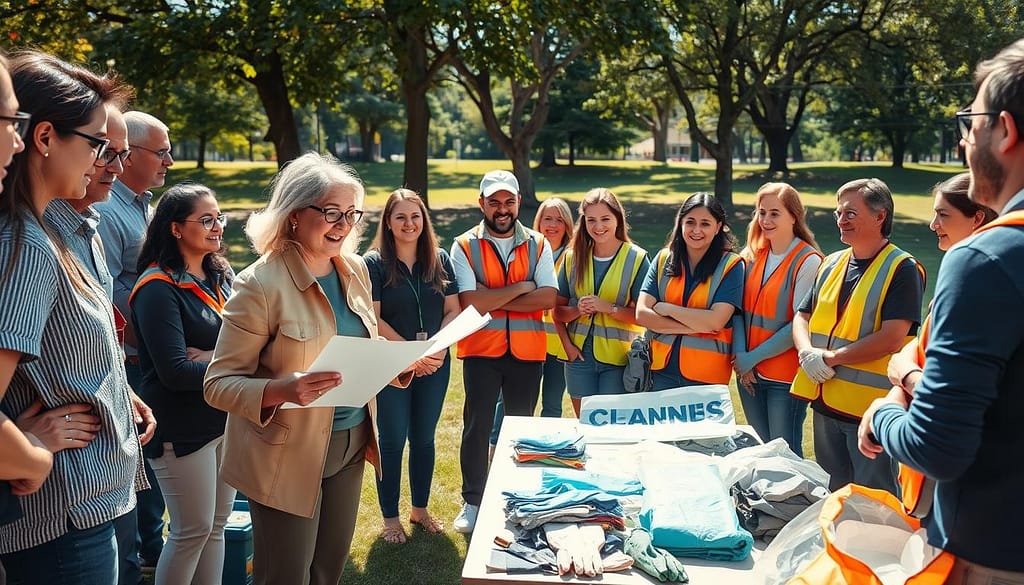
Now, let’s talk about the gear. It’s not about looking good; it’s about being safe and effective. The Zimbabwe study shows that the right tools are essential.
Here’s what every volunteer needs:
| Gear | Purpose | Pro-Tip |
|---|---|---|
| Heavy-Duty Gloves | Protects against sharp objects and chemicals. | Leather palms are the best for puncture resistance. |
| Sturdy, Closed-Toe Shoes | Keeps feet safe from dropped items and uneven ground. | No sandals. Ever. |
| High-Visibility Vest or Shirt | Makes volunteers easy to see, for safety and visibility. | Makes the volunteers a visible force for good. |
| Reusable Water Bottle | Staying hydrated is key to safety. Dehydration can lead to poor choices. | Provide a central water station for refills. |
| Grabber Tools & 5-Gallon Buckets | Reduces back strain and makes carrying easier. | Assign a “bucket brigade” system for full buckets. |
We aim to make the cleanup as smooth as the Zimbabwe study’s plan. It’s not just about picking up trash; it’s a well-coordinated effort. Every volunteer knows their role and has the right tools. We’re not just fighting litter; we’re conducting a symphony of civic action.
Waste Tracking and Data Reporting
If a bag of trash is collected in a park and no one tracks the data, did it really make an impact in the annual report? The feel-good vibes of a cleanup are powerful, but they don’t pay for next year’s event or convince a corporate sponsor to write a check. This is where the story moves from anecdote to asset. The transition from simply collecting trash to collecting actionable intelligence> is what separates a one-time event from a strategic, fundable, and replicable community program.
Forget the blisters and the sunburn for a moment. The real muscle of a modern community cleanup isn’t just in the biceps; it’s in the spreadsheet. The narrative of “we filled X bags” is heartwarming, but the narrative that opens doors is “we diverted X tons from the landfill, beautified Y acres of parkland, and saved the municipal budget Z dollars in waste management costs.” This is the language of grants, sponsorships, and city council support.
More Than Just Bags of Trash: The Metrics of Impact
So, you’ve mobilized the troops and filled a dumpster. So what? The “so what” is the data you collect. Think of it as the post-game analytics for your civic event. Instead of just points on a scoreboard, you’re tracking environmental and social KPIs.
Consider Ohio State University’s game-day operations, which achieve a 94-98% waste diversion rate. This isn’t luck; it’s a masterclass in data-driven process. They don’t just have recycling bins; they have a system to track contamination rates, diversion by weight, and even the energy recovered from compost. Your cleanup can operate on the same principle, just on a different scale. The bag is the end of one story, but the data inside it is the beginning of the next one.
This is where the magic—or perhaps, the method—happens. Impact is no longer a fuzzy concept. It’s a quantifiable metric. It’s the difference between saying “we cleaned a park” and “we removed 450 lbs of waste from a 2-acre wetland, restoring a habitat and preventing an estimated 1.2 tons of CO2 equivalent from improper waste breakdown.” The latter gets the attention of everyone from the local newspaper to the corporate social responsibility officer at a major employer in town.
So, how do you turn a pile of trash bags into a compelling data story? You build a simple, replicable methodology. This is your playbook for turning sweat equity into hard numbers.
First, you measure the inputs and outputs. This isn’t just weight (though that’s a great start). It’s the story in the numbers:
- Volume & Weight: Total bags/weight collected. (This is your “tonnage,” your most basic KPI).
- Area Impacted: Square footage or acreage cleaned. (e.g., “We restored 3 miles of riverbank”).
- Volunteer Power: Total volunteer hours. (This is a huge selling point for community engagement).
- Waste Composition: What did you find? 40% plastic bottles, 30% food wrappers, 20% scrap metal? This data is gold for advocating for policy changes (like bottle deposit laws) or targeted education campaigns.
Here’s where we get analytical. Let’s use a real-world parallel. Arizona State University powers a significant portion of its campus with solar. They don’t just say “we use solar.” They track megawatt-hours generated, CO2 emissions offset, and cost savings. Your cleanup can mirror this. For example:
| Metric | Your Cleanup | Impact Translation |
|---|---|---|
| Weight Diverted | 1,200 lbs | Equivalent to the waste of 15 average US households for a week diverted from landfill. |
| Area Restored | 2.5 acres of wetland | Critical habitat restored, improving local biodiversity. |
| Volunteer Hours | 150 hours | Represents over $4,000 in community labor value (at a standard volunteer hour rate). |
Consider the methodology from studies on community cleanup impact, which emphasize before-and-after photographic evidence and spatial mapping. This isn’t just for show. This data is your currency. It’s what you show the local business who might sponsor you next year: “Your $500 sponsorship last year enabled us to collect and report on 1,200 lbs of waste. Here is the exact impact of your dollars.” It’s what you show the city to prove the event’s value and secure the permit again. It’s the hard evidence that a community cleanup is not a one-day feel-good event, but a data point in a larger strategy for civic improvement.
In the end, the trash bags are just the artifact. The data is the legacy. It’s the difference between a story that ends with the dumpster and a story that builds a movement.
Celebrations and Recognition
Too often, cleanup events end with a quick “thanks” and bagels. This misses the mark. True success is in the community spirit built, not just filled trash bags. The final act is turning volunteer work into a moment of pride and celebration.
This moment makes the event a true community celebration. It shows the value of every participant’s effort. It also sets the stage for the next event.
Recognition fuels future action. It turns a one-time volunteer into a lifelong advocate for parks & rivers.
The Victory Lap: Making Recognition a Highlight
Forget generic certificates. Real recognition creates moments worth sharing. Your volunteers are local heroes. The power of local sports and community shows how to celebrate.
Look to the pros for inspiration. At Truist Park, fans get team merchandise for recycling. Use this as a model for your event. Aim for more than just a “thank you.”
- The Social Spotlight: Create a social media highlight reel. Share before-and-after photos and “Volunteer of the Hour” clips. Tag your volunteers and sponsors.
- Sponsor-Donated Prizes: Local businesses love to support good causes. A gift card or free oil change can motivate volunteers.
- The “Green Team” Hall of Fame: Highlight a volunteer on your website or newsletter. Share their story and why they care about parks & rivers.
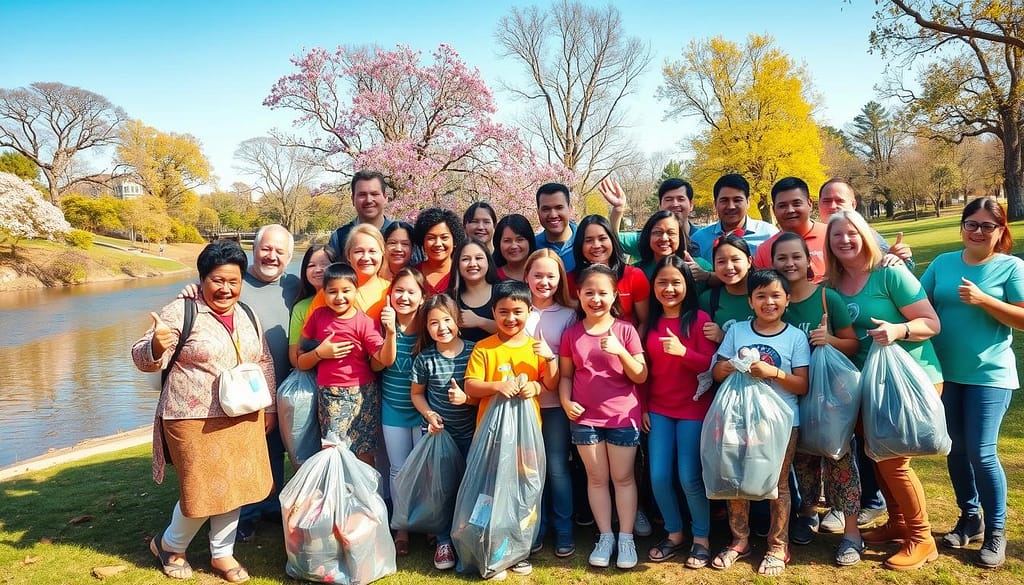
Why stop celebrating when the last piece of trash is gone? The post-cleanup moment is perfect for building community. Oregon’s “canned food for admission” model is a great example of combining community and environmental benefits.
Apply this to your cleanup. Don’t just send people home. Turn the park into a mini-festival—a true “Green Day.”
- Host a Picnic: Partner with a local food truck or sponsor for simple, low-waste refreshments.
- Live Local Music: A local student band or acoustic performer adds the perfect celebratory soundtrack.
- Partner Showcases: Invite local environmental groups for interactive booths on composting, native plants, or water quality.
This turns the event into a destination. The cleanup becomes a highlight of a larger, positive community gathering. People remember the fun and the community, not just the trash they picked up. This builds a lasting legacy, not just a clean park.
Sponsorship and Local Business Involvement
The old way of sponsorship is outdated. Today, it’s about creating a story of impact together. It’s not just charity; it’s a strategic partnership. For local businesses, it’s more than a tax write-off. It’s a chance to connect with the community.
The parks and rivers we clean are more than places. They are the backdrop for a story of corporate citizenship.
Think of it as a story with three parts: the brand, the community, and the outcome. A brewery sponsoring the cleanup’s social event isn’t just giving out free drinks. It’s creating a space for volunteers to come together.
A local outfitter providing gear isn’t just donating. It’s equipping the heroes of the day. This is more than just writing a check; it’s building a legacy.
Beyond the Logo: Creating Authentic Partnerships
To move from just placing logos to real partnerships, change the conversation. Ask what you can build together, not just what you can give. Real partnerships are based on shared values and creating value together.
For example, a hardware store could sponsor a contest for the most creative upcycled item. A café might sponsor the volunteer breakfast. This makes the business a part of the event’s story, not just a name on a banner.
It’s the difference between renting a billboard and becoming a character in the community’s story. For more on how local businesses can give back, see how they can integrate into the community fabric.
From Local Brews to Major Brands: A Partnership Playbook
The playbook for partnerships is the same, whether it’s a local business or a major brand. The scale changes, but the principles stay the same.
For a local business, like a brewery or outdoor shop, the goal is authentic hyper-local engagement. Their sponsorship is an investment in their community. A brewery sponsoring the after-party isn’t just selling beer; it’s celebrating with the community.
For a regional or national brand, the focus is on a broader ESG narrative. Look at the pros. Companies like WestRock and Ball Corporation are becoming official sustainability partners for cleanups. They’re funding a story of circularity and corporate responsibility.
The playbook has a few key chapters:
- Value Alignment: Partner with businesses whose values align with environmental stewardship. An outdoor apparel brand and a river cleanup are a natural fit.
- Multi-tiered Engagement: Offer tiered sponsorship packages. A local café might provide in-kind coffee and pastries (Community Tier), while a construction firm might sponsor a “Heavy Litter” team (Title Tier).
- Co-creation, Not Just Contribution: Invite the sponsor to help design their activation. Can a local print shop sponsor and produce the event t-shirts? Can a tech company provide an app for volunteers to log collected waste data?
- Data & Impact Storytelling: For the brand, the ROI isn’t just a logo. It’s the data: “Our partnership with 500 volunteers removed 2 tons of waste from the river, which we prevented from entering the watershed.” That’s a powerful ESG metric.
A sustainable sponsorship for a park or river cleanup is about more than a one-time cleanup. It’s about a brand becoming a recurring character in the story of a place. It’s not about the cost; it’s about the value of the partnership. When a business becomes a partner, they’re not just cleaning a river; they’re investing in the community’s future and their own brand’s values.
Replication Guide
Think of this as your game plan. A winning strategy isn’t a secret; it’s a series of smart plays. Here is your playbook for a game-changing community cleanup.
Your Playbook for a Game-Changing Cleanup
The final whistle hasn’t blown. Your playbook, based on pros and global studies, is your call to action. It’s your five-step play for a winning community cleanup.
Scout the Field
First, pick your site. It could be a local park, a riverbank, or a neglected lot. Use maps and local intel to choose wisely. The Ohio State and Truist Park models show that a visible, accessible site builds momentum. Engage local officials early to secure permits.
Draft Your All-Star Team
Your volunteers are your MVPs. Recruit them with a clear, compelling “why.” Use the fan-engagement spirit of a college game day or a stadium cleanup. Tap into local sports teams, schools, and businesses. Build your green team roster with purpose.
Call the Play in the Huddle
Gather your team for the pre-game. The safety briefing is your huddle. Distribute supplies and assign zones like a coach drawing up a play. This is where the methodology from global studies meets on-the-ground action.
Execute the Play
This is the game. Deploy your volunteers to the parks & rivers you’ve targeted. Equip them with bags, gloves, and a simple data card to track the waste collected. This isn’t just about bags of trash; it’s about the data. How many bags? What types of waste? This is your impact metric.
Celebrate the Win
Data and recognition are your victory lap. Share the collected metrics—pounds of trash, bags collected, acres cleaned. Publicly thank your volunteers and local sponsors. This celebration, as seen in successful models, isn’t just a party. It’s the proof of concept that fuels the next game.
This is your playbook. It’s not a theory; it’s the synthesis of what works. The field is yours.