
Clubs, nonprofits, and event organizers in the U.S. use branded items to unite, raise funds, and spread the word. But today’s supporters want more. They look for products that match their values and support responsible business.
This is where ethical merchandise comes in. It’s about fair labor and green materials in the supply chain. It turns simple items into a statement of your organization’s values.
Good Gear Only leads this change for groups everywhere. We offer a full package for risk-free, values-based campaigns. Our method uses pre-orders to avoid financial risks.
This article will help you from start to finish. It shows that doing good is also good for business.
Risk Mapping in Apparel/Souvenirs
Risk mapping turns vague promises into real, checkable data. It’s the first step to show if products are truly ethical. Without it, claims of responsibility are weak.
This process goes beyond just the cost of items. It examines the whole supply chain for environmental and social issues. It tracks everything from raw materials to the final product.

- Raw Material Extraction: Conventional cotton farming (water-intensive, pesticide-heavy) and virgin plastic production from fossil fuels.
- Processing & Dyeing: Wastewater pollution from chemical dyes and fabric treatments.
- Labor Conditions: Unverified factory audits can hide unfair wages and unsafe working environments, a critical concern for high-risk textiles.
To reduce risks, brands choose better materials. They use recycled PET, FSC-certified paper, organic cotton, and ocean-bound plastic. These choices tell a clear sustainability story and help reduce carbon footprint.
Effective platforms aim to avoid harm from the start. For example, Teemill’s circular model was created to solve fashion waste. It embeds risk reduction in its supply chain design.
In the end, a detailed risk map is essential. It makes your intentions real, ensuring your products match your values at every step.
Vendor Codes and Audits
To move from risk to action, you need two key tools: a strict vendor code and regular audits. These tools are essential for any ethical merchandise program. Without them, promises of fair labor and sustainability are empty words.
A vendor code of conduct is your guide for ethical production. It’s a strict rulebook for your partners. This document turns your values into real, enforceable standards.
An effective code covers several key areas:
- Fair Labor Practices: No forced labor, child labor, discrimination, or too much overtime.
- Living Wages: Pay that covers basic needs and lets people have some extra money.
- Safe Working Conditions: A healthy, safe workplace with the right training and tools.
- Environmental Management: Rules to reduce waste, manage chemicals, and lower environmental impact.
But a code is only as good as its enforcement. That’s where audits come in. Independent audits check if your code is being followed. They prove that fair labor is real.
In the U.S., choosing the right partners is key. The old way hid behind complex, unaccountable supply chains. Now, we need transparent, accountable partners. Look for those with ISO-certified systems or full audit trails.
The best partners handle everything from sourcing to fulfillment themselves. This setup offers unmatched transparency. It makes complex supply chains simple and ethical.
Creating a solid base starts with a detailed supplier code of conduct. This makes fair labor a real part of your brand, not just a slogan. It’s the gap between hoping and knowing your products are safe.
Low-Impact Materials and Packaging
Real sustainable merchandise is shown by what it’s made of, not just what it says. Switching to eco-friendly materials is a big step to cut down on waste. It’s about making real changes, not just talking about them.
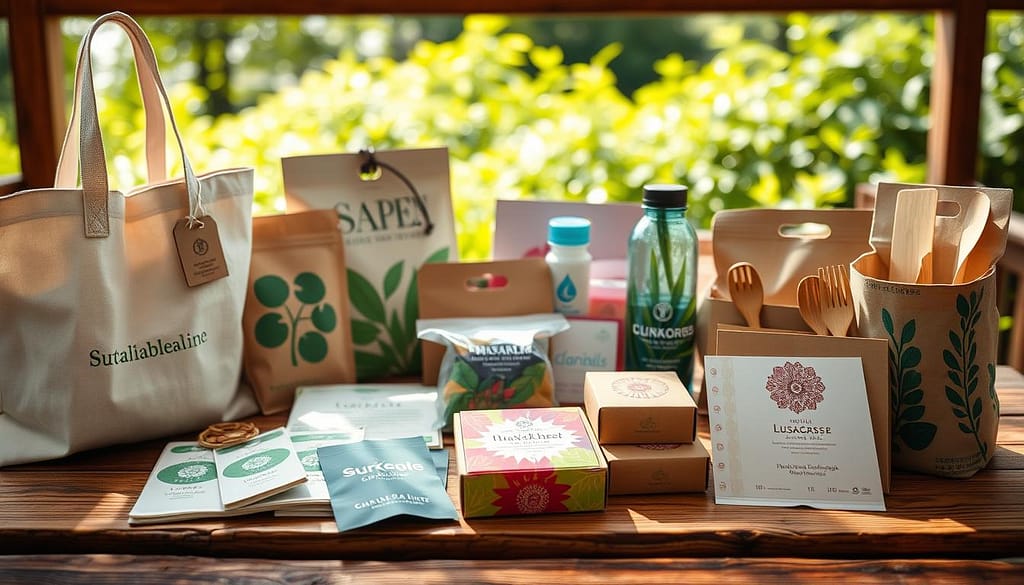
When it comes to clothes, the fabric matters a lot. Organic cotton is a top choice because it’s grown without harmful chemicals. Brands like Teemill use it for their charity t-shirts, making them soft and kind to the planet. Recycled cotton and recycled polyester (rPET) from old plastic bottles are also great. They use less water and energy than new materials.
For items like drinkware and accessories, there’s room for creativity. Recycled stainless steel is strong and can be recycled forever, perfect for bottles and cups. Some companies even use ocean-bound plastic to make special items, helping clean the oceans. Microfiber cloths made from recycled stuff are also a smart choice for kits.
Packaging is key, but often overlooked. Using single-use plastic defeats the purpose of eco-friendly products. Aim for plastic-free, compostable, or minimal packaging. This could be recycled paper, cardboard with eco-friendly inks, or even seed paper that can be planted. The RSPB, for example, pairs its organic cotton tees with eco-friendly packaging.
| Material Type | Common Source | Key Environmental Benefit | Example Use |
|---|---|---|---|
| Recycled Polyester (rPET) | Post-consumer plastic bottles | Reduces plastic waste & energy use | Sportswear, fleece jackets |
| Organic Cotton | Farms using no synthetic chemicals | Protects soil & water quality | T-shirts, tote bags |
| Recycled Stainless Steel | Industrial & post-consumer scrap metal | Infinitely recyclable, highly durable | Reusable water bottles, travel mugs |
| Compostable Packaging | Plant-based materials like cornstarch | Breaks down naturally, no landfill waste | Mailers, product wrappers |
Choosing these materials does more than just help the planet. It tells a story that people can see and feel. When someone gets an “Active Bottle” in a compostable mailer, it shows your values. This real action builds trust and interest in a way words can’t.
By picking materials and packaging that are kind to the earth, your products become more than just items. They become symbols of your commitment to sustainability. Every t-shirt, bottle, and bag becomes a chance to talk about living green and making choices that matter.
Take-Back and Repair Programs
Smart merchandise strategies don’t stop at the sale. They plan for returns. This is key to a circular and responsible approach to sustainable merch. It shows that a t-shirt’s journey shouldn’t end in a landfill.
For clubs and events, this means caring for an item’s whole life. The aim is to design out waste from the start. Teemill is a great example of this in action.
Teemill’s system makes every garment circular. Each product has a unique return label. When a customer is done, they can send it back for free. The old material is then remade into new products.
This process turns old stock into valuable material. It creates a loop of material use. For your organization, adopting this builds huge credibility.
Practical ways to implement this for events and teams include:
- Repair Services: Offer repair clinics for durable goods like jackets, bags, or hats. A simple stitch or patch can make a product last years longer. This service builds fan loyalty and reduces waste right away.
- Take-Back Schemes: Set up easy ways for fans to return old apparel. Use collection bins at stadiums or offer mail-in options. This collected material can then be recycled or used for a new “reclaimed” collection.
These programs do more than just manage waste. They deepen engagement with your community. Fans become part of your sustainability mission. This turns a simple purchase into a long-term relationship.
It shows your brand’s leadership in ethical merchandise. Your commitment lasts long after the final whistle.
Comparing Circular Program Models
Different models fit different organizations and merchandise. The table below outlines key models for your sustainable merch strategy.
| Program Type | How It Works | Key Benefit for Club/Event | Example Implementation |
|---|---|---|---|
| Take-Back Program | Customers return used items via mail or drop-off. Materials are recycled or remanufactured. | Secures raw materials for future lines and shows end-to-end responsibility. | Providing a prepaid return label with every hoodie sold. |
| Repair & Refurbishment Service | On-site or mail-in repair for damaged or worn merchandise to extend its usable life. | Builds intense brand loyalty and reduces new resource extraction demand. | Hosting a “stitch and fix” tent at annual fan fest events. |
| Hybrid Model | Combines take-back for unrepairable items with repair services for salvageable goods. | Maximizes material recovery and customer service touchpoints. | A jersey trade-in program that offers discounts on new items for returned old ones, with wearable jerseys being repaired for resale. |
Choosing the right model depends on your product mix and capacity. Even a small pilot program can gain goodwill. It shows a real commitment to a circular future for your sustainable merch.
Take-back and repair initiatives close the loop. They ensure your merchandise’s story has a happy ending. This proactive care is what sets true leaders apart from those who just use green buzzwords.
Revenue Without Harm
Ethical merchandise is a strong way to make money. It’s about being open about where things come from and treating workers fairly. These are key to a successful business today.
Groups like Greenpeace, CALM, and Music Declares Emergency show it works. They’ve made over £1 million with green merchandise, without spending anything first. Their trick is using pre-orders and print-on-demand.
This method changes the game. Your group or event doesn’t have to pay anything at first. Products are made only after you sell them. They’re sent straight to the buyer. You keep all the profit and stick to your values.
This way, you avoid wasting money and guesswork. Your success means less harm to the environment. For groups in the U.S., it’s a way to make money that helps the planet and fair work conditions. It’s the best of both worlds.