Let’s clear up the greenwashing confusion. True sports leadership isn’t just about planting trees on Earth Day. It’s about using big events to really make a difference for the environment.
While big oil companies put their logos on stadiums, athletes and communities were working on real change. Sport has a unique power to grab everyone’s attention in today’s world.
This isn’t just about winning games or getting paid. It’s about making sure our kids have a planet to play on. The facts are clear: we face a big climate crisis. And sports organizations are starting to see their part in fixing it.
It’s about using their influence to create a sports world with less carbon emissions. That’s something worth cheering for.
Pathways from Athlete to Advocate
So, you’ve mastered your backhand or free throw. Now, what’s next? Moving from sports star to environmental champion is a big leap. It’s like shifting from the stadium’s chaos to the ever-changing world of politics.
Pat Cummins, cricket’s star, wanted more than just winning games. He became Australia’s cricket captain and the International Cricket Council’s top player. In 2022, he started Cricket for Climate. His goal was simple: add solar power to 4,000 cricket clubs in Australia.
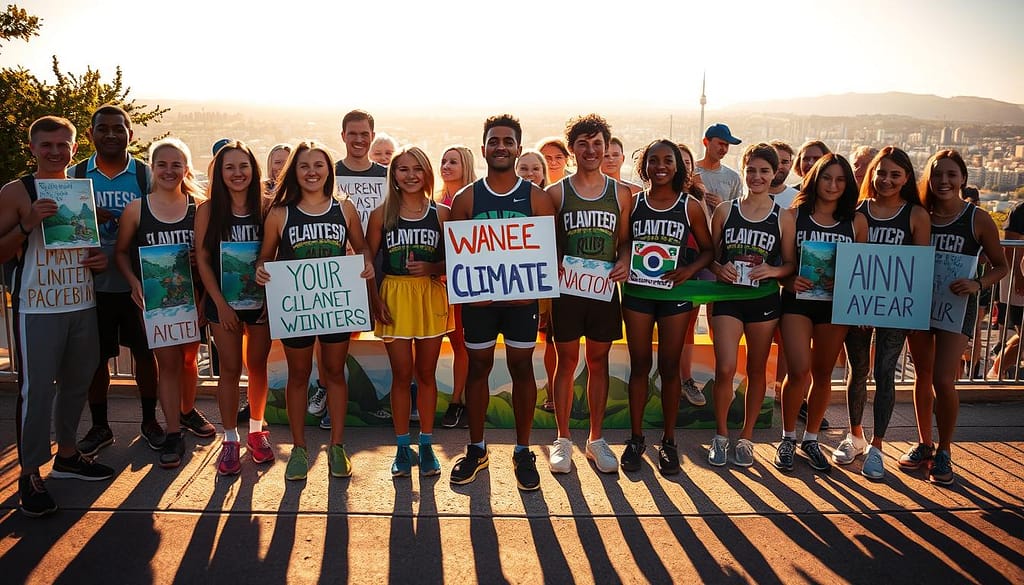
He faced harsh criticism right away. Media outlets called him “Captain Woke” and “Captain Planet.” Now, he battled climate deniers, corporate pushback, and online trolls.
Cummins’ success comes from real action, not just posting online. He put solar panels on cricket clubs. This change is real, powering the game with green energy. It’s the difference between just talking about change and actually making it happen.
Switching to advocacy requires the same grit as winning championships. You need focus, resilience, and strategy. The journey demands:
- Turning athletic discipline into advocacy persistence
- Using team leadership for community mobilization
- Directing competitive drive towards solutions
This isn’t about giving up sports for activism. It’s about using your platform, discipline, and community to make a real difference. The best athlete-advocates see their sports career as training for something greater.
True community engagement goes beyond small gestures. It’s about real action, like building green infrastructure. The journey from athlete to advocate is tough. But for those who make it, the rewards are greater than any trophy.
Notable Community Leaders
While billionaire team owners focus on fancy projects, real change comes from unexpected places. Vermont Green FC shows that combining environmental justice with soccer can be truly groundbreaking.
This isn’t just about sports teams pretending to care about the environment. Vermont Green FC is built on real values like fighting racism, respecting human rights, and protecting the planet. They show that when values are real, they can change the world.
Their approach to selling merchandise is a big win for the planet. They use recycled materials, organic cotton, and partner with “1% for the Planet.” It’s all about giving back, not just for show.
What’s even more impressive is their fans. A huge 80-90% of them want sports teams to focus on saving the planet. It’s amazing to see a fanbase that puts the planet first.
The Generation of Environmental Leaders Program is training the next big wave of change-makers in North America. These leaders are not just tolerated; they’re needed and wanted.
These green leaders show that making a difference doesn’t need to be big. It’s about creating systems where caring for the planet is the norm, not just an extra effort.
Their work is similar to athletes who use their platforms for. They prove that sports can be more than just games; they can be a force for real change.
| Initiative | Core Approach | Community Impact | Sustainability Metric |
|---|---|---|---|
| Vermont Green FC | Environmental justice integration | Local fan engagement | 100% sustainable merchandise |
| Generation Environmental Leaders | Youth leadership development | North American collaboration | Multi-national solutions |
| 1% for the Planet Partners | Financial commitment | Global environmental funding | 1% revenue donation |
| Grassroots Sports Programs | Community-based action | Local environmental projects | Direct community impact |
The table shows a key point: good green leaders measure success in many ways. They look at community involvement, environmental impact, and making a real difference.
These efforts show that being a green leader isn’t about being flawless. It’s about being dedicated, open, and always striving to do better than before.
Integrating Values into Everyday Play
Ever notice how big changes start with simple things, like a backyard rink? That’s where sports leadership meets real life – not in offices, but on frozen ponds and fields.
RinkWatch shows us how to make a difference. Over 1,400 volunteers track climate change by asking, “Can we skate today?” It turns a kid’s hockey practice into real science. The melting ice shows our world is changing.
The True Sport Report 2022 tells us what we already know: sports should be fun, fair, and for everyone. Now, we’re adding “good for the environment” to that list. It’s not just about looking green – it’s about changing how we play.
Here are some ways to make sports greener:
- Equipment made from recycled materials
- Local tournaments that cut down on travel emissions
- Fields powered by clean energy
- Water-saving systems for upkeep
When we integrate environmental values, we create a positive cycle. Better for the planet means better sports spaces, which helps grow sports leadership. It’s a greener version of the sporting life.
When caring for the environment becomes second nature, it’s amazing. You’re not just playing sports; you’re taking care of the planet. Every action on the field is part of a bigger effort.
Climate change isn’t far away; it’s right on our fields. The real question is, are we smart enough to lead the change?
Fostering Leadership in Young Athletes
We’ve been coaching young athletes all wrong. Instead of making them score machines, we should focus on making them environmental leaders. The key is to mix sports with caring for our planet.
Picture soccer teams checking air quality during practice or hockey players tracking ice thickness. It’s not just sports—it’s also community engagement. That young athlete learning about green field care is not just getting ready for games. They’re learning to protect the fields we all play on.
The TrueSport framework teaches us that sports do more than build muscles. They build social connections and community bonds. By focusing on environmental care, we’re not just making better athletes. We’re making better people who know that leading means protecting our planet. The real score is whether we’ll have a world to play in tomorrow.