
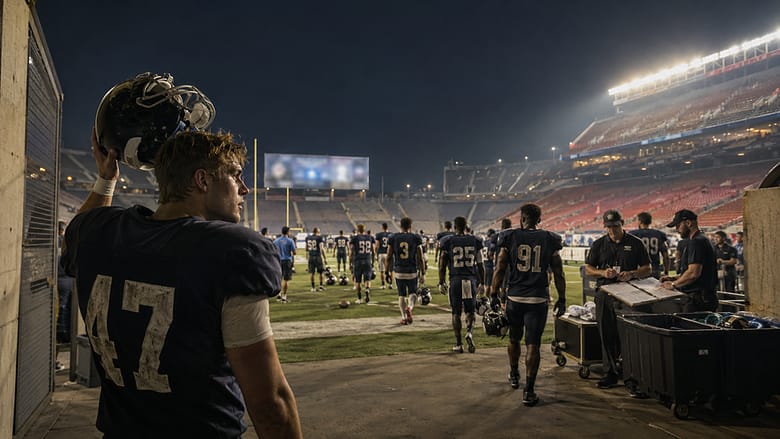
NFL preseason football creates an unusual viewing challenge. The scoreboard looks familiar, yet the goals behind each snap can be very different from a regular-season game. Fans interested in the wagering side of football may consult resources such as MyBookie sportsbook reviews, but preseason evaluation has a deeper football question: which players are earning meaningful work, handling larger responsibilities, and moving closer to a roster spot? In August, snap counts and assignments often reveal far more than the final score.
The 2026 preseason arrived with the Carolina Panthers and Arizona Cardinals opening the schedule in the Pro Football Hall of Fame Game on August 6. The main first preseason weekend runs August 13 through August 15, followed by two more rounds before clubs face their final roster decisions. For fans trying to learn something useful from exhibition football, that compressed calendar puts roster evaluation ahead of wins and losses.
Preseason Football Has A Different Competitive Purpose
A regular-season coaching staff enters each game trying to maximize its chances of winning that afternoon or evening. A preseason coaching staff has several jobs happening at once.
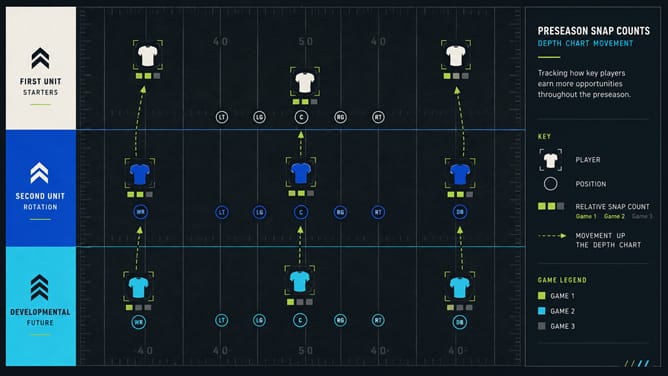
Established starters may need only a limited amount of live work. Young players need enough snaps to show they understand assignments under pressure. Coaches must test combinations along the offensive line, defensive front and special-teams units. Position coaches need film that separates two players competing for one roster spot.
That creates games in which the fourth quarter can have tremendous importance inside the organization, even if most viewers have stopped paying attention to the score.
The 2026 NFL preseason schedule shows how quickly those evaluations begin. Detroit visits Cincinnati, Green Bay plays Pittsburgh, Indianapolis faces New England and several other clubs begin their exhibition schedules on August 13. By the end of that weekend, every coaching staff will have a much larger body of live-game evidence.
A reserve guard playing 42 snaps can give coaches more useful information than a starting quarterback playing one series. A linebacker who handles defense and multiple special-teams units can improve his roster case without producing a highlight. A receiver who runs the correct route, blocks reliably and avoids assignment mistakes may gain ground despite finishing with one catch.
That is the preseason evaluation hidden underneath the televised game.
Snap Counts Help Show Which Competitions Matter
Snap totals need context. Playing 50 snaps does not automatically mean a player performed well, yet usage can show where a coaching staff needs more information.
A player receiving extended work early in the preseason may be involved in an unsettled competition. Another player receiving fewer snaps may already have a well-defined role. Coaches can increase workloads for rookies, recent signings and players returning from developmental seasons.
The strongest clues come from changes across multiple games.
A third-team receiver moving into second-team work deserves attention. A young corner receiving snaps against better opposing receivers is getting a different test. An offensive lineman rotating between guard and tackle may be showing the staff whether he can cover multiple positions on game day.
Versatility has extra value near the bottom of an NFL roster. Teams cannot carry a separate replacement for every position. Reserve players often need to contribute on special teams or handle more than one role.
That makes preseason participation a form of roster information.
| Preseason Detail | What Fans Can Watch | Why It Matters |
|---|---|---|
| Rising Snap Count | More work with stronger units | May signal a larger evaluation opportunity |
| Multiple Positions | Player moves between roles | Versatility can strengthen a roster case |
| Special-Teams Work | Coverage, return or blocking units | Reserve players often need special-teams value |
| Late-Game Snaps | Extended work with roster hopefuls | Coaches get more film on developmental players |
| Reduced Work | Established player exits early | Role may already be relatively secure |
The table cannot predict final cuts. It gives fans a cleaner framework for reading the game.
The August 30 Roster Deadline Changes The Pressure
The 2026 calendar adds a clear endpoint to every preseason competition.
According to the NFL’s official league calendar, the first preseason weekend runs August 13–15, the second runs August 20–23 and the third takes place August 27–29. Clubs must reduce their Active/Inactive Lists to a maximum of 53 players before 6 p.m. ET on August 30.
That schedule gives coaching staffs very little distance between the final exhibition game and the roster deadline.
A player competing for a backup job cannot assume there will be another opportunity after the third preseason weekend. The final game may represent the last full-speed evaluation before personnel departments begin making calls.
The timing places extra weight on consistency.
One explosive play can attract attention. Several games of dependable assignment football can carry more value inside a meeting room. Coaches need players they can trust when injuries, substitutions and game-day adjustments change the personnel available during the regular season.
Preseason mistakes matter for the same reason. A missed protection, coverage bust or special-teams error can appear small on television. Repeated mistakes can raise questions about whether a player can be trusted in a limited regular-season role.
The final score says very little about that calculation.
Special Teams Can Decide The Bottom Of A Roster
Many fans naturally watch quarterbacks, running backs and receivers. Roster decisions often depend on snaps that receive far less attention.
Kick coverage is one example.
A fifth receiver may need to contribute on punt coverage. A reserve defensive back can improve his value through multiple kicking units. A linebacker fighting for a final spot may need to prove he can tackle in space and execute special-teams assignments.
A player who offers no special-teams role has a narrower route to the roster if he is unlikely to start on offense or defense.
This explains why preseason evaluation cannot be reduced to box-score production. A receiver with three catches may have had a productive night, yet another receiver with one catch may have contributed across several special-teams units and executed every blocking assignment.
The same principle appears across positions. Backup running backs need pass protection. Reserve tight ends may need blocking and special-teams utility. Defensive backs can gain value through positional flexibility.
Fans who watch preseason games through this lens start seeing the same underlying question repeatedly: what jobs can this player perform when the regular season starts?
Practice-Squad Decisions Extend The Evaluation
The 53-man deadline does not end every player’s NFL opportunity.

The league’s 2026 important-dates calendar states that the waiver period following final roster reductions expires at 1 p.m. ET on August 31. Clubs can then establish practice squads, with the current calendar allowing 17 players when one qualifies and is designated as an International Player.
That makes the final preseason weeks part of a broader talent-retention process.
Some players will be evaluated as immediate 53-man roster candidates. Others may interest teams as developmental options. Another organization can claim or sign a player who becomes available, which means strong preseason film can matter outside the club that originally brought him to camp.
For young players, every snap becomes part of a league-wide résumé.
A defensive lineman who loses a crowded position battle can still show enough burst, technique or positional flexibility to attract another team. A receiver blocked by an established depth chart may produce useful film for clubs needing help at the position.
That gives preseason football stakes without pretending the exhibition standings matter.
The competition is often player versus roster structure rather than team versus team.
Fans Should Track Roles Instead Of Preseason Records
Preseason records have limited predictive value. Coaching priorities change from game to game, starters receive different workloads and teams spend large portions of contests evaluating personnel combinations that may never appear together during the regular season.
Role changes are more useful.
Watch which quarterback enters second. Watch which offensive linemen move between positions. Notice which defensive backs appear on coverage units. Track which receivers are working with higher-level quarterback groups from one week to the next.
The NFL has three standard preseason games for most teams in 2026, with Arizona and Carolina receiving an extra game from their Hall of Fame appearance. The league’s team-by-team preseason slate creates a short progression from opening evaluations to final roster decisions.
That progression is the story.
Week 1 can establish a baseline. Week 2 can show movement within a competition. Week 3 can reveal which players receive the final opportunities before cutdown.
No single snap guarantees a roster spot. Patterns become much more informative across several weeks.
Why The Final August Snaps Carry Real Weight
NFL preseason football becomes easier to understand once the scoreboard stops being the primary measuring stick.
The real competition is taking place inside depth charts.
Coaches are identifying reliable backups, special-teams contributors and developmental players. Personnel departments are deciding which forms of versatility have enough value to occupy one of 53 roster positions. Players near the cut line are trying to leave enough quality film for 32 teams to evaluate.
For the viewer, that creates a better reason to watch August football.
A fourth-quarter possession between reserve players may have no impact on a championship race, yet it can shape a player’s professional future. A special-teams tackle can matter more than a late touchdown. A clean series from a backup offensive line can answer questions a preseason final score never will.
The 2026 preseason should be read as a sequence of evaluations leading toward August 30. Track snaps, roles, unit movement and versatility, and the games begin to reveal far more than their final scores suggest.