Commanders Stadium Progress has moved from broad political agreement into the harder phase of delivery: construction teams, project controls, transit commitments, housing promises, and community accountability. For a football organization returning to the former RFK site, the sports story is not only about a 65,000-seat enclosed venue. It is about whether a 180-acre campus can serve players, fans, workers, and nearby residents without shifting too many costs onto the public.
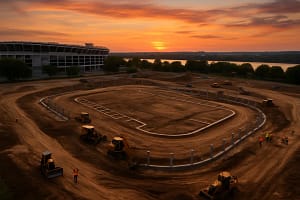
The major milestones in August and September 2026 gave the project more shape. On August 11, 2026, the Commanders selected Clark Construction Group, Mortenson, and Smoot Construction Company as the joint venture to build the stadium. On September 3, 2026, the District PM Alliance, made up of Brailsford & Dunlavey, CAA ICON, and McKissack & McKissack, was chosen as owner’s project manager. Foundation work was scheduled for Q1 2027, with completion targeted for the second quarter of 2030. Those dates matter because stadium schedules affect training operations, event bookings, transportation planning, labor needs, and neighborhood disruption.
Commanders Stadium Progress At RFK Campus
Commanders Stadium Progress Benchmarks
The planned facility sits inside a 1.8-million-square-foot campus and has been positioned to host more than 200 events annually, including sports, concerts, and national celebrations. That scale changes the RFK discussion from a single NFL home field into a year-round public asset test. A football stadium can anchor identity, but it also concentrates traffic, security demands, concession labor, maintenance needs, and public-space management into a small number of high-impact dates.
On September 24, 2026, Mayor Muriel Bowser transmitted the RFK campus master plan to the D.C. Council for review. The plan described four development districts for housing, office, and commercial uses, plus two districts for parks and recreation. It also referenced game-day open spaces and public amenities, including river access. The mayor’s office said the planning process included more than 3,000 written comments during a 45-day public comment period in summer 2026 and more than 30 community and stakeholder engagement events, according to the RFK campus plan release.
Why The Venue Design Matters For Sport
The first interior renderings, unveiled on September 16, 2026, described a continuous seating bowl without stacked premium seating, a "wall of fans" section with affordable seating, steeper seat angles, and roofing intended to bring fans closer to the field and support crowd noise. Those are football-first choices. Crowd proximity can affect the feel of a home game, while affordability claims deserve follow-through in ticketing, seating inventory, and access policies.
Athlete rights should be part of this evaluation. Stadium design is often sold through fan amenities, but players and stadium workers live with the building every week. Safe surfaces, efficient arrival routes, medical and recovery areas, locker-room operations, heat planning, and secure movement through the venue should receive the same public attention as premium clubs. The research provided does not give detailed athlete-area specifications, so any judgment on those features should wait for fuller design documents.
Infrastructure Tests Around The RFK Plan
Transit Is The Real Game-Day Capacity
The project’s infrastructure case depends heavily on transit. The plan included only 6,000 parking spaces, which signals reliance on rail, buses, walking, cycling, and managed drop-off patterns. By the planned fall 2030 opening, the plan called for an expansion of the Stadium-Armory Metro station and the introduction of Gold Line bus rapid transit buses to serve the site. The city had allocated $300 million for the Stadium-Armory Metro station expansion, while $5 million had been allocated for Gold Line BRT planning.
That gap does not prove failure, but it does identify a governance issue. A 65,000-seat stadium with concerts and national events needs dependable mobility beyond kickoff. If the bus component lags behind station work, Ward 7 residents and game-day workers could face uneven service, crowded transfers, or more pressure from ride-hail traffic. For readers tracking similar public-cost questions in sports venue deals, Back2Tap’s related analysis of the Commanders stadium development placed the RFK plan within a broader discussion of project controls, housing promises, and neighborhood concerns.
Economic Scale Requires Public Proof
The economic impact analysis placed total development cost at about $8.0 billion: $3.2 billion for the stadium over a three-year construction period and $4.8 billion for the surrounding mixed-use district over a seven-year horizon. It also projected 1.4 million annual attendees across sports and non-sports events and 28 to 29 ticketed events per year, as outlined in the RFK economic impact analysis.
Commanders Stadium Progress is not just a construction update; it is a test of whether public and private partners can explain who benefits, who pays, and how benefits are measured. The District projected about $4 billion in tax revenue over 30 years from the stadium and RFK campus development. The Commanders’ $2.7 billion stadium investment was described in D.C.’s FY 2025 Annual Comprehensive Financial Report as the single largest private investment in the city’s history. Those figures are significant, but projections should be judged against delivery, not headlines.
- Track whether transit improvements are funded and completed before the fall 2030 stadium opening.
- Measure affordable housing delivery against the stated 30% minimum across 5,000 to 6,500 planned residential units.
- Report construction impacts in Ward 7 with clear timelines and public updates.
- Publish accessible updates on event-day transportation performance after opening.
Community Engagement And Athlete-Centered Standards
What The Public Comment Record Shows
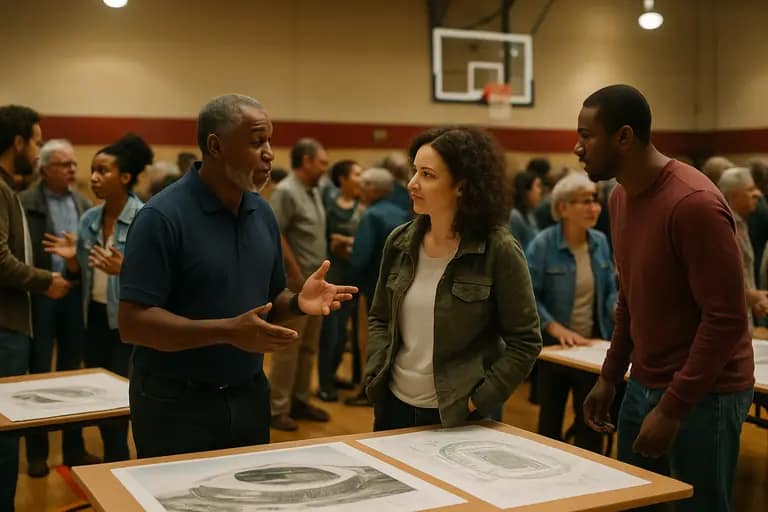
The 3,000-plus written comments and more than 30 engagement events show that residents treated the RFK campus as more than a team relocation matter. The site touches park access, riverfront use, housing affordability, event security, transportation reliability, and local business opportunity. That is where sustainable sports leadership has to move from branding to accountability.
In June 2026, Advisory Neighborhood Commission 7B passed a resolution supporting a Community Benefits Agreement. The research notes identify proposed elements such as free game-day shuttles starting near Naylor Road and Southern Avenue and a Stadium Community Advisory Board with representation from each of the five ANCs in Ward 7. Those ideas fit the scale of the project because they connect event-day operations to specific neighborhoods rather than treating "community" as a broad talking point.
Housing, Parks, And The Risk Of Delay
The master plan called for 5,000 to 6,500 residential units onsite, with at least 30% affordable housing. Some construction parcels may be delayed into the 2040s because of zoning and other regulatory processes. That timing matters. If the stadium opens in 2030 but housing and public amenities arrive much later, the most visible benefit could be football and entertainment first, with neighborhood gains deferred.
That does not make the plan unworkable. It means D.C. officials, the Commanders, and development partners should separate what is funded, what is approved, what is scheduled, and what remains aspirational. Fans deserve an honest stadium timeline. Residents deserve the same clarity on housing, parks, shuttles, and street impacts. For broader context across sports venues, the same network’s baseball coverage at Books on Baseball, a related site in the network, offers another angle on how facilities shape sports communities over time.
Commanders Stadium Progress Accountability
What Should Be Monitored Before 2030
The next phase should be judged through public benchmarks, not ceremonial updates. Commanders Stadium Progress should be measured by whether below-grade work begins in Q1 2027, whether the owner’s project manager publishes usable schedule and risk information, and whether D.C. Council review leads to clearer commitments on transit, housing, and community benefits.
There is a responsible way to build a major football venue. It starts with the sport itself: a strong home-field setting, safe athlete spaces, fair worker conditions, and fan access that does not depend only on premium spending. It then extends outward: reliable transit, public parks, river access, housing delivery, and community boards with real channels for feedback. The RFK plan has enough detail to be taken seriously, but not enough completed work to be treated as a finished civic win.
That is the standard industry leaders should apply. If the Commanders and the District meet the schedule, protect affordable access, and keep Ward 7 residents involved after approvals are granted, the project can become a model for a sports-first district with public value. If those commitments slip behind the stadium shell, the public will be right to ask whether the project served the city as fully as it served the franchise.