Youth Soccer Development in the United States moved into a new phase on August 29, 2026, when U.S. Soccer and U.S. Youth Soccer completed a formal integration approved by USYS State Associations, with stated goals around alignment, investment, player pathways, and family experiences U.S. Soccer announcement. For national teams, the development question is not only whether top prospects are identified. It is whether the system gives coaches clearer information, gives families clearer standards, and gives players age-appropriate competition before they reach senior-team selection windows.
As of October 6, 2026, the key developments are not theoretical. The 2026 national championship events, youth futsal championship, ADAPTandTHRIVE Invitational, youth leadership meetings, and national training center use had already taken place. That matters for analysis because these programs can be judged by what they put in place during 2026, not by promotional language alone.
Why Youth Soccer Development Changed In 2026
The August 29 integration was the clearest governance shift in the youth game during 2026. USYS had long operated as a major youth soccer body, while U.S. Soccer governed the national-team structure. Bringing USYS formally under U.S. Soccer created a more direct link between grassroots registration, state associations, local competitions, and federation-level talent planning.
Youth Soccer Development Standards And Pathways
For education-focused analysts, Youth Soccer Development is now easier to evaluate against shared standards. The research record points to three linked priorities: a national Talent Reporters Program, gateway camps for Youth National Teams from 13 through 23 age groups, and expanded local soccer infrastructure. Those priorities fit the federation’s stated “U.S. Way” philosophy, but the useful test will be consistency: whether similar player profiles are evaluated through similar criteria across different states, clubs, and competition formats.
- The national Talent Reporters Program was highlighted in U.S. Soccer’s third quarter 2026 reporting.
- Gateway camps were tied to Youth National Team age groups from 13 through 23.
- Local infrastructure growth was identified as part of the same development push.
Age-Group Rules And Calendar Clarity
Starting with the 2026-27 seasonal year, USYS age grouping for state and local competitions followed birth-year alignment with an August 1 to July 31 seasonal calendar. The research notes also specify that elite events such as the National Championships and National Presidents Cup retained existing brackets. That split is worth watching because calendar standards can reduce confusion for families, yet different rules across competition tiers can still require clear education from clubs and state associations.
National Team Preparation And Coaching Links
The youth pathway became more relevant because the senior and U-23 programs also entered defined cycles. Mauricio Pochettino’s contract as U.S. Men’s National Team head coach was renewed through 2030 on August 3, 2026, giving the senior program a four-year competitive frame toward the 2030 FIFA World Cup. On July 9, 2026, Steve Cherundolo was appointed head coach of the U.S. Under-23 Men’s National Team, with responsibility for preparing the squad for the 2028 Summer Olympics.
Senior And U-23 Cycles
Those appointments did not guarantee player outcomes, and it would be speculative to claim that any single youth program will produce a specific senior international. The verified point is narrower and still significant: the federation had named coaches for key competitive cycles, while youth programming was being reorganized below them. That alignment can help if scouting language, positional expectations, and camp evaluations are shared across age groups.
Gateway Camps And Talent Reporting
Gateway camps for ages 13 through 23 can serve different purposes at different stages. Younger players may need education on training habits and competition demands. Older players may need evaluation against international-style roles and tournament pressure. A Talent Reporters Program can improve coverage only if reporting standards are clear, consistent, and regularly reviewed. In that sense, standards are not paperwork; they are a player-protection tool and a coaching tool.
Competition Platforms That Tested Players
The 2026 U.S. Youth Soccer National Championships were completed from July 13 to 23. Boys age groups 13U through 19U competed in Salt Lake City and Provo, Utah, while girls competitions were held in Murfreesboro and Smyrna, Tennessee. The event represented the final stage of state, regional, and national-level competition among top youth teams.
National Championships As A Benchmark
Championship events help identify players who can handle repeated match demands, travel, and opponent adjustments. They are not the only valid development setting, but they provide a structured benchmark. For families, the educational value is strongest when coaches explain what scouts are assessing: decision speed, technical execution under pressure, off-ball movement, recovery habits, and role understanding.
Futsal And Disability Soccer
The 2026 U.S. Youth Futsal National Championship, held in Richmond, Virginia, was identified in the research as the 21st edition and the largest national youth futsal tournament in the United States, drawing more than 215 boys’ and girls’ teams. Futsal can support close-control development because the game compresses space and increases quick decisions, but any claims about long-term player conversion should be made carefully without player-tracking data.
Inclusive programming also had a clear place in 2026. The ADAPTandTHRIVE Invitational was held May 18 to 24 at the Arthur M. Blank U.S. Soccer National Training Center. It featured all five U.S. Disability National Teams and five disability soccer organizations, including U.S. Men’s Cerebral Palsy team matches against Scotland on May 21 and May 22. For readers interested in exploring community sports dynamics within the same network, Bass Lake Roadhouse provides insight into how local access and public-facing sports culture shape family connections to organized play.
Facilities And Infrastructure For Youth Teams
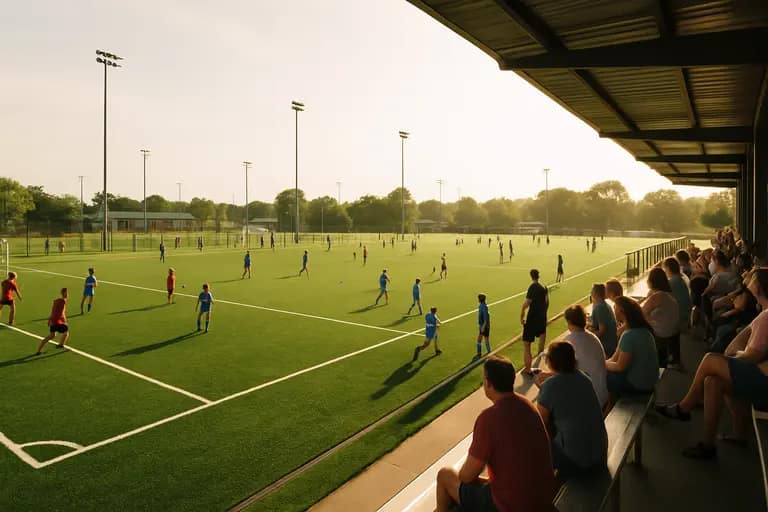
The Arthur M. Blank U.S. Soccer National Training Center in Fayette County, Georgia, became a major part of the federation’s training base. The facility was reported as a 200-acre site with 19 fields and a $250 million investment, and it was first used for training camps ahead of the 2026 World Cup AP report. The research notes also state that the center now supports youth national team camps.
What The Georgia Center Adds
A national training center can help standardize the camp environment. Players can be assessed in the same setting, with shared fields, recovery spaces, meeting rooms, and staff processes. That does not replace club development, high school decisions, or state-level competition. It does give federation coaches a central setting for comparisons across regions and age groups.
Local Infrastructure Still Matters
The center is only one piece. U.S. Soccer’s third quarter 2026 reporting also referenced growth in local soccer infrastructure. That point deserves attention because most players spend far more hours in local environments than in national camps. Back2Tap has covered related themes in U.S. camps, where access, scouting, and education shape how prospects are seen before tournament selection.
Youth Soccer Development After Integration
Youth Soccer Development after the 2026 integration should be judged by visible standards rather than broad claims. The best signs will be practical: clearer age-group communication, consistent camp criteria, trained evaluators, accessible programming, and competition calendars that families can understand before registration.
Signals To Track Through 2030
The senior men’s cycle through 2030 and the U-23 cycle toward the 2028 Summer Olympics give the system defined targets, but youth programs need nearer checkpoints. Reasonable indicators include how talent reporters are trained, how often gateway camps connect to federation feedback, and whether state associations can explain calendar rules without confusion.
- Clearer evaluation language across clubs, state associations, and national-team camps.
- Documented education for families on age grouping and competition pathways.
- Continued inclusion of futsal and disability soccer within the broader development discussion.
- Facility access that supports national teams without weakening local programming needs.
The cautious read is that 2026 produced meaningful structural changes. The integration, camp expansion, national events, and training center use created a stronger framework. The next measure is whether that framework makes the player pathway easier to understand, easier to audit, and fairer for families across different soccer communities.